Apr . 01, 2024 17:55 Back to list
beach towel microfiber large Performance Analysis
Introduction
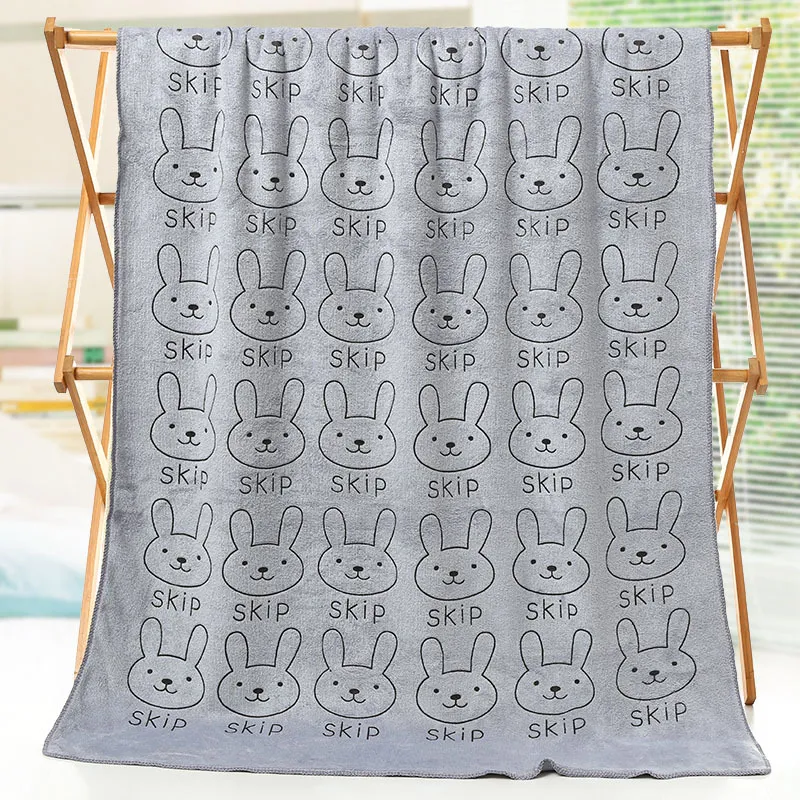
Beach towels constructed from microfiber represent a significant advancement in textile engineering for recreational applications. These towels, typically large in dimensions, are designed for rapid water absorption, quick drying, and portability, addressing key pain points for consumers and hospitality industries. Microfiber beach towels differ fundamentally from traditional cotton towels due to the ultra-fine diameter of their constituent fibers – typically less than one denier – resulting in increased surface area and capillary action. This translates into superior performance in both wet and dry conditions. The production chain involves polymer extrusion, fiber spinning, weaving or knitting, and finishing treatments to enhance properties like softness, colorfastness, and antibacterial resistance. Understanding the material science, manufacturing processes, and performance characteristics is crucial for quality control, product development, and ensuring customer satisfaction in a competitive market.
Material Science & Manufacturing
The primary raw material for microfiber beach towels is typically polyester, though polyamide (nylon) is also utilized. Polyester offers excellent durability, resistance to UV degradation, and cost-effectiveness, while polyamide provides superior softness and absorbency. The polymer extrusion process involves melting the polymer pellets and forcing them through spinnerets to create continuous filaments. These filaments are then split – a critical step – to achieve the microfiber structure. Splitting can be accomplished mechanically or chemically. Mechanical splitting uses physical forces to separate the filaments, while chemical splitting employs solvents to dissolve binding agents. Following splitting, the microfibers undergo weaving or knitting to create the towel fabric. Weaving produces a more durable and stable fabric, while knitting offers greater elasticity and softness. Critical parameters during weaving/knitting include yarn tension, stitch density, and fabric width. Dyeing and finishing treatments are then applied to impart color, antimicrobial properties (often using silver ions), and enhanced water repellency. Quality control focuses on fiber denier, fabric weight (GSM – grams per square meter), splitting ratio, and colorfastness to washing and sunlight. Inconsistent splitting leads to reduced absorbency, while inadequate dye fixation causes color bleeding.
Performance & Engineering
The performance of microfiber beach towels is dictated by several key engineering principles. Water absorption relies heavily on capillary action, driven by the large surface area and small pore sizes created by the microfiber structure. The rate of water absorption can be quantified using immersion tests, measuring the mass of water absorbed per unit mass of towel over time. Drying rate is equally important; microfiber’s low moisture retention allows for significantly faster evaporation compared to cotton. This is governed by Fick's Law of Diffusion, where the rate of moisture diffusion depends on the moisture gradient and the diffusion coefficient of the material. Tensile strength, assessed through ASTM D5035, determines the towel’s resistance to tearing and abrasion. Dimensional stability, crucial to prevent shrinkage or distortion after washing, is evaluated using wash-and-wear tests based on ISO 5077. UV resistance is also a significant performance attribute, protecting the towel from degradation and color fading during prolonged sun exposure. Manufacturers often employ UV absorbers in the polyester formulation to enhance this property. Compliance requirements include adherence to OEKO-TEX Standard 100 for harmful substance testing and REACH regulations for restricted chemical substances.
Technical Specifications
| Parameter | Typical Value (Beach Towel Microfiber Large) | Test Method | Industry Standard |
|---|---|---|---|
| Fabric Weight (GSM) | 300-400 | ISO 307 | ISO 307 |
| Fiber Composition | 80-100% Polyester (or blend with Polyamide) | FTIR Spectroscopy | ASTM D7891 |
| Fiber Denier | 0.1 - 0.3 | Microscopic Analysis | ASTM D76 |
| Water Absorption Capacity | 3-5 times its weight | ASTM D5035 | EDANA 114.2 |
| Drying Time (Air Dry) | 30-60 minutes | Controlled Environment Test | AATCC 183 |
| Tensile Strength (Warp/Weft) | >200 N / 5 cm width | ASTM D5035 | ISO 13934-1 |
Failure Mode & Maintenance
Microfiber beach towels, while durable, are susceptible to several failure modes. Delamination, or the separation of the woven or knitted structure, can occur due to excessive mechanical stress or improper washing techniques. Fiber degradation, caused by prolonged UV exposure or chlorine bleaching, leads to reduced strength and color fading. Pilling, the formation of small balls of fiber on the surface, is a common aesthetic issue but doesn’t necessarily compromise functionality. Microplastic shedding during washing is an emerging environmental concern; the release of microfibers into wastewater contributes to plastic pollution. Maintenance is crucial to prolonging the towel's lifespan. Machine washing should be performed on a gentle cycle with mild detergent, avoiding bleach and fabric softeners. Tumble drying on low heat is recommended; high heat can damage the fibers. Regular rinsing to remove sand and debris prevents abrasion and maintains absorbency. For stubborn stains, spot cleaning with a mild detergent is preferable to harsh chemical treatments. Implementing microfiber filters in washing machines can significantly reduce microplastic shedding.
Industry FAQ
Q: What is the primary difference between a microfiber beach towel and a traditional cotton beach towel in terms of absorbency?
A: Microfiber towels possess significantly higher absorbency than cotton towels due to their much larger surface area. The individual fibers are much finer than cotton fibers, creating more space for water to be drawn in through capillary action. A typical microfiber towel can absorb 3-5 times its weight in water, whereas cotton usually absorbs around 1-2 times its weight.
Q: How can I prevent pilling on my microfiber beach towel?
A: Pilling occurs when loose fibers break off and tangle on the surface. To minimize pilling, avoid washing the towel with abrasive materials like denim or towels with zippers. Use a mild detergent and wash on a gentle cycle. Consider using a fabric shaver to remove existing pills, but be careful not to damage the fabric.
Q: Is microfiber susceptible to damage from chlorine in swimming pools?
A: Yes, chlorine can degrade microfiber, particularly polyester. Prolonged exposure to chlorine can cause the fibers to become brittle and lose their color. Rinse the towel thoroughly with fresh water after each use in a chlorinated pool and avoid prolonged soaking.
Q: What is GSM, and how does it relate to the quality of a microfiber beach towel?
A: GSM stands for Grams per Square Meter, and it’s a measure of the fabric's density. A higher GSM generally indicates a thicker, more absorbent, and more durable towel. For microfiber beach towels, a GSM between 300-400 is considered good quality. Lower GSM towels may be less absorbent and less durable.
Q: Are there any environmental concerns related to microfiber beach towels, and what can be done to mitigate them?
A: The primary environmental concern is microplastic shedding during washing. Microfibers can enter wastewater systems and contribute to plastic pollution. Using a microfiber filter in your washing machine, washing towels less frequently, and choosing towels made from recycled materials can help mitigate this issue.
Conclusion
Microfiber beach towels represent a significant advancement in textile technology, providing superior performance in terms of absorbency, drying time, and portability. The manufacturing process, from polymer extrusion and fiber splitting to weaving and finishing, requires precise control of parameters to achieve optimal properties. Understanding the potential failure modes – delamination, fiber degradation, and pilling – and implementing proper maintenance procedures are crucial for maximizing the towel's lifespan and minimizing environmental impact.
Future development in this area will likely focus on utilizing more sustainable materials, such as recycled polyester, and improving microfiber capture technologies to address the issue of microplastic pollution. Continued research into fiber splitting techniques and finishing treatments will further enhance the performance and durability of these increasingly popular beach accessories. The industry's commitment to adhering to relevant standards will ensure continued product quality and consumer safety.


 English
  Afrikaans
  Albanian
  Amharic
  Arabic
  Armenian
  Azerbaijani
  Basque
  Belarusian
  Bengali
  Bosnian
  Bulgarian
  Catalan
  Cebuano
  Corsican
  Croatian
  Czech
Czech  Danish
  Dutch
Dutch  Esperanto
  Estonian
  Finnish
  French
  Frisian
  Galician
  Georgian
  German
  Greek
Greek  Gujarati
  Haitian Creole
  Hausa
Hausa  Hebrew
  Hindi
Hindi  Miao
Miao  Hungarian
  Icelandic
  Igbo
Igbo  Indonesian
  Irish
Irish  Italian
  Japanese
  Javanese
  Kazakh
  Khmer
Khmer  Rwandese
  Korean
  Kurdish
  Kyrgyz
  Lao
Lao  Latin
Latin  Latvian
  Lithuanian
  Luxembourgish
  Macedonian
  Malgashi
  Malay
Malay  Malayalam
  Maltese
  Maori
Maori  Marathi
  Mongolian
  Myanmar
  Nepali
  Norwegian
  Norwegian
  Occitan
  Pashto
  Persian
  Polish
  Portuguese
  Romanian
  Russian
  Samoan
  Scottish Gaelic
  Serbian
  Sesotho
  Shona
Shona  Sindhi
  Sinhala
  Slovak
  Slovenian
  Somali
  Spanish
  Sundanese
  Swahili
  Swedish
  Tajik
Tajik  Tamil
Tamil  Tatar
Tatar  Telugu
  Thai
Thai  Turkish
  Turkmen
  Ukrainian
  Urdu
Urdu  Uighur
  Uzbek
Uzbek  Vietnamese
  Welsh
Welsh  Bantu
Bantu  Yiddish
  Yoruba
  Zulu
Zulu