
Apr . 01, 2024 17:55 Back to list
bedside felt storage bag Performance Analysis
Introduction
Bedside felt storage bags represent a growing segment within the broader category of soft storage solutions, specifically targeting the organization of personal items within the bedroom environment. Functionally, these bags serve as caddies or organizers, typically utilizing fabric pockets and compartments to hold frequently accessed objects such as books, remote controls, mobile devices, and personal care items. Their technical position in the supply chain involves textile manufacturing, cutting, sewing, and finishing processes, connecting raw material suppliers (polyester fibers, felt material) to retail outlets and ultimately, consumers. Core performance characteristics center around structural integrity, dimensional stability, load-bearing capacity, and aesthetic appeal, all influenced significantly by the felt material’s composition and manufacturing techniques. The increasing demand for bedside organizers highlights a consumer need for space optimization and streamlined accessibility in modern living spaces. A critical industry pain point is achieving consistent product quality across production runs, specifically concerning seam strength and the prevention of material deformation under load. Another challenge revolves around meeting consumer expectations for durability and resisting degradation from typical household use and cleaning practices.
Material Science & Manufacturing
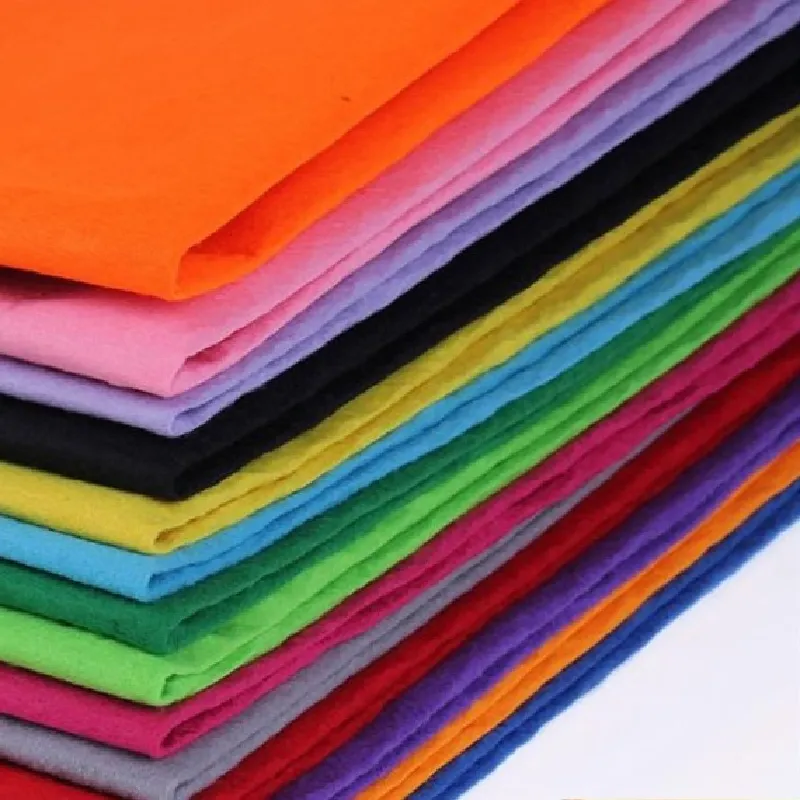
The primary material used in bedside felt storage bags is typically polyester felt, although wool felt is employed in higher-end applications. Polyester felt is a non-woven fabric created through a mechanical bonding process of polyester fibers. These fibers, typically polyethylene terephthalate (PET), possess good tensile strength (20-80 MPa depending on fiber denier and processing), moderate elasticity (elongation at break around 20-50%), and inherent resistance to abrasion. Wool felt, derived from sheep’s wool, utilizes the natural interlocking properties of wool fibers to create a dense, durable fabric. Wool felt offers superior moisture absorption and breathability compared to polyester but is generally more expensive and susceptible to moth damage. Manufacturing begins with the production of the felt sheets through needle-punching or thermal bonding. Needle-punching involves repeatedly impacting the fibers with barbed needles, causing them to interlock. Thermal bonding utilizes heat to partially melt and fuse the fibers together. Key parameter control during felt production includes fiber density (mass per unit area, gsm – typically 100-500 gsm), fiber fineness (denier), and bonding intensity. Subsequent processing involves cutting the felt sheets into specific patterns using die-cutting or laser cutting. The components are then assembled through sewing, often utilizing chain stitch or lockstitch methods. Seam strength is critical, and thread selection (typically polyester or nylon) and stitch density are carefully controlled to prevent seam failure. Finishing operations may include applying edge binding to prevent fraying, adding handles or straps, and quality control inspections.
Performance & Engineering
The performance of a bedside felt storage bag is dictated by its load-bearing capacity, dimensional stability under load, and resistance to deformation. Force analysis reveals that the primary stresses are tensile stresses on the fabric, concentrated around the seams and attachment points for handles or straps. Finite element analysis (FEA) can be used to model stress distribution and optimize seam placement. Environmental resistance is another key consideration. Polyester felt exhibits good resistance to UV degradation and mildew, while wool felt requires protection from moths and moisture. The bag's ability to maintain its shape and integrity over time is crucial. Creep – the tendency of a solid material to deform permanently under sustained stress – is a potential failure mode, particularly for bags loaded with heavier objects. Compliance requirements are typically governed by general product safety standards, such as those related to small parts (to prevent choking hazards for children) and flammability. Functional implementation involves ensuring that the pocket and compartment sizes are ergonomically designed for common bedside items. The handle or strap attachment method must be robust enough to withstand repeated use and the weight of the contents. The overall design should prioritize ease of access and efficient organization. Load distribution within the bag is also important; uneven loading can lead to localized stress concentrations and premature failure.
Technical Specifications
| Parameter | Polyester Felt (Standard Grade) | Wool Felt (Medium Density) | Unit |
|---|---|---|---|
| Material Composition | 100% Polyester | 100% Wool | - |
| Density (GSM) | 300 | 500 | g/m² |
| Tensile Strength | 40 | 60 | MPa |
| Elongation at Break | 30 | 25 | % |
| Thickness | 3 | 5 | mm |
| Seam Strength (Peel Force) | >50 | >75 | N/cm |
| Moisture Absorption | <1 | 30 | % |
Failure Mode & Maintenance
Common failure modes for bedside felt storage bags include seam failure, material tearing, deformation under load, and abrasion. Seam failure typically occurs due to insufficient stitch density, improper thread tension, or the use of low-quality thread. Material tearing can result from excessive stress concentration, particularly around attachment points or sharp edges. Deformation under load, or creep, is more prevalent with prolonged use and heavier objects. Abrasion, caused by repeated rubbing against surfaces, can lead to pilling and eventual material degradation. Oxidation, while less significant for polyester, can affect wool felt over time, leading to discoloration and loss of strength. Failure analysis often reveals that the root cause is a combination of material defects, manufacturing flaws, and improper usage. Maintenance recommendations include regular cleaning with a mild detergent and lukewarm water. Avoid harsh chemicals or abrasive cleaners, as these can damage the felt fibers. Allow the bag to air dry completely before use. For wool felt bags, periodic mothproofing treatment is recommended. To prolong the bag’s lifespan, avoid overloading it with excessive weight and store it in a dry, well-ventilated area when not in use. Regularly inspect seams for signs of wear and repair them promptly. Preventative measures, such as reinforcing stress points with additional stitching, can significantly enhance durability.
Industry FAQ
Q: What is the primary difference between polyester and wool felt in terms of long-term durability for a bedside storage bag?
A: While polyester felt is generally more resistant to abrasion and environmental factors like mildew, wool felt often exhibits superior resilience and resistance to compression set, meaning it’s less likely to permanently deform under prolonged load. However, wool requires more careful maintenance to prevent moth damage and is typically more expensive.
Q: How does seam strength impact the overall lifespan of the storage bag?
A: Seam strength is critical. Weak seams are often the first point of failure. Insufficient stitch density, improper thread selection, or poor sewing technique can all compromise seam integrity, leading to tearing and eventual disintegration of the bag.
Q: What considerations should be made regarding load capacity to prevent deformation?
A: The bag’s load capacity should be clearly specified and adhered to. Exceeding the recommended weight limit can lead to creep and permanent deformation, particularly if the load is concentrated in a small area. Distributing the weight evenly is crucial.
Q: What types of cleaning agents are safe to use on polyester felt bedside storage bags?
A: Mild detergents and lukewarm water are recommended. Avoid bleach, strong solvents, or abrasive cleaners. Spot cleaning is generally preferable to full immersion washing. Ensure the bag is fully dried before use to prevent mildew growth.
Q: How important is the selection of thread material for seam durability?
A: Extremely important. Polyester or nylon thread is generally preferred due to their high tensile strength, abrasion resistance, and resistance to UV degradation. Cotton thread is less suitable as it weakens when wet and is more susceptible to mildew. The thread’s denier (thickness) should also be appropriately matched to the felt thickness.
Conclusion
Bedside felt storage bags represent a practical solution for organizing personal items, but their performance and longevity are directly tied to material selection, manufacturing processes, and proper maintenance. Polyester felt offers a cost-effective and durable option for general use, while wool felt provides superior comfort and resilience, albeit at a higher price point. Careful consideration of seam strength, load capacity, and environmental resistance is paramount to ensure product reliability and customer satisfaction.
Future development may focus on incorporating sustainable materials, such as recycled polyester or plant-based fibers, and enhancing manufacturing techniques to improve seam durability and reduce material waste. Exploring alternative bonding methods, such as ultrasonic welding, could also offer advantages in terms of seam strength and aesthetics. Ultimately, a comprehensive understanding of the underlying material science and engineering principles is essential for creating high-quality, long-lasting bedside felt storage bags that meet the evolving needs of consumers.


 English
  Afrikaans
  Albanian
  Amharic
  Arabic
  Armenian
  Azerbaijani
  Basque
  Belarusian
  Bengali
  Bosnian
  Bulgarian
  Catalan
  Cebuano
  Corsican
  Croatian
  Czech
Czech  Danish
  Dutch
Dutch  Esperanto
  Estonian
  Finnish
  French
  Frisian
  Galician
  Georgian
  German
  Greek
Greek  Gujarati
  Haitian Creole
  Hausa
Hausa  Hebrew
  Hindi
Hindi  Miao
Miao  Hungarian
  Icelandic
  Igbo
Igbo  Indonesian
  Irish
Irish  Italian
  Japanese
  Javanese
  Kazakh
  Khmer
Khmer  Rwandese
  Korean
  Kurdish
  Kyrgyz
  Lao
Lao  Latin
Latin  Latvian
  Lithuanian
  Luxembourgish
  Macedonian
  Malgashi
  Malay
Malay  Malayalam
  Maltese
  Maori
Maori  Marathi
  Mongolian
  Myanmar
  Nepali
  Norwegian
  Norwegian
  Occitan
  Pashto
  Persian
  Polish
  Portuguese
  Romanian
  Russian
  Samoan
  Scottish Gaelic
  Serbian
  Sesotho
  Shona
Shona  Sindhi
  Sinhala
  Slovak
  Slovenian
  Somali
  Spanish
  Sundanese
  Swahili
  Swedish
  Tajik
Tajik  Tamil
Tamil  Tatar
Tatar  Telugu
  Thai
Thai  Turkish
  Turkmen
  Ukrainian
  Urdu
Urdu  Uighur
  Uzbek
Uzbek  Vietnamese
  Welsh
Welsh  Bantu
Bantu  Yiddish
  Yoruba
  Zulu
Zulu