
Apr . 01, 2024 17:55 Back to list
brown felt Performance Engineering
Introduction
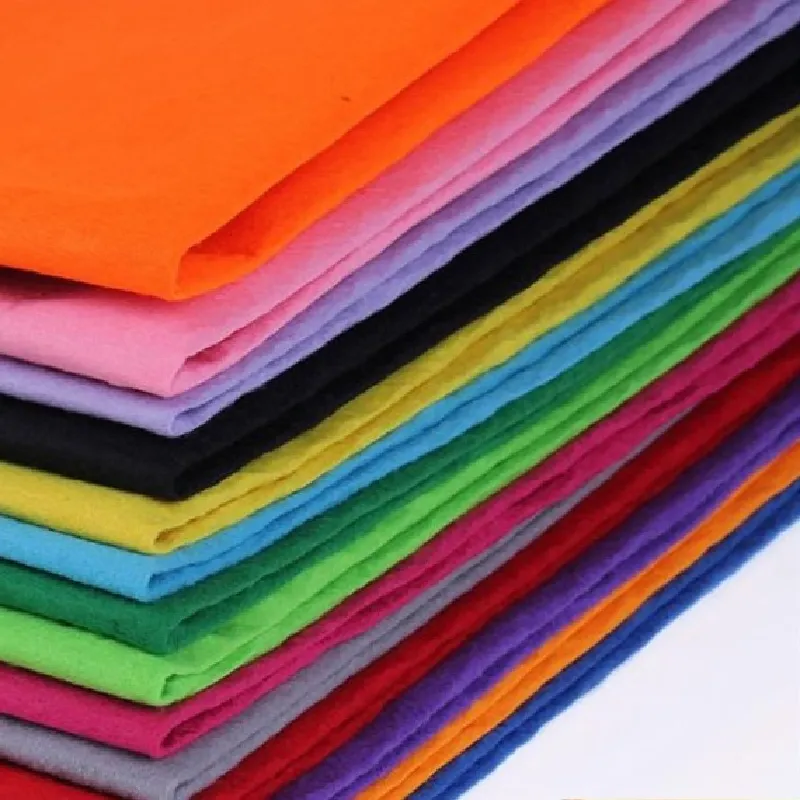
Brown felt is a non-woven textile material produced by matting, condensing and pressing fibers together. Predominantly composed of wool, but increasingly utilizing synthetic fibers like acrylic, polyester, and rayon, it finds widespread application across diverse industries including automotive, filtration, insulation, crafting, and protective padding. Its technical position within the materials supply chain is as a versatile intermediate product, often customized through post-processing techniques like calendaring, dyeing, and coating. Core performance characteristics revolve around its compressibility, sound absorption, thermal insulation, and ability to conform to irregular shapes, making it a key component in applications demanding both protection and adaptable material properties. A primary industry pain point centers around consistency in fiber composition and density, directly impacting the repeatability of performance metrics. Another concern is the increasing demand for sustainable and biodegradable felt options, pushing manufacturers to explore alternative fiber sources and production methodologies. The presence of impurities within the raw materials can lead to inconsistent dyeing, reduced strength, and decreased lifespan of the finished product.
Material Science & Manufacturing
The fundamental material science of brown felt lies in the properties of its constituent fibers. Wool fibers, the traditional base material, possess a complex chemical composition primarily of keratin, exhibiting inherent crimp and elasticity. Synthetic fibers like polyester contribute strength and resistance to abrasion, while acrylic offers a wool-like handfeel at a lower cost. The manufacturing process begins with fiber preparation – carding and combing – which aligns the fibers in a parallel arrangement. This is followed by matting, where the fibers are layered and condensed. The critical step is pressing, typically employing mechanical pressure and often incorporating heat to induce fiber interlocking. Density control is paramount; higher densities generally equate to increased strength and reduced permeability. Post-processing techniques significantly alter the final product characteristics. Needling further interlocks fibers, enhancing structural integrity. Calendaring imparts a smoother surface finish and controlled thickness. Dyeing uses various chemical mordants and dyes, impacting colorfastness and washability. Chemical compatibility is critical during dyeing, ensuring the chosen dyes do not degrade the fiber structure. Parameters such as temperature, pressure, and duration of pressing are meticulously controlled to achieve desired thickness, density, and mechanical properties. Fiber blending ratios are also carefully managed to optimize cost-performance trade-offs. A key failure point related to manufacturing is inconsistent fiber distribution, leading to localized weak spots and uneven performance.
Performance & Engineering
Performance engineering of brown felt relies on understanding its mechanical and thermal properties. Tensile strength, elongation at break, and tear resistance are key mechanical parameters, dictated by fiber type, density, and the degree of fiber interlocking. Force analysis during impact applications, for example in automotive interiors, requires careful consideration of the felt’s compression characteristics and energy absorption capacity. Environmental resistance is crucial; prolonged exposure to UV radiation can degrade wool and some synthetic fibers, leading to embrittlement and color fading. Moisture absorption influences dimensional stability and can promote microbial growth if not appropriately treated. Compliance requirements vary based on the intended application. Automotive applications necessitate adherence to flammability standards (FMVSS 302), while filtration applications require meeting specific particle retention efficiency and pressure drop criteria. Thermal insulation performance is evaluated through thermal conductivity measurements, with thicker and denser felts exhibiting lower thermal conductivity. Air permeability, measured in CFM (cubic feet per minute), dictates its effectiveness in sound absorption. Engineering considerations extend to the design of felt components; complex shapes can be formed through die-cutting, molding, or thermoforming. Bonding to other materials, using adhesives or mechanical fasteners, requires careful selection of compatible materials to avoid delamination or chemical reactions. A common engineering challenge is optimizing the felt’s performance characteristics to balance competing requirements, such as strength, flexibility, and cost.
Technical Specifications
| Parameter | Wool Felt (Typical) | Polyester Felt (Typical) | Acrylic Felt (Typical) | Units |
|---|---|---|---|---|
| Density | 0.2 – 0.8 | 0.1 – 0.6 | 0.15 – 0.5 | g/cm³ |
| Tensile Strength | 50 – 150 | 80 – 200 | 40 – 100 | N/m |
| Elongation at Break | 20 – 50 | 30 – 70 | 25 – 60 | % |
| Thickness | 1 – 10 | 0.5 – 8 | 1 – 6 | mm |
| Thermal Conductivity | 0.035 – 0.045 | 0.03 – 0.04 | 0.032 – 0.042 | W/m·K |
| Air Permeability | 5 – 30 | 20 – 50 | 10 – 40 | CFM |
Failure Mode & Maintenance
Brown felt is susceptible to several failure modes, depending on the application and environmental conditions. Fatigue cracking can occur under repeated stress, particularly in applications involving vibration or cyclical loading. Delamination, the separation of felt layers, is often caused by inadequate fiber interlocking or the use of incompatible adhesives. Degradation of the fibers, especially wool, can result from prolonged exposure to UV radiation, leading to embrittlement and loss of strength. Oxidation, particularly in synthetic fibers, can cause discoloration and a decrease in mechanical properties. Microbial growth is a concern in humid environments, leading to deterioration and odor formation. Mechanical abrasion can lead to wear and thinning of the felt, particularly in high-friction applications. Maintenance strategies include regular inspection for signs of wear and tear, removal of contaminants, and appropriate cleaning procedures. Wool felt can be dry cleaned or gently hand washed with mild detergent. Synthetic felts are generally more durable and can withstand more rigorous cleaning methods. Preventative measures include applying UV protective coatings, using antimicrobial treatments, and selecting appropriate fiber types for the intended application. Proper storage conditions, such as keeping the felt dry and protected from sunlight, can significantly extend its lifespan. Addressing manufacturing defects, like uneven fiber distribution, is critical for preventing premature failure.
Industry FAQ
Q: What is the impact of fiber blending on the performance characteristics of brown felt?
A: Fiber blending is a critical parameter. Incorporating synthetic fibers like polyester enhances tensile strength and abrasion resistance compared to 100% wool felt. Acrylic provides a softer handfeel and improved colorfastness. The optimal blend ratio depends on the specific application requirements. For example, a high-wool content is desirable for superior thermal insulation, while a higher polyester content is preferred for applications demanding high durability.
Q: How does the pressing process influence the density and mechanical properties of felt?
A: The pressing process is central to achieving desired properties. Increased pressure and temperature generally result in higher density, leading to increased tensile strength and reduced air permeability. However, excessive pressure can damage the fibers and reduce elongation. Precise control of pressing parameters is essential to optimize the balance between strength, flexibility, and permeability.
Q: What are the key considerations when selecting a dyeing process for brown felt?
A: Dye selection must consider fiber composition. Wool requires different dyes than polyester or acrylic. Chemical compatibility is vital; the dye should not degrade the fiber structure. Colorfastness, resistance to fading from light and washing, is also a critical factor. The dyeing process should be carefully controlled to ensure even dye penetration and avoid localized variations in color.
Q: What methods can be used to improve the UV resistance of brown felt used in outdoor applications?
A: Applying a UV protective coating is the most effective method. This coating absorbs UV radiation and prevents it from reaching the fibers. Alternatively, selecting fibers with inherent UV resistance, such as certain acrylic formulations, can provide some level of protection. Regular treatment with UV protectants can also extend the lifespan of the felt.
Q: How does the presence of contaminants in the raw materials affect the quality of the finished brown felt product?
A: Contaminants can significantly impact quality. Plant matter or other foreign particles can create weak spots and inconsistencies in the felt structure. Oils and greases can interfere with dyeing processes and reduce the adhesion of coatings. Contamination can also promote microbial growth. Careful sourcing of raw materials and rigorous quality control procedures are essential to minimize the risk of contamination.
Conclusion
Brown felt, despite its seemingly simple construction, presents a complex interplay of material science, manufacturing process control, and performance engineering. The versatility of felt stems from the ability to tailor its properties through fiber selection, blending ratios, and post-processing techniques. Understanding the inherent failure modes – fatigue, delamination, and degradation – is crucial for designing durable and reliable felt components. Maintaining consistent fiber composition and density throughout the manufacturing process are critical to achieving repeatable performance characteristics.
Looking forward, the industry faces increasing demands for sustainable and biodegradable felt options. Research into alternative fiber sources, such as recycled materials and plant-based fibers, is essential. Advancements in non-woven fabric technology will continue to refine the manufacturing process, leading to improved material properties and reduced production costs. A continued focus on rigorous quality control and adherence to industry standards will ensure the long-term viability and reliability of brown felt in diverse applications.


 English
  Afrikaans
  Albanian
  Amharic
  Arabic
  Armenian
  Azerbaijani
  Basque
  Belarusian
  Bengali
  Bosnian
  Bulgarian
  Catalan
  Cebuano
  Corsican
  Croatian
  Czech
Czech  Danish
  Dutch
Dutch  Esperanto
  Estonian
  Finnish
  French
  Frisian
  Galician
  Georgian
  German
  Greek
Greek  Gujarati
  Haitian Creole
  Hausa
Hausa  Hebrew
  Hindi
Hindi  Miao
Miao  Hungarian
  Icelandic
  Igbo
Igbo  Indonesian
  Irish
Irish  Italian
  Japanese
  Javanese
  Kazakh
  Khmer
Khmer  Rwandese
  Korean
  Kurdish
  Kyrgyz
  Lao
Lao  Latin
Latin  Latvian
  Lithuanian
  Luxembourgish
  Macedonian
  Malgashi
  Malay
Malay  Malayalam
  Maltese
  Maori
Maori  Marathi
  Mongolian
  Myanmar
  Nepali
  Norwegian
  Norwegian
  Occitan
  Pashto
  Persian
  Polish
  Portuguese
  Romanian
  Russian
  Samoan
  Scottish Gaelic
  Serbian
  Sesotho
  Shona
Shona  Sindhi
  Sinhala
  Slovak
  Slovenian
  Somali
  Spanish
  Sundanese
  Swahili
  Swedish
  Tajik
Tajik  Tamil
Tamil  Tatar
Tatar  Telugu
  Thai
Thai  Turkish
  Turkmen
  Ukrainian
  Urdu
Urdu  Uighur
  Uzbek
Uzbek  Vietnamese
  Welsh
Welsh  Bantu
Bantu  Yiddish
  Yoruba
  Zulu
Zulu