
Apr . 01, 2024 17:55 Back to list
felt balls bulk Technical Analysis
Introduction
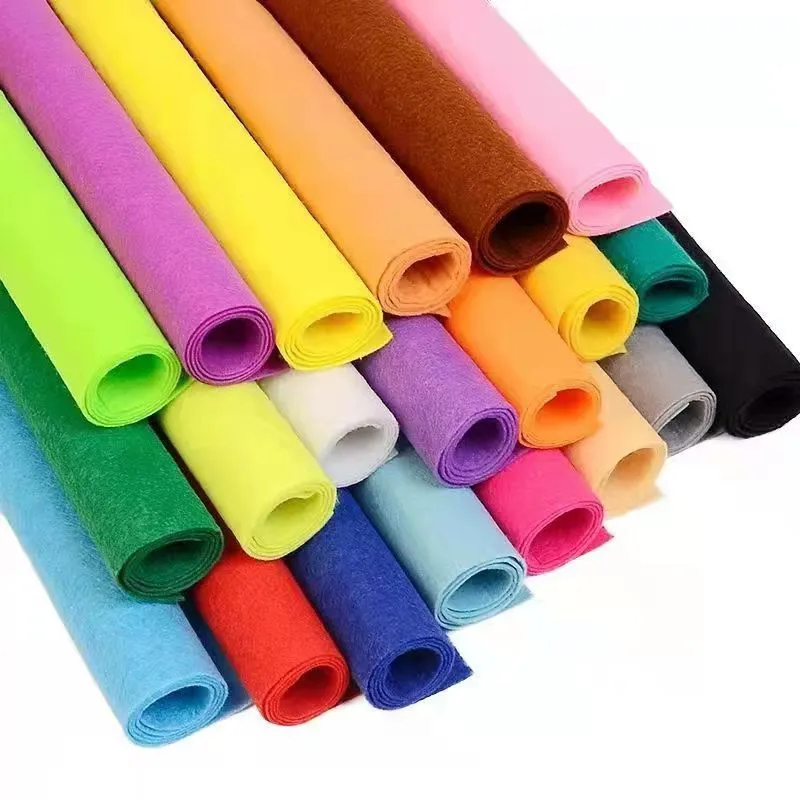
Felt balls, produced in bulk quantities, represent a versatile material utilized across a diverse range of industrial and consumer applications. These spheres are typically manufactured from compressed natural or synthetic fibers, predominantly wool, but increasingly utilizing acrylic, polyester, and rayon blends. Their position within the supply chain varies; they can function as finished components – as in decorative applications – or as intermediate products undergoing further processing. Core performance characteristics center around their cushioning capabilities, filtration properties, abrasive qualities, and aesthetic appeal. The demand for felt balls is driven by their cost-effectiveness, inherent flexibility in shape and size, and increasingly, a focus on sustainable and biodegradable material options. This guide will provide an in-depth technical analysis of felt ball bulk production, material science, performance parameters, failure modes, and relevant industry standards. A key pain point in the industry is consistent quality control, specifically ensuring uniform density, diameter, and color across large production runs, impacting downstream processes like automated filling and accurate weight measurements.
Material Science & Manufacturing
The primary raw material for felt balls is typically wool, possessing a complex fiber structure composed primarily of keratin protein. Wool fibers exhibit natural crimp due to their scaled surface, facilitating interlocking during the felting process. Synthetic fibers like acrylic offer improved resistance to abrasion and moisture but lack the inherent biodegradability of wool. Polyester provides strength and dimensional stability, while rayon (viscose) offers a silk-like texture and drape. Manufacturing primarily relies on the needle felting process. This involves repeatedly punching barbed needles through a fiber web, causing mechanical interlocking of the fibers. The density and depth of needle penetration directly correlate to the final density and firmness of the felt ball. Critical parameters include needle gauge (finer gauges produce denser felt), needle density (needles per square centimeter), punching speed, and material feed rate. Alternative manufacturing processes include wet felting (using hot water, soap, and agitation to encourage fiber entanglement) and dry felting (using friction and specialized tools). Chemical compatibility is a consideration; harsh detergents or solvents can damage wool fibers, altering their structure and reducing their performance characteristics. Colorfastness is achieved through the use of dyes that exhibit strong affinity for the fiber type; however, dye migration can occur under high humidity or temperature, requiring careful dye selection and post-treatment processes.
Performance & Engineering
The performance of felt balls is highly dependent on their density and fiber composition. Density directly influences compression resistance and impact absorption. Force analysis reveals that felt balls exhibit non-linear stress-strain behavior due to the complex fiber network. This means the force required to compress the ball increases disproportionately as compression increases. Environmental resistance is a significant factor. Wool felt is susceptible to degradation from prolonged exposure to UV radiation, leading to fiber embrittlement and color fading. Moisture absorption can also affect dimensional stability and weight. Synthetic felt balls exhibit superior resistance to UV degradation and moisture but may exhibit lower breathability. Compliance requirements vary based on intended application. For example, felt balls used in children’s toys must meet stringent flammability standards (e.g., ASTM F963) and heavy metal content limits (e.g., CPSIA). Filtration applications require evaluation of particle retention efficiency, pressure drop, and chemical resistance. The functional implementation of felt balls often involves their use as fillers, packing materials, or polishing agents. In these applications, particle size distribution and abrasion resistance are critical performance parameters. A common engineering challenge is minimizing dust generation during handling and use, requiring surface treatment or fiber encapsulation.
Technical Specifications
| Diameter (mm) | Density (g/cm³) | Tensile Strength (MPa) | Moisture Absorption (%) |
|---|---|---|---|
| 10 | 0.35 - 0.45 | 0.5 - 1.2 | 15 - 25 |
| 15 | 0.40 - 0.50 | 0.7 - 1.5 | 12 - 20 |
| 20 | 0.45 - 0.55 | 1.0 - 2.0 | 10 - 18 |
| 25 | 0.50 - 0.60 | 1.2 - 2.5 | 8 - 15 |
| 30 | 0.55 - 0.65 | 1.5 - 3.0 | 6 - 12 |
| 35 | 0.60 - 0.70 | 2.0 - 3.5 | 5 - 10 |
Failure Mode & Maintenance
Felt balls are susceptible to several failure modes depending on their composition and application. Fatigue cracking can occur under cyclic loading, particularly in wool felt balls, due to fiber breakage and weakening. Delamination, or the separation of layers within the ball, can result from insufficient needle felting or exposure to aggressive solvents. Degradation of the fibers, especially wool, occurs due to UV exposure, leading to reduced tensile strength and increased brittleness. Oxidation can also contribute to fiber weakening, particularly in synthetic materials. Abrasion leads to fiber loss and surface wear, affecting the ball’s shape and performance. Maintenance largely focuses on preventative measures. Regular inspection for signs of wear, cracking, or delamination is crucial. Storage in a cool, dry, and dark environment minimizes UV degradation and moisture absorption. Avoid exposure to harsh chemicals or solvents. For heavily soiled felt balls, gentle cleaning with mild detergent and lukewarm water is recommended, followed by thorough drying. If significant delamination or cracking occurs, replacement is typically the most cost-effective solution. For filtration applications, regular replacement based on differential pressure readings is essential to maintain optimal performance.
Industry FAQ
Q: What is the impact of fiber blend on the lifespan of felt balls used in polishing applications?
A: The lifespan of felt balls in polishing applications is significantly impacted by the fiber blend. 100% wool felt offers excellent polishing properties but exhibits relatively low abrasion resistance and faster wear. Incorporating synthetic fibers like nylon or polyester improves abrasion resistance, extending the lifespan of the ball, but may slightly reduce polishing effectiveness. A blend of 60% wool and 40% synthetic fiber often provides a good balance between polishing performance and durability.
Q: How does needle density affect the filtration efficiency of felt balls used in air filtration systems?
A: Higher needle density during manufacturing results in a more compact and tightly interwoven felt structure. This reduces the pore size within the ball, increasing its ability to capture smaller particulate matter and improving filtration efficiency. However, excessively high needle density can also increase pressure drop across the filter, potentially reducing airflow. Optimization of needle density is crucial to balance filtration efficiency and airflow rate.
Q: What testing methods are used to ensure colorfastness of dyed felt balls?
A: Colorfastness is typically assessed using standardized tests such as ISO 105-B02 (colorfastness to washing) and ISO 105-B04 (colorfastness to rubbing). These tests involve exposing the dyed felt balls to specific conditions (e.g., washing with a standardized detergent, rubbing with a white cloth) and then measuring the amount of dye that has transferred to the test medium. Colorfastness ratings are based on the degree of dye transfer.
Q: What are the limitations of using wet felting for large-scale production of felt balls?
A: Wet felting, while producing a very dense and durable felt, is generally less suitable for large-scale production due to its labor-intensive nature and longer processing times. Controlling consistency in shape and size is also more challenging with wet felting compared to needle felting. The water consumption and wastewater treatment associated with wet felting also present environmental concerns.
Q: How does the coefficient of restitution differ between wool and acrylic felt balls, and what are the implications for their use in impact absorption applications?
A: Acrylic felt balls generally have a higher coefficient of restitution than wool felt balls, meaning they rebound more readily after impact. This makes acrylic balls less effective at dissipating energy in impact absorption applications. Wool felt balls, with their lower coefficient of restitution, absorb more energy upon impact, providing superior cushioning and protection. The choice of material depends on the specific requirements of the application – whether energy absorption or rebound resilience is prioritized.
Conclusion
Felt balls bulk represent a remarkably versatile material platform, with performance characteristics directly tied to fiber composition, manufacturing processes, and intended application. Achieving consistent quality – particularly in terms of density, diameter, and colorfastness – remains a critical industry challenge. A comprehensive understanding of material science principles, including fiber properties and chemical compatibility, is essential for optimizing felt ball performance and durability.
Future development will likely focus on incorporating sustainable and biodegradable fiber alternatives, improving manufacturing efficiency through automation, and developing specialized surface treatments to enhance specific performance attributes like abrasion resistance and moisture repellency. Adherence to relevant international standards (outlined below) is paramount to ensure product safety, performance, and compliance with regulatory requirements.


 English
  Afrikaans
  Albanian
  Amharic
  Arabic
  Armenian
  Azerbaijani
  Basque
  Belarusian
  Bengali
  Bosnian
  Bulgarian
  Catalan
  Cebuano
  Corsican
  Croatian
  Czech
Czech  Danish
  Dutch
Dutch  Esperanto
  Estonian
  Finnish
  French
  Frisian
  Galician
  Georgian
  German
  Greek
Greek  Gujarati
  Haitian Creole
  Hausa
Hausa  Hebrew
  Hindi
Hindi  Miao
Miao  Hungarian
  Icelandic
  Igbo
Igbo  Indonesian
  Irish
Irish  Italian
  Japanese
  Javanese
  Kazakh
  Khmer
Khmer  Rwandese
  Korean
  Kurdish
  Kyrgyz
  Lao
Lao  Latin
Latin  Latvian
  Lithuanian
  Luxembourgish
  Macedonian
  Malgashi
  Malay
Malay  Malayalam
  Maltese
  Maori
Maori  Marathi
  Mongolian
  Myanmar
  Nepali
  Norwegian
  Norwegian
  Occitan
  Pashto
  Persian
  Polish
  Portuguese
  Romanian
  Russian
  Samoan
  Scottish Gaelic
  Serbian
  Sesotho
  Shona
Shona  Sindhi
  Sinhala
  Slovak
  Slovenian
  Somali
  Spanish
  Sundanese
  Swahili
  Swedish
  Tajik
Tajik  Tamil
Tamil  Tatar
Tatar  Telugu
  Thai
Thai  Turkish
  Turkmen
  Ukrainian
  Urdu
Urdu  Uighur
  Uzbek
Uzbek  Vietnamese
  Welsh
Welsh  Bantu
Bantu  Yiddish
  Yoruba
  Zulu
Zulu