
Apr . 01, 2024 17:55 Back to list
felt party bags Performance Analysis
Introduction
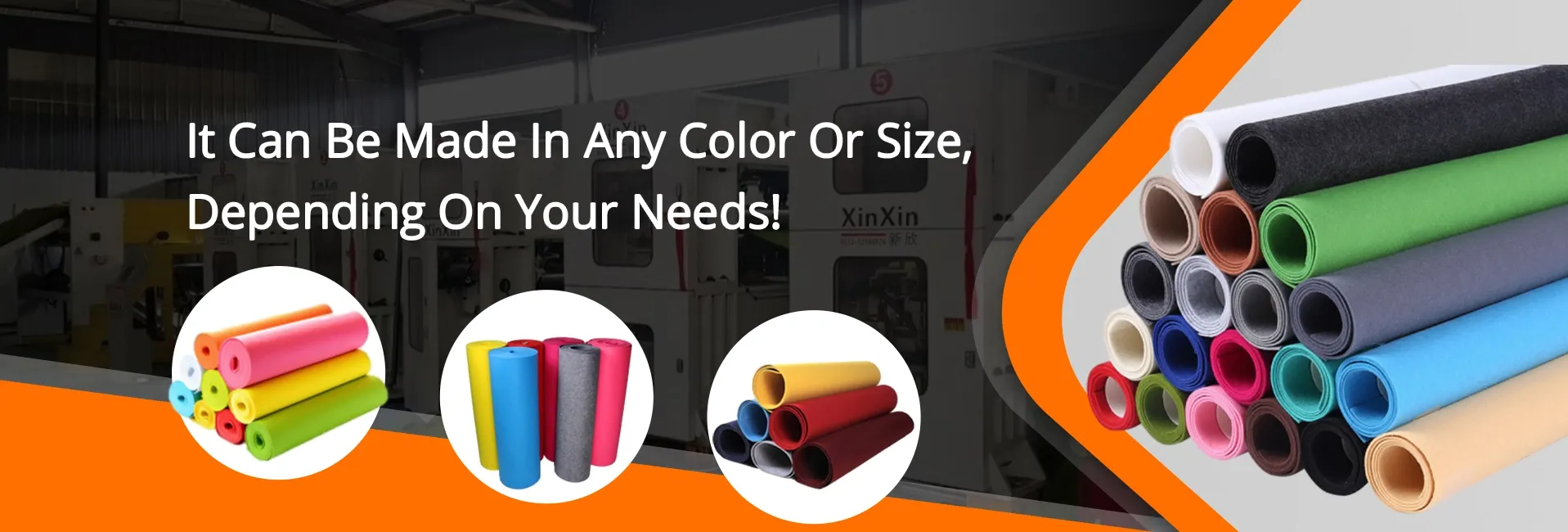
Felt party bags, commonly utilized in event planning and retail gift packaging, represent a subset of non-woven textile products experiencing consistent demand. Technically, these bags are constructed primarily from matted fibers of wool, rayon, acrylic, or polypropylene, processed through mechanical, chemical, or thermal bonding – omitting traditional weaving or knitting processes. Their position within the supply chain spans raw material sourcing (polymer production or animal fiber harvesting), non-woven fabric manufacturing, cutting and sewing/die-cutting operations, and finally, customization (printing, embellishment). Core performance characteristics center around tensile strength, dimensional stability, colorfastness, and the ability to withstand repeated handling. Addressing current market demands requires understanding the trade-offs between cost, durability, and aesthetic appeal, particularly concerning sustainable material sourcing and biodegradable alternatives.
Material Science & Manufacturing
The core material determining felt party bag properties is the fiber composition. Wool felt, historically dominant, boasts excellent resilience and natural crimp, contributing to its dimensional stability and luxurious feel. However, its cost and susceptibility to moth damage limit its broad application. Rayon, a regenerated cellulose fiber, offers a silk-like drape and readily accepts dyes, but exhibits lower wet strength and can shrink. Acrylic felt provides good color retention and is more affordable than wool, yet displays lower abrasion resistance and a tendency to pill. Polypropylene felt, the most prevalent contemporary choice, is cost-effective, lightweight, and resistant to moisture and many chemicals. Manufacturing processes vary based on fiber type. Wool and rayon felts are created through wet felting (compaction via moisture, heat, and agitation) or needle felting (interlocking fibers with barbed needles). Acrylic and polypropylene felts are predominantly manufactured using thermal bonding (melting fibers together) or chemical bonding (using adhesives). Critical parameters during production include fiber denier (thickness), web weight (grams per square meter), bonding temperature/pressure (thermal bonding), and adhesive concentration (chemical bonding). These parameters dictate the final fabric density, tensile strength, and permeability.
Performance & Engineering
The primary functional requirement of a felt party bag is to contain and transport a defined mass of goods without failure. This necessitates a thorough understanding of force analysis. Tensile strength, measured in Newtons (N) or pounds-force (lbf), dictates the bag’s resistance to tearing under load. Burst strength, assessed using methods like the Mullen burst test, quantifies the bag’s resistance to rupture when subjected to internal pressure. Seam strength, crucial at handle attachment points, depends on the stitch type, thread tension, and fabric density. Environmental resistance is also paramount. Exposure to UV radiation causes polymer degradation in polypropylene and acrylic felts, leading to embrittlement and discoloration. Humidity affects dimensional stability, especially in rayon. Chemical compatibility becomes a concern if the bags are intended to hold products with corrosive or reactive properties. Compliance requirements often include flammability testing (ASTM D6413), lead content limits (CPSIA), and restrictions on azo dyes (EN 14362-1). Handle design must consider ergonomic factors and load distribution to prevent discomfort or breakage. Load-bearing capacity is engineered by careful selection of fabric weight, seam construction, and handle reinforcement.
Technical Specifications
| Material Composition | Fabric Weight (g/m²) | Tensile Strength (N/5cm) | Burst Strength (kPa) |
|---|---|---|---|
| 100% Polypropylene | 100 | 80 | 200 |
| 100% Acrylic | 120 | 100 | 250 |
| 70% Wool / 30% Rayon | 200 | 250 | 400 |
| 100% Recycled PET | 150 | 120 | 300 |
| 80% Polypropylene / 20% Cotton | 110 | 90 | 220 |
| 90% Wool / 10% Silk | 250 | 300 | 450 |
Failure Mode & Maintenance
Felt party bags are susceptible to several failure modes. Fatigue cracking at handle attachment points is common, particularly under cyclic loading. Delamination, the separation of fabric layers, can occur with low-quality bonding or excessive stress. Degradation due to UV exposure manifests as discoloration and embrittlement, reducing tensile strength. Abrasion, especially at corners and seams, leads to thinning and eventual tearing. Chemical attack from contained substances can cause staining, weakening, or dissolution of the fabric. Static cling, particularly with polypropylene, can attract dust and debris, affecting aesthetics. Maintenance is largely preventative. Avoid overloading the bags beyond their specified capacity. Store in a cool, dry place away from direct sunlight. Spot clean with mild detergent and water – avoid harsh chemicals or abrasive cleaners. Inspect seams and handles regularly for signs of wear or damage. For wool felt bags, periodic brushing can help restore the pile and maintain appearance. Replacement is recommended when significant wear, tearing, or delamination is observed. Repairing torn seams with appropriate thread and needle can extend the bag’s lifespan in some cases.
Industry FAQ
Q: What is the difference between needle-felted and thermal-bonded felt, and how does it impact bag durability?
A: Needle-felted felt interlocks fibers mechanically, creating a more robust and dimensionally stable structure, generally resulting in higher tensile and burst strength. Thermal-bonded felt relies on melting fibers together, which can be less durable and more prone to delamination, especially at higher temperatures. For party bags requiring high load-bearing capacity and repeated use, needle-felted materials are preferable, despite potentially higher production costs.
Q: How does the choice of dye affect the colorfastness of felt party bags?
A: Dye selection significantly impacts colorfastness. Azo dyes, while inexpensive, are known to fade and potentially release harmful chemicals. Reactive dyes and pigment dyes offer superior color retention and are less likely to bleed or discolor with washing or UV exposure. Compliance with EN 14362-1 ensures that azo dye content is below regulated limits.
Q: What are the considerations for using felt party bags for food packaging?
A: When using felt party bags for food contact, ensure the material is food-grade certified (e.g., FDA compliant or equivalent). The bag must be non-toxic, non-reactive, and not impart any undesirable flavors or odors to the food. Consider barrier properties, as felt generally lacks significant moisture or gas barrier protection. Liners may be necessary for perishable goods.
Q: How does recycled content impact the performance characteristics of polypropylene felt?
A: Recycled polypropylene felt can exhibit slightly lower tensile strength and burst strength compared to virgin polypropylene felt due to polymer chain degradation during reprocessing. However, advancements in recycling technology are minimizing this performance gap. The use of recycled content contributes to sustainability goals without significantly compromising functionality when sourced from reputable suppliers.
Q: What is the recommended gauge (thickness) of felt for a party bag intended to hold items up to 1kg?
A: For a 1kg load, a polypropylene felt with a gauge of at least 1.5mm (approximately equivalent to 150 g/m²) is recommended. A higher gauge (e.g., 2.0mm / 200 g/m²) provides an added safety margin and improved durability. The specific recommendation depends on the bag’s dimensions and handle construction.
Conclusion
Felt party bags, while seemingly simple, represent a complex interplay of material science, manufacturing processes, and performance engineering. The selection of fiber composition, bonding technique, and fabric weight directly influences the bag’s strength, durability, and suitability for intended applications. Understanding these parameters is crucial for ensuring product quality and meeting customer expectations.
Future development in this sector will likely focus on bio-based and biodegradable felt materials to address growing sustainability concerns. Improved recycling technologies for polypropylene and acrylic felts will also be key. Optimizing bag design and reinforcement techniques will enhance load-bearing capacity and extend product lifespan, reducing waste and promoting circular economy principles.


 English
  Afrikaans
  Albanian
  Amharic
  Arabic
  Armenian
  Azerbaijani
  Basque
  Belarusian
  Bengali
  Bosnian
  Bulgarian
  Catalan
  Cebuano
  Corsican
  Croatian
  Czech
Czech  Danish
  Dutch
Dutch  Esperanto
  Estonian
  Finnish
  French
  Frisian
  Galician
  Georgian
  German
  Greek
Greek  Gujarati
  Haitian Creole
  Hausa
Hausa  Hebrew
  Hindi
Hindi  Miao
Miao  Hungarian
  Icelandic
  Igbo
Igbo  Indonesian
  Irish
Irish  Italian
  Japanese
  Javanese
  Kazakh
  Khmer
Khmer  Rwandese
  Korean
  Kurdish
  Kyrgyz
  Lao
Lao  Latin
Latin  Latvian
  Lithuanian
  Luxembourgish
  Macedonian
  Malgashi
  Malay
Malay  Malayalam
  Maltese
  Maori
Maori  Marathi
  Mongolian
  Myanmar
  Nepali
  Norwegian
  Norwegian
  Occitan
  Pashto
  Persian
  Polish
  Portuguese
  Romanian
  Russian
  Samoan
  Scottish Gaelic
  Serbian
  Sesotho
  Shona
Shona  Sindhi
  Sinhala
  Slovak
  Slovenian
  Somali
  Spanish
  Sundanese
  Swahili
  Swedish
  Tajik
Tajik  Tamil
Tamil  Tatar
Tatar  Telugu
  Thai
Thai  Turkish
  Turkmen
  Ukrainian
  Urdu
Urdu  Uighur
  Uzbek
Uzbek  Vietnamese
  Welsh
Welsh  Bantu
Bantu  Yiddish
  Yoruba
  Zulu
Zulu