
Apr . 01, 2024 17:55 Back to list
felt shopping bag Performance Analysis
Introduction
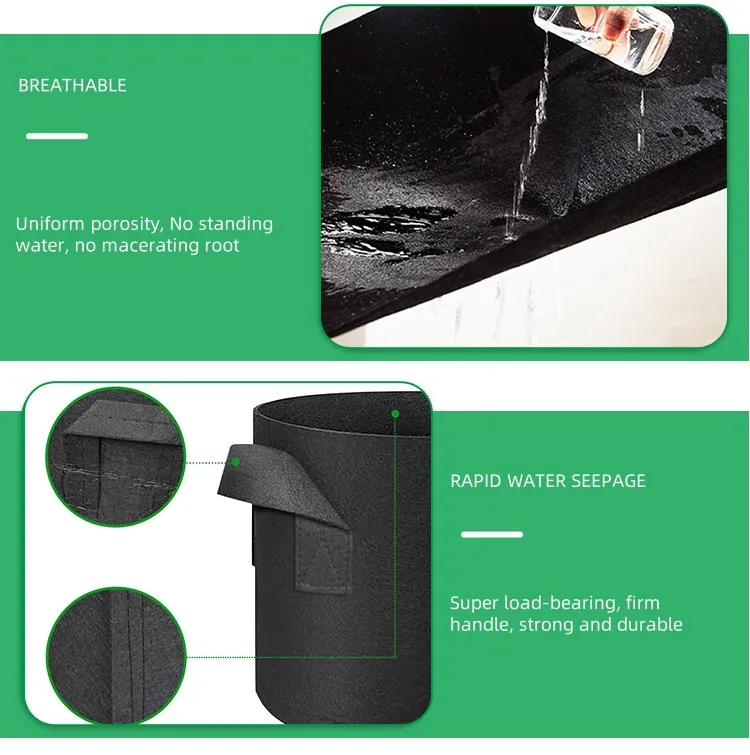
Felt shopping bags represent a significant segment within the reusable shopping bag market, increasingly favored for their sustainable profile, cost-effectiveness, and versatility. Constructed primarily from non-woven textile fabrics, typically derived from polyester, polypropylene, or wool fibers, they offer an alternative to traditional plastic carrier bags. Their position in the supply chain extends from polymer production and fiber manufacturing to fabric formation, cutting, sewing, and finishing. Core performance characteristics include tensile strength, tear resistance, dimensional stability, and printability, all crucial for durability and branding. The industry currently faces pressure to optimize material sourcing for genuine sustainability, improve manufacturing process efficiency to reduce costs, and enhance bag designs to meet diverse consumer demands and carrying capacities. The rising cost of raw materials and increasing regulatory scrutiny surrounding single-use plastics are key drivers for increased adoption of felt shopping bags.
Material Science & Manufacturing
The predominant raw materials used in felt shopping bag production are synthetic polymers, specifically polypropylene (PP) and polyester (PET). PP offers good tensile strength and chemical resistance at a lower cost, while PET provides superior durability and printability. Wool felt, though less common due to its higher cost, offers exceptional natural properties like biodegradability and thermal insulation. Manufacturing begins with polymer production, followed by fiber extrusion or spinning. These fibers are then subjected to a needle-punching or thermal bonding process – the core of non-woven fabric creation. Needle-punching interlocks the fibers mechanically, whereas thermal bonding utilizes heat to partially melt and fuse the fibers. Key parameters include needle density (for needle-punched felt), bonding temperature and pressure (for thermal bonding), and fiber denier (fiber thickness). The fabric is then cut to the desired shape using die-cutting or laser cutting techniques. Seams are typically stitched using lockstitch or overlock machines. Parameter control during sewing is vital to ensure seam strength and prevent unraveling. Dyeing and printing are applied as finishing steps. Colorfastness, washability, and adherence of the print are critical quality parameters. Quality control at each stage, including fiber testing, fabric weight verification, and seam strength testing, is essential to ensure consistent product quality. The influence of fiber orientation on fabric anisotropy (directional properties) is a crucial consideration in design and manufacturing.
Performance & Engineering
The performance of a felt shopping bag is primarily determined by its load-bearing capacity, tear resistance, and dimensional stability under stress. Force analysis reveals that the bag's structure distributes weight across the seams and fabric, making seam strength a critical failure point. Tensile strength, measured in Newtons per square meter (N/m²), dictates the maximum force the fabric can withstand before breaking. Tear resistance, assessed through methods like the Elmendorf test (N/m), indicates the force required to propagate a tear. Environmental resistance is also crucial. Prolonged UV exposure can lead to polymer degradation, reducing strength and causing color fading. Temperature variations can affect dimensional stability, particularly in PP-based felts. Compliance requirements vary by region. In Europe, EN 13432 mandates compostability standards for packaging, influencing the selection of biodegradable polymers. REACH regulations restrict the use of certain chemical substances in manufacturing. The bag’s structural integrity is also impacted by handle attachment methods. Stitching, ultrasonic welding, and adhesive bonding each present different strength characteristics and potential failure modes. Handle load capacity must be calculated based on expected usage scenarios. Finite Element Analysis (FEA) is increasingly used to simulate stress distribution and optimize bag designs for enhanced performance and durability.
Technical Specifications
| Parameter | Polypropylene (PP) Felt | Polyester (PET) Felt | Wool Felt |
|---|---|---|---|
| Tensile Strength (N/m²) | 800 – 1500 | 1200 – 2500 | 2000 – 4000 |
| Tear Resistance (N/m) | 50 – 100 | 80 – 150 | 150 – 300 |
| Basis Weight (g/m²) | 100 – 300 | 120 – 350 | 150 – 500 |
| Thickness (mm) | 1.0 – 3.0 | 1.5 – 4.0 | 2.0 – 5.0 |
| Water Resistance | Low | Moderate | Low (unless treated) |
| UV Resistance | Poor | Moderate | Moderate |
Failure Mode & Maintenance
Common failure modes in felt shopping bags include seam rupture, fabric tearing, handle detachment, and material degradation. Seam rupture typically occurs due to excessive load or poorly executed stitching. Fabric tearing often originates from pre-existing defects or stress concentrations around cut edges. Handle detachment results from inadequate bonding or stitching strength. Material degradation, particularly in PP felts, is caused by UV exposure, leading to embrittlement and reduced strength. Oxidation can also occur, causing discoloration and weakening of the fibers. Maintenance is limited due to the non-woven nature of the material. Regular inspection for seam damage and tears is recommended. Cleaning should be performed with mild detergents and cold water. Avoid excessive heat or harsh chemicals, as these can accelerate degradation. For minor tears, fabric adhesive can provide a temporary repair. Preventative measures include avoiding overloading the bag, storing it in a cool, dry place away from direct sunlight, and avoiding abrasive surfaces. Implementing a robust quality control program during manufacturing, focusing on seam integrity and material consistency, is crucial for minimizing failure rates. Fatigue cracking can develop over time with repeated use and stress, especially around handle attachment points.
Industry FAQ
Q: What is the difference between needle-punched and thermal-bonded felt, and how does it impact bag durability?
A: Needle-punched felt relies on mechanical interlocking of fibers, offering lower initial strength but better dimensional stability and breathability. Thermal-bonded felt achieves strength through fiber fusion, resulting in higher tensile strength and tear resistance but potentially reduced breathability and a tendency to delaminate under high stress if bonding parameters aren't optimized. For demanding applications, thermal bonding is generally preferred, but a high-quality needle-punched felt can suffice for lighter loads.
Q: How does the denier of the fibers affect the bag’s performance?
A: Fiber denier (thickness) directly influences the fabric’s strength and durability. Lower denier fibers result in a softer, more pliable fabric but with reduced strength. Higher denier fibers create a more robust fabric with increased tensile strength and tear resistance. Choosing the appropriate denier depends on the intended application and required load-bearing capacity.
Q: What are the implications of using recycled PET versus virgin PET in felt production?
A: Recycled PET (rPET) offers a more sustainable alternative to virgin PET, reducing landfill waste and lowering the carbon footprint. However, rPET fibers can be shorter and weaker than virgin PET fibers, potentially reducing fabric strength. Careful processing and blending with virgin fibers can mitigate these drawbacks. rPET also requires stringent quality control to ensure consistency and avoid contamination.
Q: How can UV degradation be minimized in polypropylene felt bags?
A: UV degradation can be mitigated through the addition of UV stabilizers during the polymer extrusion process. These stabilizers absorb UV radiation and prevent polymer chain scission. Applying a UV-resistant coating can also provide additional protection. Storing bags out of direct sunlight when not in use will further prolong their lifespan.
Q: What are the key considerations when selecting a printing method for felt shopping bags?
A: The choice of printing method depends on the design complexity, required durability, and budget. Screen printing is cost-effective for simple designs with limited colors. Digital printing allows for intricate designs and photographic images but may be less durable. Dye-sublimation printing provides excellent colorfastness and image quality but requires polyester-based felt. Ink compatibility with the felt material is crucial to prevent bleeding and fading.
Conclusion
Felt shopping bags offer a viable and increasingly popular alternative to traditional plastic bags, driven by sustainability concerns and evolving consumer preferences. Understanding the material science, manufacturing processes, and performance characteristics of these bags is crucial for selecting the appropriate materials and designs for specific applications. Key factors influencing performance include fiber type, fabric construction, seam strength, and environmental resistance.
Future advancements will likely focus on developing biodegradable felt materials, optimizing manufacturing processes for improved efficiency and reduced environmental impact, and incorporating smart technologies for tracking and authentication. Continued research into UV stabilization and enhancing tear resistance will also be essential for improving the long-term durability and usability of felt shopping bags. Adherence to international standards and rigorous quality control are paramount for ensuring consistent product quality and meeting evolving regulatory requirements.


 English
  Afrikaans
  Albanian
  Amharic
  Arabic
  Armenian
  Azerbaijani
  Basque
  Belarusian
  Bengali
  Bosnian
  Bulgarian
  Catalan
  Cebuano
  Corsican
  Croatian
  Czech
Czech  Danish
  Dutch
Dutch  Esperanto
  Estonian
  Finnish
  French
  Frisian
  Galician
  Georgian
  German
  Greek
Greek  Gujarati
  Haitian Creole
  Hausa
Hausa  Hebrew
  Hindi
Hindi  Miao
Miao  Hungarian
  Icelandic
  Igbo
Igbo  Indonesian
  Irish
Irish  Italian
  Japanese
  Javanese
  Kazakh
  Khmer
Khmer  Rwandese
  Korean
  Kurdish
  Kyrgyz
  Lao
Lao  Latin
Latin  Latvian
  Lithuanian
  Luxembourgish
  Macedonian
  Malgashi
  Malay
Malay  Malayalam
  Maltese
  Maori
Maori  Marathi
  Mongolian
  Myanmar
  Nepali
  Norwegian
  Norwegian
  Occitan
  Pashto
  Persian
  Polish
  Portuguese
  Romanian
  Russian
  Samoan
  Scottish Gaelic
  Serbian
  Sesotho
  Shona
Shona  Sindhi
  Sinhala
  Slovak
  Slovenian
  Somali
  Spanish
  Sundanese
  Swahili
  Swedish
  Tajik
Tajik  Tamil
Tamil  Tatar
Tatar  Telugu
  Thai
Thai  Turkish
  Turkmen
  Ukrainian
  Urdu
Urdu  Uighur
  Uzbek
Uzbek  Vietnamese
  Welsh
Welsh  Bantu
Bantu  Yiddish
  Yoruba
  Zulu
Zulu