
Apr . 01, 2024 17:55 Back to list
felt snowflakes Performance Analysis
Introduction
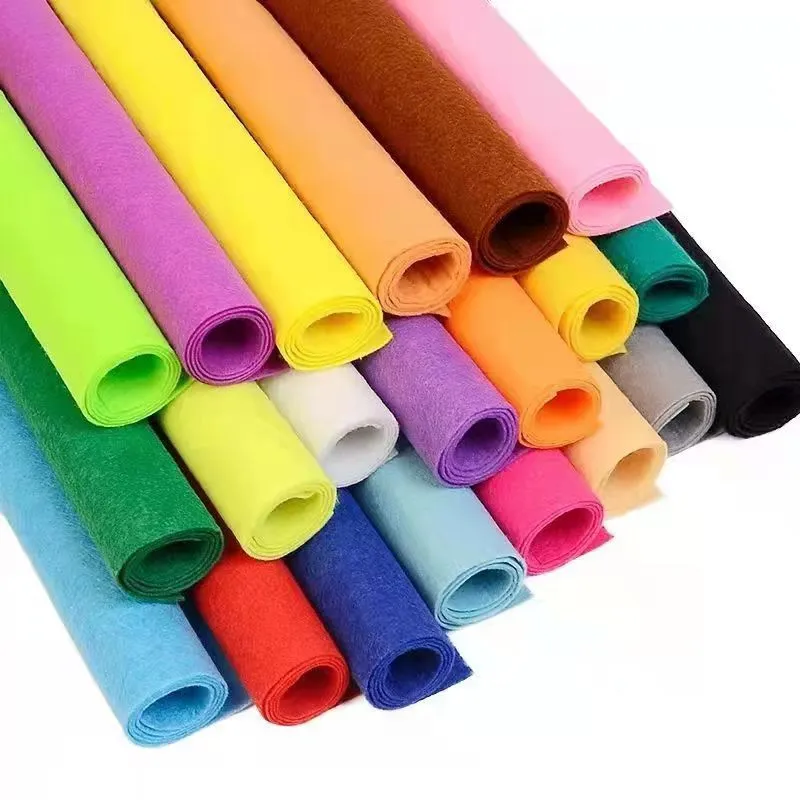
Felt snowflakes represent a decorative artifact primarily utilized for seasonal embellishment, notably during the winter holiday period. Within the broader decorative textiles industry, they occupy a niche focused on handcrafted and aesthetically pleasing ornamentation. Their technical position lies in the intersection of non-woven fabric production, dye chemistry, and structural design. Core performance characteristics center around visual appeal, dimensional stability, resistance to common environmental factors (humidity, minor abrasion), and manufacturing cost. Unlike more robust decorative elements, felt snowflakes prioritize artistic impression over long-term durability; however, understanding their material composition and manufacturing processes is crucial for optimizing these performance parameters and addressing potential degradation issues. The core pain point for manufacturers lies in balancing aesthetic demand with material cost, ensuring consistent color fidelity, and mitigating potential fiber shedding which impacts both user experience and regulatory compliance regarding particulate matter.
Material Science & Manufacturing
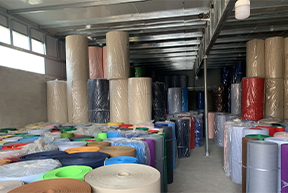
The primary raw material for felt snowflakes is typically wool, acrylic, or a blend of both. Wool, a protein fiber derived from sheep, provides excellent warmth retention, natural crimp, and a softer tactile experience. Its chemical composition is primarily keratin (containing sulfur), offering inherent flame resistance, though susceptible to moth damage. Acrylic, a synthetic polymer (polyacrylonitrile), offers superior resistance to moths, mildew, and sunlight, and is generally less expensive than wool. However, it possesses lower moisture absorption and a different hand feel. The manufacturing process begins with fiber preparation, involving carding to align the fibers into a web. This web then undergoes needle felting – a mechanical interlocking process where barbed needles repeatedly penetrate the fibers, causing them to bind together. Density control is paramount during needle felting, directly impacting the snowflake's structure and dimensional stability. Dyeing can occur pre- or post-felting, utilizing acid dyes for wool and disperse dyes for acrylic. Post-felting dyeing provides greater color control but can impact fiber integrity. Cutting the felt into snowflake shapes is typically achieved through die-cutting or laser cutting. Laser cutting offers greater precision and intricate designs but can cause slight edge charring if parameters aren’t optimized. Key parameter control focuses on needle density (needles/cm²), needle penetration depth, web weight (grams/m²), and dye bath temperature/pH.
Performance & Engineering
The structural integrity of a felt snowflake relies primarily on the mechanical interlocking of the fibers achieved during needle felting. Force analysis reveals that tensile strength is anisotropic, varying with the direction of applied force. Resistance to tearing is lower than tensile strength. Environmental resistance is a critical performance factor. Exposure to humidity can cause wool felt to swell, potentially distorting the snowflake shape. Acrylic felt exhibits less swelling but is susceptible to UV degradation over prolonged exposure to sunlight, leading to color fading and fiber embrittlement. Compliance requirements are generally focused on flammability (particularly for decorative items in public spaces) and the presence of restricted substances (e.g., azo dyes, formaldehyde) as dictated by regional regulations like REACH (Europe) and CPSIA (US). Functional implementation – the snowflake's ability to maintain its shape and visual appeal – is directly influenced by fiber density, dye fastness, and the quality of the cutting process. To minimize deformation under handling, a higher density felt is preferable, sacrificing some flexibility. The geometry of the snowflake design also influences performance; intricate designs with fine points are more prone to damage than simpler, more robust designs. A finite element analysis (FEA) could model stress distribution within the felt structure under different loading conditions.
Technical Specifications
| Parameter | Wool Felt | Acrylic Felt | Wool/Acrylic Blend (50/50) |
|---|---|---|---|
| Density (g/m²) | 300-600 | 200-400 | 350-500 |
| Tensile Strength (MPa) | 0.5-1.2 (Longitudinal) | 0.3-0.8 (Longitudinal) | 0.4-1.0 (Longitudinal) |
| Moisture Absorption (%) | 14-17 | <1 | 7-10 |
| UV Resistance (Rating 1-5, 5=Excellent) | 2 | 3 | 2.5 |
| Flammability (Self-Extinguishing) | No | Yes (typically with flame retardant additives) | May require flame retardant |
| Color Fastness to Washing (Rating 1-5, 5=Excellent) | 3-4 (depending on dye) | 4-5 | 3-4 |
Failure Mode & Maintenance
The most common failure modes for felt snowflakes are physical damage (tearing, deformation), color fading, and fiber shedding. Tearing typically occurs at points of high stress concentration, such as intricate design features or areas subjected to repeated handling. Deformation can result from prolonged exposure to humidity or compression. Color fading is primarily caused by UV exposure, particularly in acrylic felt lacking UV stabilizers. Fiber shedding, while often aesthetically minor, can be a concern for indoor air quality and may violate certain regulatory standards. Fatigue cracking isn’t a significant issue due to the material’s inherent flexibility, but repeated bending along the same line can weaken the fibers. Degradation of wool felt can also occur due to enzymatic attack by microorganisms in humid environments, leading to fiber weakening and odor development. Maintenance primarily consists of gentle brushing to remove dust and debris. Avoid washing felt snowflakes, as this can cause significant deformation and dye bleeding. If cleaning is necessary, spot cleaning with a mild detergent and cold water is recommended, followed by air drying away from direct sunlight. Storage in a dry, dark environment will minimize UV degradation and prevent moisture absorption. To mitigate shedding, consider applying a fabric sealant specifically designed for felt.
Industry FAQ
Q: What is the impact of using different needle types during the needle felting process on the final product's structural integrity?
A: The type of needle significantly influences the interlocking of fibers. Needles with different barb arrangements (e.g., cross, star, triangular) create varying fiber entanglement patterns. Cross needles offer a more isotropic (uniform in all directions) felt structure, enhancing dimensional stability and reducing tearing. Star needles provide faster felting but can result in a more directionally oriented felt, potentially weaker in certain axes. The gauge (thickness) of the needle also matters; finer gauge needles create a smoother surface finish but require more passes for adequate felting, while coarser needles felt more quickly but can damage delicate fibers.
Q: How does the choice of dye affect the long-term colorfastness and potential environmental impact of the felt snowflake?
A: The dye class dictates colorfastness and environmental considerations. Acid dyes (commonly used for wool) offer vibrant colors but can have lower lightfastness and may contain heavy metals. Reactive dyes provide excellent colorfastness but require significant water usage during application. Disperse dyes (used for acrylic) generally exhibit good lightfastness but can release volatile organic compounds (VOCs) during processing. Choosing dyes certified by Oeko-Tex Standard 100 ensures they meet stringent criteria for harmful substances, minimizing environmental impact and health risks.
Q: What are the primary methods for assessing the flammability of felt snowflakes, and what standards are typically applied?
A: Flammability is typically assessed using vertical flame tests (e.g., ASTM D654, UL 94) which measure the flame spread rate, afterglow time, and whether the material self-extinguishes. Horizontal flame tests (e.g., ASTM D5132) evaluate the rate of flame spread across a horizontal surface. The specific standards applied depend on the intended end-use of the snowflake and the regulations of the target market. For decorative items in public spaces, compliance with building codes and fire safety standards is crucial.
Q: Considering cost optimization, what is the minimum acceptable wool/acrylic blend ratio to maintain reasonable durability and aesthetic qualities?
A: A 30/70 wool/acrylic blend represents a reasonable compromise between cost, durability, and aesthetics. While 50/50 offers a better balance, reducing wool content to 30% significantly lowers material costs without drastically compromising the snowflake’s structural integrity. The acrylic content provides increased resistance to moth damage and UV degradation, while the wool contributes to a softer hand feel and improved drape. Careful optimization of the needle felting process is crucial to maximize fiber entanglement and compensate for the lower wool content.
Q: How does the laser cutting process affect the long-term edge integrity and potential for fiber fraying compared to die-cutting?
A: Laser cutting offers greater precision and intricacy in snowflake design. However, the heat generated during laser cutting can slightly melt and seal the edges of the felt, potentially leading to minor discoloration or charring. While this sealing effect can initially reduce fraying, prolonged exposure to UV light can cause the sealed edges to become brittle and more susceptible to fiber separation. Die-cutting, on the other hand, mechanically shears the felt fibers, creating a cleaner cut with less thermal damage. However, die-cutting may not be suitable for highly intricate designs. Applying a fabric sealant to the edges after cutting, regardless of the method, can further minimize fraying.
Conclusion
Felt snowflakes, while seemingly simple decorative items, rely on a complex interplay of material science, manufacturing techniques, and performance considerations. The choice between wool, acrylic, or a blend thereof dictates critical properties such as durability, UV resistance, and aesthetic qualities. Mastery of the needle felting process – controlling needle density, penetration depth, and web weight – is paramount for achieving optimal fiber interlocking and structural integrity. Understanding potential failure modes, such as tearing, deformation, and color fading, and implementing preventative maintenance measures will prolong the lifespan and visual appeal of these decorative artifacts.
The future of felt snowflake production may involve exploring sustainable materials, such as recycled wool or bio-based acrylic alternatives, and implementing more efficient dyeing processes to minimize environmental impact. Continued research into novel fiber entanglement techniques could further enhance the durability and dimensional stability of felt snowflakes, expanding their potential applications beyond purely decorative purposes. A holistic approach, integrating material science, manufacturing optimization, and a commitment to sustainability, will be key to maintaining the relevance and appeal of felt snowflakes in the evolving decorative textiles market.


 English
  Afrikaans
  Albanian
  Amharic
  Arabic
  Armenian
  Azerbaijani
  Basque
  Belarusian
  Bengali
  Bosnian
  Bulgarian
  Catalan
  Cebuano
  Corsican
  Croatian
  Czech
Czech  Danish
  Dutch
Dutch  Esperanto
  Estonian
  Finnish
  French
  Frisian
  Galician
  Georgian
  German
  Greek
Greek  Gujarati
  Haitian Creole
  Hausa
Hausa  Hebrew
  Hindi
Hindi  Miao
Miao  Hungarian
  Icelandic
  Igbo
Igbo  Indonesian
  Irish
Irish  Italian
  Japanese
  Javanese
  Kazakh
  Khmer
Khmer  Rwandese
  Korean
  Kurdish
  Kyrgyz
  Lao
Lao  Latin
Latin  Latvian
  Lithuanian
  Luxembourgish
  Macedonian
  Malgashi
  Malay
Malay  Malayalam
  Maltese
  Maori
Maori  Marathi
  Mongolian
  Myanmar
  Nepali
  Norwegian
  Norwegian
  Occitan
  Pashto
  Persian
  Polish
  Portuguese
  Romanian
  Russian
  Samoan
  Scottish Gaelic
  Serbian
  Sesotho
  Shona
Shona  Sindhi
  Sinhala
  Slovak
  Slovenian
  Somali
  Spanish
  Sundanese
  Swahili
  Swedish
  Tajik
Tajik  Tamil
Tamil  Tatar
Tatar  Telugu
  Thai
Thai  Turkish
  Turkmen
  Ukrainian
  Urdu
Urdu  Uighur
  Uzbek
Uzbek  Vietnamese
  Welsh
Welsh  Bantu
Bantu  Yiddish
  Yoruba
  Zulu
Zulu