Apr . 01, 2024 17:55 Back to list
felt stickers Performance Analysis
Introduction
Felt stickers are adhesive-backed components constructed primarily from non-woven textile materials, typically composed of pressed wool, acrylic, or polyester fibers. Positioned within the broader adhesive product industry, they serve as protective, cushioning, and spacing elements in a wide range of applications, from furniture protection and floor protection to electronic component mounting and noise reduction. Their core performance characteristics center around adhesion strength, compressibility, shear resistance, and resistance to environmental factors. The increasing demand for non-marring protective solutions, particularly in delicate surface applications, drives continued development in adhesive formulations and felt material composition. Understanding the nuances of felt density, adhesive properties, and long-term durability is crucial for ensuring optimal performance in specific industrial contexts. A key industry pain point revolves around consistency in adhesive performance across varying substrates and temperature ranges, and maintaining dimensional stability under prolonged stress.
Material Science & Manufacturing
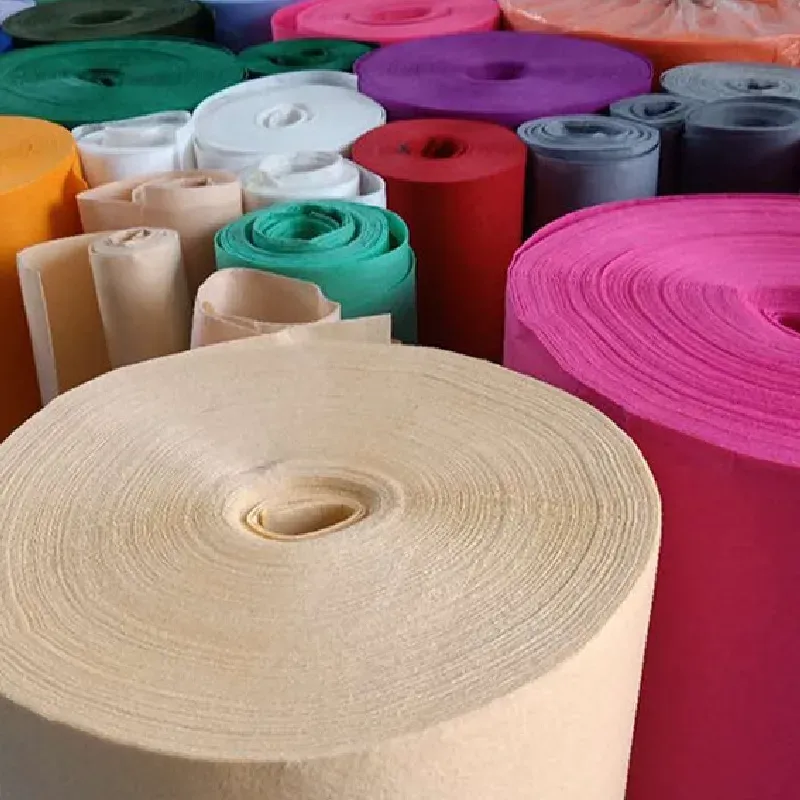
The primary material for felt stickers is the non-woven felt itself. Wool felt, traditionally used, offers excellent cushioning and absorbency due to its natural crimp and porosity. However, acrylic and polyester felts have gained prominence due to their lower cost, greater colorfastness, and resistance to mildew. Acrylic fibers offer good UV resistance, while polyester exhibits superior tensile strength and abrasion resistance. The manufacturing of the felt begins with fiber preparation – carding and potentially dyeing. These fibers are then interlocked via mechanical, chemical, or thermal bonding processes. Needlepunching is a common method, using barbed needles to entangle the fibers. Chemical bonding utilizes adhesives, while thermal bonding relies on melting fibers (often polyester) to create a cohesive structure. Density (measured in g/m²) is a critical parameter affecting compressibility and cushioning. Adhesive selection is equally vital. Common adhesives include acrylic-based pressure-sensitive adhesives (PSAs), rubber-based PSAs, and hot melt adhesives. Acrylic PSAs provide good UV resistance and long-term adhesion, while rubber-based PSAs offer high initial tack. Hot melt adhesives provide rapid bonding but may exhibit temperature sensitivity. The adhesive is typically applied to the felt via coating methods like roll coating or spray coating. Parameter control during manufacturing – fiber density, adhesive weight, coating uniformity, and bonding temperature – are paramount to achieve consistent product performance. Dimensional stability is also a key manufacturing consideration, controlled by minimizing fiber shrinkage during the bonding process.
Performance & Engineering
The performance of felt stickers is heavily influenced by force analysis, particularly concerning peel adhesion and shear strength. Peel adhesion, measured in N/cm, determines the force required to remove the sticker from a substrate at a specific angle. Shear strength, measured in MPa, indicates the resistance to sliding forces parallel to the surface. Environmental resistance is a crucial engineering consideration. Temperature fluctuations can significantly affect adhesive tack and cohesion. Exposure to humidity can lead to moisture absorption by the felt, altering its dimensions and reducing adhesion. UV radiation can degrade both the felt fibers and the adhesive polymer chains, reducing long-term durability. Compliance requirements, such as RoHS (Restriction of Hazardous Substances) and REACH (Registration, Evaluation, Authorisation and Restriction of Chemicals), dictate permissible substance limits within the sticker’s composition. The design of the sticker itself influences performance. Thicker felt provides greater cushioning but may reduce adhesive contact. Die-cutting precision is critical to ensure consistent shape and size. Consideration must also be given to the substrate surface energy – low surface energy substrates (e.g., polyethylene) require specialized adhesives to achieve adequate adhesion. Functional implementation often involves stress distribution analysis to ensure the sticker can withstand anticipated loads without failure. Finite element analysis (FEA) can be employed to model stress concentrations and optimize sticker geometry.
Technical Specifications
| Material Composition | Adhesive Type | Thickness (mm) | Peel Adhesion (N/cm) - Stainless Steel |
|---|---|---|---|
| 100% Polyester Felt | Acrylic PSA | 1.5 | 5.0 |
| 70% Wool / 30% Acrylic Felt | Rubber PSA | 3.0 | 7.5 |
| 100% Acrylic Felt | Hot Melt Adhesive | 1.0 | 3.5 |
| 80% Polyester / 20% Nylon Felt | Modified Acrylic PSA | 2.0 | 6.2 |
| 100% Polyester Felt (UV Stabilized) | Acrylic PSA (UV Resistant) | 1.5 | 5.5 |
| 70% Wool / 30% Viscose Felt | Natural Rubber Adhesive | 2.5 | 8.0 |
Failure Mode & Maintenance
Felt sticker failure modes typically fall into several categories. Adhesive failure, where the adhesive detaches from either the substrate or the felt, is common and often results from insufficient surface preparation, low surface energy substrates, or excessive shear stress. Cohesive failure occurs within the adhesive layer itself, often due to temperature extremes or prolonged exposure to solvents. Felt degradation, including fiber breakdown, compression set (permanent deformation), and discoloration, can reduce cushioning and adhesive contact. Oxidation of the adhesive can lead to embrittlement and loss of tack. Delamination, where the felt layers separate, is more prevalent in lower-density felts. Fatigue cracking, particularly under cyclic loading, can occur in the adhesive or the felt itself. Maintenance typically involves ensuring surfaces are clean, dry, and free of contaminants before application. Avoid exposure to harsh chemicals or excessive temperatures. For critical applications, periodic inspection for adhesive lift or felt degradation is recommended. If failure occurs, the sticker should be completely removed, and the surface thoroughly cleaned before reapplying a new sticker. Selecting a sticker with appropriate adhesive and felt composition for the specific environment and load conditions is the most effective preventative measure.
Industry FAQ
Q: What is the impact of surface roughness on the adhesive performance of felt stickers?
A: Increased surface roughness generally promotes mechanical interlocking between the adhesive and the substrate, potentially improving peel adhesion. However, excessive roughness can create air gaps, reducing the effective adhesive contact area. Surface preparation, such as cleaning and degreasing, is crucial to optimize adhesion on rough surfaces.
Q: How does temperature affect the long-term adhesion of felt stickers?
A: Elevated temperatures can soften adhesives, reducing their shear strength and increasing the risk of creep. Low temperatures can cause adhesives to become brittle and lose tack. Selecting an adhesive with a suitable glass transition temperature (Tg) for the operating environment is essential for maintaining long-term adhesion.
Q: What is the role of the felt density in determining the cushioning performance?
A: Higher felt density generally results in lower compressibility and greater resistance to compression set, providing firmer cushioning. Lower density felt offers greater compressibility but may be less durable. The optimal density depends on the specific application requirements.
Q: Are there any felt sticker options suitable for use in cleanroom environments?
A: Yes, specialized felt stickers constructed from low-outgassing materials (e.g., polyester felt with acrylic adhesive) are available for use in cleanrooms. These stickers are designed to minimize particle generation and maintain air purity.
Q: How do I determine the appropriate adhesive type for a specific substrate?
A: Consider the substrate's surface energy, temperature resistance, and chemical compatibility. Low surface energy substrates require adhesives with low surface tension. High-temperature applications demand adhesives with high Tg. Chemical resistance should be assessed based on potential exposure to solvents or other chemicals.
Conclusion
Felt stickers represent a versatile and cost-effective solution for a diverse range of industrial applications. Their performance is fundamentally tied to the interplay between material selection – specifically the felt composition and adhesive type – and meticulous manufacturing control. Understanding the principles of adhesion, environmental resistance, and force analysis is paramount to ensuring optimal performance and longevity.
Future development in felt sticker technology will likely focus on sustainable materials, advanced adhesive formulations (e.g., bio-based adhesives), and improved methods for tailoring performance characteristics to specific application needs. Continued research into surface treatment techniques and adhesive bonding mechanisms will further enhance the reliability and durability of these ubiquitous components.


 English
  Afrikaans
  Albanian
  Amharic
  Arabic
  Armenian
  Azerbaijani
  Basque
  Belarusian
  Bengali
  Bosnian
  Bulgarian
  Catalan
  Cebuano
  Corsican
  Croatian
  Czech
Czech  Danish
  Dutch
Dutch  Esperanto
  Estonian
  Finnish
  French
  Frisian
  Galician
  Georgian
  German
  Greek
Greek  Gujarati
  Haitian Creole
  Hausa
Hausa  Hebrew
  Hindi
Hindi  Miao
Miao  Hungarian
  Icelandic
  Igbo
Igbo  Indonesian
  Irish
Irish  Italian
  Japanese
  Javanese
  Kazakh
  Khmer
Khmer  Rwandese
  Korean
  Kurdish
  Kyrgyz
  Lao
Lao  Latin
Latin  Latvian
  Lithuanian
  Luxembourgish
  Macedonian
  Malgashi
  Malay
Malay  Malayalam
  Maltese
  Maori
Maori  Marathi
  Mongolian
  Myanmar
  Nepali
  Norwegian
  Norwegian
  Occitan
  Pashto
  Persian
  Polish
  Portuguese
  Romanian
  Russian
  Samoan
  Scottish Gaelic
  Serbian
  Sesotho
  Shona
Shona  Sindhi
  Sinhala
  Slovak
  Slovenian
  Somali
  Spanish
  Sundanese
  Swahili
  Swedish
  Tajik
Tajik  Tamil
Tamil  Tatar
Tatar  Telugu
  Thai
Thai  Turkish
  Turkmen
  Ukrainian
  Urdu
Urdu  Uighur
  Uzbek
Uzbek  Vietnamese
  Welsh
Welsh  Bantu
Bantu  Yiddish
  Yoruba
  Zulu
Zulu