
Apr . 01, 2024 17:55 Back to list
felt table mats Performance Analysis

Introduction
Felt table mats represent a ubiquitous yet often overlooked component in domestic and commercial settings. They function primarily as a protective barrier between tableware and table surfaces, preventing scratches, reducing noise from placed objects, and providing a degree of thermal insulation. Within the broader textile industry, felt table mats occupy a niche defined by their material composition – typically non-woven textiles made from natural, synthetic, or blended fibers – and their relatively simple manufacturing processes. Their core performance characteristics hinge on density, thickness, fiber composition, and surface treatment, all influencing their durability, thermal resistance, and aesthetic appeal. A key challenge facing manufacturers is balancing cost-effectiveness with the increasing demand for sustainable materials and enhanced performance characteristics, particularly in high-end hospitality and consumer markets. This guide provides a detailed technical analysis of felt table mats, encompassing material science, manufacturing processes, performance parameters, failure modes, and relevant industry standards.
Material Science & Manufacturing
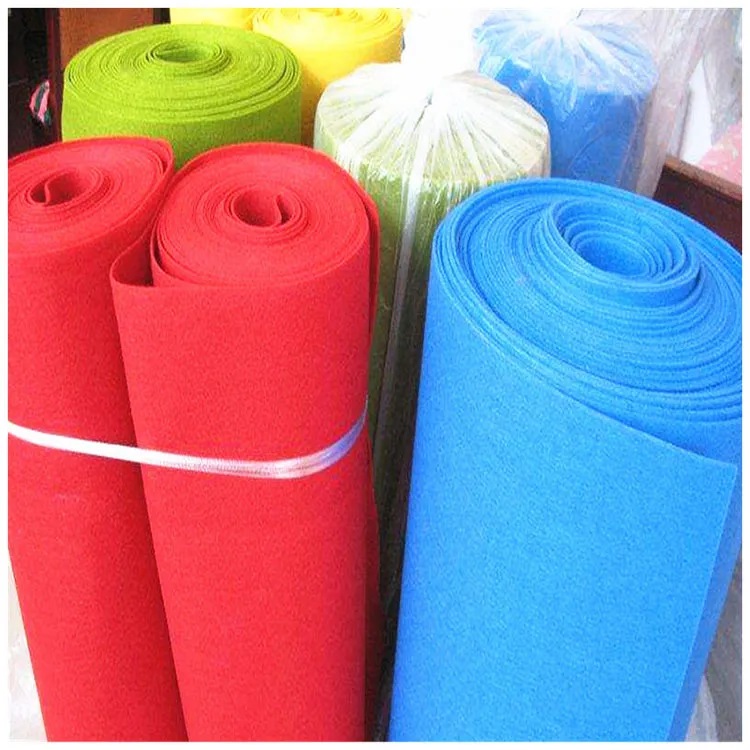
The foundational material of felt table mats is predominantly non-woven felt, though variations exist. Common raw materials include wool, acrylic, polypropylene, polyester, and rayon. Wool felts offer excellent thermal insulation and natural resilience, however, are susceptible to moisture absorption and biological degradation. Synthetic fibers, like polypropylene and polyester, provide superior durability, stain resistance, and cost-effectiveness but generally lack the thermal properties of wool. Blends are frequently employed to leverage the strengths of multiple fiber types. The manufacturing process begins with fiber preparation - carding, combing, or air-laying – to align the fibers. This is followed by bonding, the critical step determining the felt’s density and strength. Needle punching is a prevalent method, utilizing barbed needles to mechanically interlock the fibers. Thermal bonding employs heat to melt and fuse fibers, often used with synthetic materials. Chemical bonding utilizes adhesives, though this is less common due to environmental concerns and potential residue. Parameter control during manufacturing is paramount. Needle density (needles per square inch) directly influences felt density and tensile strength. Thermal bonding temperature and dwell time must be precisely controlled to avoid fiber damage or incomplete fusion. Consistency in fiber distribution is crucial for uniform thickness and performance. Post-processing often includes calendaring to compress the felt, dyeing or printing for aesthetic customization, and edge finishing to prevent fraying. The choice of bonding method significantly affects the felt’s susceptibility to delamination, a common failure mode.
Performance & Engineering
The performance of felt table mats is dictated by several key engineering principles. Coefficient of friction is vital; a moderate coefficient is desirable for preventing tableware slippage while allowing easy cleaning. Thermal resistance (R-value) determines the mat’s ability to insulate surfaces from hot dishes. This is largely dependent on felt thickness and fiber type, with wool offering the highest R-value. Compressive strength is crucial to withstand the weight of placed objects without permanent deformation. This is directly related to fiber density and bonding method. Environmental resistance is an increasingly important consideration. Exposure to UV radiation can cause degradation of synthetic fibers, leading to discoloration and loss of strength. Moisture absorption can promote mold growth and reduce dimensional stability, particularly in wool felts. Compliance requirements vary by region and application. For food contact applications, materials must comply with regulations such as FDA 21 CFR for food-grade materials. Flame retardancy may be required for use in commercial settings, necessitating treatment with flame-retardant chemicals or selection of inherently flame-resistant fibers. Force analysis is critical in determining optimal felt thickness and density for specific applications. Finite element analysis (FEA) can be employed to model the stress distribution under load, optimizing the mat’s structural integrity and preventing deformation.
Technical Specifications
| Parameter | Wool Felt | Polypropylene Felt | Polyester Felt | Acrylic Felt |
|---|---|---|---|---|
| Density (g/cm³) | 0.2 - 0.5 | 0.15 - 0.3 | 0.18 - 0.4 | 0.2 - 0.45 |
| Tensile Strength (MPa) | 2 - 5 | 4 - 8 | 5 - 10 | 3 - 6 |
| Thermal Resistance (R-value, m²⋅K/W) | 0.15 - 0.25 | 0.08 - 0.15 | 0.1 - 0.2 | 0.12 - 0.22 |
| Moisture Absorption (%) | 15 - 30 | <0.1 | 0.4 - 1 | 5 - 10 |
| UV Resistance (Rating 1-5, 5=Excellent) | 2 | 3 | 2-3 | 2 |
| Compressive Strength (kPa) | 50 - 150 | 80 - 200 | 100 - 250 | 60 - 180 |
Failure Mode & Maintenance
Felt table mats are susceptible to several failure modes. Delamination, particularly in chemically bonded felts, occurs when the adhesive loses adhesion, causing the layers to separate. This is often exacerbated by repeated washing or exposure to solvents. Fiber degradation, especially in wool and acrylic felts, results from UV exposure and repeated abrasion, leading to loss of tensile strength and aesthetic deterioration. Compaction occurs when the felt fibers become permanently compressed under sustained load, reducing its cushioning effect and thermal insulation. Staining is a common issue, particularly with wool felts, requiring prompt cleaning to prevent permanent discoloration. Mold growth can occur in wool felts exposed to prolonged moisture, leading to odor and material decomposition. Maintenance primarily involves regular cleaning. Vacuuming removes loose debris. Spot cleaning with mild detergent and water addresses spills. Machine washing is possible for some synthetic felts, but requires careful adherence to manufacturer’s instructions to avoid shrinkage or delamination. Avoid harsh chemicals or abrasive cleaners. For wool felts, professional dry cleaning is recommended. Periodic inspection for signs of delamination or fiber degradation is crucial for preventative maintenance. Replacement is necessary when significant damage compromises the mat’s functionality or aesthetic appeal.
Industry FAQ
Q: What is the impact of felt density on its ability to protect delicate surfaces?
A: Higher density felts generally provide superior protection. Greater density translates to increased cushioning and abrasion resistance, reducing the likelihood of scratches or damage to the underlying table surface. However, excessively high density can reduce flexibility and compressibility, diminishing the mat’s ability to conform to uneven surfaces.
Q: How does the choice of fiber affect the longevity of the mat in a high-traffic commercial setting?
A: Synthetic fibers, specifically polypropylene and polyester, are generally more durable and resistant to wear and tear in high-traffic areas than natural fibers like wool. They withstand repeated abrasion and cleaning cycles more effectively, resulting in a longer service life. Wool, while offering superior aesthetics, requires more frequent maintenance and is more susceptible to damage.
Q: What are the implications of using chemically bonded felts versus needle-punched felts from a durability standpoint?
A: Needle-punched felts generally exhibit superior long-term durability compared to chemically bonded felts. The mechanical interlocking of fibers in needle punching creates a more robust and resilient structure. Chemical bonding relies on adhesive strength, which can degrade over time, leading to delamination, especially with exposure to heat or solvents.
Q: Are there any environmentally friendly alternatives to traditional synthetic felt materials?
A: Yes, several sustainable alternatives are emerging. Recycled polyester felt, made from post-consumer plastic bottles, is a popular option. Plant-based felts, derived from materials like bamboo or corn fibers, offer biodegradable and renewable alternatives, although their performance characteristics may differ from traditional materials. Furthermore, the use of natural dyes and low-impact manufacturing processes can minimize the environmental footprint.
Q: What specific testing standards are relevant for evaluating the slip resistance of felt table mats?
A: ASTM D1073 is a standard test method for evaluating the coefficient of friction of textile materials, which can be used to assess the slip resistance of felt table mats. Furthermore, standards like EN 13775 (for slip resistance of floor coverings) can be adapted to evaluate the performance of table mats in preventing tableware slippage.
Conclusion
Felt table mats, despite their apparent simplicity, are complex materials whose performance is dictated by a confluence of material properties, manufacturing processes, and engineering considerations. Selecting the appropriate felt composition – be it wool, synthetic, or a blend – hinges on a detailed understanding of the intended application and the trade-offs between cost, durability, thermal resistance, and environmental impact. Proper manufacturing parameter control, particularly bonding method and density, is critical for ensuring consistent quality and mitigating common failure modes such as delamination and compaction.
Looking ahead, the demand for sustainable and high-performance felt table mats will continue to drive innovation in materials science and manufacturing techniques. The development of bio-based felt materials and advanced bonding technologies will be key to addressing the evolving needs of the market. Rigorous testing and adherence to relevant industry standards are essential for guaranteeing product quality and safety, ultimately ensuring that these seemingly mundane items fulfill their critical role in protecting surfaces and enhancing the dining experience.


 English
  Afrikaans
  Albanian
  Amharic
  Arabic
  Armenian
  Azerbaijani
  Basque
  Belarusian
  Bengali
  Bosnian
  Bulgarian
  Catalan
  Cebuano
  Corsican
  Croatian
  Czech
Czech  Danish
  Dutch
Dutch  Esperanto
  Estonian
  Finnish
  French
  Frisian
  Galician
  Georgian
  German
  Greek
Greek  Gujarati
  Haitian Creole
  Hausa
Hausa  Hebrew
  Hindi
Hindi  Miao
Miao  Hungarian
  Icelandic
  Igbo
Igbo  Indonesian
  Irish
Irish  Italian
  Japanese
  Javanese
  Kazakh
  Khmer
Khmer  Rwandese
  Korean
  Kurdish
  Kyrgyz
  Lao
Lao  Latin
Latin  Latvian
  Lithuanian
  Luxembourgish
  Macedonian
  Malgashi
  Malay
Malay  Malayalam
  Maltese
  Maori
Maori  Marathi
  Mongolian
  Myanmar
  Nepali
  Norwegian
  Norwegian
  Occitan
  Pashto
  Persian
  Polish
  Portuguese
  Romanian
  Russian
  Samoan
  Scottish Gaelic
  Serbian
  Sesotho
  Shona
Shona  Sindhi
  Sinhala
  Slovak
  Slovenian
  Somali
  Spanish
  Sundanese
  Swahili
  Swedish
  Tajik
Tajik  Tamil
Tamil  Tatar
Tatar  Telugu
  Thai
Thai  Turkish
  Turkmen
  Ukrainian
  Urdu
Urdu  Uighur
  Uzbek
Uzbek  Vietnamese
  Welsh
Welsh  Bantu
Bantu  Yiddish
  Yoruba
  Zulu
Zulu