
Apr . 01, 2024 17:55 Back to list
large felt storage tote Performance Analysis
Introduction
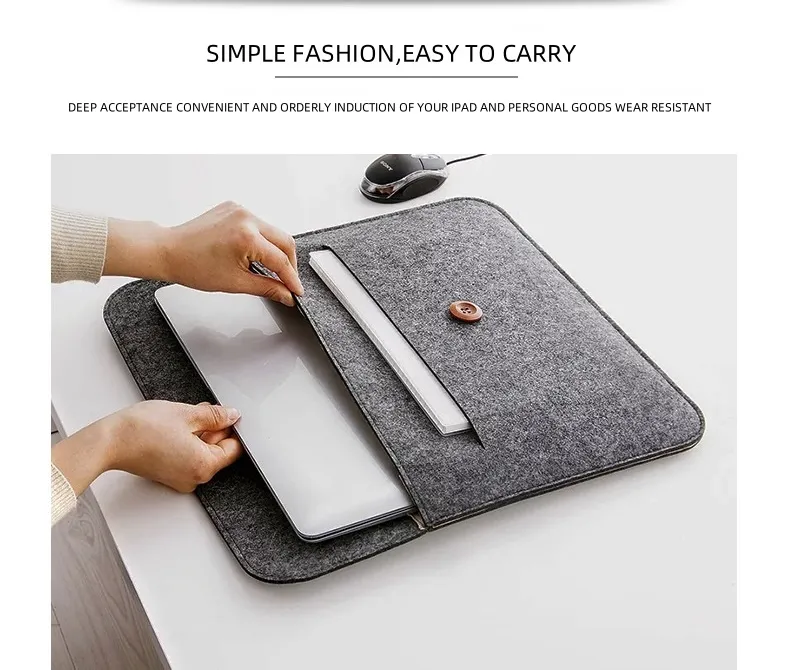
Large felt storage totes are increasingly prevalent in logistical operations, retail supply chains, and personal organization due to their lightweight nature, cost-effectiveness, and inherent cushioning properties. These totes, typically constructed from non-woven polyester fabrics mimicking felt, serve as collapsible containers for temporary storage and transportation of goods. Their technical position in the supply chain lies between basic packaging (cardboard boxes, plastic wrap) and rigid containers (plastic bins, metal pallets). Core performance characteristics include load-bearing capacity, dimensional stability under load, resistance to tearing and abrasion, and suitability for automated handling systems. A key industry pain point is balancing cost with durability; lower-cost materials frequently lack the tensile strength and abrasion resistance needed for repeated use in demanding applications, leading to premature failure and increased lifecycle costs. Furthermore, ensuring consistent manufacturing quality – specifically, uniform fabric density and seam integrity – is a significant challenge for manufacturers supplying to global markets.
Material Science & Manufacturing
The primary raw material for large felt storage totes is typically polypropylene (PP) or polyester (PET) non-woven fabric. PP offers a lower cost and adequate tensile strength for lighter loads, while PET exhibits superior abrasion resistance and dimensional stability, justifying its higher price point. Fabric density, measured in grams per square meter (gsm), is a critical parameter – ranges typically fall between 100gsm to 300gsm. Higher gsm equates to increased durability but also increased weight and cost. Manufacturing primarily involves needle-punching or thermal bonding of the fibers. Needle-punching mechanically interlocks the fibers, creating a relatively porous but strong fabric. Thermal bonding utilizes heat to partially melt and fuse the fibers, resulting in a denser, less porous material. Seam construction is typically performed using ultrasonic welding or industrial sewing. Ultrasonic welding creates a strong, clean seam without the need for threads, minimizing potential failure points. Key parameter control during manufacturing includes maintaining consistent fiber distribution, controlling needle density (for needle-punched fabrics), precise temperature control during thermal bonding, and ensuring proper tension during seam construction. Chemical compatibility is a concern, as prolonged exposure to certain solvents or strong oxidizing agents can degrade the fabric fibers. Furthermore, the presence of UV stabilizers in the polymer is crucial to prevent photodegradation, especially for totes intended for outdoor storage or transport.
Performance & Engineering
Performance of large felt storage totes is fundamentally governed by stress-strain relationships and load distribution. Force analysis must consider static loads (weight of contents) and dynamic loads (acceleration/deceleration during transport, impacts during handling). The tote's geometry and seam construction significantly influence stress concentration points. Finite Element Analysis (FEA) is increasingly used to optimize designs and predict failure points under various loading conditions. Environmental resistance is crucial. Moisture absorption, though typically low for PP and PET, can lead to weight gain and potential mildew growth in humid environments. Temperature fluctuations can affect the fabric's elasticity and dimensional stability. Compliance requirements vary depending on the intended application. For example, totes used in the food industry must comply with FDA regulations regarding materials and hygiene. Totes used in air transport must meet specific requirements for flame retardancy and dimensional limitations. Functional implementation often involves integration with automated handling systems, requiring features like reinforced corners for robotic gripping, RFID tags for tracking, and barcoded labels for identification. The ability of the tote to maintain its shape and structural integrity during repeated folding and unfolding cycles is also a critical performance parameter.
Technical Specifications
| Parameter | Unit | Typical Value (PP Fabric) | Typical Value (PET Fabric) |
|---|---|---|---|
| Fabric Density | gsm | 150 | 250 |
| Tensile Strength (Longitudinal) | N/5cm | 80 | 150 |
| Tensile Strength (Transverse) | N/5cm | 60 | 120 |
| Tear Strength (Grab Test) | N | 30 | 60 |
| Abrasion Resistance (Taber Abraser) | Cycles to Failure | 500 | 1500 |
| Water Resistance (Hydrostatic Head) | mm H2O | 50 | 100 |
Failure Mode & Maintenance
Common failure modes for large felt storage totes include seam failure (splitting or unraveling), fabric tearing (particularly at stress concentration points like corners), abrasion-induced wear (leading to thinning and eventual failure), and photodegradation (causing embrittlement and loss of strength). Fatigue cracking can occur in repeatedly stressed areas, such as handles or reinforcement points. Delamination, while less common, can occur in thermally bonded fabrics if the bonding process is not properly controlled. Oxidation, particularly in PP fabrics exposed to UV radiation, contributes to material degradation. Maintenance primarily focuses on preventative measures. Regular inspection for signs of wear and tear, such as frayed seams, tears, or thinning fabric, is crucial. Avoid overloading totes beyond their rated capacity. Protect totes from prolonged exposure to direct sunlight and harsh chemicals. Cleaning can be performed with mild soap and water. For minor seam repairs, industrial sewing can be used. Severely damaged totes should be discarded to prevent catastrophic failure during use. Implementing a regular inspection and replacement schedule can significantly extend the overall service life and minimize downtime.
Industry FAQ
Q: What is the impact of fabric GSM on the tote's load-bearing capacity?
A: Higher GSM generally corresponds to a greater load-bearing capacity. A denser fabric provides more fibers to distribute the load, reducing stress concentration and increasing tensile strength. However, the relationship isn't linear; diminishing returns are observed beyond a certain GSM, and increased weight can become a factor.
Q: How does ultrasonic welding compare to traditional sewing for seam construction?
A: Ultrasonic welding creates a stronger, more durable seam than traditional sewing because it fuses the fabric fibers together rather than relying on thread. It also eliminates the risk of thread breakage and unraveling. However, it typically requires a higher initial investment in equipment.
Q: What are the key considerations for selecting between PP and PET fabrics?
A: PP is more cost-effective and suitable for lighter loads where abrasion resistance isn’t critical. PET offers superior abrasion resistance, dimensional stability, and UV resistance, making it ideal for demanding applications and outdoor use. Consider the expected lifecycle and operating environment when making the selection.
Q: What measures can be taken to mitigate the effects of UV degradation?
A: Incorporating UV stabilizers into the polymer during manufacturing is the most effective method. Avoiding prolonged exposure to direct sunlight and storing totes indoors when not in use can also help. Regularly inspecting for signs of embrittlement and replacing degraded totes is essential.
Q: What is the expected lifespan of a typical large felt storage tote under moderate usage conditions?
A: Under moderate usage conditions (consistent loads, indoor storage, minimal exposure to abrasives or chemicals), a PP tote may last 1-2 years, while a PET tote can last 3-5 years. However, lifespan is heavily dependent on the quality of materials, manufacturing processes, and operating environment.
Conclusion
Large felt storage totes represent a versatile and cost-effective solution for a wide range of material handling and storage applications. The performance and longevity of these totes are intricately linked to the material science employed, particularly the choice between polypropylene and polyester fabrics, and the precision of the manufacturing processes. Understanding the failure modes – stemming from seam stress, abrasion, and environmental degradation – is paramount for implementing effective maintenance strategies and optimizing lifecycle costs.
Looking ahead, advancements in non-woven fabric technology, including the development of recycled and bio-based materials, will likely drive further innovation in this sector. Continued research into seam reinforcement techniques and the integration of smart technologies, such as RFID tracking, will enhance the functionality and efficiency of large felt storage totes in increasingly complex supply chain environments. Careful consideration of technical specifications and adherence to relevant industry standards are crucial for ensuring optimal performance and reliability.


 English
  Afrikaans
  Albanian
  Amharic
  Arabic
  Armenian
  Azerbaijani
  Basque
  Belarusian
  Bengali
  Bosnian
  Bulgarian
  Catalan
  Cebuano
  Corsican
  Croatian
  Czech
Czech  Danish
  Dutch
Dutch  Esperanto
  Estonian
  Finnish
  French
  Frisian
  Galician
  Georgian
  German
  Greek
Greek  Gujarati
  Haitian Creole
  Hausa
Hausa  Hebrew
  Hindi
Hindi  Miao
Miao  Hungarian
  Icelandic
  Igbo
Igbo  Indonesian
  Irish
Irish  Italian
  Japanese
  Javanese
  Kazakh
  Khmer
Khmer  Rwandese
  Korean
  Kurdish
  Kyrgyz
  Lao
Lao  Latin
Latin  Latvian
  Lithuanian
  Luxembourgish
  Macedonian
  Malgashi
  Malay
Malay  Malayalam
  Maltese
  Maori
Maori  Marathi
  Mongolian
  Myanmar
  Nepali
  Norwegian
  Norwegian
  Occitan
  Pashto
  Persian
  Polish
  Portuguese
  Romanian
  Russian
  Samoan
  Scottish Gaelic
  Serbian
  Sesotho
  Shona
Shona  Sindhi
  Sinhala
  Slovak
  Slovenian
  Somali
  Spanish
  Sundanese
  Swahili
  Swedish
  Tajik
Tajik  Tamil
Tamil  Tatar
Tatar  Telugu
  Thai
Thai  Turkish
  Turkmen
  Ukrainian
  Urdu
Urdu  Uighur
  Uzbek
Uzbek  Vietnamese
  Welsh
Welsh  Bantu
Bantu  Yiddish
  Yoruba
  Zulu
Zulu