Apr . 01, 2024 17:55 Back to list
large microfiber bath towels Performance Analysis
Introduction
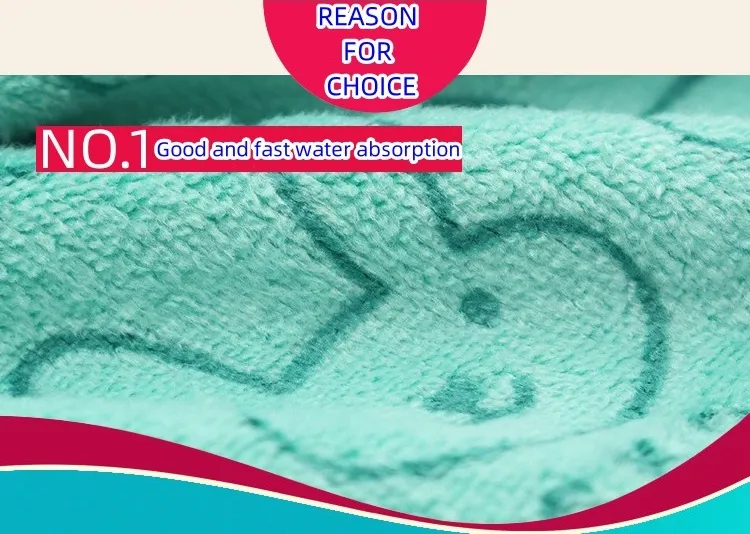
Large microfiber bath towels represent a significant advancement in textile technology, offering enhanced absorbency, softness, and durability compared to traditional cotton towels. Composed of synthetic fibers, primarily polyester and polyamide (nylon), these towels leverage the capillary action created by the extremely fine fiber structure – often less than one denier – to rapidly draw moisture away from the skin. Their position in the textile supply chain is as a high-performance consumer good, reliant on polymer production, fiber extrusion, weaving/knitting, dyeing, and finishing processes. Core performance characteristics include high water absorbency (typically 3-5 times that of cotton), rapid drying times, reduced weight, and inherent resistance to mildew and bacterial growth. The industry faces challenges relating to raw material sourcing, sustainable manufacturing practices, and maintaining consistent quality across diverse production facilities. Understanding these elements is crucial for procurement, quality control, and ultimately, consumer satisfaction.
Material Science & Manufacturing
Microfiber towels are primarily constructed from polyester and polyamide (nylon) polymers. Polyester, typically polyethylene terephthalate (PET), provides durability, resistance to stretching, and cost-effectiveness. Polyamide adds softness, increased absorbency, and improved resilience. The raw materials are typically sourced from petrochemical feedstocks. Fiber production involves melt extrusion, where the polymers are heated and forced through spinnerets to create continuous filaments. These filaments are then split into microfibers—the key to the towel’s performance—via mechanical or chemical processes. The splitting process increases the surface area dramatically, enhancing absorbency. Manufacturing then proceeds through either weaving or knitting. Weaving creates a more durable, structured fabric, while knitting offers greater softness and stretch. A critical parameter is denier (weight in grams of 9000 meters of fiber), with microfiber typically ranging from 0.1 to 1.0 denier. Dyeing is commonly achieved through solution dyeing (adding color to the polymer melt before extrusion) or exhaust dyeing (dyeing the finished fabric). Finishing processes include softening treatments (e.g., silicone emulsions) to enhance tactile comfort and anti-pilling treatments to minimize surface fuzzing. Precise control of temperature, pressure, and chemical concentrations throughout the extrusion, splitting, and dyeing stages is vital to prevent fiber damage and ensure consistent performance. Quality control requires regular testing of fiber diameter, tensile strength, and dye fastness.

Performance & Engineering
The performance of a microfiber bath towel is heavily reliant on the physical properties of the microfibers and the fabric construction. Water absorption is driven by capillary action, where the small spaces between the fibers create a pressure differential that draws liquid in. The rate of absorption is proportional to the total surface area of the fibers; hence, the importance of microfiber splitting. Force analysis reveals that the tensile strength of the towel is a function of both the fiber strength (polyester and polyamide have different strengths) and the weave/knit pattern. Environmental resistance is a key consideration. While microfiber is inherently resistant to mildew, prolonged exposure to UV radiation can degrade the polymers, reducing strength and colorfastness. Compliance requirements vary by region. In the EU, REACH regulations restrict the use of certain chemicals in textile production. In the US, CPSIA standards address lead content and other hazardous substances. Functional implementation involves optimizing the fabric density and pile height to maximize absorbency and drying speed while maintaining a comfortable texture. The weight of the towel is also an engineering parameter; higher GSM (grams per square meter) generally equates to higher absorbency but also slower drying times. Proper loop construction is also essential to prevent fiber shedding and ensure a long lifespan.
Technical Specifications
| Parameter | Unit | Typical Value | Test Method |
|---|---|---|---|
| Fiber Composition | % | Polyester 80%, Polyamide 20% | ASTM D758 |
| Fabric Weight (GSM) | g/m² | 300-600 | ISO 3801 |
| Absorbency | g H₂O/g fabric | 5-8 | ASTM D583 |
| Drying Time | minutes | 30-60 | Internal Method (Controlled Environment) |
| Tensile Strength (Warp) | N/5cm | ≥ 20 | ISO 13934-1 |
| Tensile Strength (Weft) | N/5cm | ≥ 15 | ISO 13934-1 |
Failure Mode & Maintenance
Microfiber towels, while durable, are susceptible to several failure modes. Fatigue cracking can occur along fiber bundles due to repeated bending and abrasion during washing and use. Delamination, or the separation of fabric layers, is often caused by inadequate fiber bonding or aggressive washing cycles. Degradation of the polymer chains due to UV exposure leads to reduced strength and color fading. Oxidation can also occur over time, particularly with exposure to chlorine bleach. Pilling, the formation of small balls of fiber on the surface, is a cosmetic issue but indicates fiber breakage. Microplastic shedding during washing is an emerging concern. Maintenance recommendations include washing towels separately from cotton items to minimize lint transfer and avoid using fabric softeners, which can coat the fibers and reduce absorbency. Washing in warm, not hot, water with a mild detergent is advised. Avoid excessive use of bleach. Tumble drying on low heat or line drying is recommended to prevent fiber damage. Regular inspection for signs of wear and tear, such as fraying edges or significant pilling, can help identify potential failures before they become critical.
Industry FAQ
Q: What is the optimal microfiber split ratio for maximizing absorbency?
A: The optimal split ratio generally falls between 80-90%. A higher split ratio increases the surface area and capillary action, but excessive splitting can weaken the fibers and lead to increased shedding. Achieving a consistent split ratio is crucial during manufacturing and is a key indicator of product quality.
Q: How does the choice of dye impact the durability and colorfastness of microfiber towels?
A: Disperse dyes are commonly used for polyester microfiber, while acid dyes are used for polyamide. The quality of the dye and the dyeing process significantly impact colorfastness to washing, light, and rubbing. Poorly dyed towels can experience color bleeding and fading, reducing their aesthetic appeal and potentially staining other items.
Q: What are the implications of microplastic shedding from microfiber towels, and how can this be mitigated?
A: Microplastic shedding is an environmental concern as these particles can enter waterways and potentially harm aquatic life. Mitigation strategies include using higher-quality microfiber with tighter weaves, utilizing laundry bags designed to capture microplastics, and promoting the use of liquid detergents instead of powder detergents.
Q: How does GSM (grams per square meter) affect the performance and price of a microfiber towel?
A: Higher GSM generally equates to greater absorbency, thickness, and a more luxurious feel, but also a higher price point. Lower GSM towels are lighter, dry faster, and are more affordable, but may not be as absorbent or durable. The optimal GSM depends on the intended application (e.g., bath, beach, sports).
Q: What are the key differences between woven and knitted microfiber towels in terms of performance and durability?
A: Woven microfiber towels are generally more durable and have a tighter weave, making them less prone to stretching and pilling. Knitted microfiber towels are softer and more absorbent due to their looser construction, but may be less durable and more prone to snagging.
Conclusion
Large microfiber bath towels represent a technological leap forward in textile design, offering superior performance characteristics compared to conventional cotton towels. Their efficacy stems from a complex interplay of material science – the specific polymer blends of polyester and polyamide – and precise manufacturing processes controlling fiber extrusion, splitting, and fabric construction. Understanding the nuances of these elements, particularly fiber denier, GSM, and weave type, is vital for optimizing towel performance and ensuring consistent product quality.
Looking ahead, the industry faces increasing pressure to adopt sustainable manufacturing practices, reduce microplastic shedding, and improve the overall lifecycle assessment of microfiber textiles. Ongoing research into biodegradable polymer alternatives and enhanced fiber bonding techniques will be critical in addressing these challenges and maintaining the competitiveness of microfiber towels in the global market. The long-term viability relies on a commitment to innovation, responsible sourcing, and environmentally conscious production methods.


 English
  Afrikaans
  Albanian
  Amharic
  Arabic
  Armenian
  Azerbaijani
  Basque
  Belarusian
  Bengali
  Bosnian
  Bulgarian
  Catalan
  Cebuano
  Corsican
  Croatian
  Czech
Czech  Danish
  Dutch
Dutch  Esperanto
  Estonian
  Finnish
  French
  Frisian
  Galician
  Georgian
  German
  Greek
Greek  Gujarati
  Haitian Creole
  Hausa
Hausa  Hebrew
  Hindi
Hindi  Miao
Miao  Hungarian
  Icelandic
  Igbo
Igbo  Indonesian
  Irish
Irish  Italian
  Japanese
  Javanese
  Kazakh
  Khmer
Khmer  Rwandese
  Korean
  Kurdish
  Kyrgyz
  Lao
Lao  Latin
Latin  Latvian
  Lithuanian
  Luxembourgish
  Macedonian
  Malgashi
  Malay
Malay  Malayalam
  Maltese
  Maori
Maori  Marathi
  Mongolian
  Myanmar
  Nepali
  Norwegian
  Norwegian
  Occitan
  Pashto
  Persian
  Polish
  Portuguese
  Romanian
  Russian
  Samoan
  Scottish Gaelic
  Serbian
  Sesotho
  Shona
Shona  Sindhi
  Sinhala
  Slovak
  Slovenian
  Somali
  Spanish
  Sundanese
  Swahili
  Swedish
  Tajik
Tajik  Tamil
Tamil  Tatar
Tatar  Telugu
  Thai
Thai  Turkish
  Turkmen
  Ukrainian
  Urdu
Urdu  Uighur
  Uzbek
Uzbek  Vietnamese
  Welsh
Welsh  Bantu
Bantu  Yiddish
  Yoruba
  Zulu
Zulu