
Apr . 01, 2024 17:55 Back to list
manure spreader Material Science and Manufacturing
Introduction
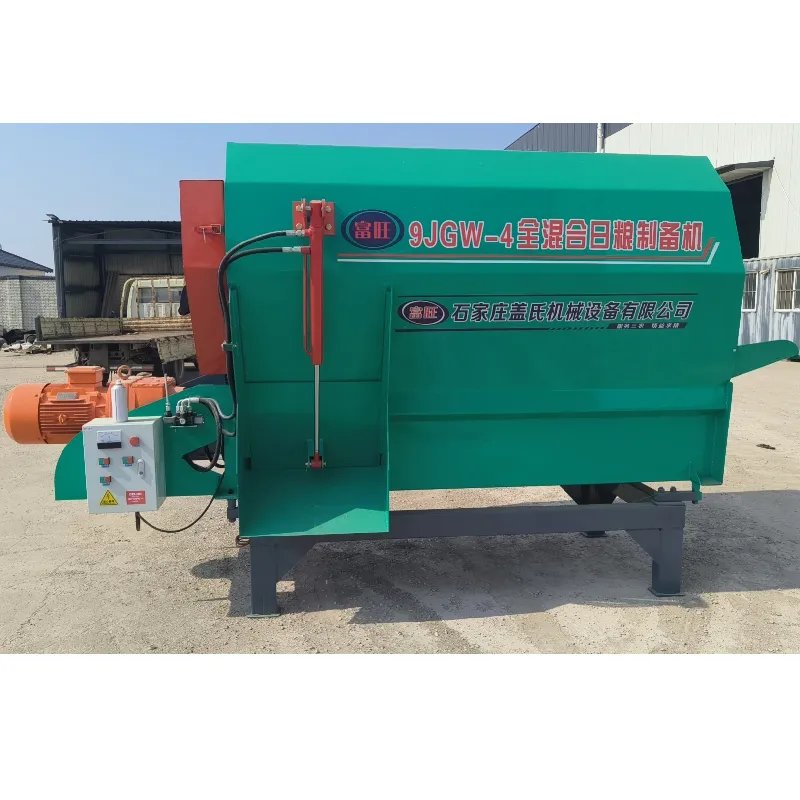
Manure spreaders are critical agricultural implements utilized for the distribution of manure across fields as fertilizer. They represent a vital link in nutrient recycling within agricultural systems, transforming animal waste into valuable soil amendment. Modern manure spreaders have evolved significantly from simple cart-based systems to sophisticated, mechanically driven machines. Their technical position in the agricultural supply chain falls between animal husbandry and crop production, directly influencing soil health, fertilizer costs, and environmental impact. Core performance characteristics center around spread width, application rate accuracy, material handling capacity, and durability under demanding field conditions. Efficient operation directly contributes to improved crop yields and reduced reliance on synthetic fertilizers, addressing key sustainability concerns within the agricultural industry.
Material Science & Manufacturing
The construction of manure spreaders relies on a diverse range of materials selected for their strength, corrosion resistance, and durability. The chassis and structural components are commonly fabricated from high-strength low-alloy (HSLA) steel, specifically grades like ASTM A572 Grade 50, offering a balance between weldability, tensile strength (typically 50 ksi), and cost-effectiveness. The manure containment body is frequently constructed from steel with a minimum yield strength of 36 ksi (ASTM A36) and treated with corrosion-resistant coatings – epoxy primers followed by polyurethane topcoats – to withstand the aggressive chemical environment of manure. Agitator mechanisms, essential for preventing material bridging and ensuring consistent flow, utilize hardened steel alloys like 4140, heat-treated for increased wear resistance. Conveyor systems, where employed (e.g., in vertical beat spreaders), often feature chains made from case-hardened alloy steels (SAE 8620) for prolonged service life.
Manufacturing processes are equally critical. Chassis fabrication typically involves robotic welding, ensuring consistent weld penetration and minimizing stress concentrations. The manure body is often formed through a combination of bending, rolling, and welding operations. Critical dimensions are maintained through precision laser cutting and CNC machining. Surface preparation for coating application follows stringent standards (e.g., SSPC SP10 near-white blast cleaning) to ensure adequate adhesion. Gearboxes utilized for power transmission are manufactured via precision machining and assembly, employing quality control checks throughout the process to ensure proper gear meshing and lubrication. Hydraulic systems, common for powering spreader functions, are assembled and pressure-tested to prevent leaks and ensure operational reliability. Key parameter control includes maintaining consistent steel alloy composition, weld quality assurance via non-destructive testing (NDT) methods like ultrasonic testing (UT), and rigorous coating thickness and adhesion testing.
Performance & Engineering
The performance of a manure spreader is fundamentally governed by force analysis related to material flow, structural integrity under load, and dynamic stresses during operation. Accurate application rate control demands precise calibration of the spreader’s metering system, typically achieved through adjustable gate openings or variable-speed conveyor belts. The design of the spreading mechanism – whether flail, fan, or disc-based – directly impacts spread width and uniformity, with computational fluid dynamics (CFD) modeling increasingly used to optimize air flow patterns and minimize material drift. Environmental resistance is a key consideration, particularly with respect to corrosion from manure constituents (ammonia, sulfides, chlorides). Material selection and protective coatings play a vital role in extending the lifespan of components exposed to these corrosive elements. Compliance requirements vary by region, with standards addressing safety features (e.g., guarding of rotating parts, emergency stop mechanisms), road transport regulations (lighting, braking systems, weight limits – adhering to DOT standards in the US, or equivalent European directives), and emissions standards related to engine operation (if applicable). Furthermore, the structural design must account for dynamic loading during transport and operation, preventing fatigue cracking and ensuring long-term reliability. Finite Element Analysis (FEA) is frequently employed to assess stress concentrations and optimize component geometry for maximum strength and minimal weight.
Technical Specifications
| Capacity (Cubic Meters) | Spreading Width (Meters) | PTO Horsepower Requirement (HP) | Weight (Kilograms) |
|---|---|---|---|
| 8 | 6-12 | 35-50 | 1800 |
| 10 | 8-14 | 40-60 | 2200 |
| 12 | 10-16 | 50-70 | 2500 |
| 15 | 12-18 | 60-80 | 3000 |
| 20 | 14-20 | 70-90 | 3800 |
| 25 | 16-24 | 80-100 | 4500 |
Failure Mode & Maintenance
Manure spreaders are susceptible to several failure modes. Fatigue cracking in the chassis, particularly around weld points, is common due to repeated stress cycles during transport and operation. This can be mitigated through regular visual inspections and non-destructive testing. Delamination of protective coatings, caused by corrosion or inadequate surface preparation, reduces corrosion resistance and accelerates material degradation. Consistent maintenance, including re-coating damaged areas, is crucial. Wear of agitator paddles and conveyor components (chains, slats) is inevitable due to abrasive contact with manure solids. Regular replacement of worn parts is essential to maintain consistent material flow. Hydraulic system failures, stemming from leaks in hoses, cylinders, or pumps, can disrupt spreader functionality. Regular inspection of hydraulic lines and fluid levels is paramount. Bearing failures in gearboxes and wheel hubs can occur due to inadequate lubrication or contamination. Scheduled greasing and oil changes are vital.
Preventative maintenance should include daily visual inspections for damage, weekly lubrication of moving parts, monthly checks of hydraulic fluid levels and hose integrity, and annual thorough inspections of the chassis, welds, and structural components. Bearing replacement should be based on manufacturer recommendations or observed wear. Coating repairs should be addressed promptly to prevent further corrosion. Implementing a detailed maintenance log helps track repair history and identify recurring issues, allowing for proactive maintenance scheduling. Utilizing high-quality replacement parts that meet or exceed original equipment manufacturer (OEM) specifications ensures long-term reliability and performance.
Industry FAQ
Q: What is the optimal PTO speed for maximizing spreading efficiency while minimizing material waste?
A: The optimal PTO speed varies depending on the spreader model and manure type. Generally, a lower PTO speed (around 540 RPM) is preferable for heavier, wetter manure, as it allows for more thorough agitation and consistent material flow. Higher speeds (1000 RPM) may be suitable for drier, lighter manure. Refer to the manufacturer’s recommendations and conduct field trials to determine the ideal speed for your specific application. Excessive speed can lead to material blow-out and uneven distribution.
Q: How does the choice of spreading mechanism (flail, fan, disc) affect nutrient distribution and ammonia emissions?
A: Flail spreaders tend to create a coarser, more concentrated application, potentially leading to higher ammonia volatilization due to increased surface area exposure. Fan spreaders offer wider distribution and reduced ammonia losses, but may require higher horsepower. Disc spreaders provide a relatively even distribution, but their performance is highly sensitive to manure consistency. Selecting the appropriate mechanism requires consideration of manure type, application rate, and environmental regulations.
Q: What are the key considerations for selecting a manure spreader capacity relative to farm size and manure production?
A: The spreader capacity should align with both manure production volume and the time available for application. A smaller farm with limited manure production may benefit from a smaller capacity spreader, reducing initial investment. Larger farms require larger capacity spreaders to efficiently manage the substantial manure volumes generated. Considering the frequency of application and the distance to fields is also important. Overestimating capacity leads to unnecessary capital expenditure, while underestimating results in prolonged application times.
Q: What type of steel alloy is best suited for the agitator paddles to withstand corrosion and abrasive wear?
A: Hardened steel alloys, specifically those containing chromium and nickel (e.g., 4140 alloy steel), are best suited for agitator paddles. These alloys offer excellent wear resistance and corrosion resistance. Surface hardening treatments, such as induction hardening or case hardening, further enhance the durability of the paddles. Regular inspection and replacement of worn paddles are still necessary, even with high-quality alloys.
Q: What are the recommended coating systems for protecting the manure spreader body from corrosion, and what is their expected lifespan?
A: A multi-layer coating system is recommended. This typically includes an epoxy primer (providing excellent adhesion and corrosion inhibition) followed by a polyurethane topcoat (offering UV resistance and durability). Galvanizing, often used as a base layer, provides sacrificial corrosion protection. Expected lifespan varies depending on environmental conditions and maintenance practices, but a properly applied system should last 5-10 years. Regular inspection and touch-up repairs are essential to extend the coating lifespan.
Conclusion
Manure spreaders are indispensable components of modern agricultural practices, facilitating efficient nutrient recycling and promoting sustainable land management. Their design and operation are underpinned by principles of material science, mechanical engineering, and fluid dynamics, demanding careful consideration of material selection, manufacturing processes, and performance optimization. Understanding the potential failure modes and implementing a proactive maintenance program are crucial for ensuring long-term reliability and minimizing downtime.
Future advancements in manure spreader technology will likely focus on precision application systems, utilizing GPS guidance and variable-rate technology to optimize nutrient distribution based on field-specific needs. Furthermore, innovations in spreading mechanisms and coating materials will aim to minimize ammonia emissions and enhance environmental performance, contributing to a more sustainable and environmentally responsible agricultural sector. Integrating data analytics and remote monitoring capabilities will further streamline operations and improve efficiency.


 English
  Afrikaans
  Albanian
  Amharic
  Arabic
  Armenian
  Azerbaijani
  Basque
  Belarusian
  Bengali
  Bosnian
  Bulgarian
  Catalan
  Cebuano
  Corsican
  Croatian
  Czech
Czech  Danish
  Dutch
Dutch  Esperanto
  Estonian
  Finnish
  French
  Frisian
  Galician
  Georgian
  German
  Greek
Greek  Gujarati
  Haitian Creole
  Hausa
Hausa  Hebrew
  Hindi
Hindi  Miao
Miao  Hungarian
  Icelandic
  Igbo
Igbo  Indonesian
  Irish
Irish  Italian
  Japanese
  Javanese
  Kazakh
  Khmer
Khmer  Rwandese
  Korean
  Kurdish
  Kyrgyz
  Lao
Lao  Latin
Latin  Latvian
  Lithuanian
  Luxembourgish
  Macedonian
  Malgashi
  Malay
Malay  Malayalam
  Maltese
  Maori
Maori  Marathi
  Mongolian
  Myanmar
  Nepali
  Norwegian
  Norwegian
  Occitan
  Pashto
  Persian
  Polish
  Portuguese
  Romanian
  Russian
  Samoan
  Scottish Gaelic
  Serbian
  Sesotho
  Shona
Shona  Sindhi
  Sinhala
  Slovak
  Slovenian
  Somali
  Spanish
  Sundanese
  Swahili
  Swedish
  Tajik
Tajik  Tamil
Tamil  Tatar
Tatar  Telugu
  Thai
Thai  Turkish
  Turkmen
  Ukrainian
  Urdu
Urdu  Uighur
  Uzbek
Uzbek  Vietnamese
  Welsh
Welsh  Bantu
Bantu  Yiddish
  Yoruba
  Zulu
Zulu