
Apr . 01, 2024 17:55 Back to list
personalised felt bag Material Performance
Introduction
Personalised felt bags represent a significant segment within the broader textile and accessory manufacturing landscape. These bags, typically constructed from non-woven felt derived from wool, synthetic fibres (like polypropylene or acrylic), or blends thereof, serve diverse applications ranging from promotional merchandise and retail packaging to protective sleeves for electronics and bespoke consumer goods. Their position in the industry chain is as a value-added product, building upon raw material (fibre) production, non-woven fabric formation, and subsequent cutting, shaping, and finishing processes. Core performance characteristics include lightweight construction, inherent cushioning properties, moldability, and susceptibility to customization via printing, embroidery, or appliqué. However, understanding the material's inherent limitations – particularly regarding dimensional stability and resistance to abrasion and certain chemicals – is critical for optimal design and application. The growing demand for sustainable and customizable packaging and promotional items is driving innovation in felt bag manufacturing, with an increasing focus on recycled and biodegradable materials.
Material Science & Manufacturing
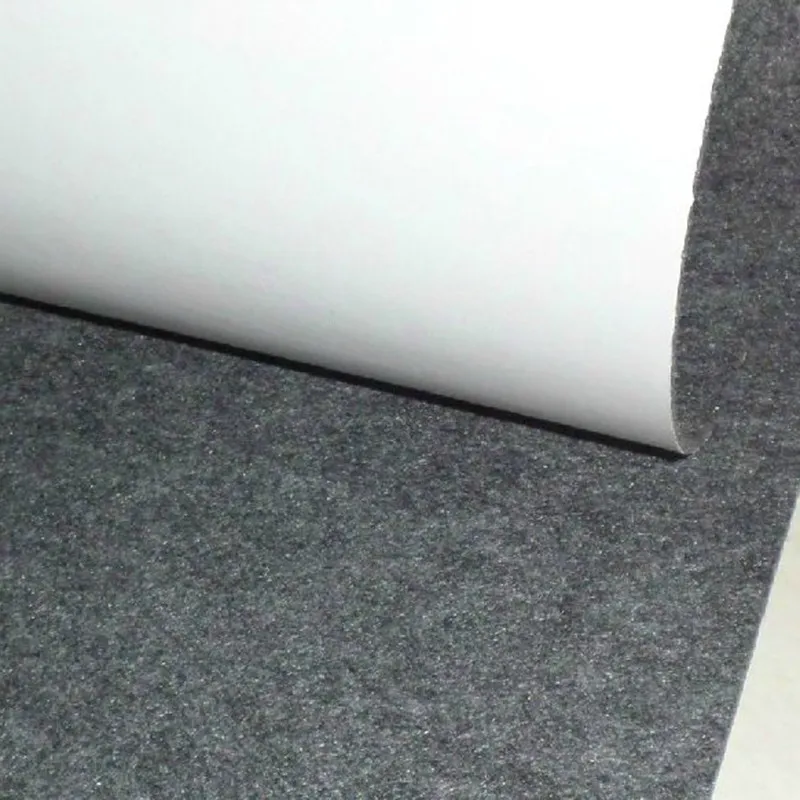
Felt, as the foundational material, dictates the performance attributes of personalised felt bags. Wool felt, traditionally favoured, is composed of overlapping fibres matted together through mechanical interlocking and, often, chemical bonding. Its strength derives from the crimp in the wool fibres, allowing for interlocking, and its resilience from the elasticity of the fibres themselves. Synthetic felt, commonly made from polypropylene or acrylic, offers greater consistency in fibre diameter and lower cost, though often at the expense of the natural breathability and moisture absorption of wool.
Manufacturing processes begin with fibre production, followed by carding, where fibres are aligned in a web. This web is then consolidated through needling (mechanical entanglement), chemical bonding (using resins), or a combination of both. Needle punching uses barbed needles to mechanically interlock the fibres. Chemical bonding, typically employing acrylic binders, provides increased dimensional stability but can reduce breathability. Crucially, parameter control during these processes – needle density, punching depth, resin concentration, and oven temperature – directly affects the felt's density, tensile strength, and tear resistance. Personalisation is typically achieved through techniques like screen printing (using plastisol or water-based inks), digital printing (direct-to-garment or dye sublimation), embroidery, or laser cutting. The choice of technique influences colour vibrancy, durability of the design, and the overall cost. Laser cutting is frequently used for intricate designs and precise shapes, but can cause slight charring of the felt edges, requiring post-processing. Quality control involves visual inspection for defects, tensile strength testing, and colour matching.
Performance & Engineering
The structural integrity of a personalised felt bag is dictated by several engineering considerations. Force analysis, particularly tensile and tear strength, is paramount. Felt’s tensile strength, though adequate for many applications, is significantly lower than woven textiles, making bag design reliant on seam reinforcement and careful consideration of load distribution. The bag’s capacity to withstand repeated use is impacted by fatigue; cyclical loading can lead to fibre breakage and eventual seam failure. Environmental resistance is another key concern. Prolonged exposure to UV radiation degrades both wool and synthetic fibres, reducing strength and colour fastness. Moisture absorption, while beneficial in some contexts (e.g., cushioning), can lead to dimensional changes and mildew growth in wool felt. Synthetic felts offer greater water resistance but are susceptible to degradation from certain solvents and oils. Compliance requirements vary depending on the intended application. For food contact, the felt material must comply with relevant food safety regulations (e.g., FDA in the US, EFSA in Europe). For children’s products, regulations regarding lead content and phthalates must be met. Furthermore, the flammability of felt (particularly synthetic felt) is a critical safety consideration, necessitating adherence to relevant fire safety standards.
Technical Specifications
| Material Composition | Density (g/m²) | Tensile Strength (N/cm) - Longitudinal | Tensile Strength (N/cm) - Transverse | Tear Resistance (N) | Water Absorption (%) - 24hr |
|---|---|---|---|---|---|
| 100% Wool Felt | 500-800 | 15-25 | 10-20 | 8-12 | 30-50 |
| 70% Wool / 30% Synthetic | 600-900 | 20-30 | 15-25 | 10-15 | 25-40 |
| 100% Polypropylene Felt | 200-400 | 8-15 | 6-12 | 5-8 | 0.1-0.5 |
| 100% Acrylic Felt | 300-500 | 10-20 | 8-18 | 6-10 | 1-3 |
| Needle Punching Density (needles/cm²) | N/A | Impacts all strength values | Impacts all strength values | Impacts tear resistance | N/A |
| Binder Content (Acrylic Resin %) | N/A | Increases tensile strength | Increases tensile strength | Reduces tear resistance | Decreases water absorption |
Failure Mode & Maintenance
Personalised felt bags are susceptible to several failure modes. Fatigue cracking, particularly at stress concentration points (e.g., seam intersections, handle attachments), occurs due to repeated flexing and loading. Delamination, especially in chemically bonded felts, can occur when the adhesive bond weakens, leading to separation of the felt layers. Degradation from UV exposure causes fibre embrittlement and colour fading, reducing overall strength and aesthetic appeal. Oxidation, particularly in wool felt, can lead to yellowing and fibre weakening. Abrasion, caused by friction against rough surfaces, can wear away the felt fibres, reducing thickness and integrity.
Maintenance to prolong bag life includes avoiding excessive loading, storing the bag in a cool, dry place away from direct sunlight, and spot cleaning with mild detergent and water. Avoid harsh chemicals and abrasive cleaners. For wool felt bags, periodic brushing can help restore the fibre nap and maintain appearance. If a seam begins to unravel, prompt repair by re-stitching is recommended. In cases of significant damage, such as large tears or delamination, bag replacement is often the most practical solution.
Industry FAQ
Q: What is the primary difference in performance between wool felt and polypropylene felt for a promotional bag application?
A: Wool felt offers superior aesthetics, breathability, and a more premium feel. However, polypropylene felt is significantly more cost-effective, more resistant to moisture, and offers better colour consistency. For high-volume promotional items where cost is a primary driver, polypropylene is often preferred. For applications where perceived quality and environmental considerations are paramount, wool felt is a better choice.
Q: How does the printing method affect the durability of a design on a felt bag?
A: Screen printing with plastisol inks generally provides the highest durability, as the ink is physically bonded to the felt fibres. Digital printing, while offering greater design flexibility, can be less durable and prone to fading with repeated washing or abrasion. Dye sublimation, used for polyester-based synthetic felts, offers good colour vibrancy and washability. The choice depends on the design complexity, quantity, and desired longevity of the print.
Q: What considerations are important when specifying seam strength for a heavy-duty felt bag?
A: Seam strength is crucial. Consider using a double-stitched seam with a high-strength thread (e.g., polyester). Reinforcing the seams at stress points (e.g., handle attachment points) with additional stitching or fabric patches is also recommended. The stitch density (stitches per inch) also impacts seam strength; higher density generally translates to greater durability.
Q: What are the environmental implications of using different felt materials?
A: Wool felt is a renewable resource and biodegradable, making it a more sustainable option than synthetic felts. However, wool production can have environmental impacts related to land use and animal welfare. Polypropylene felt is derived from petroleum, a non-renewable resource, and is not readily biodegradable. Recycled polypropylene felt offers a more sustainable alternative. Consider the entire lifecycle of the product when assessing environmental impact.
Q: What testing should be performed to ensure a felt bag meets specified quality standards?
A: Key tests include tensile strength testing (to assess the material's resistance to tearing), tear resistance testing (to evaluate the material's resistance to propagation of tears), colour fastness testing (to assess the print’s resistance to fading), and dimensional stability testing (to check for shrinkage or stretching after washing). For food contact applications, migration testing should be conducted to ensure compliance with relevant food safety regulations.
Conclusion
Personalised felt bags offer a versatile and customizable solution for diverse applications. However, successful implementation hinges on a thorough understanding of the material science underpinning felt construction – be it wool, synthetic, or blended – and a meticulous approach to manufacturing process control. Optimising parameters like needle density, resin concentration, and seam construction directly translates to enhanced performance characteristics, ensuring both functional durability and aesthetic appeal.
Future trends will likely focus on the development of more sustainable felt materials, utilising recycled fibres and biodegradable binders. Advancements in printing technologies will enable increasingly complex and durable designs. Continued refinement of manufacturing processes will drive down costs and improve consistency, making personalised felt bags an even more competitive option across a broader range of industries.


 English
  Afrikaans
  Albanian
  Amharic
  Arabic
  Armenian
  Azerbaijani
  Basque
  Belarusian
  Bengali
  Bosnian
  Bulgarian
  Catalan
  Cebuano
  Corsican
  Croatian
  Czech
Czech  Danish
  Dutch
Dutch  Esperanto
  Estonian
  Finnish
  French
  Frisian
  Galician
  Georgian
  German
  Greek
Greek  Gujarati
  Haitian Creole
  Hausa
Hausa  Hebrew
  Hindi
Hindi  Miao
Miao  Hungarian
  Icelandic
  Igbo
Igbo  Indonesian
  Irish
Irish  Italian
  Japanese
  Javanese
  Kazakh
  Khmer
Khmer  Rwandese
  Korean
  Kurdish
  Kyrgyz
  Lao
Lao  Latin
Latin  Latvian
  Lithuanian
  Luxembourgish
  Macedonian
  Malgashi
  Malay
Malay  Malayalam
  Maltese
  Maori
Maori  Marathi
  Mongolian
  Myanmar
  Nepali
  Norwegian
  Norwegian
  Occitan
  Pashto
  Persian
  Polish
  Portuguese
  Romanian
  Russian
  Samoan
  Scottish Gaelic
  Serbian
  Sesotho
  Shona
Shona  Sindhi
  Sinhala
  Slovak
  Slovenian
  Somali
  Spanish
  Sundanese
  Swahili
  Swedish
  Tajik
Tajik  Tamil
Tamil  Tatar
Tatar  Telugu
  Thai
Thai  Turkish
  Turkmen
  Ukrainian
  Urdu
Urdu  Uighur
  Uzbek
Uzbek  Vietnamese
  Welsh
Welsh  Bantu
Bantu  Yiddish
  Yoruba
  Zulu
Zulu