
Apr . 01, 2024 17:55 Back to list
Polyester Felt Performance Analysis

Introduction
Polyester felt is a non-woven fabric manufactured from polyester fibers, distinguished by its versatility and cost-effectiveness. Unlike traditional wool felt, which requires mechanical interlocking and heat, polyester felt is produced through a thermal bonding process, creating a material with consistent density and thickness. It occupies a significant position in various industrial applications, including filtration, insulation, padding, and acoustic control. Its core performance characteristics revolve around its ability to provide cushioning, sound absorption, and particle filtration, representing a vital component in diverse manufacturing supply chains. The increasing demand for synthetic alternatives to wool, coupled with advancements in polyester fiber production, has solidified polyester felt’s market presence, particularly in applications where cost, consistency, and hygiene are paramount.
Material Science & Manufacturing
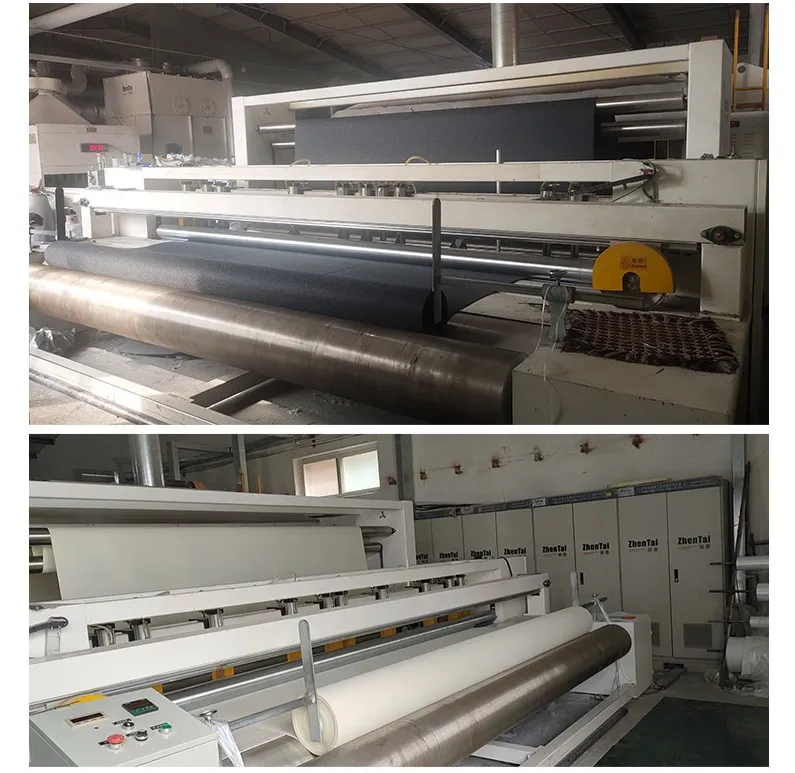
Polyester felt's foundation lies in polyethylene terephthalate (PET) fibers, a thermoplastic polymer derived from ethylene glycol and terephthalic acid. PET exhibits inherent properties such as high tensile strength, resistance to stretching and shrinking, and relative inertness to many chemicals. Raw material selection significantly influences the final product’s characteristics; variations in denier (fiber thickness) and staple length directly impact felt density, texture, and strength. The manufacturing process begins with fiber preparation, followed by carding – a mechanical process that disentangles and aligns the fibers into a web. This web is then subjected to needling, where barbed needles interlock the fibers, creating a preliminary bond. Crucially, thermal bonding, utilizing ovens or heated rollers, melts the polyester fibers at their softening point (approximately 260°C), fusing them together without the need for adhesives. Parameter control during thermal bonding—temperature, dwell time, and pressure—is vital. Insufficient temperature results in weak bonding, while excessive temperature causes fiber degradation and discoloration. Variations exist, including chemical bonding utilizing a binder resin and mechanical bonding using water jets (spunlaced felt), though thermal bonding remains the dominant method for standard polyester felt production. The consistency of fiber distribution within the web directly correlates to the uniformity of the felt, demanding precise carding machine calibration and regular maintenance.
Performance & Engineering
The performance of polyester felt is dictated by a complex interplay of physical and mechanical properties. Its tensile strength, typically ranging from 50-200 N/50mm (depending on density and fiber type), determines its resistance to tearing under stress. Elongation at break, usually between 50-150%, signifies its ability to stretch before fracturing. Critical to many applications is its air permeability, measured in CFM (cubic feet per minute), which governs its effectiveness in filtration and ventilation systems. Polyester felt’s resistance to abrasion, assessed via methods like the Taber abrasion test, dictates its lifespan in applications involving frictional forces. Environmental resistance is also crucial. While polyester is resistant to many dilute acids and alkalis, prolonged exposure to strong solvents or UV radiation can lead to degradation. Therefore, understanding the operational environment is paramount. In acoustic applications, polyester felt’s sound absorption coefficient (ranging from 0.15 to 0.95 across various frequencies) is a key metric, influenced by density and thickness. Force analysis in cushioning applications requires consideration of compression set – the permanent deformation remaining after unloading – which directly affects the long-term performance of the felt. Compliance requirements vary by industry; for instance, automotive applications demand adherence to flammability standards (FMVSS 302), while medical applications necessitate biocompatibility testing (ISO 10993).
Technical Specifications
| Property | Unit | Typical Value (Standard Grade) | Typical Value (High-Density Grade) |
|---|---|---|---|
| Density | g/m² | 500-1200 | 1500-2500 |
| Thickness | mm | 1-5 | 5-10 |
| Tensile Strength | N/50mm | 80-120 | 150-200 |
| Elongation at Break | % | 80-120 | 100-150 |
| Air Permeability | CFM | 100-300 | 20-100 |
| Operating Temperature | °C | -40 to +150 | -40 to +150 |
Failure Mode & Maintenance
Polyester felt, while durable, is susceptible to several failure modes. Hydrolytic degradation, caused by prolonged exposure to moisture, weakens the polymer chains, reducing strength and flexibility. This is particularly pronounced in high-humidity environments. Thermal degradation, resulting from exceeding the maximum operating temperature, leads to discoloration, embrittlement, and loss of mechanical properties. Mechanical fatigue, arising from repeated compression or flexing, can cause fiber breakage and eventual material failure. Abrasion, especially in applications involving sliding contact, leads to surface erosion and thinning of the felt. Biological degradation, while less common, can occur due to microbial attack in specific environments. Failure analysis often reveals the root cause; for instance, brittle fractures indicate thermal degradation, while significant thinning points to abrasion. Maintenance primarily focuses on prevention. Regular cleaning to remove particulate matter prevents clogging and maintains airflow. Avoidance of harsh chemicals and prolonged UV exposure is crucial. For applications requiring high hygiene, periodic replacement is recommended. In cases of minor damage, patching with compatible polyester felt can extend the lifespan, but extensive damage necessitates complete replacement to ensure consistent performance and prevent catastrophic failure. Periodic inspection for signs of degradation—discoloration, brittleness, or reduced thickness—is paramount for proactive maintenance.
Industry FAQ
Q: What is the impact of different polyester fiber deniers on the final felt properties?
A: Lower denier fibers (finer fibers) generally result in a smoother, softer felt with a higher surface area, enhancing filtration efficiency and providing a more refined texture. However, they tend to have lower tensile strength. Higher denier fibers produce a coarser, more robust felt with greater strength, but potentially reduced filtration capabilities and a less refined surface finish. The optimal denier depends on the specific application requirements.
Q: How does the thermal bonding process affect the felt's dimensional stability?
A: Precise control of the thermal bonding process is critical for dimensional stability. Insufficient bonding leads to fiber slippage and dimensional changes, particularly under stress or in humid environments. Over-bonding can cause excessive shrinkage and distortion. Consistent temperature, pressure, and dwell time are essential to achieve optimal bonding and maintain the desired dimensions.
Q: What are the limitations of polyester felt in applications requiring chemical resistance?
A: While polyester exhibits good resistance to many common chemicals, it is susceptible to degradation by strong acids, alkalis, and organic solvents. Prolonged exposure to these substances can cause swelling, dissolution, or embrittlement. It’s crucial to verify chemical compatibility before using polyester felt in such environments.
Q: How does the density of polyester felt influence its sound absorption performance?
A: Generally, higher density polyester felt exhibits better sound absorption, particularly at lower frequencies. Increased density provides greater mass, which enhances the material's ability to damp sound waves. However, very high densities can reduce air permeability, potentially diminishing performance at higher frequencies. Optimizing density for a specific frequency range is vital.
Q: Can polyester felt be recycled, and what are the typical recycling processes?
A: Polyester felt can be recycled, although the process is not as widespread as PET bottle recycling. Mechanical recycling involves shredding the felt and reprocessing it into new fibers or materials. Chemical recycling, a more advanced process, breaks down the polyester into its constituent monomers for reuse. However, contamination from other materials during use can complicate the recycling process.
Conclusion
Polyester felt stands as a versatile and cost-effective material, delivering a unique combination of performance characteristics suited to a wide range of industrial applications. Its manufacturing process, centered around thermal bonding of PET fibers, allows for precise control of density, thickness, and mechanical properties. Understanding the interplay between material science, manufacturing parameters, and application-specific requirements is critical for achieving optimal performance and longevity.
Future advancements will likely focus on incorporating bio-based polyester alternatives, enhancing chemical resistance through surface treatments, and developing more efficient recycling processes to minimize environmental impact. As industries continue to prioritize sustainable materials and high-performance solutions, polyester felt is poised to remain a prominent component in diverse manufacturing sectors.


 English
  Afrikaans
  Albanian
  Amharic
  Arabic
  Armenian
  Azerbaijani
  Basque
  Belarusian
  Bengali
  Bosnian
  Bulgarian
  Catalan
  Cebuano
  Corsican
  Croatian
  Czech
Czech  Danish
  Dutch
Dutch  Esperanto
  Estonian
  Finnish
  French
  Frisian
  Galician
  Georgian
  German
  Greek
Greek  Gujarati
  Haitian Creole
  Hausa
Hausa  Hebrew
  Hindi
Hindi  Miao
Miao  Hungarian
  Icelandic
  Igbo
Igbo  Indonesian
  Irish
Irish  Italian
  Japanese
  Javanese
  Kazakh
  Khmer
Khmer  Rwandese
  Korean
  Kurdish
  Kyrgyz
  Lao
Lao  Latin
Latin  Latvian
  Lithuanian
  Luxembourgish
  Macedonian
  Malgashi
  Malay
Malay  Malayalam
  Maltese
  Maori
Maori  Marathi
  Mongolian
  Myanmar
  Nepali
  Norwegian
  Norwegian
  Occitan
  Pashto
  Persian
  Polish
  Portuguese
  Romanian
  Russian
  Samoan
  Scottish Gaelic
  Serbian
  Sesotho
  Shona
Shona  Sindhi
  Sinhala
  Slovak
  Slovenian
  Somali
  Spanish
  Sundanese
  Swahili
  Swedish
  Tajik
Tajik  Tamil
Tamil  Tatar
Tatar  Telugu
  Thai
Thai  Turkish
  Turkmen
  Ukrainian
  Urdu
Urdu  Uighur
  Uzbek
Uzbek  Vietnamese
  Welsh
Welsh  Bantu
Bantu  Yiddish
  Yoruba
  Zulu
Zulu