
Apr . 01, 2024 17:55 Back to list
red felt fabric Performance Analysis
Introduction
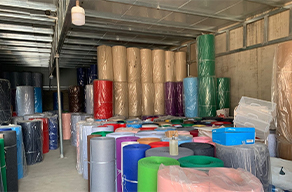
Red felt fabric is a non-woven textile material manufactured by matting, condensing and pressing fibers together. Primarily composed of wool, but increasingly incorporating synthetic fibers like acrylic, rayon, and polyester, it distinguishes itself from woven fabrics through its lack of a true weave. Within the broader textile industry, red felt occupies a niche role requiring specific manufacturing expertise and material understanding. Its consistent density, lack of fraying, and ease of cutting make it ideal for applications ranging from craft projects and insulation to industrial filtration and protective padding. Core performance characteristics include thermal insulation, sound absorption, cushioning, and liquid absorption. The color, 'red', is typically achieved through dyeing processes after the felting process, influencing colorfastness and potential impact on fiber properties. Understanding the composition, manufacturing process, and inherent limitations of red felt is crucial for selecting the appropriate grade for specific engineering applications.
Material Science & Manufacturing
The primary raw material for traditional red felt is wool, specifically sheep’s wool, valued for its crimp, scale structure, and inherent resilience. Wool fibers contain keratin, a protein providing natural elasticity and a degree of flame resistance. Synthetic alternatives, like acrylic (polyacrylonitrile) and rayon (regenerated cellulose), offer lower cost and tailored properties, such as increased abrasion resistance. The manufacturing process begins with fiber preparation, involving cleaning, carding (aligning fibers), and potentially dyeing. Felting itself relies on the principle of entanglement. Mechanical felting uses needles to repeatedly interlock the fibers, while wet felting employs hot water, agitation, and often chemical additives (like alkalis) to cause the scales on wool fibers to interlock. The degree of agitation, temperature, and chemical concentration directly impact the fabric’s density, thickness, and strength. For red felt specifically, dyeing is frequently conducted post-felting using acid dyes for wool or reactive dyes for synthetic blends. Critical process parameters include dye bath temperature (typically 60-90°C for wool), pH control (critical for dye uptake and fiber damage prevention), and thorough rinsing to remove residual chemicals. Post-processing may include calendaring (pressing) to achieve a smoother surface and defined thickness, and potentially surface treatments for water repellency or stain resistance. Variations in fiber type and manufacturing method lead to diverse felt qualities, impacting its end-use performance.
Performance & Engineering
Red felt's performance characteristics are dictated by its composition and density. From an engineering perspective, it’s crucial to analyze its mechanical, thermal, and chemical properties. Tensile strength, typically ranging from 5-30 MPa depending on fiber content and density, defines its resistance to tearing. Compressive strength, vital for cushioning applications, relates to its ability to withstand loads without permanent deformation. Thermal insulation is a key attribute, with a thermal conductivity of approximately 0.035-0.04 W/m·K for wool felt. This performance stems from the trapped air within the fiber matrix. Sound absorption coefficients, generally higher at lower frequencies, make it useful in acoustic applications. Environmental resistance is variable; wool felt is susceptible to degradation from prolonged UV exposure and moisture, while synthetic blends exhibit superior resistance. Chemical compatibility is also critical. Red felt, particularly wool varieties, are vulnerable to attack by moths, mildew, and strong acids/alkalis. Applications requiring oil resistance necessitate synthetic blends. Compliance requirements depend on the end-use. For example, felt used in filtration systems must meet specific particle retention standards, while felt used in automotive interiors needs to adhere to flammability regulations (e.g., FMVSS 302 in the US). Force analysis often involves calculating the required thickness and density to withstand anticipated loads and maintain desired compression set.
Technical Specifications
| Parameter | Wool Felt (Typical) | Acrylic Felt (Typical) | Wool/Polyester Blend (60/40) (Typical) | Unit |
|---|---|---|---|---|
| Density | 0.5 - 0.8 | 0.3 - 0.6 | 0.6 - 0.75 | g/cm³ |
| Thickness | 1 - 10 | 0.5 - 5 | 1 - 8 | mm |
| Tensile Strength | 8 - 20 | 5 - 15 | 10 - 25 | MPa |
| Elongation at Break | 30 - 60 | 20 - 40 | 35 - 55 | % |
| Thermal Conductivity | 0.035 - 0.04 | 0.04 - 0.05 | 0.037 - 0.042 | W/m·K |
| Water Absorption | 30 - 50 | 5 - 15 | 20 - 40 | % (24 hr immersion) |
Failure Mode & Maintenance
Red felt is susceptible to several failure modes depending on its composition and application. Fatigue cracking can occur under cyclic loading, particularly in thinner materials, resulting from fiber breakage and delamination. Dimensional instability, especially in wool felt, can arise from moisture absorption and subsequent shrinkage or stretching. Oxidation and UV degradation are prominent failure mechanisms for both wool and synthetic fibers, leading to color fading, reduced strength, and embrittlement. Biological degradation, specifically moth attack on wool, is a significant concern requiring preventative measures. Chemical attack from acids, alkalis, and solvents can dissolve or weaken the fibers. Delamination, or separation of the felt layers, is common under shear stress. Maintenance involves regular inspection for signs of wear, damage, and biological activity. Cleaning should be performed gently, avoiding harsh detergents and excessive agitation. For wool felt, dry cleaning is generally recommended. Storage should be in a cool, dry, and well-ventilated area, protected from direct sunlight and potential pest infestations. Periodic application of mothproofing treatments may be necessary for wool felt components. Preventative measures, such as protective coatings or encapsulation, can enhance resistance to environmental factors and prolong service life. Failure analysis should include microscopic examination of fractured surfaces to identify the root cause of failure (e.g., fiber breakage, chemical attack, delamination).
Industry FAQ
Q: What is the primary difference in performance between wool felt and acrylic felt in a high-humidity environment?
A: Wool felt exhibits significantly higher moisture absorption compared to acrylic felt. While beneficial for some applications (e.g., moisture buffering), excessive moisture uptake leads to dimensional instability – shrinkage and potential loss of shape – in wool felt. Acrylic felt retains its shape and dimensions better in high-humidity conditions but lacks the natural moisture-wicking properties of wool. This difference dictates material selection based on the intended application and environmental exposure.
Q: How does the dyeing process impact the tensile strength of red felt, and what measures are taken to mitigate this?
A: The dyeing process, particularly for wool felt, can reduce tensile strength if not carefully controlled. Harsh chemicals and high temperatures can damage the keratin structure of the wool fibers, weakening their intermolecular bonds. To mitigate this, pH control is crucial during dyeing, along with the selection of appropriate dye types (acid dyes are generally less damaging than direct dyes). Thorough rinsing after dyeing removes residual chemicals that could contribute to degradation. Post-dyeing treatments, such as softening agents, can also help restore some fiber flexibility.
Q: What are the key considerations when specifying red felt for a filtration application involving acidic fluids?
A: Wool felt is generally unsuitable for prolonged exposure to acidic fluids, as the acid can degrade the keratin fibers. Acrylic or polypropylene felt are far more resistant. Even with synthetic felts, the specific acid concentration and temperature must be considered. The felt's thickness and density should be chosen to withstand the fluid pressure and maintain adequate filtration efficiency without deformation. Chemical compatibility testing is essential to verify the felt’s performance and longevity in the intended acidic environment.
Q: How does the needle-felting process compare to wet felting in terms of the resulting felt's mechanical properties and structural integrity?
A: Needle felting produces a felt with more directional strength, aligned with the needle penetration direction, while wet felting creates a more isotropic (uniform in all directions) material. Needle felting generally results in lower density and greater porosity compared to wet felting. Wet felting yields a denser, more compact structure with superior resistance to unraveling, but it can be more difficult to achieve precise thickness control. The choice between the two processes depends on the desired mechanical properties and application requirements.
Q: What standards are relevant for assessing the flammability of red felt used in upholstery applications?
A: Several standards apply to the flammability of upholstery materials. In the US, FMVSS 302 (Flammability of Interior Materials) is a key regulation for automotive upholstery. For general upholstery, NFPA 260 (Standard Methods for Small Scale Orientation of Flammability of Interior Finish Materials Used in Finished Textile and Apparel Articles) is commonly used. In Europe, EN 1021-1 & 2 (Flammability of Furniture – Part 1 & 2) are the relevant standards. These standards assess ignition resistance, flame spread, and smoke generation, ensuring a minimum level of fire safety.
Conclusion
Red felt fabric, whether comprised of wool, acrylic, or a blend, represents a versatile material with performance characteristics dictated by its fiber composition and manufacturing process. The selection of appropriate red felt for a specific application necessitates a thorough understanding of its mechanical properties, environmental resistance, and potential failure modes. Factors such as tensile strength, thermal conductivity, moisture absorption, and chemical compatibility are critical considerations. Careful attention to manufacturing parameters, such as dyeing conditions and felting techniques, directly influences the final product quality and longevity.
Future development in red felt technology focuses on enhancing its sustainable attributes through the utilization of recycled fibers and biodegradable materials. Research into innovative surface treatments aims to improve its resistance to degradation and broaden its application scope. Understanding and adhering to relevant international standards (FMVSS, NFPA, EN) is paramount for ensuring product safety and compliance in diverse industries. A comprehensive approach to material selection, manufacturing control, and rigorous testing will continue to drive advancements and broaden the applicability of red felt fabric across a wide range of engineering domains.


 English
  Afrikaans
  Albanian
  Amharic
  Arabic
  Armenian
  Azerbaijani
  Basque
  Belarusian
  Bengali
  Bosnian
  Bulgarian
  Catalan
  Cebuano
  Corsican
  Croatian
  Czech
Czech  Danish
  Dutch
Dutch  Esperanto
  Estonian
  Finnish
  French
  Frisian
  Galician
  Georgian
  German
  Greek
Greek  Gujarati
  Haitian Creole
  Hausa
Hausa  Hebrew
  Hindi
Hindi  Miao
Miao  Hungarian
  Icelandic
  Igbo
Igbo  Indonesian
  Irish
Irish  Italian
  Japanese
  Javanese
  Kazakh
  Khmer
Khmer  Rwandese
  Korean
  Kurdish
  Kyrgyz
  Lao
Lao  Latin
Latin  Latvian
  Lithuanian
  Luxembourgish
  Macedonian
  Malgashi
  Malay
Malay  Malayalam
  Maltese
  Maori
Maori  Marathi
  Mongolian
  Myanmar
  Nepali
  Norwegian
  Norwegian
  Occitan
  Pashto
  Persian
  Polish
  Portuguese
  Romanian
  Russian
  Samoan
  Scottish Gaelic
  Serbian
  Sesotho
  Shona
Shona  Sindhi
  Sinhala
  Slovak
  Slovenian
  Somali
  Spanish
  Sundanese
  Swahili
  Swedish
  Tajik
Tajik  Tamil
Tamil  Tatar
Tatar  Telugu
  Thai
Thai  Turkish
  Turkmen
  Ukrainian
  Urdu
Urdu  Uighur
  Uzbek
Uzbek  Vietnamese
  Welsh
Welsh  Bantu
Bantu  Yiddish
  Yoruba
  Zulu
Zulu