
Apr . 01, 2024 17:55 Back to list
small felt christmas bags Material Science Manufacturing
Introduction
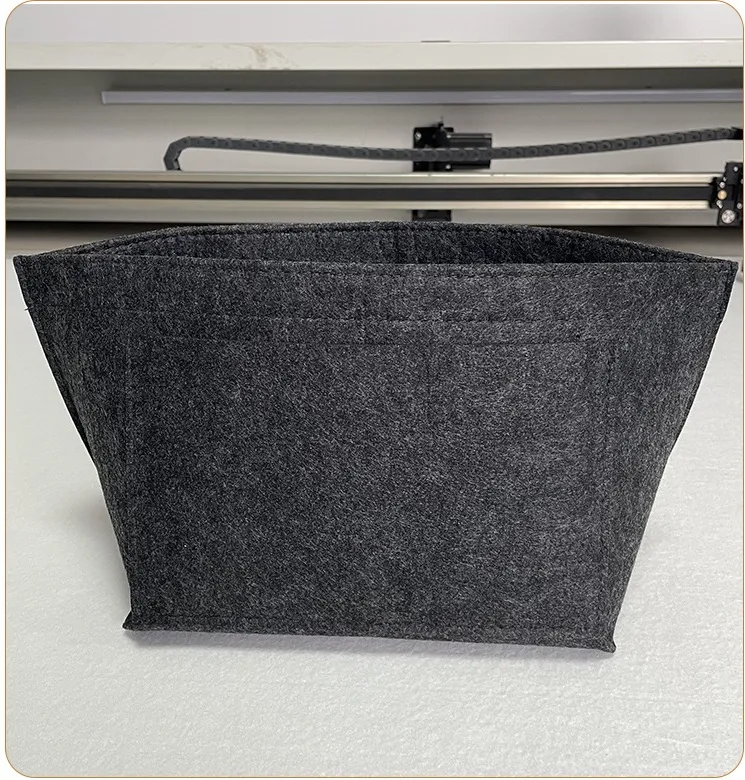
Small felt Christmas bags represent a prevalent packaging solution within the seasonal giftware industry, falling under the broader category of soft goods and decorative packaging. Their technical position in the supply chain ranges from raw material sourcing (primarily wool felt or synthetic alternatives) through die-cutting, sewing, and finishing processes to final distribution. Core performance characteristics center around containment, aesthetic appeal, and cost-effectiveness. While seemingly simplistic, the consistent demand necessitates a focus on material durability, dimensional stability, and colorfastness to withstand handling and storage. A key pain point for manufacturers and purchasers alike is balancing cost with the desired level of perceived quality and adherence to safety regulations concerning dye content and fiber composition. The bags are typically intended for single-use or limited-use applications, creating a demand for efficient manufacturing processes and potentially, sustainable material options.
Material Science & Manufacturing
The primary material for small felt Christmas bags is non-woven felt, typically composed of either wool fibers or synthetic polymers like polypropylene or acrylic. Wool felt possesses inherent crimp and scale structure, enabling fiber interlocking through mechanical entanglement and, sometimes, wet felting processes. This results in a material with good insulation properties, moderate tensile strength (typically 10-30 MPa, dependent on fiber density and processing), and a natural resistance to static electricity. However, wool is susceptible to degradation from moths, mildew, and excessive moisture. Synthetic felts offer improved moisture resistance and lower cost, but generally exhibit lower tensile strength (5-15 MPa) and higher static buildup.
Manufacturing commonly involves several stages: fiber preparation, carding, needling (for synthetic felts), die-cutting, and sewing. Carding aligns the fibers into a web, while needling mechanically interlocks the fibers to create the felt structure. Critical parameters include needle density, punching frequency, and fiber blend ratios. Die-cutting, using hardened steel dies, ensures dimensional accuracy. Seam quality is paramount, with stitch density and thread tension directly impacting bag durability. Polyester thread is frequently employed due to its high tensile strength and abrasion resistance. Dyeing processes, often utilizing acid dyes for wool or disperse dyes for synthetics, must meet stringent colorfastness standards to prevent bleeding or fading during use. Quality control focuses on weight consistency, dimensional accuracy (tolerance typically +/- 2mm), and seam integrity. Increasingly, manufacturers are exploring recycled polyester felt options to address sustainability concerns.
Performance & Engineering
The structural performance of small felt Christmas bags is primarily governed by the tensile strength and tear resistance of the felt material, and the strength of the seams. Force analysis during typical use involves loading from the weight of the contained items, and stress concentration around the handle attachment points. Handle attachment methods vary – commonly, they are sewn directly onto the bag body. The seam strength is the critical factor in preventing handle detachment. A typical handle load capacity requirement is 2-5 kg, depending on the intended use.
Environmental resistance is a crucial consideration. Wool felt is hygroscopic, absorbing moisture which can lead to dimensional changes and reduced strength. Synthetic felts offer better water resistance. Exposure to UV radiation can cause degradation of both wool and synthetic fibers, leading to color fading and reduced tensile strength. Chemical resistance is generally good for non-acidic substances; however, exposure to strong acids or solvents can cause fiber damage. Compliance requirements include adherence to REACH regulations (regarding restricted substances) and CPSIA regulations (for children’s products, specifically regarding lead content in dyes). Dimensional stability is influenced by temperature and humidity; manufacturers must account for potential shrinkage or expansion during storage and transportation. Further engineering considerations include the design of the bag closure (drawstring, ribbon, etc.) and its ease of use.
Technical Specifications
| Material Composition | Thickness (mm) | Tensile Strength (MPa) | Colorfastness (Gray Scale - ISO 105) |
|---|---|---|---|
| 100% Wool Felt | 2.0 - 3.0 | 15 - 25 | 4 - 5 |
| 70% Wool / 30% Viscose Felt | 2.0 - 3.0 | 12 - 20 | 3 - 4 |
| 100% Polypropylene Felt | 1.5 - 2.5 | 8 - 15 | 3 - 4 |
| 100% Polyester Felt | 1.5 - 2.5 | 10 - 18 | 4 - 5 |
| Recycled Polyester Felt | 1.5 - 2.5 | 7 - 14 | 3 - 4 |
| Seam Strength (N/mm) | N/A | >20 | N/A |
Failure Mode & Maintenance
Common failure modes for small felt Christmas bags include seam rupture, material tearing, and dye bleeding. Seam rupture typically occurs under excessive load or due to poor stitch quality (insufficient stitch density, weak thread). Material tearing can occur due to punctures or stress concentration around handle attachment points, particularly with thinner felt materials. Dye bleeding is a result of inadequate dye fixation or exposure to moisture, leading to color transfer to the contents of the bag.
Oxidation and degradation of the fibers, especially with wool, can occur over extended periods of storage, leading to reduced tensile strength and embrittlement. Abrasion during handling and transportation can also contribute to material wear. For maintenance, these bags are not typically washable. Spot cleaning with a mild detergent and cool water is permissible for minor stains, but excessive washing can damage the felt structure. Proper storage in a cool, dry, and dark environment will minimize degradation. Preventative measures include reinforcing handle attachment points with additional stitching, using higher-quality thread, and selecting felt materials with adequate tensile strength for the intended application. Regular inspection of seams and material integrity can help identify potential failure points before they occur.
Industry FAQ
Q: What is the primary difference in performance between wool felt and synthetic felt for these bags?
A: Wool felt offers superior insulation and a natural aesthetic, but is more susceptible to moisture damage and degradation. Synthetic felts, such as polypropylene or polyester, provide better moisture resistance, lower cost, and are less prone to mildew, but generally have lower tensile strength and a less luxurious feel. The choice depends on the intended use and budget constraints.
Q: How do you ensure colorfastness of the dye used in the felt?
A: We utilize dyes specifically formulated for the fiber type (acid dyes for wool, disperse dyes for synthetics) and rigorously test for colorfastness to washing, rubbing, and light exposure, adhering to ISO 105 standards. We also conduct batch testing to ensure consistency.
Q: What is the typical lifespan of a small felt Christmas bag under normal use?
A: Under normal use (holding lightweight gifts for a single holiday season), a well-constructed bag should last at least one season. Lifespan is primarily dependent on the quality of the felt, seam strength, and the weight of the contents. Repeated heavy use will reduce its lifespan.
Q: What standards are you compliant with regarding restricted substances?
A: We are fully compliant with REACH regulations (Registration, Evaluation, Authorisation and Restriction of Chemicals) and CPSIA (Consumer Product Safety Improvement Act) regulations, ensuring our products are free from harmful substances like lead and phthalates.
Q: Can the felt material be recycled, and are there sustainable options available?
A: While traditional wool felt is biodegradable, recycling is challenging. We are increasingly offering bags made from recycled polyester felt, which diverts plastic waste from landfills. Sourcing of wool from responsible farms is also a consideration for improved sustainability.
Conclusion
Small felt Christmas bags, despite their simple construction, require careful consideration of material science, manufacturing processes, and performance requirements to ensure quality and durability. The selection of felt type (wool vs. synthetic) significantly impacts performance characteristics, and adherence to relevant safety and environmental standards is paramount. Balancing cost, aesthetic appeal, and functional integrity remains a critical challenge for manufacturers.
Future development trends are likely to focus on the utilization of sustainable materials, such as recycled polyester felt and responsibly sourced wool, and the implementation of more efficient manufacturing processes to reduce waste and costs. Continuous improvement in seam strength and dye fixation technologies will further enhance product quality and longevity. Furthermore, optimized designs and material choices based on data-driven force analysis will lead to enhanced structural performance and reliability.


 English
  Afrikaans
  Albanian
  Amharic
  Arabic
  Armenian
  Azerbaijani
  Basque
  Belarusian
  Bengali
  Bosnian
  Bulgarian
  Catalan
  Cebuano
  Corsican
  Croatian
  Czech
Czech  Danish
  Dutch
Dutch  Esperanto
  Estonian
  Finnish
  French
  Frisian
  Galician
  Georgian
  German
  Greek
Greek  Gujarati
  Haitian Creole
  Hausa
Hausa  Hebrew
  Hindi
Hindi  Miao
Miao  Hungarian
  Icelandic
  Igbo
Igbo  Indonesian
  Irish
Irish  Italian
  Japanese
  Javanese
  Kazakh
  Khmer
Khmer  Rwandese
  Korean
  Kurdish
  Kyrgyz
  Lao
Lao  Latin
Latin  Latvian
  Lithuanian
  Luxembourgish
  Macedonian
  Malgashi
  Malay
Malay  Malayalam
  Maltese
  Maori
Maori  Marathi
  Mongolian
  Myanmar
  Nepali
  Norwegian
  Norwegian
  Occitan
  Pashto
  Persian
  Polish
  Portuguese
  Romanian
  Russian
  Samoan
  Scottish Gaelic
  Serbian
  Sesotho
  Shona
Shona  Sindhi
  Sinhala
  Slovak
  Slovenian
  Somali
  Spanish
  Sundanese
  Swahili
  Swedish
  Tajik
Tajik  Tamil
Tamil  Tatar
Tatar  Telugu
  Thai
Thai  Turkish
  Turkmen
  Ukrainian
  Urdu
Urdu  Uighur
  Uzbek
Uzbek  Vietnamese
  Welsh
Welsh  Bantu
Bantu  Yiddish
  Yoruba
  Zulu
Zulu