Apr . 01, 2024 17:55 Back to list
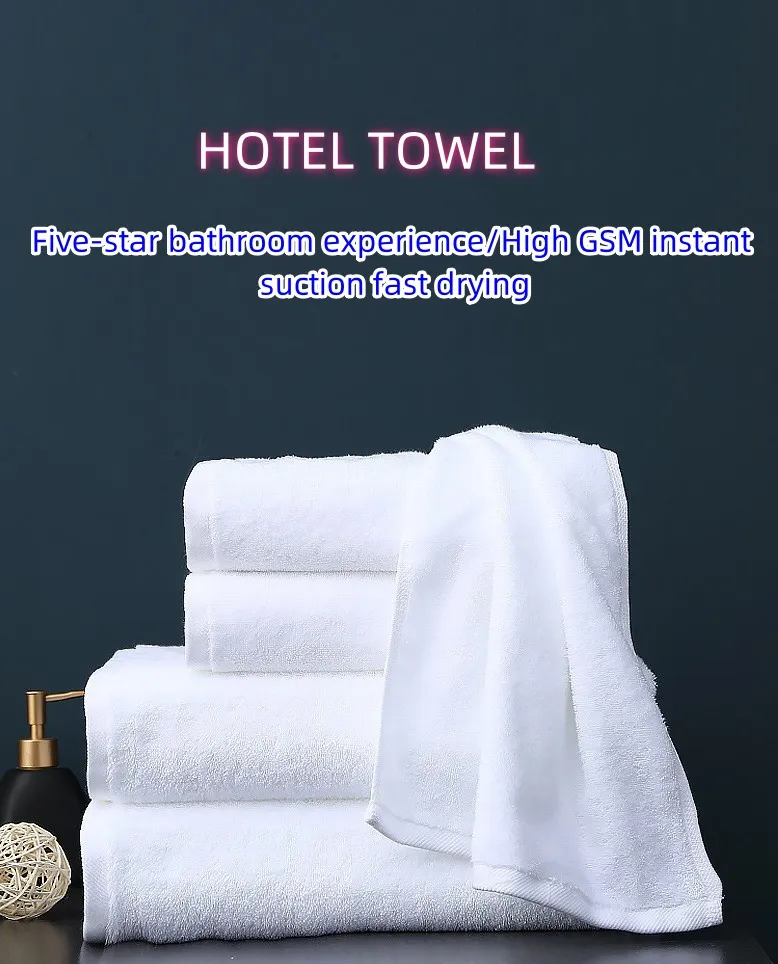
soft microfiber hair towel Performance Analysis
Introduction
Soft microfiber hair towels represent a significant advancement in hair care technology, moving beyond traditional cotton towels to offer enhanced drying efficiency and reduced hair damage. Positioned within the textile manufacturing industry, specifically the personal care sub-segment, these towels are designed to absorb significantly more water than conventional materials, reducing drying time and minimizing friction that can lead to breakage and frizz. Their core performance characteristics revolve around high absorbency, rapid drying capabilities, and a gentle texture optimized for delicate hair structures. The increasing demand for these towels reflects a growing consumer awareness of hair health and a desire for products that minimize styling-related damage. This guide provides an in-depth technical analysis of microfiber hair towels, covering material science, manufacturing processes, performance metrics, potential failure modes, and relevant industry standards.
Material Science & Manufacturing
The primary material component of soft microfiber hair towels is typically polyester and polyamide (nylon) – often in blends with ratios optimized for specific performance characteristics. Polyester contributes to durability and shape retention, while polyamide enhances absorbency and softness. Microfiber construction involves splitting the fibers into extremely fine strands, increasing the surface area and creating more spaces for water absorption. Denier, a unit of measure for the linear mass density of fibers, is a critical parameter, with lower denier values (e.g., 0.1-0.3 denier) indicating finer fibers and greater softness. Manufacturing commonly begins with polymer extrusion, where molten polyester and polyamide are forced through spinnerets to create filaments. These filaments are then drawn (stretched) to align the polymer chains, increasing tensile strength. The crucial step is the fiber splitting process, achieved through various methods including air-jet texturing or chemical etching. This creates the characteristic microfiber structure. Knit construction, frequently a warp knit, is preferred over woven structures due to its superior stretch and recovery properties, contributing to the towel's conformability. Dyeing utilizes specialized disperse dyes for polyester and acid dyes for polyamide, requiring precise temperature and pH control to ensure colorfastness and prevent fiber degradation. Parameter control focuses heavily on fiber denier consistency, splitting ratio, and knit loop length, all impacting the final towel’s absorbency and texture. Quality control at this stage includes microscopic examination of fiber structure and testing of tensile strength and elongation.
Performance & Engineering
The performance of a soft microfiber hair towel is fundamentally governed by its water absorption capacity and drying rate. Water absorption is driven by capillary action – the ability of the microfibers to draw water into the spaces between them. This is directly related to the surface area and the contact angle of water on the fiber surface. Lower contact angles (hydrophilic surfaces) facilitate greater water uptake. The towel’s weight is also a key parameter; a higher weight generally corresponds to greater absorbency, up to a saturation point. Engineering considerations include assessing the towel’s tensile strength and dimensional stability after repeated washing and drying cycles. Force analysis reveals that the shear forces experienced by the hair fibers during drying are significantly reduced with microfiber towels compared to cotton, minimizing damage and frizz. Environmental resistance is also crucial; exposure to UV radiation and repeated laundering can degrade the polymer chains, reducing absorbency and strength. Compliance requirements, particularly concerning skin sensitivity, are addressed through OEKO-TEX Standard 100 certification, ensuring the absence of harmful substances. Functional implementation relies on the towel’s ability to efficiently wick moisture away from the hair shaft, promoting faster drying and reducing the risk of fungal growth. The impact of different knit structures (e.g., terry, loop) on absorbency and texture is also a significant engineering consideration.
Technical Specifications
| Parameter | Unit | Typical Value | Test Method |
|---|---|---|---|
| Fiber Composition | % | Polyester 80 / Polyamide 20 | FTIR Spectroscopy |
| Fiber Denier | dtex | 0.2 - 0.3 | Fiber Density Measurement |
| Absorbency | g H2O / g fabric | 6 - 8 | ISO 9073-14 |
| Drying Time | seconds | < 30 (on naturally wet hair) | Controlled Environment Testing |
| Tensile Strength (Warp) | N/cm | > 20 | ISO 13934-1 |
| Tensile Strength (Weft) | N/cm | > 18 | ISO 13934-1 |
Failure Mode & Maintenance
Microfiber hair towels, while durable, are susceptible to several failure modes. Common issues include fiber shedding, particularly after repeated washing. This is exacerbated by harsh detergents and high wash temperatures. Degradation of the polymer chains due to UV exposure can lead to reduced absorbency and discoloration. Mechanical damage, such as tearing or snagging, can occur due to abrasive forces or improper handling. A significant failure mode is the loss of loft and softness over time, resulting from fiber matting and compaction. Failure analysis reveals that repeated stretching and compression during use can lead to fiber fatigue and breakage. Maintenance recommendations emphasize washing the towels in lukewarm water with mild detergent, avoiding fabric softeners (which can clog the microfibers), and air drying whenever possible. Avoiding bleach is critical, as it can chemically degrade the polymer fibers. Periodic inspection for fiber shedding and tearing is recommended, with damaged towels being removed from service to prevent further deterioration. Proper storage in a cool, dry place, away from direct sunlight, can minimize UV degradation. Rejuvenating absorbency can sometimes be achieved by occasionally washing the towels with white vinegar to remove detergent buildup.
Industry FAQ
Q: What is the difference between polyester and polyamide microfiber, and how does the blend ratio affect towel performance?
A: Polyester provides the structure and durability, resisting stretching and maintaining shape. Polyamide contributes significantly to absorbency and a softer hand feel. Increasing the polyamide content enhances absorbency but can reduce durability and increase cost. An 80/20 polyester/polyamide blend is a common compromise, offering a balance of performance and cost-effectiveness.
Q: How does the denier of the microfiber affect the towel’s softness and absorbency?
A: Lower denier fibers (finer fibers) create a softer texture because there are more individual filaments contacting the skin. They also increase the overall surface area, enhancing absorbency. However, extremely low denier fibers can be less durable and more prone to shedding.
Q: What is the impact of using fabric softener on microfiber towels?
A: Fabric softeners deposit a coating on the microfiber surface, reducing their absorbency by filling the spaces between the fibers that would normally draw in water. It’s strongly recommended to avoid using fabric softeners with microfiber products.
Q: What are the common washing instructions to prolong the life of a microfiber hair towel?
A: Wash in lukewarm water with a mild, liquid detergent. Avoid bleach and fabric softener. Tumble dry on low heat or, preferably, air dry. Do not iron. Regular, gentle washing will maintain the towel’s absorbency and prevent fiber damage.
Q: How does OEKO-TEX certification ensure product safety for consumers?
A: OEKO-TEX Standard 100 certification independently tests textile products for harmful substances, such as allergenic dyes and pesticides. This certification guarantees that the towel is safe for skin contact and does not pose a health risk to the user.
Conclusion
Soft microfiber hair towels represent a significant improvement over traditional cotton towels in terms of drying efficiency and hair health. Their performance is fundamentally linked to the material science of polyester and polyamide microfibers, the precise control of manufacturing parameters such as denier and knit structure, and adherence to relevant industry standards. Understanding the potential failure modes, such as fiber shedding and UV degradation, is crucial for maximizing the lifespan and performance of these products.
The ongoing development of microfiber technologies focuses on enhancing durability, improving absorbency, and reducing environmental impact through the use of recycled materials. Continued research into fiber treatments and knit structures promises further advancements in the performance and longevity of these essential hair care accessories. As consumer awareness of hair health continues to grow, the demand for high-quality microfiber hair towels is expected to remain strong.


 English
  Afrikaans
  Albanian
  Amharic
  Arabic
  Armenian
  Azerbaijani
  Basque
  Belarusian
  Bengali
  Bosnian
  Bulgarian
  Catalan
  Cebuano
  Corsican
  Croatian
  Czech
Czech  Danish
  Dutch
Dutch  Esperanto
  Estonian
  Finnish
  French
  Frisian
  Galician
  Georgian
  German
  Greek
Greek  Gujarati
  Haitian Creole
  Hausa
Hausa  Hebrew
  Hindi
Hindi  Miao
Miao  Hungarian
  Icelandic
  Igbo
Igbo  Indonesian
  Irish
Irish  Italian
  Japanese
  Javanese
  Kazakh
  Khmer
Khmer  Rwandese
  Korean
  Kurdish
  Kyrgyz
  Lao
Lao  Latin
Latin  Latvian
  Lithuanian
  Luxembourgish
  Macedonian
  Malgashi
  Malay
Malay  Malayalam
  Maltese
  Maori
Maori  Marathi
  Mongolian
  Myanmar
  Nepali
  Norwegian
  Norwegian
  Occitan
  Pashto
  Persian
  Polish
  Portuguese
  Romanian
  Russian
  Samoan
  Scottish Gaelic
  Serbian
  Sesotho
  Shona
Shona  Sindhi
  Sinhala
  Slovak
  Slovenian
  Somali
  Spanish
  Sundanese
  Swahili
  Swedish
  Tajik
Tajik  Tamil
Tamil  Tatar
Tatar  Telugu
  Thai
Thai  Turkish
  Turkmen
  Ukrainian
  Urdu
Urdu  Uighur
  Uzbek
Uzbek  Vietnamese
  Welsh
Welsh  Bantu
Bantu  Yiddish
  Yoruba
  Zulu
Zulu