
Apr . 01, 2024 17:55 Back to list
Sound absorbing felt Performance Analysis
Introduction
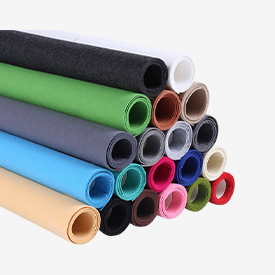
Sound absorbing felt, typically composed of synthetic fibers like polyester or polypropylene, constitutes a critical component in noise control applications across diverse industries, including automotive, construction, and HVAC. Positioned within the building materials and acoustic engineering supply chain, its primary function is to reduce sound reflection and reverberation by converting sound energy into heat through frictional damping. Core performance metrics include Noise Reduction Coefficient (NRC), sound absorption coefficient at specific frequencies, airflow resistance, and density. The industry faces persistent challenges related to achieving optimal sound absorption across a broad frequency spectrum, maintaining long-term performance in humid environments, and meeting increasingly stringent fire safety regulations. This guide provides an in-depth technical analysis of sound absorbing felt, covering material science, manufacturing processes, performance characteristics, failure modes, and relevant industry standards.
Material Science & Manufacturing
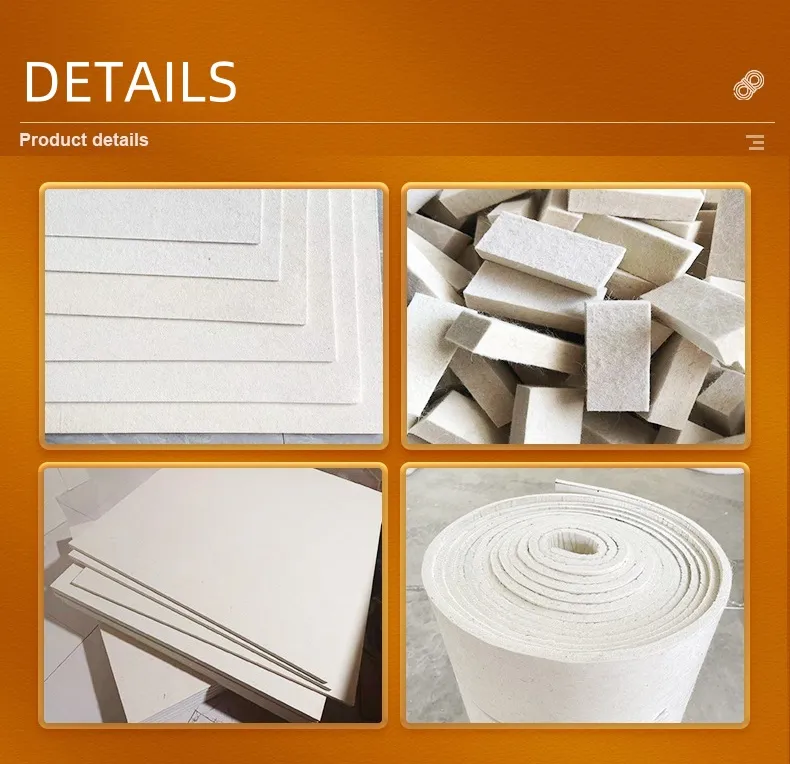
The predominant raw materials for sound absorbing felt are polyester (PET) and polypropylene (PP) fibers. PET fibers exhibit inherent thermal stability and resistance to degradation, contributing to the longevity of the felt. PP fibers offer excellent chemical resistance and a lower cost base, although typically with slightly lower thermal performance. Fiber denier (fineness) significantly impacts sound absorption; finer deniers increase surface area and thus improve damping. Manufacturing primarily involves carding, needling, and thermal bonding. Carding aligns the fibers into a web. Needling mechanically interlocks the fibers to create structural integrity, avoiding the need for adhesives that could compromise acoustic performance. Thermal bonding utilizes heat to partially melt the fibers, fusing them together. Critical parameters during manufacturing include carding speed, needle density, needle depth, and thermal bonding temperature. Excessive thermal bonding can reduce airflow resistance, negatively impacting sound absorption, while insufficient bonding can lead to delamination. Fiber uniformity and consistent web density are paramount to ensure predictable acoustic properties. Recent advancements include the incorporation of recycled PET fibers, addressing sustainability concerns, and the use of biopolymers to further reduce the environmental footprint.
Performance & Engineering
The sound absorption performance of felt is fundamentally governed by its porous structure, which allows sound waves to penetrate and dissipate energy through viscous and thermal losses. Airflow resistance, measured in Rayls, is a crucial parameter; an optimal resistance range exists for maximizing sound absorption at specific frequencies. Low resistance materials are effective at absorbing high frequencies, while higher resistance materials perform better at lower frequencies. The Noise Reduction Coefficient (NRC), an average measure of sound absorption across the 250Hz to 2000Hz frequency range, is a common performance metric. Engineering considerations include material density, thickness, and mounting configuration. Increasing thickness generally improves low-frequency absorption. Mounting felt directly to a hard surface maximizes performance, while leaving an air gap can reduce effectiveness, particularly at lower frequencies. Force analysis dictates the selection of felt density and thickness to withstand potential mechanical stresses, such as vibrations in automotive applications or impacts in building acoustics. Compliance with fire safety standards, such as UL 94 and EN 13501-1, is essential, requiring the use of fire retardants or inherently flame-resistant fibers. Environmental resistance is also critical, with prolonged exposure to humidity potentially leading to degradation of the fibers and a reduction in acoustic performance.
Technical Specifications
| Parameter | Unit | Polyester Felt (Standard Grade) | Polypropylene Felt (Standard Grade) |
|---|---|---|---|
| Density | kg/m³ | 150-300 | 100-200 |
| Thickness | mm | 6-50 | 6-50 |
| Noise Reduction Coefficient (NRC) | - | 0.70-0.95 | 0.65-0.85 |
| Airflow Resistance | Rayls | 5-50 | 2-30 |
| Thermal Conductivity | W/m·K | 0.35-0.45 | 0.30-0.40 |
| Water Absorption (24hr) | % Weight | <1.0 | <0.5 |
Failure Mode & Maintenance
Common failure modes in sound absorbing felt include delamination, compression set, and degradation due to UV exposure or chemical attack. Delamination occurs when the fiber bonding is insufficient to maintain structural integrity, particularly under mechanical stress or fluctuating temperatures. Compression set, a permanent deformation under sustained load, reduces the effective thickness and thus diminishes sound absorption. UV exposure can cause discoloration and embrittlement of the fibers, especially in polyester felt. Chemical attack from cleaning agents or industrial pollutants can dissolve or weaken the fibers. Maintenance primarily involves vacuuming to remove dust and debris, which can accumulate and reduce airflow resistance. Avoid harsh cleaning chemicals, opting instead for mild detergents and water. In high-humidity environments, periodic inspection for mold growth is recommended. If delamination occurs, replacement of the affected section is typically the most practical solution. Preventative measures include selecting materials with appropriate UV stabilizers and chemical resistance for the intended application, and ensuring proper installation to minimize mechanical stress. Regular monitoring of acoustic performance, using a sound level meter or acoustic analyzer, can detect early signs of degradation.
Industry FAQ
Q: What is the impact of humidity on the long-term performance of polyester felt?
A: Prolonged exposure to high humidity can cause polyester felt to absorb moisture, leading to a reduction in airflow resistance and a corresponding decrease in sound absorption, particularly at lower frequencies. Mold growth is also a concern in humid environments. Specifying a felt with a hydrophobic treatment or incorporating a vapor barrier during installation can mitigate these effects.
Q: How does the thickness of the felt affect its ability to absorb low-frequency sound?
A: Increasing the thickness of the felt generally improves its ability to absorb low-frequency sound. This is because longer air pathways within the material provide more opportunity for viscous and thermal losses to dissipate energy from lower frequency waves. However, there is a point of diminishing returns, and excessive thickness may not provide a proportional improvement.
Q: What fire safety standards are most relevant for sound absorbing felt used in building construction?
A: EN 13501-1 (European Classification of Reaction to Fire Performance) and UL 94 (Standard for Safety of Flammability of Plastic Materials) are key fire safety standards. Compliance with these standards typically requires the use of inherently flame-resistant fibers or the application of fire retardant treatments. The specific requirements vary depending on the building code and application.
Q: Is it possible to recycle sound absorbing felt at the end of its service life?
A: Yes, particularly polyester (PET) felt can be recycled. Many manufacturers offer take-back programs or utilize post-consumer recycled PET fibers in their production. Polypropylene felt recycling is more challenging, but emerging technologies are being developed to address this. Utilizing recycled content contributes to sustainability goals.
Q: What is the difference between needle-punched and thermally bonded felt, and how does it impact performance?
A: Needle-punched felt relies on mechanical interlocking of fibers, providing good durability and dimensional stability. Thermally bonded felt uses heat to fuse the fibers together, potentially creating a smoother surface and a more uniform density. Needle-punching generally results in higher airflow resistance and potentially better low-frequency absorption, while thermal bonding can offer improved tensile strength but may slightly reduce airflow resistance.
Conclusion
Sound absorbing felt remains a fundamental material in noise control engineering, offering a cost-effective and versatile solution for mitigating unwanted sound transmission and reverberation. Its performance is dictated by a complex interplay of material properties, manufacturing parameters, and installation techniques. Understanding the critical role of density, airflow resistance, and fiber characteristics is paramount for selecting the appropriate felt for a specific application.
Future trends in sound absorbing felt development include the increased utilization of sustainable materials, advancements in fiber technology to enhance acoustic performance across a broader frequency spectrum, and the integration of smart materials with adaptive sound absorption capabilities. Continued research into novel bonding techniques and surface treatments will further optimize the performance and longevity of this essential material.


 English
  Afrikaans
  Albanian
  Amharic
  Arabic
  Armenian
  Azerbaijani
  Basque
  Belarusian
  Bengali
  Bosnian
  Bulgarian
  Catalan
  Cebuano
  Corsican
  Croatian
  Czech
Czech  Danish
  Dutch
Dutch  Esperanto
  Estonian
  Finnish
  French
  Frisian
  Galician
  Georgian
  German
  Greek
Greek  Gujarati
  Haitian Creole
  Hausa
Hausa  Hebrew
  Hindi
Hindi  Miao
Miao  Hungarian
  Icelandic
  Igbo
Igbo  Indonesian
  Irish
Irish  Italian
  Japanese
  Javanese
  Kazakh
  Khmer
Khmer  Rwandese
  Korean
  Kurdish
  Kyrgyz
  Lao
Lao  Latin
Latin  Latvian
  Lithuanian
  Luxembourgish
  Macedonian
  Malgashi
  Malay
Malay  Malayalam
  Maltese
  Maori
Maori  Marathi
  Mongolian
  Myanmar
  Nepali
  Norwegian
  Norwegian
  Occitan
  Pashto
  Persian
  Polish
  Portuguese
  Romanian
  Russian
  Samoan
  Scottish Gaelic
  Serbian
  Sesotho
  Shona
Shona  Sindhi
  Sinhala
  Slovak
  Slovenian
  Somali
  Spanish
  Sundanese
  Swahili
  Swedish
  Tajik
Tajik  Tamil
Tamil  Tatar
Tatar  Telugu
  Thai
Thai  Turkish
  Turkmen
  Ukrainian
  Urdu
Urdu  Uighur
  Uzbek
Uzbek  Vietnamese
  Welsh
Welsh  Bantu
Bantu  Yiddish
  Yoruba
  Zulu
Zulu