
Apr . 01, 2024 17:55 Back to list
Sticky Back Felt Performance Analysis
Introduction
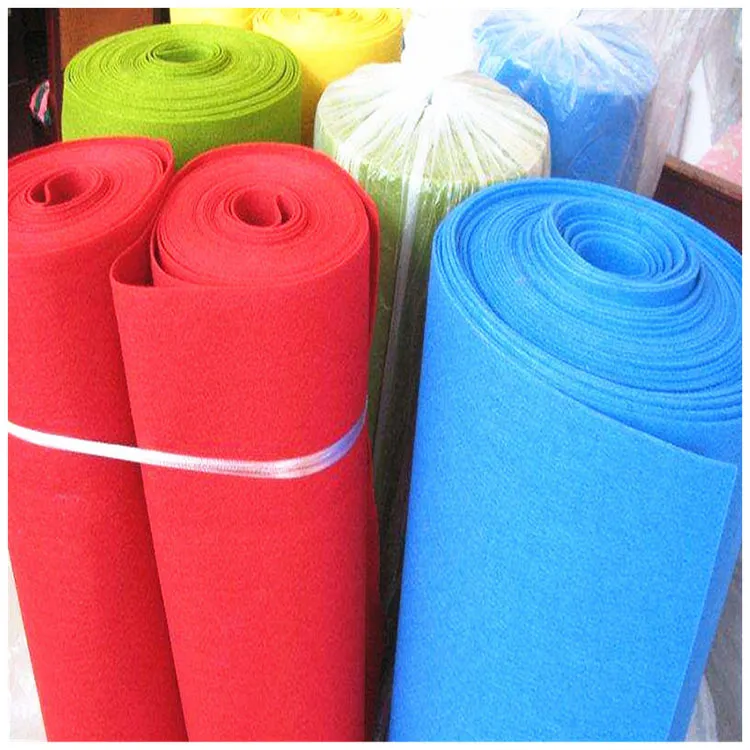
Sticky back felt is a composite material consisting of a felt base, typically constructed from wool, synthetic fibers, or a blend thereof, and a pressure-sensitive adhesive (PSA) coating. It functions as a cushioning, protective, and aesthetic covering, often used in applications demanding noise reduction, scratch prevention, and ease of application. Within the broader materials science landscape, sticky back felt occupies a niche between simple adhesive tapes and more complex engineered fabrics. Its core performance characteristics – adhesion strength, compressibility, density, and resilience – directly influence its suitability for diverse industrial applications ranging from automotive interiors and appliance components to furniture protection and acoustic lining. A key pain point within industries utilizing sticky back felt lies in maintaining consistent adhesive performance across varying temperatures and surface energies, alongside ensuring long-term durability and resistance to environmental degradation. This guide provides a comprehensive technical overview of sticky back felt, covering material composition, manufacturing processes, performance parameters, failure modes, and relevant industry standards.
Material Science & Manufacturing
The felt base material is paramount to the overall properties of sticky back felt. Traditional wool felts offer excellent cushioning and insulation, deriving their properties from the natural crimp and interlocking fiber structure of wool. However, wool felts are susceptible to moisture absorption and biodegradation. Synthetic felts, predominantly composed of polyester, polypropylene, or acrylic fibers, offer improved dimensional stability, resistance to moisture and UV degradation, and cost-effectiveness. Fiber denier, crimp frequency, and needle-punching density during felt formation significantly impact the material’s porosity, density (typically 0.2 – 0.8 g/cm³), and compressive strength. The adhesive layer is generally an acrylic-based PSA, selected for its balance of adhesion, cohesion, and temperature resistance. Acrylic PSAs are formulated with varying levels of tackifiers, plasticizers, and crosslinking agents to tailor their adhesive performance. Silicone-based adhesives are employed in applications requiring high temperature resistance and low outgassing. Manufacturing typically involves a continuous lamination process. The felt base is unwound and passed through a coating station where the PSA is applied using a variety of techniques, including roll coating, knife coating, or spray coating. Coating weight (adhesive applied per unit area, typically 50-200 g/m²) is a critical parameter, influencing adhesion strength and tack. Following coating, the material may undergo curing to enhance adhesive properties and is then wound onto a release liner, typically silicone-coated paper or polyethylene film, for ease of handling and application. Precise control of line speed, coating temperature, and adhesive viscosity are essential for consistent product quality. Post-processing often includes slitting and die-cutting to create custom shapes and sizes.
Performance & Engineering
The performance of sticky back felt is heavily dependent on its adhesion characteristics, quantified by peel adhesion strength (N/cm) and tack (measured using the Probe Tack test). Peel adhesion strength is influenced by surface energy of the substrate, contact pressure during application, and the adhesive formulation. Lower surface energy substrates (e.g., polyethylene, polypropylene) require adhesives with enhanced wetting properties. Environmental resistance is another critical performance parameter. Prolonged exposure to elevated temperatures (above 60°C) can lead to adhesive softening and reduced adhesion. Humidity can cause water absorption into the felt base, potentially weakening the adhesive bond. UV exposure can degrade both the felt and adhesive, leading to discoloration and reduced mechanical properties. Force analysis during application is important to understand the stress distribution on the adhesive interface. Excessive force can lead to adhesive failure or substrate damage. In acoustic applications, the felt’s sound absorption coefficient (measured across a range of frequencies) is a key performance metric. Higher density felts generally exhibit better low-frequency sound absorption. Compliance requirements vary depending on the application. For automotive interiors, materials must meet flammability standards (e.g., FMVSS 302). For medical applications, materials must be biocompatible and meet relevant ISO standards. In applications involving electrical components, the felt must exhibit appropriate dielectric strength to prevent short circuits.
Technical Specifications
| Parameter | Unit | Typical Range (Wool Felt) | Typical Range (Polyester Felt) |
|---|---|---|---|
| Density | g/cm³ | 0.2 – 0.5 | 0.3 – 0.8 |
| Thickness | mm | 1 – 5 | 1 – 10 |
| Tensile Strength | N/cm | 5 – 15 | 10 – 30 |
| Elongation at Break | % | 10 – 30 | 20 – 50 |
| Peel Adhesion Strength (to Steel) | N/cm | 2 – 8 | 3 – 10 |
| Service Temperature Range | °C | -20 to 60 | -30 to 80 |
Failure Mode & Maintenance
Common failure modes for sticky back felt include adhesive failure, cohesive failure, and felt degradation. Adhesive failure occurs when the adhesive bond breaks at the interface between the adhesive and the substrate, often due to insufficient surface preparation, low surface energy of the substrate, or excessive stress. Cohesive failure occurs within the adhesive layer itself, typically resulting from adhesive softening at elevated temperatures or from fatigue due to cyclic loading. Felt degradation can manifest as fiber breakdown, discoloration, or loss of cushioning properties, primarily caused by UV exposure, moisture absorption, or chemical attack. Fatigue cracking in the adhesive can also occur over time, particularly in applications involving vibration or repeated flexing. Delamination, where the adhesive separates from the felt base, can occur due to poor adhesion between the felt and adhesive layers during manufacturing. Oxidation of the adhesive can lead to embrittlement and loss of adhesion. Maintenance typically involves regular inspection for signs of adhesive failure or felt degradation. Contaminated surfaces should be cleaned with isopropyl alcohol prior to application to ensure optimal adhesion. Replacing the felt when significant degradation is observed is crucial to prevent further component damage or functional failure. Avoid exposing the material to harsh chemicals or extreme environmental conditions. Correct application technique, including consistent pressure application, is vital for long-term performance.
Industry FAQ
Q: What is the impact of substrate surface energy on adhesive performance?
A: Lower surface energy substrates (e.g., polypropylene) present a challenge for achieving strong adhesive bonds. The adhesive struggles to wet the surface and maximize contact area. This can be mitigated by using adhesives with lower surface tension, surface priming the substrate, or employing techniques like corona treatment to increase the surface energy.
Q: How does temperature affect the long-term performance of sticky back felt?
A: Elevated temperatures can soften the adhesive, reducing its shear strength and peel adhesion. Low temperatures can make the adhesive brittle, increasing the risk of cohesive failure. Selecting an adhesive with a suitable glass transition temperature (Tg) for the intended operating temperature range is crucial.
Q: What are the key considerations when selecting a felt base material (wool vs. synthetic)?
A: Wool felts offer superior cushioning and insulation but are susceptible to moisture absorption and biodegradation. Synthetic felts (polyester, polypropylene) provide better dimensional stability, moisture resistance, and UV resistance. The choice depends on the specific application requirements and environmental conditions.
Q: How can I prevent adhesive failure during application?
A: Ensure the substrate surface is clean, dry, and free of contaminants. Apply consistent pressure during application to maximize contact between the adhesive and the substrate. Avoid stretching or distorting the felt during application, as this can introduce stress on the adhesive bond.
Q: What are the common causes of felt degradation and how can they be avoided?
A: UV exposure, moisture absorption, and chemical attack are common causes of felt degradation. To mitigate these issues, use UV-stabilized felt materials, protect the felt from moisture, and avoid exposing it to harsh chemicals. Proper storage in a cool, dry place is also essential.
Conclusion
Sticky back felt provides a versatile solution for cushioning, protection, and noise reduction across diverse industrial applications. Its performance characteristics are intrinsically linked to the material selection of both the felt base and the adhesive, as well as the precision of the manufacturing process. Understanding the interplay between these factors is crucial for optimizing product performance and ensuring long-term durability. Careful consideration of environmental factors – temperature, humidity, and UV exposure – and appropriate surface preparation techniques are also paramount to prevent premature failure.
The continuous evolution of adhesive technology and fiber science presents opportunities to enhance the performance of sticky back felt, leading to materials with improved adhesion strength, environmental resistance, and sustainability. Future developments may focus on bio-based adhesives and felts derived from recycled materials, addressing growing concerns about environmental impact and resource depletion. By adhering to industry best practices and implementing rigorous quality control measures, manufacturers can consistently deliver high-performance sticky back felt solutions that meet the demanding requirements of modern industrial applications.


 English
  Afrikaans
  Albanian
  Amharic
  Arabic
  Armenian
  Azerbaijani
  Basque
  Belarusian
  Bengali
  Bosnian
  Bulgarian
  Catalan
  Cebuano
  Corsican
  Croatian
  Czech
Czech  Danish
  Dutch
Dutch  Esperanto
  Estonian
  Finnish
  French
  Frisian
  Galician
  Georgian
  German
  Greek
Greek  Gujarati
  Haitian Creole
  Hausa
Hausa  Hebrew
  Hindi
Hindi  Miao
Miao  Hungarian
  Icelandic
  Igbo
Igbo  Indonesian
  Irish
Irish  Italian
  Japanese
  Javanese
  Kazakh
  Khmer
Khmer  Rwandese
  Korean
  Kurdish
  Kyrgyz
  Lao
Lao  Latin
Latin  Latvian
  Lithuanian
  Luxembourgish
  Macedonian
  Malgashi
  Malay
Malay  Malayalam
  Maltese
  Maori
Maori  Marathi
  Mongolian
  Myanmar
  Nepali
  Norwegian
  Norwegian
  Occitan
  Pashto
  Persian
  Polish
  Portuguese
  Romanian
  Russian
  Samoan
  Scottish Gaelic
  Serbian
  Sesotho
  Shona
Shona  Sindhi
  Sinhala
  Slovak
  Slovenian
  Somali
  Spanish
  Sundanese
  Swahili
  Swedish
  Tajik
Tajik  Tamil
Tamil  Tatar
Tatar  Telugu
  Thai
Thai  Turkish
  Turkmen
  Ukrainian
  Urdu
Urdu  Uighur
  Uzbek
Uzbek  Vietnamese
  Welsh
Welsh  Bantu
Bantu  Yiddish
  Yoruba
  Zulu
Zulu