Apr . 01, 2024 17:55 Back to list
swim towel microfiber Performance Analysis
Introduction
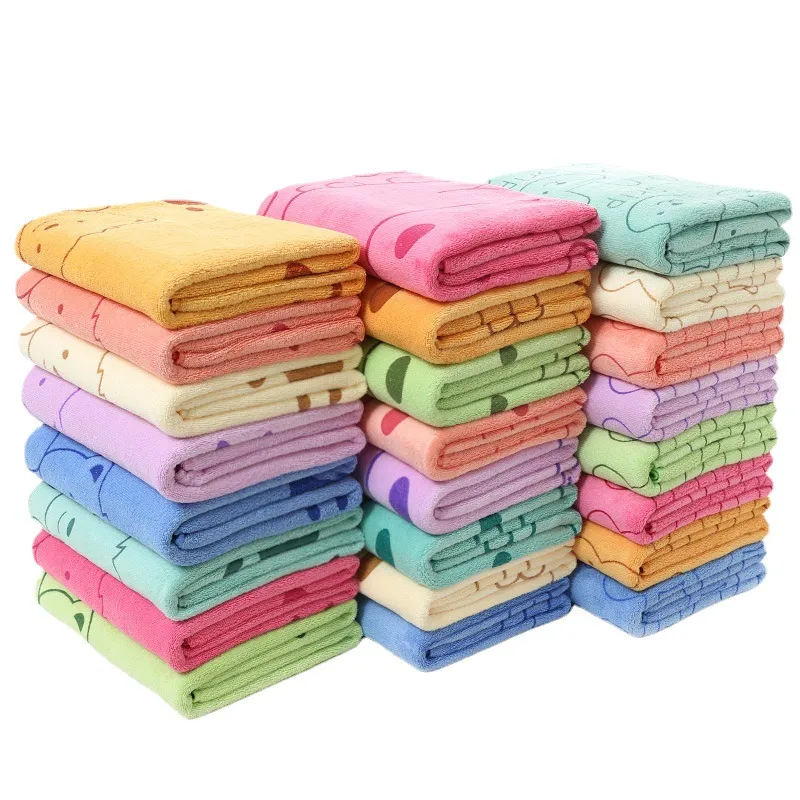
Swim towel microfiber represents a significant advancement in post-aquatic activity drying technology. Unlike traditional cotton towels, microfiber swim towels are engineered for superior water absorption, rapid drying times, and compact portability. Positioned within the textile manufacturing industry, these towels bridge the gap between functional necessity and user convenience. The core performance characteristics revolve around the fiber's high surface area, contributing to exceptional capillary action and efficient moisture wicking. A key advantage over conventional materials is their reduced weight and bulk, offering a practical solution for swimmers, surfers, and beachgoers. The industry faces growing demand for sustainable and high-performance textile options, driving innovation in microfiber production and treatment processes.
Material Science & Manufacturing
Microfiber swim towels are primarily constructed from ultra-fine synthetic fibers, typically polyester and polyamide (nylon). Polyester provides durability and resistance to degradation from chlorine and UV exposure, crucial for swim applications. Polyamide enhances absorbency and softness. The individual fibers are significantly thinner than a human hair – typically less than one denier (a unit of linear mass density). This fineness creates a dramatically increased surface area per unit mass, enabling higher water absorption. Manufacturing involves several key stages. First, the polymer chips (polyester or polyamide) are melt-spun into continuous filaments. These filaments are then split – a crucial process – creating multiple microfibers from each original filament. Splitting methods include hydraulic splitting (using high-pressure water jets) and mechanical splitting. Following splitting, the microfibers are woven or knitted into a fabric structure. Common weaves include ultra-fine knit structures like raschel knit, which maximize surface area. Parameter control during the weaving/knitting process is critical to maintain consistent fiber density and prevent irregularities. Post-processing typically includes dyeing, finishing treatments to enhance softness and absorbency (e.g., brushing, chemical softening), and quality control checks for fiber uniformity, tensile strength, and dimensional stability. The ratio of polyester to polyamide influences the final towel characteristics; higher polyamide content generally results in greater absorbency but potentially reduced durability.
Performance & Engineering
The performance of a microfiber swim towel is heavily influenced by its physical properties and engineered construction. Water absorption is dictated by capillary action, a phenomenon driven by the surface tension of water and the small interstitial spaces between the microfibers. A higher fiber density and smaller fiber diameter contribute to increased capillary force. Drying time is inversely proportional to the surface area exposed to air; the large surface area of microfiber facilitates rapid evaporation. Tensile strength is crucial to prevent tearing during use and washing. Testing involves evaluating both dry and wet tensile strength, as the latter is often lower due to fiber swelling. Environmental resistance is a key consideration. Prolonged exposure to chlorine can degrade polyester fibers, leading to reduced strength and color fading. UV radiation can also cause polymer chain scission, weakening the fabric. Therefore, UV stabilizers and chlorine-resistant finishes are often applied. Compliance requirements vary by region. In the US, the Consumer Product Safety Improvement Act (CPSIA) regulates lead content and phthalates in textile products. European regulations, such as REACH, address the use of hazardous chemicals in textile manufacturing. Engineering considerations also include the towel’s weight and compactness. Optimization of weave structure and fiber density aims to minimize weight while maximizing absorbency and drying speed. Functional implementation requires balancing these competing requirements to deliver a product that meets user expectations.
Technical Specifications
| Parameter | Unit | Typical Value (Standard Grade) | High-Performance Grade |
|---|---|---|---|
| Fiber Composition (Polyester/Polyamide) | % | 80/20 | 70/30 |
| Fiber Denier | dtex | 0.8 | 0.5 |
| Fabric Weight | gsm | 250 | 300 |
| Water Absorption Capacity | g/g | 5-7 | 7-9 |
| Drying Time (20°C, 50% RH) | minutes | 30-45 | 15-30 |
| Tensile Strength (Warp) | N/5cm | 200 | 250 |
| Tensile Strength (Weft) | N/5cm | 180 | 230 |
Failure Mode & Maintenance
Microfiber swim towels, while durable, are susceptible to specific failure modes. Delamination, the separation of fabric layers, can occur due to repeated washing or mechanical stress. This is often exacerbated by low-quality adhesives used in the manufacturing process. Fiber degradation, particularly of the polyester component, arises from prolonged exposure to chlorine and UV radiation. This manifests as reduced tensile strength, color fading, and a decrease in absorbency. Pilling, the formation of small balls of fiber on the surface, is a cosmetic issue but indicates fiber breakage and wear. Microplastic shedding during washing is an emerging concern, contributing to environmental pollution. Fatigue cracking can occur in areas subjected to repeated bending and stress, such as along the edges of the towel. Oxidation of the fibers can also occur, though it is less common. Preventative maintenance is crucial. Washing should be performed in cold water with a mild detergent, avoiding bleach and fabric softeners. Fabric softeners can coat the fibers, reducing their absorbency. Avoid high-temperature drying, as this can accelerate fiber degradation. Regular inspection for signs of damage (tears, delamination, pilling) allows for timely repair or replacement. To minimize microplastic shedding, consider using a laundry bag designed to capture microfibers. Storage in a cool, dry place away from direct sunlight will help prevent UV degradation.
Industry FAQ
Q: What is the impact of different weave structures on the absorbency of microfiber swim towels?
A: Weave structure significantly impacts absorbency. Raschel knit structures, characterized by open loops, generally offer the highest absorbency due to their increased surface area and capillary action. Woven structures, while potentially more durable, typically have lower absorbency due to a tighter fiber arrangement that restricts water penetration. The density of the weave also plays a role; a more dense weave will generally have lower absorbency, but increased structural integrity.
Q: How does chlorine exposure affect the lifespan of a microfiber swim towel, and what mitigation strategies are employed?
A: Chlorine exposure causes degradation of the polyester fibers, leading to reduced tensile strength, color fading, and decreased absorbency. Mitigation strategies include using chlorine-resistant polyester fibers, applying UV stabilizers, and recommending thorough rinsing of the towel after each use to remove residual chlorine. The lifespan can also be extended through careful washing procedures and avoidance of high-temperature drying.
Q: What are the key differences between polyester and polyamide microfiber, and how do these impact towel performance?
A: Polyester offers superior durability, UV resistance, and chlorine resistance, making it ideal for prolonged outdoor use. Polyamide (nylon) boasts higher absorbency and a softer hand feel. Towels with a higher polyamide content will typically absorb more water but may be less resistant to degradation from chlorine and UV exposure. A blend of the two offers a compromise between these properties.
Q: What testing standards are used to evaluate the quality and performance of microfiber swim towels?
A: Common testing standards include ASTM D3776 (water absorbency), ASTM D2260 (tensile strength), and ISO 105 (colorfastness). Testing for pilling is typically performed according to ASTM D3512. Microplastic shedding is currently undergoing standardization, but methods based on filtration and microscopic analysis are being developed.
Q: What innovations are being developed to address the issue of microplastic shedding from microfiber towels?
A: Innovations include modifying fiber structures to reduce shedding, applying coatings to bind fibers together, and developing washing machine filters designed to capture microfibers. Research is also focused on biodegradable microfiber alternatives, though these are not yet widely available due to performance and cost limitations.
Conclusion
Microfiber swim towels represent a significant advancement in drying technology, offering superior absorbency, rapid drying, and portability compared to traditional cotton towels. Their performance is dictated by a complex interplay of material science, manufacturing processes, and engineered construction. Understanding the fiber composition, weave structure, and potential failure modes is crucial for selecting a high-quality towel that meets specific application requirements.
Continued innovation in microfiber technology is focused on enhancing durability, reducing environmental impact (particularly microplastic shedding), and optimizing performance characteristics. Addressing the challenges of chlorine and UV degradation remains a priority, driving research into advanced polymer formulations and protective coatings. The evolving demand for sustainable and high-performance textiles will undoubtedly shape the future of microfiber swim towel development.


 English
  Afrikaans
  Albanian
  Amharic
  Arabic
  Armenian
  Azerbaijani
  Basque
  Belarusian
  Bengali
  Bosnian
  Bulgarian
  Catalan
  Cebuano
  Corsican
  Croatian
  Czech
Czech  Danish
  Dutch
Dutch  Esperanto
  Estonian
  Finnish
  French
  Frisian
  Galician
  Georgian
  German
  Greek
Greek  Gujarati
  Haitian Creole
  Hausa
Hausa  Hebrew
  Hindi
Hindi  Miao
Miao  Hungarian
  Icelandic
  Igbo
Igbo  Indonesian
  Irish
Irish  Italian
  Japanese
  Javanese
  Kazakh
  Khmer
Khmer  Rwandese
  Korean
  Kurdish
  Kyrgyz
  Lao
Lao  Latin
Latin  Latvian
  Lithuanian
  Luxembourgish
  Macedonian
  Malgashi
  Malay
Malay  Malayalam
  Maltese
  Maori
Maori  Marathi
  Mongolian
  Myanmar
  Nepali
  Norwegian
  Norwegian
  Occitan
  Pashto
  Persian
  Polish
  Portuguese
  Romanian
  Russian
  Samoan
  Scottish Gaelic
  Serbian
  Sesotho
  Shona
Shona  Sindhi
  Sinhala
  Slovak
  Slovenian
  Somali
  Spanish
  Sundanese
  Swahili
  Swedish
  Tajik
Tajik  Tamil
Tamil  Tatar
Tatar  Telugu
  Thai
Thai  Turkish
  Turkmen
  Ukrainian
  Urdu
Urdu  Uighur
  Uzbek
Uzbek  Vietnamese
  Welsh
Welsh  Bantu
Bantu  Yiddish
  Yoruba
  Zulu
Zulu