
Apr . 01, 2024 17:55 Back to list
tmr rations for beef cattle Performance Analysis
Introduction
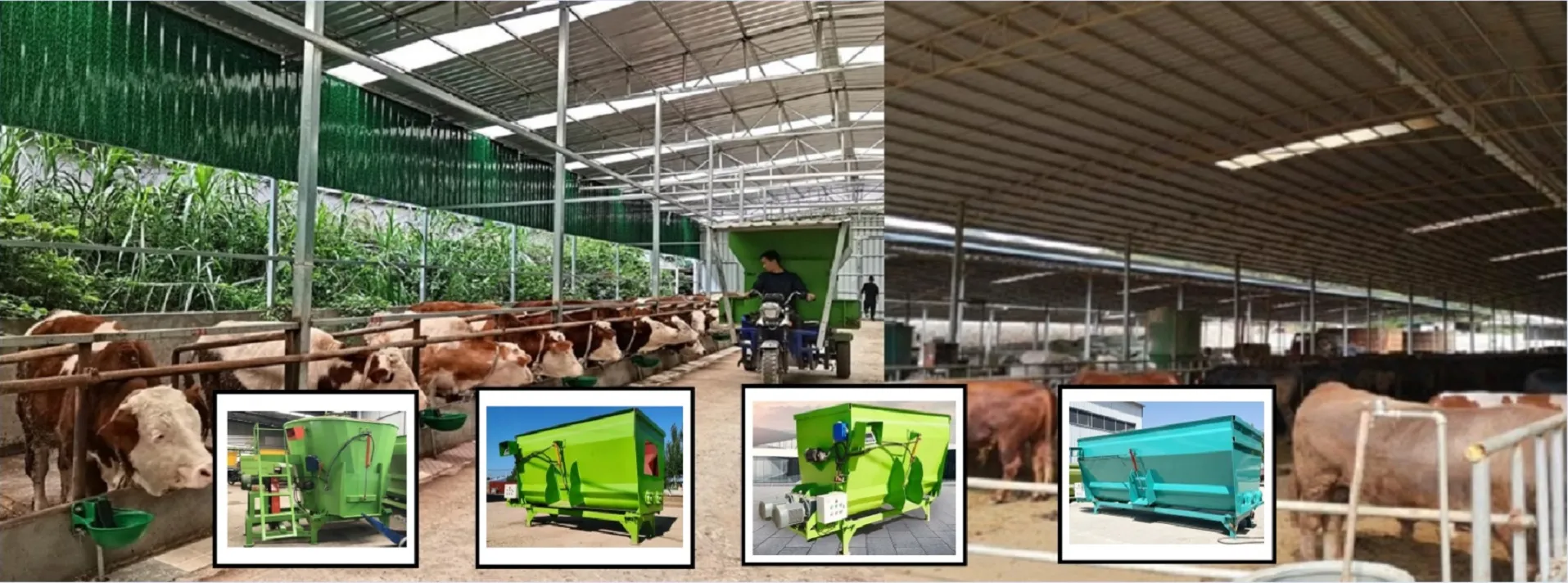
Total Mixed Ration (TMR) is a precisely formulated feed blend designed to meet the nutritional requirements of beef cattle at specific stages of growth and production. Unlike traditional feeding methods where cattle selectively consume components of a feed mixture, TMR ensures each animal receives a balanced intake of forages, concentrates, protein supplements, vitamins, and minerals in every bite. This technology represents a significant advancement in ruminant nutrition, shifting from ingredient-based feeding to a nutrient-based approach. TMR’s position within the beef production chain is critical; it directly impacts animal health, growth rates, feed efficiency, carcass quality, and ultimately, profitability. The core performance indicators are centered around optimizing ruminal fermentation, maximizing nutrient utilization, and minimizing feed waste, leading to improved animal performance and reduced environmental impact. Effective TMR management requires a comprehensive understanding of ingredient characteristics, mixing protocols, and cattle physiological demands. Industry challenges revolve around maintaining consistent ration quality, adapting to variable ingredient availability and pricing, and mitigating the risk of mycotoxins and other feed contaminants.
Material Science & Manufacturing
The constituent materials of TMR rations are diverse, exhibiting distinct physical and chemical properties. Forages, such as corn silage, hay, and grass, are composed primarily of cellulose, hemicellulose, and lignin – complex carbohydrates impacting digestibility. Concentrate ingredients like corn and barley contribute starch, a readily fermentable energy source. Protein supplements, derived from soybean meal or distillers grains, provide essential amino acids. Mineral and vitamin premixes, often micro-encapsulated, ensure optimal nutrient bioavailability. The manufacturing process of TMR typically involves precise weighing of ingredients followed by thorough mixing. Key parameters include particle size, moisture content, and mixing time. Particle size is crucial; excessively fine particles can lead to sorting and reduced fiber mat formation in the rumen, while excessively coarse particles can reduce digestibility. Moisture content impacts palatability and preservation; too high can promote spoilage, too low can create dust and reduce intake. Mixing time must be sufficient to achieve homogeneity, ensuring each bite contains a representative sample of all ingredients. Mixing equipment varies, ranging from vertical TMR mixers (auger or paddle-based) to horizontal mixers (screw conveyor). Ingredient compatibility is also vital. For example, certain minerals can react with phytates in grains, reducing their bioavailability, necessitating the addition of phytase enzymes. Proper storage of ingredients is critical to prevent nutrient degradation and mycotoxin growth. Forages should be stored under anaerobic conditions to minimize spoilage, while concentrates should be protected from moisture and pests.
Performance & Engineering
TMR performance is fundamentally linked to its impact on ruminal fermentation. The rumen, a complex microbial ecosystem, relies on a delicate balance of pH, substrate availability, and microbial populations. TMR formulation aims to optimize this balance, promoting efficient fiber digestion, volatile fatty acid (VFA) production, and microbial protein synthesis. Force analysis considerations include the structural integrity of the mixing equipment, accounting for the load imposed by the varying densities and volumes of ingredients. Environmental resistance is critical in storage and delivery. Silages are typically ensiled under anaerobic conditions, relying on lactic acid fermentation to inhibit spoilage organisms. Protecting TMR from rainfall and temperature fluctuations minimizes nutrient losses and maintains palatability. Compliance requirements are driven by animal feed regulations and food safety standards, varying by region. In the United States, the Food and Drug Administration (FDA) regulates animal feed ingredients and labeling. Functional implementation involves accurate ration formulation based on Nutrient Requirements of Beef Cattle (NRC) recommendations, precise ingredient weighing using calibrated scales, and thorough mixing to ensure homogeneity. Furthermore, monitoring feed intake, animal body condition score, and manure consistency provides valuable feedback for adjusting the ration as needed. Analyzing forage quality (e.g., dry matter, crude protein, neutral detergent fiber) is essential for accurate ration balancing. The delivery system—whether bunk feeding, total-free stall, or pasture-based—also influences TMR performance. Proper bunk management prevents feed spoilage and ensures adequate access for all animals.
Technical Specifications
| Component | Typical Range (Dry Matter Basis) | Unit | Analytical Method |
|---|---|---|---|
| Crude Protein | 12-18 | % | Kjeldahl Method (AOAC 920.87) |
| Neutral Detergent Fiber (NDF) | 28-45 | % | Fibertec System (ANKOM) |
| Acid Detergent Fiber (ADF) | 18-30 | % | Fibertec System (ANKOM) |
| Net Energy for Maintenance (NEm) | 1.4-1.8 | Mcal/kg | NRC 2000 Equations |
| Net Energy for Gain (NEl) | 0.9-1.3 | Mcal/kg | NRC 2000 Equations |
| Starch | 20-35 | % | Enzymatic Gravimetric Method (AOAC 920.40) |
Failure Mode & Maintenance
TMR rations are susceptible to several failure modes impacting animal performance. Mycotoxin contamination is a primary concern; molds growing on forages can produce toxic metabolites leading to reduced feed intake, immune suppression, and reproductive problems. Spoilage due to improper storage is another common issue; aerobic instability in silages results in nutrient losses and the proliferation of undesirable microorganisms. Feed sorting, where animals selectively consume certain ingredients, undermines the balanced nutrient delivery principle of TMR. This can occur if the ration is not adequately mixed or if particle size distribution is uneven. Delamination within the mixing equipment, particularly in vertical mixers, can lead to inconsistent ration quality. Oxidation of fats and vitamins during storage reduces their bioavailability. Fatigue cracking in mixer components, particularly augers and blades, can occur due to repeated stress and wear. Maintenance protocols include regular inspection of storage facilities for signs of mold growth or spoilage, monitoring ingredient moisture content, ensuring proper mixer maintenance (lubrication, blade replacement, belt tensioning), and periodic mycotoxin testing of ingredients. Implementing a robust quality control program—including regular ration analysis and visual inspection—is crucial for identifying and mitigating potential issues. Proper cleaning and sanitation of mixing equipment are essential to prevent the buildup of residue and microbial contamination.
Industry FAQ
Q: What is the optimal NDF level in a TMR for finishing beef cattle?
A: The optimal NDF level for finishing beef cattle typically falls within the 28-45% range (dry matter basis). Higher NDF levels promote ruminal fill and chewing activity, contributing to increased saliva production, which buffers rumen pH. However, excessively high NDF can reduce energy density and limit intake. The specific target NDF level depends on the forage quality, concentrate energy content, and desired rate of gain.
Q: How do I mitigate the risk of mycotoxin contamination in TMR?
A: Mitigating mycotoxin risk involves several strategies. First, source ingredients from reputable suppliers with robust quality control programs. Second, visually inspect forages for signs of mold growth or discoloration. Third, consider utilizing mycotoxin binders in the ration, which adsorb toxins in the rumen. Fourth, regularly test ingredients for mycotoxin presence, and adjust the ration accordingly. Finally, ensure proper storage of forages to minimize mold growth.
Q: What are the key indicators of inadequate mixing in a TMR?
A: Indicators of inadequate mixing include visible segregation of ingredients in the TMR, uneven particle size distribution, inconsistent bunk scores (variation in feed consumption across pens), and fluctuating animal performance metrics. A simple “bite test” – visually examining multiple handfuls of TMR – can reveal ingredient segregation. Regular calibration of the mixing equipment and proper maintenance are essential.
Q: How frequently should I analyze my TMR for nutrient content?
A: TMR should be analyzed for nutrient content at least monthly, and ideally more frequently if ingredient sources change or if you suspect inconsistencies in ration quality. Regular analysis provides accurate data for adjusting the ration to meet animal requirements and ensures optimal performance.
Q: What are the best practices for storing silage to minimize nutrient losses?
A: The best practices for silage storage include ensuring a tight seal to exclude air, packing the silage densely to minimize oxygen exposure, using appropriate silage inoculants to promote lactic acid fermentation, and protecting the silage pile from rainfall and direct sunlight. Regularly inspecting the silage face for mold growth or spoilage is also crucial.
Conclusion
The successful implementation of Total Mixed Ration (TMR) technology hinges on a comprehensive understanding of material science, precise manufacturing processes, and diligent performance monitoring. By optimizing nutrient delivery, promoting ruminal health, and mitigating potential failure modes, TMR offers significant advantages over traditional feeding methods. Addressing industry challenges related to ingredient variability, mycotoxin contamination, and mixing consistency requires ongoing investment in quality control, analytical capabilities, and preventative maintenance.
Looking forward, advancements in precision feeding technologies – including near-infrared spectroscopy for real-time ration analysis and automated feeding systems – are poised to further enhance TMR management. Continued research into ruminal microbiome dynamics and nutrient utilization will also drive improvements in ration formulation and animal performance, ultimately contributing to a more sustainable and profitable beef production system.


 English
  Afrikaans
  Albanian
  Amharic
  Arabic
  Armenian
  Azerbaijani
  Basque
  Belarusian
  Bengali
  Bosnian
  Bulgarian
  Catalan
  Cebuano
  Corsican
  Croatian
  Czech
Czech  Danish
  Dutch
Dutch  Esperanto
  Estonian
  Finnish
  French
  Frisian
  Galician
  Georgian
  German
  Greek
Greek  Gujarati
  Haitian Creole
  Hausa
Hausa  Hebrew
  Hindi
Hindi  Miao
Miao  Hungarian
  Icelandic
  Igbo
Igbo  Indonesian
  Irish
Irish  Italian
  Japanese
  Javanese
  Kazakh
  Khmer
Khmer  Rwandese
  Korean
  Kurdish
  Kyrgyz
  Lao
Lao  Latin
Latin  Latvian
  Lithuanian
  Luxembourgish
  Macedonian
  Malgashi
  Malay
Malay  Malayalam
  Maltese
  Maori
Maori  Marathi
  Mongolian
  Myanmar
  Nepali
  Norwegian
  Norwegian
  Occitan
  Pashto
  Persian
  Polish
  Portuguese
  Romanian
  Russian
  Samoan
  Scottish Gaelic
  Serbian
  Sesotho
  Shona
Shona  Sindhi
  Sinhala
  Slovak
  Slovenian
  Somali
  Spanish
  Sundanese
  Swahili
  Swedish
  Tajik
Tajik  Tamil
Tamil  Tatar
Tatar  Telugu
  Thai
Thai  Turkish
  Turkmen
  Ukrainian
  Urdu
Urdu  Uighur
  Uzbek
Uzbek  Vietnamese
  Welsh
Welsh  Bantu
Bantu  Yiddish
  Yoruba
  Zulu
Zulu