
Apr . 01, 2024 17:55 Back to list
Automotive Felt Performance Analysis

Introduction
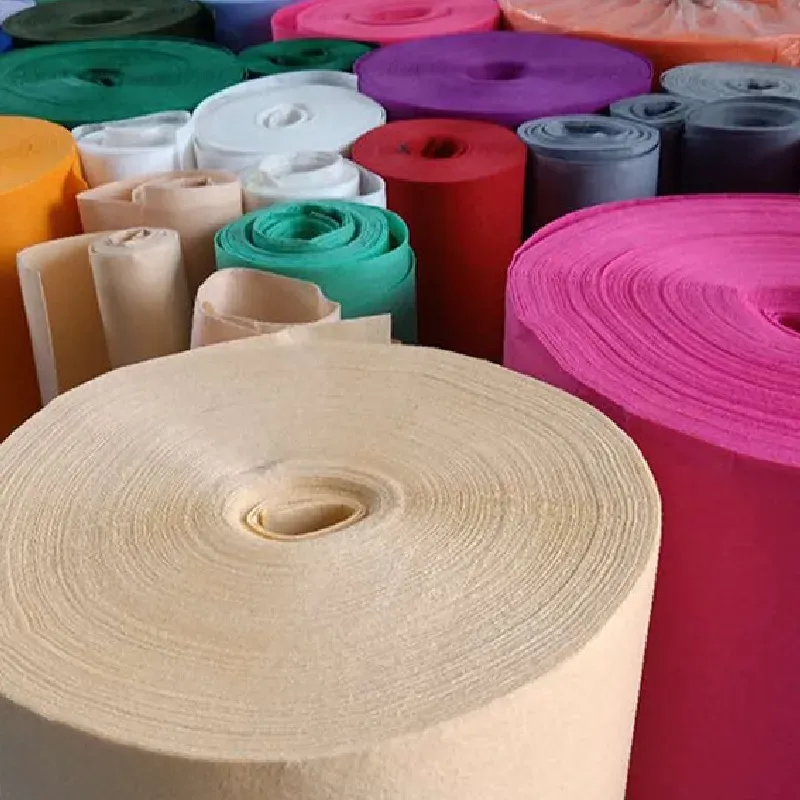
Automotive felt, a non-woven textile material, occupies a critical niche within the automotive supply chain. It's primarily composed of compressed natural, synthetic, or blended fibers, typically wool, acrylic, polyester, or polypropylene. Unlike woven fabrics, felt is created through matting, condensing, and bonding fibers via mechanical, chemical, or thermal processes. Within the automotive industry, its function extends beyond simple cushioning; it serves as a vital component in sound dampening, vibration isolation, thermal insulation, filtration, and sealing applications. The material's performance is dictated by fiber composition, density, thickness, and the specific bonding process employed. The automotive sector demands high-performance felt materials due to stringent requirements for durability, temperature resistance, and chemical compatibility, particularly with automotive fluids and gases. Addressing issues such as long-term compression set, material degradation from UV exposure, and consistent performance across temperature fluctuations are key pain points for automotive engineers and procurement specialists.
Material Science & Manufacturing
The core raw materials for automotive felt – wool, polyester, polypropylene, and acrylic – each exhibit unique physical and chemical properties. Wool offers excellent natural resilience, crimp, and moisture absorption, contributing to superior sound dampening, but is susceptible to degradation from oil and high temperatures. Polyester provides high tensile strength, abrasion resistance, and good UV stability, making it suitable for applications requiring durability. Polypropylene is characterized by its low density, high chemical resistance, and cost-effectiveness, frequently used in interior trim components. Acrylic offers wool-like properties at a lower cost, with good resistance to sunlight and mildew. Manufacturing processes typically involve carding, needling, or wet felting. Carding aligns the fibers, while needling mechanically interlocks them using barbed needles. Wet felting utilizes heat, moisture, and agitation to bond the fibers. Thermoplastic felts (polyester and polypropylene) undergo thermal bonding, where fibers fuse upon application of heat. Parameter control is paramount; fiber fineness, density, needling density, temperature, and pressure all influence the final product’s properties. Chemical bonding, employing adhesives, provides enhanced strength but may introduce VOC emissions, necessitating careful adhesive selection and process control. Consistency in fiber distribution and bonding uniformity are critical to avoid localized weak points and ensure predictable performance. Furthermore, the use of recycled fibers is increasing, demanding rigorous quality control to maintain material integrity.
Performance & Engineering
The performance of automotive felt is critically dependent on its ability to mitigate noise, vibration, and harshness (NVH). This relies on the material's inherent damping characteristics, which are influenced by fiber type, density, and thickness. Force analysis reveals that felt absorbs energy through fiber deformation and friction, converting mechanical energy into heat. The material's resistance to compression set – permanent deformation under sustained load – is vital for sealing applications, such as window and door seals. Environmental resistance is paramount, considering exposure to temperature extremes (-40°C to +85°C), humidity, UV radiation, and a range of automotive fluids including oils, fuels, brake fluid, and coolants. Compliance with automotive industry standards, such as FMVSS 302 (Flammable Materials) in the US and similar regulations in Europe and Asia, requires testing for flammability, smoke emission, and toxicity. Furthermore, the material must exhibit dimensional stability; excessive shrinkage or expansion can compromise fit and function. In filtration applications (cabin air filters), felt's pore size distribution and filtration efficiency are crucial parameters, often governed by EN 779 standards. Engineering design considerations include the material’s creep behavior under continuous stress, its resistance to ozone cracking, and its compatibility with adhesives and other joining methods.
Technical Specifications
| Property | Wool Felt | Polyester Felt | Polypropylene Felt | Acrylic Felt |
|---|---|---|---|---|
| Density (g/m²) | 500-1200 | 600-1500 | 400-800 | 450-1000 |
| Thickness (mm) | 1-5 | 1-10 | 1-6 | 1-4 |
| Tensile Strength (MPa) | 0.5-1.5 | 2-5 | 1.5-3.5 | 0.8-2 |
| Compression Set (%) (24hr @ 70°C) | 15-25 | 5-15 | 3-10 | 10-20 |
| Water Absorption (%) | 30-40 | 0.5-1.5 | 0.1-0.5 | 2-5 |
| Operating Temperature (°C) | -20 to 80 | -40 to 150 | -30 to 100 | -20 to 90 |
Failure Mode & Maintenance
Automotive felt is susceptible to several failure modes. Fatigue cracking, particularly under cyclic loading (e.g., door seals), arises from repeated stress exceeding the material’s endurance limit. Delamination, especially in multi-layered felts, occurs due to inadequate bonding between layers or exposure to solvents. Degradation, stemming from UV exposure, results in embrittlement and loss of strength. Oxidation, promoted by high temperatures and exposure to oxygen, affects wool and acrylic felts, leading to discoloration and reduced performance. Chemical attack from automotive fluids (oils, coolants) can cause swelling, dissolution, or plasticization of the material. Compression set, as previously mentioned, leads to loss of sealing effectiveness. Maintenance typically involves periodic inspection for signs of wear, cracking, or delamination. Cleaning with mild detergents and avoiding harsh chemicals is recommended. For contaminated felt (e.g., oil-soaked), replacement is often the most practical solution. Preventative measures include selecting appropriate felt materials for specific applications, incorporating UV stabilizers, and implementing protective coatings. Regular visual assessments, especially in critical sealing applications, can identify early signs of failure and prevent more significant issues. Addressing moisture ingress is crucial to prevent mildew growth and maintain structural integrity.
Industry FAQ
Q: What is the impact of humidity on the long-term performance of wool felt in automotive applications?
A: Wool felt's hygroscopic nature means it readily absorbs moisture. While this contributes to sound dampening, excessive moisture absorption can lead to dimensional changes, reduced strength, and susceptibility to mildew. Long-term exposure to high humidity can also accelerate fiber degradation. Engineering solutions include utilizing blended materials or applying hydrophobic treatments to mitigate moisture uptake.
Q: How does the choice of bonding agent affect the VOC emissions from thermoplastic felt used in interior trim?
A: The bonding agent used in thermoplastic felts can significantly impact VOC emissions. Traditional adhesives often contain solvents that release VOCs. Selecting low-VOC or solvent-free adhesives is crucial for meeting automotive air quality standards. Thermal bonding offers a VOC-free alternative, but may require careful control of temperature and pressure to ensure sufficient bond strength.
Q: What testing methods are used to evaluate the flammability resistance of automotive felt?
A: Flammability resistance is evaluated using standardized tests like FMVSS 302 (US), ISO 3795 (International), and DIN 75200 (Germany). These tests measure parameters such as flame spread rate, smoke density, and after-flame time. Materials must meet specific criteria to be approved for automotive use.
Q: What are the key considerations when selecting felt for a cabin air filtration application?
A: Key considerations include particle filtration efficiency (measured according to EN 779 or similar standards), dust holding capacity, pressure drop, and resistance to moisture and mold growth. Fiber diameter and pore size distribution are critical parameters influencing filtration performance. The felt should also be chemically inert and not release harmful substances into the cabin air.
Q: How does the cost of recycled felt compare to virgin felt, and are there any performance trade-offs?
A: Recycled felt is generally less expensive than virgin felt, but performance can vary depending on the quality of the recycled fibers. Recycled fibers may have lower tensile strength and abrasion resistance than virgin fibers. Rigorous quality control and fiber blending are essential to ensure that recycled felt meets the required performance specifications.
Conclusion
Automotive felt remains an indispensable material within the automotive industry, providing critical functionalities in noise reduction, vibration damping, sealing, and filtration. Its performance is intrinsically linked to material selection, manufacturing process control, and a thorough understanding of potential failure modes. The trend towards lightweighting and sustainable materials is driving increased adoption of recycled felt and the development of innovative fiber blends with enhanced properties.
Continued research and development efforts are focused on improving the durability, chemical resistance, and thermal stability of automotive felt, as well as minimizing VOC emissions and enhancing its overall environmental footprint. A deep understanding of these technical parameters and adherence to stringent industry standards are essential for ensuring the long-term reliability and performance of automotive components utilizing this versatile material.


 English
  Afrikaans
  Albanian
  Amharic
  Arabic
  Armenian
  Azerbaijani
  Basque
  Belarusian
  Bengali
  Bosnian
  Bulgarian
  Catalan
  Cebuano
  Corsican
  Croatian
  Czech
Czech  Danish
  Dutch
Dutch  Esperanto
  Estonian
  Finnish
  French
  Frisian
  Galician
  Georgian
  German
  Greek
Greek  Gujarati
  Haitian Creole
  Hausa
Hausa  Hebrew
  Hindi
Hindi  Miao
Miao  Hungarian
  Icelandic
  Igbo
Igbo  Indonesian
  Irish
Irish  Italian
  Japanese
  Javanese
  Kazakh
  Khmer
Khmer  Rwandese
  Korean
  Kurdish
  Kyrgyz
  Lao
Lao  Latin
Latin  Latvian
  Lithuanian
  Luxembourgish
  Macedonian
  Malgashi
  Malay
Malay  Malayalam
  Maltese
  Maori
Maori  Marathi
  Mongolian
  Myanmar
  Nepali
  Norwegian
  Norwegian
  Occitan
  Pashto
  Persian
  Polish
  Portuguese
  Romanian
  Russian
  Samoan
  Scottish Gaelic
  Serbian
  Sesotho
  Shona
Shona  Sindhi
  Sinhala
  Slovak
  Slovenian
  Somali
  Spanish
  Sundanese
  Swahili
  Swedish
  Tajik
Tajik  Tamil
Tamil  Tatar
Tatar  Telugu
  Thai
Thai  Turkish
  Turkmen
  Ukrainian
  Urdu
Urdu  Uighur
  Uzbek
Uzbek  Vietnamese
  Welsh
Welsh  Bantu
Bantu  Yiddish
  Yoruba
  Zulu
Zulu