
Apr . 01, 2024 17:55 Back to list
blue felt paper Performance Analysis
Introduction
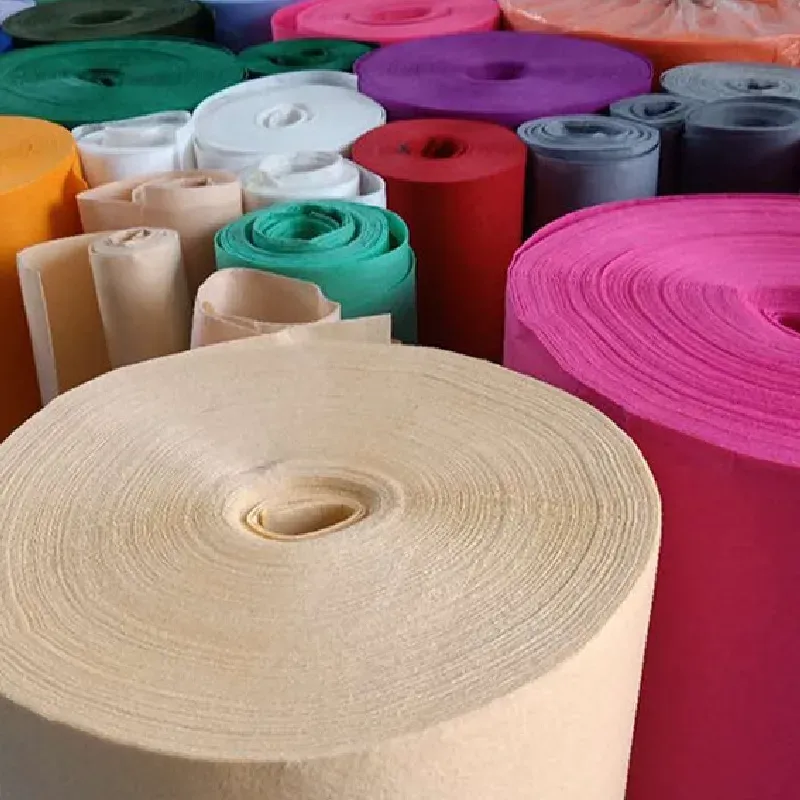
Blue felt paper, typically a non-woven material composed of cellulose fibers and often synthetic binders, occupies a niche yet critical position across several industries. Primarily utilized as an underlayment, cushioning material, or protective layer, it differs fundamentally from traditional paper products due to its lack of a defined grain and its inherent flexibility. Within the manufacturing chain, it bridges the gap between raw pulp processing and finished product assembly. Its core performance characteristics – absorption, compressibility, and sound dampening – are directly linked to fiber composition, density, and the specific binders employed. This technical guide will provide a comprehensive overview of blue felt paper, detailing its material science, manufacturing processes, performance parameters, failure modes, and relevant industry standards. A significant industry pain point centers around consistent performance variability due to sourcing inconsistencies and a lack of standardized quality control metrics for the often-proprietary binder formulations.
Material Science & Manufacturing
The foundational material for blue felt paper is typically bleached wood pulp, often sourced from softwood species like pine and spruce due to their longer fiber length. These fibers provide the structural basis for the material’s strength and flexibility. However, 100% cellulose felt is uncommon; most compositions include synthetic fibers – polypropylene or polyester – to enhance durability and abrasion resistance. The “blue” coloration is typically achieved through the addition of soluble dyes during the wet-end of the paper-making process, commonly utilizing basic blue dyes offering vibrant, yet light-fast color. The binders, representing a crucial proprietary element, are usually acrylic or latex-based polymers. These polymers provide fiber bonding, compressibility, and contribute significantly to the material’s density.
Manufacturing typically involves a wet-laid non-woven process. Pulp is dispersed in water, forming a slurry. Synthetic fibers are added and thoroughly mixed. This mixture is then deposited onto a moving wire mesh. The water drains away, leaving a mat of fibers. Crucially, the application of binders occurs at this stage, often through spray systems. The mat then passes through a drying oven, evaporating residual moisture and activating the binder. Parameter control is paramount: fiber consistency (maintained at 0.5-1.5% by weight), wire speed (affecting density – typically 80-120 m/min), binder solids content (20-30%), and oven temperature (120-150°C) all directly influence the final product’s properties. Calendering, a process of passing the material between rollers, can be employed to control thickness and surface finish. The resulting material is then wound into rolls for distribution.
Performance & Engineering
The performance of blue felt paper is largely dictated by its intended application. As a cushioning material in furniture or packaging, its compressive strength and recovery properties are key. Force analysis reveals that the material exhibits non-linear stress-strain behavior. Initial compression is relatively low, followed by a rapid increase in stress as the fibers begin to compact and the binder reaches its limit. Environmental resistance is a critical factor. Prolonged exposure to high humidity can lead to moisture absorption, resulting in dimensional instability and a reduction in compressive strength. UV exposure can cause binder degradation, leading to embrittlement and discoloration.
In applications requiring barrier properties (e.g., underlayment for flooring), the material's porosity and density dictate its ability to prevent moisture migration. While not inherently waterproof, a carefully formulated binder can impart a degree of water repellency. Compliance requirements vary significantly by application. For example, use in packaging intended for food contact necessitates adherence to FDA regulations concerning binder composition and potential migration of harmful substances. For flooring underlayment, compliance with fire safety standards (e.g., UL 94) is essential. The material’s acoustic performance stems from its fibrous structure, which absorbs sound energy through friction and damping. The Sound Transmission Class (STC) rating is dependent on the density and thickness of the felt.
Technical Specifications
| Property | Units | Typical Value | Test Method |
|---|---|---|---|
| Density | g/m² | 100-300 | ISO 536 |
| Thickness | mm | 1-5 | ASTM D1777 |
| Tensile Strength (MD) | N/m | 50-200 | ISO 527-1 |
| Tensile Strength (CD) | N/m | 30-100 | ISO 527-1 |
| Compressive Strength | kPa | 20-80 | ASTM D575 |
| Water Absorption (24hr) | % | 10-30 | ISO 247 |
Failure Mode & Maintenance
Blue felt paper is susceptible to several failure modes. Fatigue cracking, induced by repeated compression cycles, can occur, particularly in applications where the material is constantly loaded and unloaded. Delamination, the separation of fiber layers, can result from insufficient binder adhesion or exposure to excessive moisture. Degradation of the binder, caused by UV exposure or high temperatures, leads to loss of flexibility and increased brittleness. Oxidation of the cellulose fibers over prolonged periods can reduce strength and contribute to discoloration. Microbial growth can occur in humid environments, leading to material decomposition and odor.
Maintenance is primarily preventative. Storage in a cool, dry, and dark environment is crucial to minimize binder degradation and moisture absorption. Avoid prolonged exposure to direct sunlight. In applications where the material is exposed to abrasion, regular inspection for wear and tear is recommended. Replacement should occur when significant delamination, cracking, or loss of compressive strength is observed. Cleaning should be performed with a gentle vacuum or brush, avoiding harsh chemicals or abrasive cleaners that can damage the fibers or binder. Avoiding excessive mechanical stress during handling and installation will also prolong service life.
Industry FAQ
Q: What is the impact of varying binder types on the long-term performance of blue felt paper?
A: Binder selection profoundly impacts long-term performance. Acrylic binders generally exhibit superior UV resistance and flexibility, making them suitable for outdoor applications. Latex binders are often more cost-effective but may be more susceptible to degradation over time, particularly in humid environments. The binder’s glass transition temperature (Tg) is also critical; a lower Tg generally results in a more flexible material, but can also reduce compressive strength at elevated temperatures.
Q: How does the percentage of synthetic fiber content affect the durability and abrasion resistance?
A: Increasing the proportion of synthetic fibers – polypropylene or polyester – significantly enhances durability and abrasion resistance. Cellulose fibers are relatively weak when subjected to repeated stress. Synthetic fibers provide reinforcement, increasing the material’s resistance to tearing and wear. However, excessive synthetic content can reduce absorbency and potentially increase cost.
Q: What specific tests should be conducted to verify the consistency of dye lot to dye lot for color matching in large-scale production runs?
A: Spectrophotometric analysis is the gold standard for verifying color consistency. Measuring the CIE Lab values for each dye lot allows for quantitative comparison. Additionally, visual comparison against a standardized color swatch under controlled lighting conditions is recommended. A Delta E (ΔE) value less than 1 indicates negligible color difference.
Q: Are there environmentally friendly alternatives to traditional acrylic or latex binders?
A: Bio-based binders derived from renewable resources, such as starch or lignin, are emerging as environmentally friendly alternatives. However, these binders often exhibit lower performance characteristics (e.g., reduced water resistance, lower strength) compared to traditional polymers. Research is ongoing to improve the performance of bio-based binders through chemical modification and blending with synthetic polymers.
Q: What are the considerations when selecting blue felt paper for use as a sound dampening underlayment for laminate flooring?
A: Key considerations include density, thickness, and the material's Impact Insulation Class (IIC) rating. Higher density and thickness generally provide better sound isolation. The IIC rating measures the material’s ability to reduce impact noise (e.g., footsteps). It’s also important to ensure the felt paper is compatible with the flooring adhesive and doesn’t contain any substances that could react with the laminate material.
Conclusion
Blue felt paper, despite its seemingly simple composition, represents a sophisticated material engineered for specific performance requirements. Its versatile properties – stemming from the interplay between cellulose and synthetic fibers, coupled with the critical role of proprietary binders – position it as a valuable component in diverse applications, from cushioning and packaging to flooring underlayment and sound dampening. The consistent challenge facing manufacturers and end-users lies in achieving reliable and reproducible performance, necessitating stringent quality control measures and a thorough understanding of the material’s underlying science.
Future advancements will likely focus on the development of sustainable binder systems, optimized fiber blends for enhanced performance, and improved manufacturing processes to minimize variability and reduce production costs. A standardization of testing methodologies and performance metrics will also be crucial in addressing the industry’s pain point of inconsistent quality and enabling more informed material selection. Continued research into the long-term durability and environmental impact of blue felt paper will be essential for ensuring its continued viability as a reliable and responsible material choice.


 English
  Afrikaans
  Albanian
  Amharic
  Arabic
  Armenian
  Azerbaijani
  Basque
  Belarusian
  Bengali
  Bosnian
  Bulgarian
  Catalan
  Cebuano
  Corsican
  Croatian
  Czech
Czech  Danish
  Dutch
Dutch  Esperanto
  Estonian
  Finnish
  French
  Frisian
  Galician
  Georgian
  German
  Greek
Greek  Gujarati
  Haitian Creole
  Hausa
Hausa  Hebrew
  Hindi
Hindi  Miao
Miao  Hungarian
  Icelandic
  Igbo
Igbo  Indonesian
  Irish
Irish  Italian
  Japanese
  Javanese
  Kazakh
  Khmer
Khmer  Rwandese
  Korean
  Kurdish
  Kyrgyz
  Lao
Lao  Latin
Latin  Latvian
  Lithuanian
  Luxembourgish
  Macedonian
  Malgashi
  Malay
Malay  Malayalam
  Maltese
  Maori
Maori  Marathi
  Mongolian
  Myanmar
  Nepali
  Norwegian
  Norwegian
  Occitan
  Pashto
  Persian
  Polish
  Portuguese
  Romanian
  Russian
  Samoan
  Scottish Gaelic
  Serbian
  Sesotho
  Shona
Shona  Sindhi
  Sinhala
  Slovak
  Slovenian
  Somali
  Spanish
  Sundanese
  Swahili
  Swedish
  Tajik
Tajik  Tamil
Tamil  Tatar
Tatar  Telugu
  Thai
Thai  Turkish
  Turkmen
  Ukrainian
  Urdu
Urdu  Uighur
  Uzbek
Uzbek  Vietnamese
  Welsh
Welsh  Bantu
Bantu  Yiddish
  Yoruba
  Zulu
Zulu