
Apr . 01, 2024 17:55 Back to list
Blush Felt Performance Analysis
Introduction
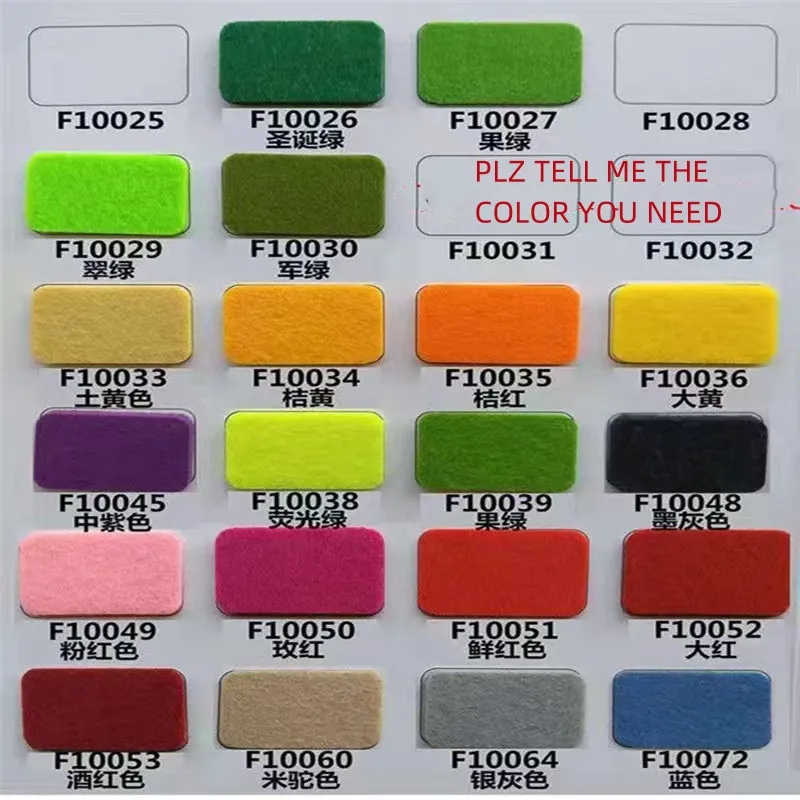
Blush felt, typically a non-woven fabric constructed from a blend of synthetic fibers, primarily polypropylene, represents a versatile material finding increasing application across diverse industrial sectors. Its position within the supply chain extends from raw polymer production through fiber formation, bonding processes, and ultimately, fabrication into finished goods. Core performance characteristics center around filtration efficiency, cushioning properties, sound absorption, and liquid absorption capabilities. Unlike traditional woven textiles, blush felt’s isotropic properties – exhibiting similar performance regardless of direction – are a key differentiator. The material’s cost-effectiveness and adaptability drive its adoption in applications ranging from automotive interiors and construction insulation to industrial wipes and medical dressings. A significant industry pain point revolves around ensuring consistent material properties across batches, particularly regarding basis weight and fiber density, which directly impact performance reliability. Achieving predictable long-term performance, especially in demanding environments characterized by chemical exposure or high temperatures, also presents a continuing challenge.
Material Science & Manufacturing
The fundamental raw material for blush felt is typically polypropylene (PP), although polyester, rayon, and acrylic fibers are also used in specific formulations to modify performance characteristics. Polypropylene's semi-crystalline structure imparts inherent chemical resistance and a relatively high melting point (around 130-171°C), crucial for processing. Fiber production involves melt-blowing or spunbond processes. Melt-blowing forces molten polymer through a die, attenuating it with high-velocity air to create microfibers. Spunbond involves extruding continuous filaments and laying them down in a web. Bonding these fibers into a cohesive fabric is achieved through thermal point bonding, chemical bonding (using binders), or mechanical interlocking (needle-punching). Thermal bonding is the most common method, utilizing patterned rollers to melt-bond the fibers at specific points. Key parameter control during manufacturing includes maintaining consistent polymer melt temperature, air velocity in melt-blowing, web speed, and bonding roller temperature/pressure. Variations in these parameters directly influence fiber diameter, basis weight (mass per unit area, typically expressed in gsm), and the overall strength and density of the felt. The presence of additives, such as UV stabilizers or anti-static agents, is incorporated during the polymer melting phase to enhance performance and address specific application requirements. Fiber denier (a unit of linear mass) and fiber length significantly impact the felt's softness, drape, and filtration efficiency.
Performance & Engineering
The performance of blush felt is heavily reliant on its physical structure and fiber composition. Tensile strength, measured according to ASTM D882, is a critical parameter, particularly in applications involving mechanical stress. Elongation at break, also determined by ASTM D882, indicates the material's ductility and ability to withstand deformation. Air permeability, measured using ASTM D737, is vital in filtration and breathable applications. Hydrostatic head, assessed by ASTM D249, quantifies the material’s resistance to water penetration. For applications requiring sound absorption, the Noise Reduction Coefficient (NRC) is a key metric, determined via ASTM C423. Environmental resistance involves assessing the material’s degradation under exposure to UV radiation (ASTM G154), temperature extremes (ASTM D7891), and chemical exposure (ASTM D543). Force analysis in structural applications requires considering the felt’s compression set (ASTM D395), which determines its ability to recover its original thickness after being subjected to compressive force. Chemical compatibility is paramount; prolonged exposure to strong acids or solvents can cause swelling, dissolution, or embrittlement. Compliance requirements often dictate adherence to flammability standards (e.g., UL 94) and restrictions on the use of certain chemicals (e.g., REACH, RoHS).
Technical Specifications
| Parameter | Typical Value (Polypropylene Blush Felt) | Testing Standard | Application Significance |
|---|---|---|---|
| Basis Weight | 100-1200 gsm | ISO 536 | Determines material density and overall weight. Influences filtration capacity and cushioning. |
| Tensile Strength (MD) | 5-30 N/5cm | ASTM D882 | Indicates resistance to tearing and stress. Critical for applications involving mechanical load. |
| Elongation at Break (MD) | 50-200% | ASTM D882 | Measures ductility and flexibility. Affects drapability and conformability. |
| Air Permeability | 50-500 cfm | ASTM D737 | Determines breathability and filtration efficiency. Crucial for HVAC filters and medical dressings. |
| Hydrostatic Head | 5-100 cm H2O | ASTM D249 | Measures water resistance. Important for protective clothing and barrier applications. |
| Melting Point | 130-165 °C | DSC (Differential Scanning Calorimetry) | Determines temperature resistance and processability. |
Failure Mode & Maintenance
Common failure modes in blush felt applications include fiber fatigue cracking due to repeated stress, delamination of bonded layers resulting from inadequate bonding parameters during manufacturing, degradation caused by prolonged UV exposure leading to brittleness, and oxidation triggered by exposure to elevated temperatures and oxidizing agents. Mechanical abrasion during use can also cause fiber wear and loss of material. Chemical attack from aggressive substances can dissolve or swell the fibers, compromising structural integrity. Preventative maintenance strategies focus on minimizing exposure to harsh environments and implementing appropriate handling procedures. Regular inspection for signs of wear, discoloration, or delamination is crucial. For filtration applications, periodic replacement of the felt is necessary to maintain optimal performance. In certain applications, applying a protective coating (e.g., a hydrophobic treatment) can enhance resistance to water or chemical damage. Storage should be in a cool, dry, and dark environment to prevent degradation. If contamination occurs, gentle vacuuming or brushing can remove loose debris; however, harsh cleaning agents should be avoided as they may damage the fibers.
Industry FAQ
Q: What is the impact of basis weight on the filtration efficiency of blush felt?
A: Higher basis weight generally correlates with increased filtration efficiency, as there is more fiber mass available to capture particulate matter. However, excessively high basis weight can lead to increased air resistance and reduced airflow. An optimal balance must be achieved based on the specific filtration requirements.
Q: How does the choice of fiber material (polypropylene vs. polyester) affect the chemical resistance of blush felt?
A: Polypropylene offers excellent resistance to many acids and alkalis, but has limited resistance to organic solvents. Polyester exhibits better resistance to organic solvents, but may be more susceptible to degradation by strong acids. The selection depends on the anticipated chemical exposure.
Q: What are the common causes of delamination in thermally bonded blush felt?
A: Delamination can occur due to insufficient bonding temperature or pressure during manufacturing, variations in fiber distribution, or exposure to solvents that weaken the thermal bonds. Proper process control and material selection are essential to prevent delamination.
Q: How does UV exposure impact the long-term performance of blush felt?
A: Prolonged UV exposure causes chain scission in the polymer, leading to brittleness, discoloration, and reduced tensile strength. Incorporating UV stabilizers during the manufacturing process can mitigate this effect, extending the material's service life.
Q: What methods are used to determine the appropriate blush felt for a specific automotive interior application?
A: Automotive applications require careful consideration of several parameters, including flammability (FMVSS 302), abrasion resistance, compression set, and color fastness. Testing is performed to ensure compliance with automotive industry standards and to verify that the selected felt meets the performance requirements for its intended use.
Conclusion
Blush felt stands as a remarkably adaptable material, offering a compelling balance of performance, cost-effectiveness, and manufacturing flexibility. Its widespread adoption is a testament to its versatility across numerous industries. Understanding the fundamental material science principles governing its behavior – from fiber properties to bonding mechanisms – is paramount for engineers and procurement professionals aiming to optimize its utilization. The critical factors to consider include the intended application's environmental conditions, mechanical stresses, and chemical exposures.
Future advancements are likely to focus on incorporating bio-based polymers to enhance sustainability, developing more robust bonding technologies to improve durability, and tailoring fiber morphology to achieve specific performance characteristics. Continued research into additive technologies will enable the creation of blush felt formulations with enhanced functionality, further expanding its application potential. Maintaining rigorous quality control throughout the manufacturing process remains essential to ensure consistent performance and mitigate the risk of premature failure.


 English
  Afrikaans
  Albanian
  Amharic
  Arabic
  Armenian
  Azerbaijani
  Basque
  Belarusian
  Bengali
  Bosnian
  Bulgarian
  Catalan
  Cebuano
  Corsican
  Croatian
  Czech
Czech  Danish
  Dutch
Dutch  Esperanto
  Estonian
  Finnish
  French
  Frisian
  Galician
  Georgian
  German
  Greek
Greek  Gujarati
  Haitian Creole
  Hausa
Hausa  Hebrew
  Hindi
Hindi  Miao
Miao  Hungarian
  Icelandic
  Igbo
Igbo  Indonesian
  Irish
Irish  Italian
  Japanese
  Javanese
  Kazakh
  Khmer
Khmer  Rwandese
  Korean
  Kurdish
  Kyrgyz
  Lao
Lao  Latin
Latin  Latvian
  Lithuanian
  Luxembourgish
  Macedonian
  Malgashi
  Malay
Malay  Malayalam
  Maltese
  Maori
Maori  Marathi
  Mongolian
  Myanmar
  Nepali
  Norwegian
  Norwegian
  Occitan
  Pashto
  Persian
  Polish
  Portuguese
  Romanian
  Russian
  Samoan
  Scottish Gaelic
  Serbian
  Sesotho
  Shona
Shona  Sindhi
  Sinhala
  Slovak
  Slovenian
  Somali
  Spanish
  Sundanese
  Swahili
  Swedish
  Tajik
Tajik  Tamil
Tamil  Tatar
Tatar  Telugu
  Thai
Thai  Turkish
  Turkmen
  Ukrainian
  Urdu
Urdu  Uighur
  Uzbek
Uzbek  Vietnamese
  Welsh
Welsh  Bantu
Bantu  Yiddish
  Yoruba
  Zulu
Zulu