
Apr . 01, 2024 17:55 Back to list
bright green felt Performance Analysis
Introduction
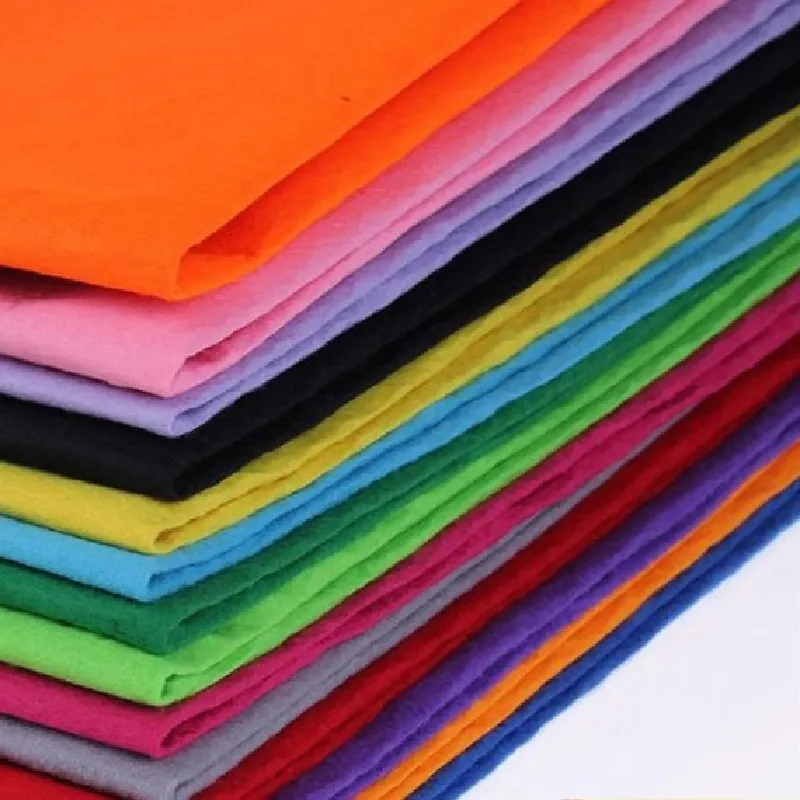
Bright green felt is a non-woven textile material typically manufactured from compressed natural, synthetic, or blended fibers. Its position within the broader textile industry chain is as a versatile intermediary product, serving applications ranging from craft projects and industrial insulation to filtration and protective padding. Core performance characteristics center around its density, thickness, tensile strength, colorfastness, and thermal/acoustic insulation properties. Unlike woven textiles, felt’s structure relies on the interlocking of fibers achieved through mechanical, chemical, or thermal processes. The vibrant green coloration is achieved through the incorporation of dyes during or after the fiber felting process. A key industry pain point is maintaining consistent color and physical properties across large production runs, particularly with recycled fiber content. Further challenges include ensuring the felt’s environmental sustainability and mitigating potential fiber shedding during use and washing.
Material Science & Manufacturing
The primary raw materials for bright green felt include wool, acrylic, polyester, and polypropylene fibers. Wool, a natural protein fiber, offers excellent insulation and moisture absorption but is susceptible to shrinkage and moth damage. Acrylic fibers provide good wool-like qualities with improved durability and resistance to sunlight. Polyester offers high tensile strength and resistance to stretching and abrasion, but has lower moisture absorption. Polypropylene is lightweight and resistant to chemicals, making it suitable for industrial applications. The green coloration is typically achieved using azo dyes, which require careful control to meet environmental regulations regarding restricted substances.
Manufacturing processes generally fall into three categories: wet felting, dry felting, and needle felting. Wet felting involves applying moisture, heat, and agitation to intertwine fibers. This process is prevalent in wool felt production. Dry felting utilizes mechanical action, such as carding and air-laying, to align fibers before compression. Needle felting employs barbed needles to mechanically entangle fibers, creating a denser and more durable material. Parameter control is critical throughout the process. Fiber length, diameter, and crimp impact the final felt density and strength. Dye concentration and application method influence color uniformity and fastness. Compression force and temperature dictate the felt's thickness and compaction. Improper control leads to inconsistencies in physical properties and color variation, necessitating rigorous quality control protocols.
Performance & Engineering
The performance of bright green felt is dictated by its intended application. In insulation, thermal resistance (R-value) and acoustic absorption coefficients are key metrics. Force analysis, particularly tensile and tear strength, is crucial for applications involving mechanical stress, like padding or filtration media. Environmental resistance concerns include UV degradation, moisture absorption, and chemical compatibility. Polyester and polypropylene felts exhibit superior UV resistance compared to wool and acrylic. Moisture absorption can affect dimensional stability and promote mold growth. Chemical compatibility is essential in filtration applications where the felt may contact corrosive substances.
Compliance requirements vary depending on the end-use. For children’s products, flammability testing (e.g., 16 CFR Part 1500) is mandatory. For automotive applications, specifications like FMVSS 302 (Flammable Materials) apply. Filtration felts used in pharmaceutical or food processing require compliance with FDA regulations regarding material safety. Engineering considerations include specifying the appropriate felt density and thickness to achieve desired performance characteristics. Furthermore, understanding the creep behavior of the felt under sustained load is important for long-term reliability. The felt’s inherent porosity influences its filtration efficiency and permeability.
Technical Specifications
| Property | Wool Felt (Bright Green) | Polyester Felt (Bright Green) | Acrylic Felt (Bright Green) | Polypropylene Felt (Bright Green) |
|---|---|---|---|---|
| Density (g/m²) | 300-600 | 200-800 | 250-500 | 100-300 |
| Thickness (mm) | 1-5 | 0.5-10 | 1-4 | 0.5-3 |
| Tensile Strength (N/cm) | 10-30 | 40-80 | 20-50 | 25-60 |
| Elongation at Break (%) | 20-40 | 15-30 | 25-45 | 30-50 |
| Water Absorption (%) | 30-50 | 0.5-2 | 5-15 | 0.1-0.5 |
| Colorfastness to Light (Grade 1-5) | 3-4 | 4-5 | 3-4 | 4-5 |
Failure Mode & Maintenance
Bright green felt is susceptible to several failure modes depending on its composition and application. Wool felts can experience shrinkage during washing, particularly with hot water and agitation. Acrylic felts may pill or fuzz with abrasion. Polyester and polypropylene felts are more resistant to abrasion but can degrade over time with prolonged UV exposure, leading to discoloration and loss of strength. Common failure mechanisms include fatigue cracking under repeated stress, delamination due to poor fiber bonding, and oxidative degradation from exposure to air and moisture. Fiber shedding is also a concern, particularly with loosely constructed felts.
Maintenance strategies vary based on the material. Wool felts typically require dry cleaning or gentle hand washing with cool water. Acrylic and polyester felts can generally be machine washed on a delicate cycle. Polypropylene felts are often wipe-cleanable. Regular vacuuming can remove surface dust and debris. Avoid excessive stretching or compression, as this can permanently deform the felt. To mitigate UV degradation, store felt products in a dark, dry location. For filtration applications, periodic replacement is necessary to maintain optimal performance and prevent clogging. Inspect for signs of wear and tear, such as thinning, fraying, or discoloration, and replace the felt as needed.
Industry FAQ
Q: What is the impact of recycled fiber content on the consistency of bright green felt’s color and physical properties?
A: Recycled fibers inherently introduce variability in color, denier, and length. This can lead to inconsistencies in dye uptake and fiber bonding, resulting in uneven coloration and fluctuations in tensile strength and density. Manufacturers mitigate this by employing rigorous sorting and blending processes, and by using higher-quality dyes. However, maintaining absolute consistency with high recycled content remains a challenge, often requiring increased quality control and potentially accepting a wider tolerance range for certain parameters.
Q: How does the type of dye used affect the environmental impact of bright green felt production?
A: Traditional azo dyes, while providing vibrant colors, can release harmful aromatic amines during degradation. Manufacturers are increasingly adopting alternative dyes, such as reactive dyes or natural dyes, which have a lower environmental impact. However, these alternatives may offer a narrower color palette or reduced colorfastness. Proper wastewater treatment is crucial to remove residual dyes and prevent water pollution, regardless of the dye type used.
Q: What are the key considerations when selecting bright green felt for a filtration application involving acidic fluids?
A: Chemical compatibility is paramount. Polypropylene felt offers excellent resistance to most acids, making it a suitable choice. Polyester has moderate resistance, while wool and acrylic are susceptible to degradation in acidic environments. Consider the concentration and temperature of the acid, as these factors influence the rate of chemical attack. Also, evaluate the felt’s filtration efficiency and permeability, ensuring it meets the application’s requirements without compromising its structural integrity.
Q: What testing methods are used to verify the flammability performance of bright green felt intended for use in children's toys?
A: The primary standard is 16 CFR Part 1500 (Flammability Standard for Fabrics Used in Children's Sleepwear). This involves testing the fabric's ignition resistance, flame spread, and char length. Additional tests, such as the small-scale flammability test, may be conducted to assess the material’s propensity to ignite and burn. The felt must meet the specified criteria to be deemed compliant and safe for use in children’s products.
Q: What is the typical service life of bright green felt used as a cushioning material under static loads?
A: The service life depends heavily on the felt’s density, thickness, the magnitude of the static load, and the operating temperature. Lower-density felts will exhibit greater creep (permanent deformation) under load, reducing their cushioning effectiveness over time. Higher-density felts provide better long-term performance. Estimating service life requires conducting creep testing under simulated operating conditions. As a general guideline, properly selected and installed felt cushioning can maintain acceptable performance for 1-5 years, but regular inspections are recommended.
Conclusion
Bright green felt represents a versatile material with applications spanning numerous industries. Its performance is fundamentally linked to the fiber composition, manufacturing process, and the specific demands of the intended application. Understanding the inherent limitations – such as susceptibility to UV degradation or shrinkage – is crucial for selecting the appropriate felt type and implementing proper maintenance procedures. The increasing emphasis on sustainability necessitates careful consideration of recycled fiber content and the environmental impact of dye selection.
Future advancements in felt technology are likely to focus on developing bio-based fibers with enhanced performance characteristics, improving dye fixation techniques to minimize environmental impact, and incorporating nanotechnology to enhance properties like water repellency and antimicrobial resistance. Continued research and development will further expand the range of applications for bright green felt, solidifying its position as a valuable and adaptable textile material.


 English
  Afrikaans
  Albanian
  Amharic
  Arabic
  Armenian
  Azerbaijani
  Basque
  Belarusian
  Bengali
  Bosnian
  Bulgarian
  Catalan
  Cebuano
  Corsican
  Croatian
  Czech
Czech  Danish
  Dutch
Dutch  Esperanto
  Estonian
  Finnish
  French
  Frisian
  Galician
  Georgian
  German
  Greek
Greek  Gujarati
  Haitian Creole
  Hausa
Hausa  Hebrew
  Hindi
Hindi  Miao
Miao  Hungarian
  Icelandic
  Igbo
Igbo  Indonesian
  Irish
Irish  Italian
  Japanese
  Javanese
  Kazakh
  Khmer
Khmer  Rwandese
  Korean
  Kurdish
  Kyrgyz
  Lao
Lao  Latin
Latin  Latvian
  Lithuanian
  Luxembourgish
  Macedonian
  Malgashi
  Malay
Malay  Malayalam
  Maltese
  Maori
Maori  Marathi
  Mongolian
  Myanmar
  Nepali
  Norwegian
  Norwegian
  Occitan
  Pashto
  Persian
  Polish
  Portuguese
  Romanian
  Russian
  Samoan
  Scottish Gaelic
  Serbian
  Sesotho
  Shona
Shona  Sindhi
  Sinhala
  Slovak
  Slovenian
  Somali
  Spanish
  Sundanese
  Swahili
  Swedish
  Tajik
Tajik  Tamil
Tamil  Tatar
Tatar  Telugu
  Thai
Thai  Turkish
  Turkmen
  Ukrainian
  Urdu
Urdu  Uighur
  Uzbek
Uzbek  Vietnamese
  Welsh
Welsh  Bantu
Bantu  Yiddish
  Yoruba
  Zulu
Zulu