
Apr . 01, 2024 17:55 Back to list
brown craft felt Technical Analysis
Introduction
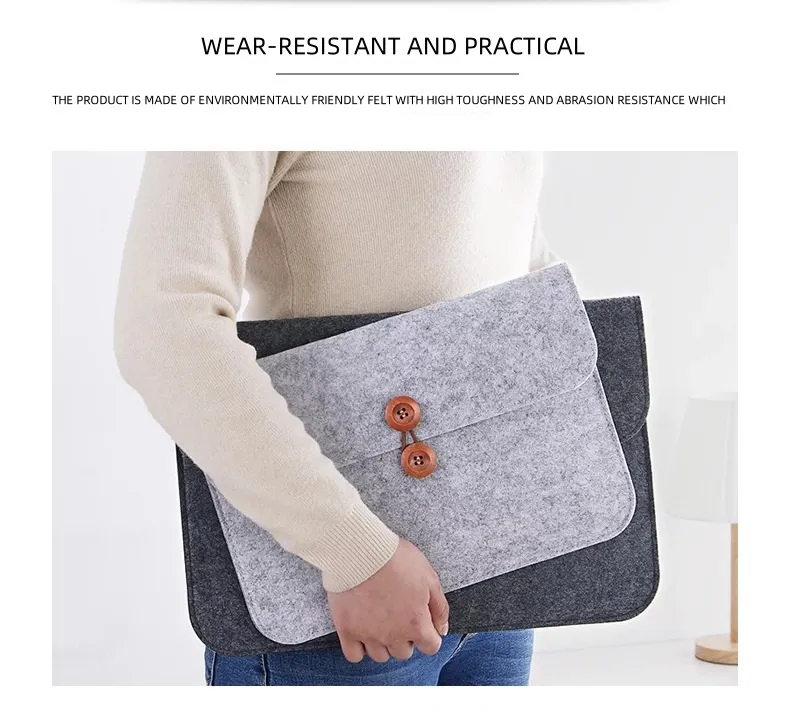
Brown craft felt is a non-woven fabric manufactured by matting, condensing and pressing fibers. Predominantly composed of polyester or a polyester-rayon blend, it distinguishes itself through its absence of a traditional woven structure. Within the textile industry, brown craft felt occupies a specific niche – a cost-effective, versatile material often utilized as a secondary component in diverse applications ranging from industrial padding and sound dampening to craft projects and protective linings. Core performance characteristics include its compressibility, ease of cutting, thermal insulation properties, and relatively low cost. Its inherent flexibility and non-fraying edges contribute to its widespread adoption, although its comparatively lower tensile strength and susceptibility to moisture absorption present key considerations for engineering applications. This guide provides an in-depth technical analysis of brown craft felt, covering material composition, manufacturing processes, performance parameters, potential failure modes, and relevant industry standards.
Material Science & Manufacturing
The primary raw material for brown craft felt is typically polyester fiber, often recycled polyester, though rayon (viscose) is frequently blended to enhance softness and dyeability. Polyester provides inherent resilience and dimensional stability, while rayon contributes to increased moisture absorption and a softer hand feel. The manufacturing process begins with fiber preparation, where the raw fibers are carded – a process which disentangles and aligns the fibers into a web. This web is then subjected to needle punching. Thousands of barbed needles repeatedly penetrate the web, interlock the fibers mechanically, and condense the material. The density and depth of needle penetration directly influence the felt’s density, thickness, and overall strength. Variations in fiber fineness (denier) and the blend ratio of polyester to rayon critically affect the felt’s physical properties. For instance, a higher percentage of rayon increases the material’s ability to absorb liquids, but may reduce its overall durability. Dyeing is generally performed before the needling process, utilizing disperse dyes for polyester and direct dyes for rayon. Parameter control during the carding process – fiber feed rate, carding speed, and doffer speed – are crucial for achieving a uniform fiber web. Precise control over needle density, punch angle, and punching speed during the needle punching phase determines the degree of fiber entanglement and subsequent mechanical properties. Post-processing steps may include calendaring to achieve a smoother surface finish and slitting or cutting to the desired dimensions.
Performance & Engineering
The performance of brown craft felt is primarily dictated by its density (mass per unit area, typically expressed in gsm – grams per square meter) and fiber composition. Its compressive strength, a critical parameter in applications requiring cushioning or sealing, is directly proportional to density. However, excessive compression can lead to permanent deformation. The material’s thermal insulation properties, while modest, are sufficient for certain protective applications. The thermal conductivity is influenced by fiber density and air entrapment within the felt structure. From an engineering standpoint, analyzing stress-strain behavior is crucial. Brown craft felt exhibits non-linear elastic behavior, meaning its stress-strain relationship is not linear. It has a relatively low tensile strength, typically ranging from 5-20 N/mm², depending on density and fiber type. Tear strength is also limited, making it unsuitable for applications involving significant tensile loads. Moisture absorption is a significant performance consideration. Polyester exhibits low moisture regain, whereas rayon can absorb a considerable amount of water. This absorption can lead to dimensional changes and reduced mechanical strength. In applications where moisture exposure is anticipated, a polyester-dominant felt is preferable or a moisture barrier coating should be applied. Compliance requirements for applications such as automotive interiors or children’s products necessitate adherence to flammability standards (e.g., FMVSS 302 in the US) and restrictions on hazardous substances (e.g., REACH and RoHS in Europe). These standards impose limits on the material’s burning rate, smoke density, and the presence of restricted chemicals.
Technical Specifications
| Property | Typical Value (Polyester Blend) | Units | Test Method |
|---|---|---|---|
| Density | 200-800 | gsm (grams per square meter) | ASTM D776 |
| Thickness | 1-5 | mm | ASTM D1777 |
| Tensile Strength | 5-20 | N/mm² | ASTM D751 |
| Tear Strength | 2-8 | N | ASTM D2261 |
| Compressive Strength (10% deflection) | 0.5-2.0 | kPa | ASTM D3763 |
| Moisture Regain | 0.5-3.0 | % | ASTM D2491 |
Failure Mode & Maintenance
Brown craft felt is susceptible to several failure modes. Fatigue cracking can occur under repeated compression or flexing, particularly at stress concentrations. This is exacerbated by higher compression rates and lower material density. Delamination – the separation of the felt’s layers – can result from prolonged exposure to moisture or mechanical stress. Degradation due to ultraviolet (UV) radiation is a significant concern for outdoor applications. UV exposure causes chain scission in the polyester fibers, leading to reduced strength and discoloration. Oxidation can occur at elevated temperatures, resulting in embrittlement and loss of flexibility. Abrasion can cause fiber loss and surface wear, especially in applications involving friction. Maintenance primarily focuses on prevention. Avoiding prolonged exposure to direct sunlight and moisture is crucial. Regular cleaning with a mild detergent and water can remove surface contaminants that contribute to degradation. In cases of minor damage, such as small tears, patching with a compatible felt material can provide temporary repair. However, for significant damage, replacement is generally recommended. To mitigate UV degradation, applying a UV-resistant coating or selecting a felt with UV stabilizers incorporated during manufacturing is advisable. For applications involving potential chemical exposure, assessing the felt’s chemical compatibility is paramount to prevent swelling, dissolution, or discoloration.
Industry FAQ
Q: What is the typical lifespan of brown craft felt in a moderately humid indoor environment?
A: The lifespan is highly dependent on the material’s density, fiber composition, and the level of stress it endures. However, in a moderately humid indoor environment (40-60% relative humidity), a polyester-dominant felt (70% polyester, 30% rayon) with a density of 500 gsm can reasonably be expected to last 5-10 years without significant degradation, assuming it’s not subjected to excessive abrasion or direct sunlight.
Q: Can brown craft felt be used as a soundproofing material, and what are its limitations?
A: Yes, brown craft felt possesses some sound-absorbing properties due to its porous structure. It’s effective at attenuating mid-to-high frequency sounds. However, its sound absorption coefficient is relatively low compared to specialized acoustic materials like mineral wool or fiberglass. Its limitations include its relatively low density and susceptibility to compression, which can reduce its sound absorption performance over time.
Q: What is the recommended storage procedure to prevent degradation during long-term storage?
A: Brown craft felt should be stored in a cool, dry, and well-ventilated area, away from direct sunlight, heat sources, and moisture. It’s best to store it rolled rather than folded to minimize compression set. Covering the roll with a breathable fabric can provide additional protection from dust and UV exposure.
Q: Is brown craft felt fire retardant, and what fire safety certifications should be considered?
A: Standard brown craft felt is not inherently fire retardant. While polyester is relatively flame-resistant, it will still burn. To meet fire safety requirements, a fire-retardant treatment can be applied. Relevant certifications include FMVSS 302 (US automotive flammability standard), EN 1021-1 & 2 (European furniture flammability standards), and UL 94 (plastic flammability testing).
Q: What types of adhesives are most compatible with brown craft felt for bonding applications?
A: Contact adhesives, spray adhesives, and hot-melt adhesives are commonly used for bonding brown craft felt. Compatibility depends on the specific adhesive chemistry and the intended application. Cyanoacrylate (super glue) can also be used for small-area bonding. It’s crucial to test the adhesive on a small sample of the felt to ensure it doesn’t cause discoloration or degradation. Solvent-based adhesives should be used with caution, as some solvents can dissolve or weaken the polyester fibers.
Conclusion
Brown craft felt represents a versatile and cost-effective material solution across a broad spectrum of applications, leveraging its unique combination of compressibility, thermal insulation, and ease of processing. However, its comparatively lower tensile strength, susceptibility to moisture absorption, and potential for degradation necessitate careful consideration during material selection and application design. Understanding the interplay between fiber composition, manufacturing parameters, and environmental factors is paramount to optimizing performance and ensuring long-term reliability.
Future advancements in brown craft felt technology may focus on incorporating bio-based or biodegradable fibers to enhance sustainability, developing novel needle punching techniques to improve fiber entanglement and mechanical strength, and introducing advanced surface treatments to enhance UV resistance and water repellency. Continued research and development will further expand the material’s application potential and address existing performance limitations.


 English
  Afrikaans
  Albanian
  Amharic
  Arabic
  Armenian
  Azerbaijani
  Basque
  Belarusian
  Bengali
  Bosnian
  Bulgarian
  Catalan
  Cebuano
  Corsican
  Croatian
  Czech
Czech  Danish
  Dutch
Dutch  Esperanto
  Estonian
  Finnish
  French
  Frisian
  Galician
  Georgian
  German
  Greek
Greek  Gujarati
  Haitian Creole
  Hausa
Hausa  Hebrew
  Hindi
Hindi  Miao
Miao  Hungarian
  Icelandic
  Igbo
Igbo  Indonesian
  Irish
Irish  Italian
  Japanese
  Javanese
  Kazakh
  Khmer
Khmer  Rwandese
  Korean
  Kurdish
  Kyrgyz
  Lao
Lao  Latin
Latin  Latvian
  Lithuanian
  Luxembourgish
  Macedonian
  Malgashi
  Malay
Malay  Malayalam
  Maltese
  Maori
Maori  Marathi
  Mongolian
  Myanmar
  Nepali
  Norwegian
  Norwegian
  Occitan
  Pashto
  Persian
  Polish
  Portuguese
  Romanian
  Russian
  Samoan
  Scottish Gaelic
  Serbian
  Sesotho
  Shona
Shona  Sindhi
  Sinhala
  Slovak
  Slovenian
  Somali
  Spanish
  Sundanese
  Swahili
  Swedish
  Tajik
Tajik  Tamil
Tamil  Tatar
Tatar  Telugu
  Thai
Thai  Turkish
  Turkmen
  Ukrainian
  Urdu
Urdu  Uighur
  Uzbek
Uzbek  Vietnamese
  Welsh
Welsh  Bantu
Bantu  Yiddish
  Yoruba
  Zulu
Zulu