
Apr . 01, 2024 17:55 Back to list
dark purple felt Performance Analysis
Introduction
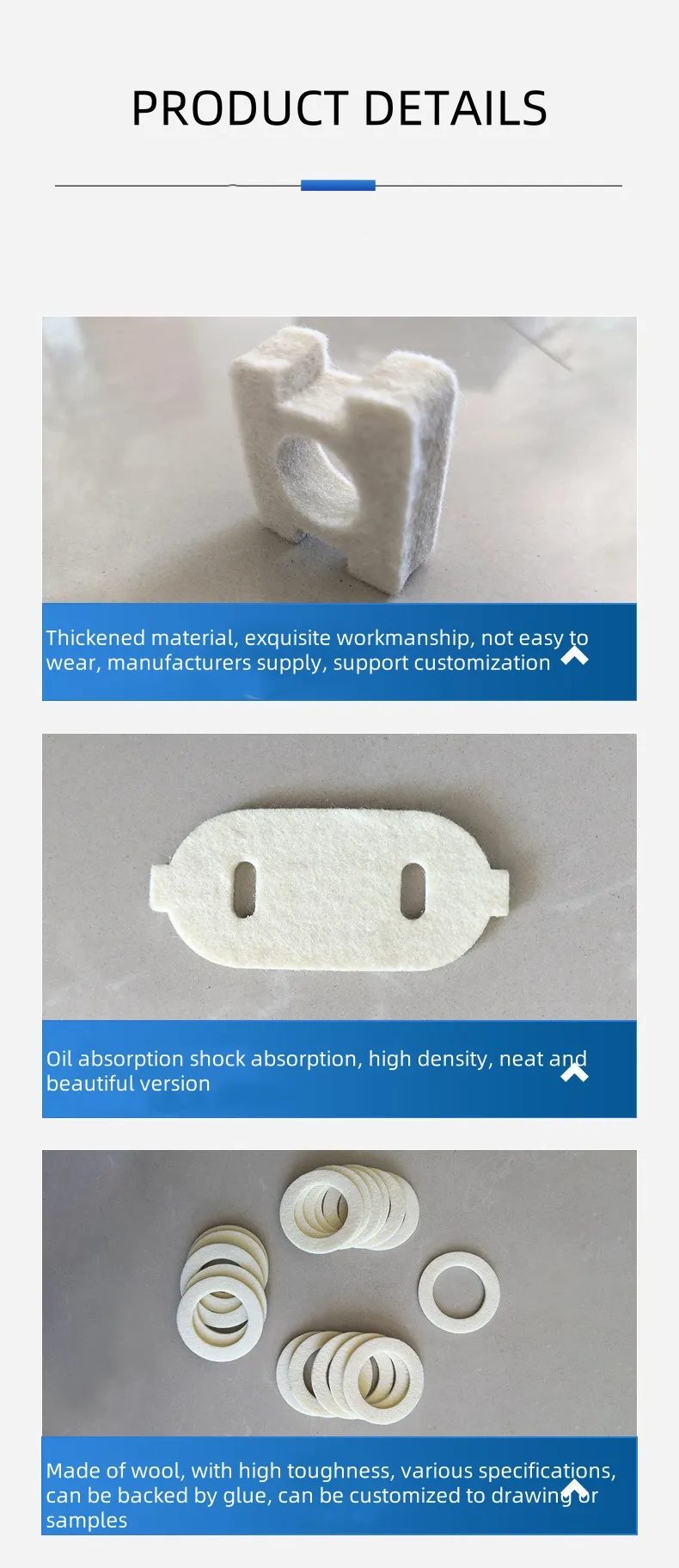
Dark purple felt is a nonwoven textile material manufactured by matting, condensing and pressing fibers together. Predominantly composed of textile fibers – typically wool, acrylic, rayon, or polyester, often in blends – it distinguishes itself from woven fabrics through its production process and resultant characteristics. Within the broader textile industry, dark purple felt occupies a niche position, valued for its compressibility, insulating properties, sound absorption capabilities, and ease of cutting and shaping without fraying. Its primary performance indicators include density, thickness, tensile strength, tear resistance, and colorfastness. This guide provides a comprehensive technical overview of dark purple felt, encompassing material science, manufacturing processes, performance characteristics, potential failure modes, and relevant industry standards, geared towards B2B procurement and engineering professionals.
Material Science & Manufacturing
The core material composition of dark purple felt dictates its properties. Wool felts, traditionally preferred for quality, leverage the natural scales on wool fibers that interlock when subjected to moisture, heat, and pressure. Acrylic felts offer a cost-effective alternative, possessing good resistance to sunlight and chemicals, albeit with lower abrasion resistance than wool. Rayon felts provide a soft hand feel and good dyeability but are less durable when wet. Polyester felts excel in dimensional stability and resilience. The dark purple coloration is achieved through the incorporation of dyes during the fiber production stage, or via dyeing the felted material post-manufacture. Commonly employed dyes include acid dyes (for wool and nylon) and disperse dyes (for polyester). Manufacturing generally follows these stages: Fiber preparation (carding to align fibers), Web formation (creating a uniform layer), Felting (applying moisture, heat, and pressure – needling or wet felting), Finishing (dyeing, calendaring to control thickness, and cutting). Key parameters controlled during manufacturing include fiber fineness (denier), fiber length, carding speed, temperature, and pressure. Wet felting relies on the interlocking of scales on natural fibers, while needle felting uses barbed needles to mechanically entangle fibers. The density, and thus performance characteristics, are directly proportional to the applied pressure during the felting process.
Performance & Engineering
The performance of dark purple felt is fundamentally tied to its intended application. In cushioning applications, its compressibility and recovery characteristics are critical. These are assessed via compression set testing (ASTM D395), measuring the permanent deformation after sustained compression. For sound absorption, the porous structure of felt provides damping, reducing sound transmission. Sound Absorption Coefficient (SAC) is measured across various frequencies (ASTM C423). Thermal insulation relies on the trapped air within the fiber matrix, resisting heat transfer. Thermal conductivity and thermal resistance are vital parameters (ASTM C518). Tensile strength, measured via ASTM D751, determines its resistance to tearing under load. Dimensional stability, particularly its resistance to shrinkage or stretching with changes in temperature and humidity, is crucial for many applications. Exposure to UV radiation can degrade the fibers, impacting strength and color; therefore, UV resistance testing (ASTM G154) is important, particularly for outdoor applications. Chemical resistance varies greatly based on fiber composition. Wool felts are susceptible to damage from alkalis and bleaches, whereas acrylic and polyester felts exhibit better resistance to most chemicals. Engineering design considerations include accounting for creep (long-term deformation under constant stress) and hysteresis (energy loss during cyclic loading).
Technical Specifications
| Property | Wool Felt | Acrylic Felt | Polyester Felt | Rayon Felt |
|---|---|---|---|---|
| Density (g/m²) | 200-800 | 150-500 | 180-600 | 120-400 |
| Thickness (mm) | 1-10 | 1-8 | 1-10 | 1-6 |
| Tensile Strength (N/50mm) | 50-200 | 30-100 | 80-250 | 40-120 |
| Tear Resistance (N) | 10-50 | 5-25 | 20-80 | 8-30 |
| Compression Set (%) | 5-15 | 10-20 | 2-8 | 15-25 |
| Water Absorption (%) | 30-40 | 2-5 | 0.5-2 | 50-60 |
Failure Mode & Maintenance
Dark purple felt is susceptible to several failure modes. Abrasion, particularly with repeated rubbing, can lead to fiber breakdown and surface wear. This is more pronounced in wool felts. Compaction, resulting from sustained compressive loads, reduces thickness and insulation performance. Hydrolytic degradation, particularly in rayon felts exposed to moisture, weakens the fibers. Oxidation, especially in wool, can cause yellowing and loss of strength. Fungal growth, in humid environments, can degrade the fibers and cause discoloration. Chemical attack, depending on the specific chemical and fiber type, can lead to dissolution or weakening of the felt. Maintenance primarily focuses on preventing these failures. Regular vacuuming removes dust and debris. Spot cleaning with mild detergent addresses localized stains. Avoid excessive moisture exposure. Storage in a cool, dry, and well-ventilated area prevents fungal growth and oxidation. For heavily soiled felts, professional cleaning is recommended. To mitigate abrasion, consider applying protective coatings or using felts with higher abrasion resistance (e.g., polyester blends). Regular inspection for signs of wear and tear allows for timely replacement before catastrophic failure.
Industry FAQ
Q: What is the impact of fiber blend composition on the overall durability of dark purple felt?
A: The blend composition significantly impacts durability. Incorporating polyester or acrylic into a wool blend enhances abrasion resistance and dimensional stability, while reducing cost. Conversely, a higher wool content generally provides superior resilience and warmth, but at a higher price point and with potentially lower resistance to chemicals. The optimal blend depends on the specific application requirements and performance priorities.
Q: How does the manufacturing process (wet felting vs. needle felting) affect the mechanical properties of the final product?
A: Wet felting generally produces a more homogenous and tightly bonded structure, resulting in higher tensile strength and tear resistance. However, it’s limited to natural fibers. Needle felting, while applicable to a wider range of fibers, creates a slightly less dense structure with potentially lower strength. The needle density and punching frequency in needle felting also heavily influence the final properties.
Q: What are the typical colorfastness ratings for dark purple felt, and how are they measured?
A: Colorfastness ratings vary depending on the dye used and the fiber type. They are typically assessed using standards like ISO 105-B02 (colorfastness to washing) and ISO 105-B04 (colorfastness to dry cleaning). Ratings are generally on a scale of 1 to 5, with 5 representing excellent colorfastness (minimal color change). Darker shades, like dark purple, can sometimes exhibit slightly lower colorfastness compared to lighter shades.
Q: What considerations are crucial when selecting dark purple felt for sound absorption applications in a commercial setting?
A: Crucial considerations include the Sound Absorption Coefficient (SAC) across the relevant frequency range, the felt's density, and its fire resistance rating (e.g., complying with UL 94 or similar standards). Higher density generally leads to better sound absorption at lower frequencies. Ensure the felt does not release harmful emissions (VOCs) and is compatible with the surrounding building materials.
Q: What are the environmental implications of using different fiber types in dark purple felt production and disposal?
A: Wool is a renewable resource, but sheep farming has environmental impacts. Acrylic and polyester are derived from fossil fuels and contribute to microplastic pollution during washing. Rayon production involves potentially harmful chemicals. End-of-life disposal is also a concern; while some felts can be recycled, many end up in landfills. Selecting recycled fibers and exploring biodegradable options (e.g., plant-based fibers) can mitigate environmental impacts.
Conclusion
Dark purple felt, as a versatile nonwoven textile, presents a spectrum of performance characteristics dictated by its constituent fibers and manufacturing techniques. Understanding the interplay between material science, production parameters, and application-specific requirements is paramount for effective selection and implementation. Careful consideration of mechanical properties, environmental resistance, and potential failure modes ensures longevity and optimal performance.
Future developments may focus on utilizing sustainable and biodegradable fiber sources, enhancing colorfastness through innovative dyeing processes, and improving the overall durability and recyclability of dark purple felt products. Continued research into novel felting techniques and surface treatments will further expand its application possibilities across diverse industrial sectors, emphasizing a balance between performance, cost-effectiveness, and environmental responsibility.


 English
  Afrikaans
  Albanian
  Amharic
  Arabic
  Armenian
  Azerbaijani
  Basque
  Belarusian
  Bengali
  Bosnian
  Bulgarian
  Catalan
  Cebuano
  Corsican
  Croatian
  Czech
Czech  Danish
  Dutch
Dutch  Esperanto
  Estonian
  Finnish
  French
  Frisian
  Galician
  Georgian
  German
  Greek
Greek  Gujarati
  Haitian Creole
  Hausa
Hausa  Hebrew
  Hindi
Hindi  Miao
Miao  Hungarian
  Icelandic
  Igbo
Igbo  Indonesian
  Irish
Irish  Italian
  Japanese
  Javanese
  Kazakh
  Khmer
Khmer  Rwandese
  Korean
  Kurdish
  Kyrgyz
  Lao
Lao  Latin
Latin  Latvian
  Lithuanian
  Luxembourgish
  Macedonian
  Malgashi
  Malay
Malay  Malayalam
  Maltese
  Maori
Maori  Marathi
  Mongolian
  Myanmar
  Nepali
  Norwegian
  Norwegian
  Occitan
  Pashto
  Persian
  Polish
  Portuguese
  Romanian
  Russian
  Samoan
  Scottish Gaelic
  Serbian
  Sesotho
  Shona
Shona  Sindhi
  Sinhala
  Slovak
  Slovenian
  Somali
  Spanish
  Sundanese
  Swahili
  Swedish
  Tajik
Tajik  Tamil
Tamil  Tatar
Tatar  Telugu
  Thai
Thai  Turkish
  Turkmen
  Ukrainian
  Urdu
Urdu  Uighur
  Uzbek
Uzbek  Vietnamese
  Welsh
Welsh  Bantu
Bantu  Yiddish
  Yoruba
  Zulu
Zulu