
Apr . 01, 2024 17:55 Back to list
Felt Bulk Performance Analysis
Introduction
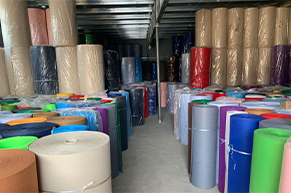
Felt bulk, encompassing both needle-felt and non-woven felt materials, represents a critical component across diverse industrial sectors, including automotive, filtration, insulation, and construction. Unlike woven fabrics, felt is produced through matting, condensing, and interlocking fibers, typically wool, acrylic, polyester, or polypropylene. Its technical position within the material supply chain lies between raw fiber production and the fabrication of finished goods requiring cushioning, damping, barrier properties, or thermal regulation. Core performance characteristics include density, thickness, tensile strength, compression set, and permeability, all of which dictate its suitability for specific applications. The increasing demand for sustainable materials is driving innovation in felt bulk production, focusing on recycled fiber content and biodegradable polymer alternatives. A primary industry pain point is maintaining consistent material properties across large production runs, impacting downstream manufacturing processes. Another significant challenge is achieving optimal balance between cost, performance, and environmental impact.
Material Science & Manufacturing
The foundational materials for felt bulk dictate its physical and chemical properties. Wool, traditionally the dominant fiber, boasts natural crimp, elasticity, and inherent flame resistance. However, cost and potential allergenic concerns drive the use of synthetic alternatives. Polyester fibers offer excellent dimensional stability and resistance to abrasion, while polypropylene provides high chemical resistance and low density. Acrylic fibers are utilized for their wool-like appearance and softness. The manufacturing process varies depending on the desired felt type. Needle-felt is produced by repeatedly punching barbed needles through a fiber web, interlocking the fibers mechanically. This process determines the felt's density and tensile strength; higher needle density generally correlates with increased strength but also reduced permeability. Non-woven felt, often employing thermal bonding or chemical adhesives, provides a more uniform structure. Key parameters in both processes include fiber fineness (denier), web formation uniformity (basis weight variation), and consolidation temperature/needle density. Precise control of these parameters is crucial to achieve desired mechanical properties and prevent defects like fiber segregation or incomplete bonding. Chemical compatibility of the fibers with adhesives (in non-woven processes) is critical to prevent delamination. Moisture regain and shrinkage rates are also essential considerations, particularly for applications in humid environments.
Performance & Engineering
Performance analysis of felt bulk hinges on understanding its response to applied forces and environmental stressors. Force analysis involves evaluating tensile strength (ASTM D751), tear strength (ASTM D624), and compression set (ASTM D395). These properties are vital for applications requiring structural integrity or load-bearing capacity. Environmental resistance is paramount; exposure to UV radiation can cause polymer degradation, particularly in polypropylene and acrylic felts, leading to embrittlement and reduced strength. Hydrolytic stability, especially for polyester felts, must be considered in humid conditions. Thermal performance is characterized by thermal conductivity and heat capacity; felt bulk acts as an effective thermal insulator due to the trapped air within its fiber matrix. For filtration applications, permeability (air or liquid) and particle retention efficiency are key parameters, dictating the filter’s effectiveness. Compliance requirements vary by industry. Automotive applications demand stringent flame retardancy standards (FMVSS 302), while medical applications require biocompatibility and sterilization resistance. Proper engineering design incorporates these factors, selecting appropriate fiber types, densities, and thicknesses to meet specific performance criteria. Finite Element Analysis (FEA) is increasingly used to model felt bulk behavior under complex loading conditions, optimizing its design for targeted applications.
Technical Specifications
| Property | Wool Felt | Polyester Felt | Polypropylene Felt | Acrylic Felt |
|---|---|---|---|---|
| Density (g/cm³) | 0.2 - 0.6 | 0.15 - 0.5 | 0.08 - 0.3 | 0.1 - 0.4 |
| Tensile Strength (MPa) | 5 - 15 | 8 - 20 | 3 - 10 | 6 - 18 |
| Elongation at Break (%) | 30 - 80 | 20 - 60 | 50 - 150 | 40 - 90 |
| Thermal Conductivity (W/m·K) | 0.03 - 0.05 | 0.035 - 0.045 | 0.03 - 0.04 | 0.032 - 0.048 |
| Water Absorption (%) | 15 - 30 | 1 - 5 | 0.5 - 3 | 5 - 15 |
| Flammability (LOI %) | >25 (inherently FR) | 20 - 22 | 22 - 25 | 20 - 24 |
Failure Mode & Maintenance
Felt bulk is susceptible to several failure modes depending on the application and environmental conditions. Fatigue cracking can occur under repeated compression or bending loads, particularly in applications involving dynamic movement. Delamination, especially in adhesive-bonded non-woven felts, arises from insufficient adhesive strength or environmental degradation of the adhesive. Oxidation, particularly for wool felts, leads to fiber embrittlement and discoloration over time. Hydrolysis, affecting polyester felts, causes chain scission and loss of mechanical properties in humid environments. Compression set, a permanent deformation under sustained load, reduces the effectiveness of cushioning or sealing applications. Biological degradation, from mold and mildew growth, can occur in wool felts exposed to moisture. Maintenance involves regular inspection for wear and tear, cleaning to remove contaminants that can accelerate degradation, and avoiding prolonged exposure to harsh chemicals or extreme temperatures. Replacing felt bulk components before catastrophic failure is crucial to prevent downstream system malfunctions. In automotive applications, periodic replacement based on mileage or operating hours is recommended. For filtration systems, monitoring pressure drop can indicate clogging and the need for filter replacement. Storage of unused felt bulk should be in a dry, well-ventilated area away from direct sunlight.
Industry FAQ
Q: What is the impact of fiber denier on the performance of needle-felt used in automotive interior components?
A: Lower fiber denier generally results in a smoother surface finish and improved conformability, enhancing the aesthetic appeal of interior components. However, finer fibers tend to have lower tensile strength individually, requiring higher needle density during manufacturing to achieve comparable mechanical properties. This can lead to increased production costs and potentially reduced permeability. A balance must be struck based on specific requirements for comfort, durability, and cost-effectiveness.
Q: How does the choice of adhesive affect the long-term durability of a non-woven felt used for industrial insulation?
A: The adhesive is a critical factor. Acrylic-based adhesives generally offer good UV resistance and thermal stability, making them suitable for outdoor applications. Polyurethane adhesives provide excellent bond strength but can be susceptible to hydrolysis. Epoxy adhesives offer high chemical resistance but may be brittle. The adhesive must be chemically compatible with the felt fibers and exhibit minimal shrinkage during curing to prevent stress concentrations and delamination. Accelerated aging tests are crucial to assess adhesive performance under expected operating conditions.
Q: What are the key considerations when selecting felt bulk for filtration applications involving corrosive fluids?
A: Chemical resistance is paramount. Polypropylene felt is generally preferred for corrosive fluid filtration due to its excellent chemical inertness. Polyester felt may be suitable for mildly corrosive environments but should be carefully evaluated. Wool felt is generally not recommended for corrosive fluids. The filtration media's permeability and particle retention efficiency must also be considered, alongside compatibility with the fluid being filtered to prevent swelling or degradation.
Q: How can we mitigate the risk of compression set in felt bulk used for vibration damping in machinery?
A: Utilizing higher density felt bulk with a more robust fiber structure can improve resistance to compression set. Incorporating reinforcing materials, such as scrims or meshes, into the felt structure can also enhance its dimensional stability. Selecting fibers with higher resilience and creep resistance is crucial. Proper design of the damping system to minimize sustained compressive loads is also essential. Regular inspection and replacement of the felt bulk as it ages are recommended.
Q: What are the environmental implications of using different felt bulk materials, and what sustainable alternatives are available?
A: Traditional wool felt, while renewable, can have environmental impacts related to land use and animal welfare. Synthetic felts, derived from petroleum, contribute to fossil fuel consumption and plastic waste. Sustainable alternatives include felt made from recycled polyester or polypropylene, bio-based polymers like polylactic acid (PLA), and natural fibers like hemp or jute. Life cycle assessments (LCAs) are valuable for comparing the environmental footprint of different felt bulk materials.
Conclusion
Felt bulk remains a versatile and essential material across numerous industries, offering a unique combination of properties – cushioning, insulation, filtration, and damping – unavailable from many alternative materials. Its performance is intrinsically linked to the selection of appropriate fiber types, manufacturing processes, and consideration of environmental factors. Addressing the industry's pain points – ensuring consistent material properties, managing costs, and minimizing environmental impact – necessitates continued innovation in fiber technology, manufacturing techniques, and sustainable material sourcing.
Future development will likely focus on enhancing felt bulk’s performance through nanotechnology, incorporating conductive fibers for electrostatic filtration, and developing fully biodegradable felt materials. Advanced characterization techniques, like micro-computed tomography (micro-CT), will play an increasingly important role in optimizing felt structure and predicting its long-term behavior. The adoption of circular economy principles, including fiber recycling and waste reduction, will be critical for ensuring the sustainable use of felt bulk in the years to come.


 English
  Afrikaans
  Albanian
  Amharic
  Arabic
  Armenian
  Azerbaijani
  Basque
  Belarusian
  Bengali
  Bosnian
  Bulgarian
  Catalan
  Cebuano
  Corsican
  Croatian
  Czech
Czech  Danish
  Dutch
Dutch  Esperanto
  Estonian
  Finnish
  French
  Frisian
  Galician
  Georgian
  German
  Greek
Greek  Gujarati
  Haitian Creole
  Hausa
Hausa  Hebrew
  Hindi
Hindi  Miao
Miao  Hungarian
  Icelandic
  Igbo
Igbo  Indonesian
  Irish
Irish  Italian
  Japanese
  Javanese
  Kazakh
  Khmer
Khmer  Rwandese
  Korean
  Kurdish
  Kyrgyz
  Lao
Lao  Latin
Latin  Latvian
  Lithuanian
  Luxembourgish
  Macedonian
  Malgashi
  Malay
Malay  Malayalam
  Maltese
  Maori
Maori  Marathi
  Mongolian
  Myanmar
  Nepali
  Norwegian
  Norwegian
  Occitan
  Pashto
  Persian
  Polish
  Portuguese
  Romanian
  Russian
  Samoan
  Scottish Gaelic
  Serbian
  Sesotho
  Shona
Shona  Sindhi
  Sinhala
  Slovak
  Slovenian
  Somali
  Spanish
  Sundanese
  Swahili
  Swedish
  Tajik
Tajik  Tamil
Tamil  Tatar
Tatar  Telugu
  Thai
Thai  Turkish
  Turkmen
  Ukrainian
  Urdu
Urdu  Uighur
  Uzbek
Uzbek  Vietnamese
  Welsh
Welsh  Bantu
Bantu  Yiddish
  Yoruba
  Zulu
Zulu