
Apr . 01, 2024 17:55 Back to list
felt custom Performance Analysis
Introduction
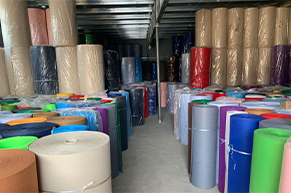
Felt custom refers to the tailored fabrication of non-woven textiles produced through the matting, condensing, and bonding of natural or synthetic fibers. Positioned within the broader textile industry, it occupies a crucial niche serving applications requiring specific dimensional control, density, and surface characteristics. Unlike woven or knitted fabrics, felt's isotropic properties – exhibiting similar characteristics in all directions – contribute to its performance advantages in areas like cushioning, filtration, and insulation. Core performance attributes include dimensional stability, compressibility, sound absorption, and thermal insulation, varying significantly based on fiber composition, density, and post-processing treatments. The increasing demand for customized felt solutions stems from industries seeking optimized material performance in specialized applications, driving innovation in fiber technology and manufacturing techniques. A key industry pain point is consistently achieving tight tolerances on complex shapes and maintaining batch-to-batch uniformity in material properties.
Material Science & Manufacturing
The foundation of felt custom lies in the selection of appropriate fibers. Common raw materials include wool (primarily for industrial and acoustic felts due to its crimp and resilience), acrylic (offering good UV resistance and dyeability), polyester (providing strength, abrasion resistance, and affordability), polypropylene (known for its chemical resistance and low cost), and rayon (offering softness and absorbency). Fiber fineness (denier) and length significantly influence the felt's characteristics. Manufacturing processes begin with fiber preparation – cleaning, carding, and blending. Carding aligns the fibers into a web, which is then condensed. Bonding is achieved through several methods: mechanical needling (interlocking fibers using barbed needles), chemical bonding (using resins and heat), thermal bonding (melting thermoplastic fibers), and wet felting (applying moisture, pressure, and agitation). Needle felting is the most prevalent method for industrial felts, offering precise control over density and thickness. Key parameters controlled during manufacturing include needle density, punching speed, resin concentration, oven temperature, and moisture content. Chemical compatibility of fibers and bonding agents is crucial to prevent degradation and maintain long-term performance. For example, using an incompatible resin with wool can lead to fiber embrittlement and loss of felt integrity. Controlling fiber orientation during carding impacts the anisotropic properties achievable in certain felt designs.
Performance & Engineering
Performance of felt custom is dictated by its intended application. In acoustic applications, sound absorption coefficient is paramount, dependent on felt thickness, density, and porosity. Force analysis considers compressive strength, tensile strength, and tear resistance, crucial in applications like seals and gaskets. Environmental resistance involves evaluating degradation due to UV exposure, chemical exposure (acids, bases, solvents), and temperature extremes. Thermal insulation is quantified by thermal conductivity and R-value. Compliance requirements vary by industry. For automotive applications, flammability standards (FMVSS 302) must be met. For filtration, particle retention efficiency and pressure drop are key performance indicators. Functional implementation often involves die-cutting, molding, or lamination with other materials. Considerations include stress concentrations at cut edges, adhesive bond strength, and thermal expansion mismatch between dissimilar materials. For example, designing a felt gasket requires precise dimensional control to ensure a proper seal, necessitating accurate tooling and process control. Fatigue performance is critical in applications involving cyclic loading, demanding careful selection of fiber type and bonding method to resist delamination and fiber breakage. The Poisson's ratio of the felt material influences its deformation characteristics under compression.
Technical Specifications
| Parameter | Unit | Wool Felt | Polyester Felt |
|---|---|---|---|
| Density | g/m² | 500-1200 | 800-2000 |
| Thickness | mm | 1-10 | 1-25 |
| Tensile Strength | N/cm | 5-20 | 10-30 |
| Elongation at Break | % | 20-50 | 50-150 |
| Compressibility | % | 20-40 | 10-30 |
| Sound Absorption Coefficient (1kHz) | - | 0.6-0.9 | 0.4-0.7 |
Failure Mode & Maintenance
Failure modes in felt custom applications include fiber breakage, delamination, compression set, and chemical degradation. Fiber breakage occurs due to tensile stress exceeding the fiber’s strength, often exacerbated by fatigue loading or pre-existing defects. Delamination arises from insufficient bonding between fiber layers, particularly in mechanically needled felts, leading to separation under stress. Compression set, or permanent deformation after prolonged compression, reduces the felt’s cushioning or sealing capabilities. Chemical degradation involves fiber weakening or dissolution due to exposure to corrosive substances. Oxidation can also degrade fibers, particularly natural materials like wool. Maintenance involves regular inspection for signs of wear, tear, or chemical attack. Cleaning methods depend on the fiber composition and contaminant type. Avoid harsh detergents or abrasive cleaners that can damage the fibers. For wool felts, mothproofing treatments may be necessary. Replacing the felt component is typically the most effective solution once significant degradation occurs. Preventive measures include selecting appropriate fiber types for the intended environment, applying protective coatings, and designing for minimal stress concentrations. Proper storage in a dry, well-ventilated area is also crucial to prevent mildew and degradation.
Industry FAQ
Q: What are the key differences between wool felt and polyester felt in terms of durability for industrial applications?
A: Polyester felt generally exhibits superior abrasion resistance and dimensional stability compared to wool felt, making it more suitable for applications involving significant friction or dimensional constraints. Wool felt, however, offers better resilience and recovery after compression, making it preferred for cushioning and sealing applications where conformability is paramount. Wool is also naturally flame retardant, a crucial factor in certain industrial settings.
Q: How does needle density affect the performance of a needle-felted product?
A: Higher needle density generally leads to increased felt density and strength, enhancing its resistance to tearing and abrasion. However, excessive needling can damage the fibers and reduce their flexibility. An optimal needle density depends on the fiber type, desired product properties, and manufacturing equipment.
Q: What considerations should be made when selecting a felt material for a chemical filtration application?
A: Chemical resistance is paramount. The felt material must be inert to the chemicals being filtered to prevent degradation and contamination. Pore size and porosity are crucial for controlling particle retention efficiency and pressure drop. Fiber type (polypropylene and PTFE are commonly used) and bonding method significantly impact chemical compatibility and filtration performance.
Q: How can compression set be minimized in felt seals and gaskets?
A: Selecting fibers with high resilience and using a bonding method that maintains fiber flexibility can minimize compression set. Optimizing felt density and thickness is also crucial. Using a felt material with a higher modulus of elasticity can provide greater resistance to permanent deformation.
Q: What are the typical tolerances achievable for custom-cut felt parts?
A: Typical tolerances for custom-cut felt parts are ±0.5mm, although tighter tolerances can be achieved with specialized die-cutting techniques and careful process control. Factors influencing tolerance include felt thickness, density, and the complexity of the cut geometry. It’s crucial to specify tolerance requirements during the design phase.
Conclusion
Felt custom offers a versatile material solution across diverse industrial applications, contingent upon precise material selection and manufacturing control. Understanding the interplay between fiber properties, bonding methods, and performance requirements is fundamental to achieving optimal results. The industry’s ongoing focus on sustainability is driving research into bio-based and recycled fiber alternatives, and advancements in non-woven technology are enabling the creation of increasingly complex and high-performance felt structures.
Future developments will likely concentrate on enhancing the durability and chemical resistance of felt materials, optimizing manufacturing processes for improved cost-effectiveness, and integrating smart functionalities such as sensors or conductive fibers. A continued emphasis on custom design and tailored material solutions will solidify felt custom's position as a critical component in numerous industries seeking innovative and adaptable material technologies.


 English
  Afrikaans
  Albanian
  Amharic
  Arabic
  Armenian
  Azerbaijani
  Basque
  Belarusian
  Bengali
  Bosnian
  Bulgarian
  Catalan
  Cebuano
  Corsican
  Croatian
  Czech
Czech  Danish
  Dutch
Dutch  Esperanto
  Estonian
  Finnish
  French
  Frisian
  Galician
  Georgian
  German
  Greek
Greek  Gujarati
  Haitian Creole
  Hausa
Hausa  Hebrew
  Hindi
Hindi  Miao
Miao  Hungarian
  Icelandic
  Igbo
Igbo  Indonesian
  Irish
Irish  Italian
  Japanese
  Javanese
  Kazakh
  Khmer
Khmer  Rwandese
  Korean
  Kurdish
  Kyrgyz
  Lao
Lao  Latin
Latin  Latvian
  Lithuanian
  Luxembourgish
  Macedonian
  Malgashi
  Malay
Malay  Malayalam
  Maltese
  Maori
Maori  Marathi
  Mongolian
  Myanmar
  Nepali
  Norwegian
  Norwegian
  Occitan
  Pashto
  Persian
  Polish
  Portuguese
  Romanian
  Russian
  Samoan
  Scottish Gaelic
  Serbian
  Sesotho
  Shona
Shona  Sindhi
  Sinhala
  Slovak
  Slovenian
  Somali
  Spanish
  Sundanese
  Swahili
  Swedish
  Tajik
Tajik  Tamil
Tamil  Tatar
Tatar  Telugu
  Thai
Thai  Turkish
  Turkmen
  Ukrainian
  Urdu
Urdu  Uighur
  Uzbek
Uzbek  Vietnamese
  Welsh
Welsh  Bantu
Bantu  Yiddish
  Yoruba
  Zulu
Zulu