
Apr . 01, 2024 17:55 Back to list
Felt Manufacturer Performance Analysis
Introduction
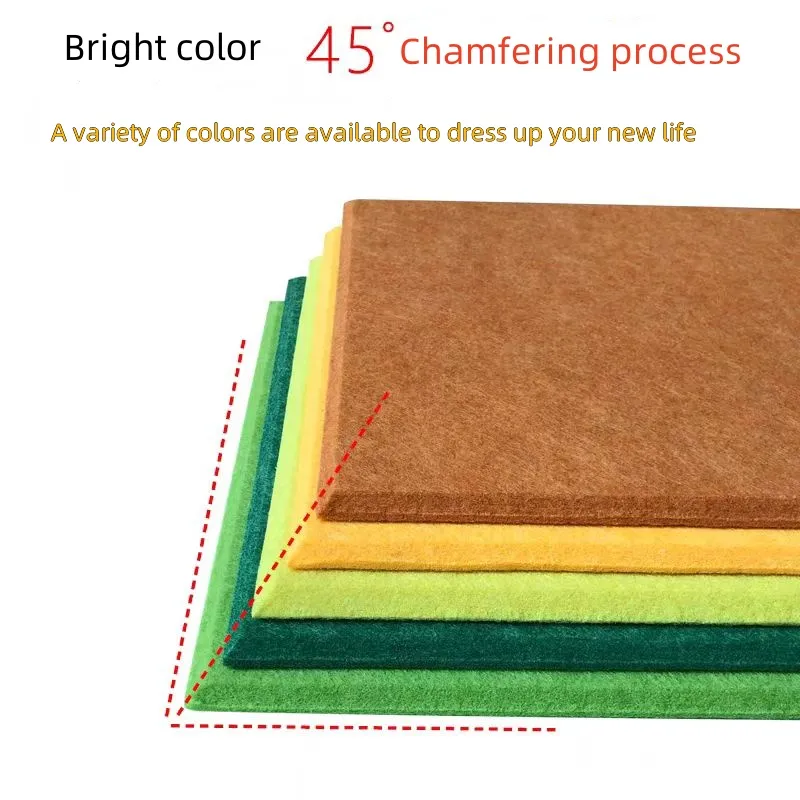
Felt, as a non-woven textile, occupies a critical position within numerous industrial supply chains. It's formed by matting, condensing and pressing fibers together, often utilizing heat, moisture, and pressure. Unlike woven fabrics, felt doesn't rely on yarn construction, leading to unique properties like isotropic behavior (similar properties in all directions) and effective cushioning. Its industrial applications are exceptionally broad, ranging from filtration media and acoustic insulation to polishing compounds and protective padding. The core performance characteristics – density, thickness, compressive resilience, and permeability – dictate its suitability for specific applications. A key industry pain point is maintaining consistent material properties across large-scale production runs, particularly relating to fiber composition and consolidation processes. Variations directly impact end-product performance and require stringent quality control measures. The inherent flexibility and relative low cost of felt make it a competitive material, though performance limitations in harsh chemical environments and at elevated temperatures frequently present design challenges.
Material Science & Manufacturing
The primary raw materials for felt production are wool, synthetic fibers (polypropylene, acrylic, polyester, nylon), and increasingly, recycled materials. Wool felt, historically dominant, benefits from the natural crimp of wool fibers, facilitating interlocking during the felting process. Synthetic felt offers greater control over properties like chemical resistance and colorfastness. Fiber denier (fineness) is a critical parameter; lower denier fibers generally yield softer, denser felts. Manufacturing processes vary significantly based on the desired end product. Wet felting involves agitating fibers in hot water and soap, inducing interlocking. Needle felting utilizes barbed needles to mechanically entangle fibers. Thermal bonding employs heat to fuse fibers together, often utilizing binders. Key parameter control during manufacturing involves maintaining consistent fiber orientation, precise temperature regulation during thermal bonding (typically between 150-200°C for synthetic felts), and controlled needle penetration depth in needle felting to prevent fiber breakage. Chemical compatibility of binders with the base fiber is also crucial to prevent degradation and maintain structural integrity. Fiber blending, combining different fiber types, is a common practice to optimize specific properties – for instance, blending wool with polypropylene can improve abrasion resistance and reduce cost.
Performance & Engineering
The performance of felt in engineering applications is directly linked to its physical and mechanical properties. Compressive stress-strain analysis is vital for applications requiring cushioning or sealing. The compressive resilience dictates the material’s ability to recover its original shape after deformation. For filtration applications, permeability (air and liquid) and particle retention efficiency are paramount. These parameters are influenced by fiber diameter, density, and the presence of any treatment or coating. Environmental resistance is a significant consideration. Felt’s susceptibility to degradation from UV exposure, oxidation, and hydrolysis must be evaluated, particularly in outdoor applications. Compliance requirements vary depending on the intended use. For example, automotive felts must meet flammability standards (FMVSS 302 in the US), while medical-grade felts must adhere to biocompatibility standards (ISO 10993). Force analysis is critical when felt is used as a bearing material, determining load capacity and wear rate. The material's Poisson's ratio impacts its behavior under multi-axial stress states. The impact resistance of felt makes it ideal for protective liners, but its performance is diminished at extremely high impact velocities.
Technical Specifications
| Property | Wool Felt (Typical) | Polypropylene Felt (Typical) | Acrylic Felt (Typical) | Polyester Felt (Typical) |
|---|---|---|---|---|
| Density (g/cm³) | 0.2 - 0.5 | 0.15 - 0.3 | 0.3 - 0.6 | 0.4 - 0.8 |
| Thickness (mm) | 1 - 10 | 0.5 - 5 | 1 - 8 | 1 - 12 |
| Tensile Strength (MPa) | 0.5 - 1.5 | 1 - 3 | 0.8 - 2.5 | 2 - 5 |
| Compressive Strength (kPa) | 50 - 200 | 30 - 150 | 80 - 300 | 100 - 400 |
| Water Absorption (%) | 20 - 30 | 1 - 3 | 5 - 10 | 2 - 5 |
| Operating Temperature (°C) | < 80 | < 80 | < 80 | < 130 |
Failure Mode & Maintenance
Felt, despite its durability, is susceptible to several failure modes. Fatigue cracking can occur under cyclic loading, particularly in applications involving repeated compression. Delamination, the separation of layers in laminated felts, results from inadequate bonding between layers or exposure to solvents. Degradation due to UV exposure leads to embrittlement and discoloration, especially in wool and acrylic felts. Oxidation can affect synthetic fibers, reducing their strength and flexibility. Abrasion causes gradual material loss, particularly relevant in polishing and filtration applications. Maintenance strategies depend on the application. Regular cleaning to remove contaminants is crucial for filtration felts. Protecting felt from prolonged UV exposure (using coatings or shielding) extends its service life. In cases of minor damage, localized repair using appropriate adhesives can be effective. For heavily soiled or damaged felts, replacement is typically the most cost-effective solution. Preventative maintenance, including inspection for wear and tear, can significantly reduce the risk of catastrophic failure. A critical failure analysis step is identifying the root cause – whether it's material degradation, mechanical stress, or improper installation.
Industry FAQ
Q: What are the key differences in performance between wool felt and synthetic felt for gasket applications?
A: Wool felt offers superior conformability and compression set resistance, making it ideal for low-pressure gaskets requiring a tight seal. However, it's susceptible to degradation in the presence of oils and solvents. Synthetic felts, like polypropylene or polyester, provide better chemical resistance and are more durable in harsh environments, but generally exhibit lower conformability and compression set.
Q: How does fiber density impact the filtration efficiency of a felt filter?
A: Increasing fiber density generally increases filtration efficiency by creating a more tortuous path for particles to pass through. However, excessively high density can reduce permeability and increase pressure drop, potentially compromising flow rate. Optimizing fiber density is crucial to balance filtration efficiency and flow characteristics.
Q: Can felt be used in high-temperature applications? What are the limitations?
A: While some synthetic felts (e.g., polyester) can withstand temperatures up to 130°C, wool felt’s upper temperature limit is around 80°C. Prolonged exposure to high temperatures can cause fiber degradation, shrinkage, and loss of mechanical properties. Specialized high-temperature felts, utilizing materials like Nomex or fiberglass, are available for extreme environments.
Q: What are the environmental considerations related to felt manufacturing and disposal?
A: Traditional felt manufacturing can generate waste materials. Utilizing recycled fibers and implementing efficient cutting processes can minimize waste. Disposal of synthetic felts presents challenges due to their non-biodegradable nature. Exploring biodegradable alternatives and developing recycling technologies are important steps toward sustainability.
Q: What type of testing is crucial for verifying the quality and performance of industrial felt?
A: Crucial testing includes density measurement, thickness determination, tensile strength testing, compression set analysis, permeability testing, and chemical resistance testing. For specific applications, flammability testing (FMVSS 302), abrasion resistance testing (Taber abrasion), and particle retention efficiency testing are also essential.
Conclusion
Felt remains a versatile and cost-effective material widely used in a multitude of industrial applications. Its unique properties – isotropic behavior, compressibility, and filtration capabilities – continue to drive innovation. However, understanding its limitations regarding environmental resistance, temperature stability, and susceptibility to specific failure modes is paramount for successful engineering design. Selecting the appropriate fiber composition and manufacturing process, combined with rigorous quality control and preventative maintenance, ensures optimal performance and longevity.
Future trends in felt technology include the development of sustainable materials, advanced fiber blending techniques to enhance performance characteristics, and the integration of smart functionalities – such as sensors embedded within the felt structure for real-time monitoring of parameters like pressure or temperature. Addressing the challenges associated with recycling synthetic felts will be critical for minimizing environmental impact and fostering a circular economy.


 English
  Afrikaans
  Albanian
  Amharic
  Arabic
  Armenian
  Azerbaijani
  Basque
  Belarusian
  Bengali
  Bosnian
  Bulgarian
  Catalan
  Cebuano
  Corsican
  Croatian
  Czech
Czech  Danish
  Dutch
Dutch  Esperanto
  Estonian
  Finnish
  French
  Frisian
  Galician
  Georgian
  German
  Greek
Greek  Gujarati
  Haitian Creole
  Hausa
Hausa  Hebrew
  Hindi
Hindi  Miao
Miao  Hungarian
  Icelandic
  Igbo
Igbo  Indonesian
  Irish
Irish  Italian
  Japanese
  Javanese
  Kazakh
  Khmer
Khmer  Rwandese
  Korean
  Kurdish
  Kyrgyz
  Lao
Lao  Latin
Latin  Latvian
  Lithuanian
  Luxembourgish
  Macedonian
  Malgashi
  Malay
Malay  Malayalam
  Maltese
  Maori
Maori  Marathi
  Mongolian
  Myanmar
  Nepali
  Norwegian
  Norwegian
  Occitan
  Pashto
  Persian
  Polish
  Portuguese
  Romanian
  Russian
  Samoan
  Scottish Gaelic
  Serbian
  Sesotho
  Shona
Shona  Sindhi
  Sinhala
  Slovak
  Slovenian
  Somali
  Spanish
  Sundanese
  Swahili
  Swedish
  Tajik
Tajik  Tamil
Tamil  Tatar
Tatar  Telugu
  Thai
Thai  Turkish
  Turkmen
  Ukrainian
  Urdu
Urdu  Uighur
  Uzbek
Uzbek  Vietnamese
  Welsh
Welsh  Bantu
Bantu  Yiddish
  Yoruba
  Zulu
Zulu