
Apr . 01, 2024 17:55 Back to list
Felt Manufacturers Performance Analysis
Introduction
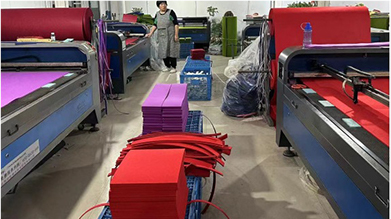
Felt, a non-woven textile produced by matting, condensing and pressing fibers together, occupies a critical position across numerous industries, ranging from automotive and filtration to construction and apparel. This guide provides a comprehensive technical overview of felt manufacturing, focusing on material science, production processes, performance characteristics, failure modes, and relevant industry standards. Traditionally produced from wool or animal fur, modern felt manufacturing utilizes a diverse array of materials including synthetic fibers like acrylic, polyester, and polypropylene. The core performance attributes – density, thickness, porosity, and mechanical strength – dictate application suitability. A primary industry pain point lies in achieving consistent quality across diverse fiber compositions and optimizing felt properties for specific end-use requirements. Understanding these nuances is vital for procurement managers and engineers seeking reliable and performant felt solutions.
Material Science & Manufacturing
The raw materials for felt production significantly impact its final properties. Wool, comprising keratin protein, provides inherent resilience, crimp, and moisture absorption. Synthetic fibers offer cost-effectiveness, durability, and resistance to specific chemicals. Polyester felt, for example, exhibits excellent UV resistance. Acrylic felt offers a softer hand and better dyeability. Polypropylene is known for its low density and moisture resistance. Manufacturing processes fall broadly into three categories: wet felting, needle felting, and thermal bonding. Wet felting involves applying heat, moisture, and mechanical agitation to interlock fibers. This process is optimal for wool due to its scales, which open and interlock when exposed to moisture. Needle felting utilizes barbed needles to mechanically tangle fibers, suitable for a wider range of materials including synthetic fibers. Thermal bonding employs heat and pressure to melt and fuse fibers, typically used for synthetic blends. Critical process parameters include fiber length, denier (fiber fineness), temperature, pressure, and agitation intensity. Controlling these parameters is paramount to achieving desired density, thickness, and structural integrity. For example, excessive heat in thermal bonding can lead to fiber degradation, while insufficient agitation in wet felting results in weak fiber interlocking. Chemical compatibility between fibers is also a crucial consideration; mixing incompatible fibers can lead to uneven bonding and compromised performance. The presence of residual oils or finishes from fiber production can also hinder proper felting.
Performance & Engineering
The performance of felt is dictated by its ability to withstand mechanical stresses, environmental factors, and fulfill its intended function. Key engineering considerations include tensile strength, tear strength, compression set, and permeability. Tensile strength, measured in Pascals (Pa) or pounds per square inch (psi), determines the felt’s resistance to stretching. Tear strength, also in Pa or psi, measures its resistance to propagation of a tear. Compression set, expressed as a percentage, indicates the permanent deformation after being subjected to compressive stress – critical for sealing applications. Permeability, quantified by air or water flow rates, dictates its effectiveness in filtration. Force analysis is crucial in applications involving load-bearing felt components. Finite element analysis (FEA) can be used to predict stress distribution and optimize felt thickness and density. Environmental resistance is another critical factor. Exposure to UV radiation can cause degradation of synthetic fibers, leading to embrittlement. Chemical exposure can lead to swelling, dissolution, or loss of strength. The choice of fiber and bonding method impacts resistance to these factors. For instance, polypropylene felt exhibits superior chemical resistance compared to wool. Compliance requirements vary depending on the application. Automotive felt must meet stringent flammability standards (e.g., FMVSS 302). Filtration felt must comply with relevant regulations regarding particle capture efficiency and pressure drop.
Technical Specifications
| Property | Wool Felt | Polyester Felt | Acrylic Felt | Polypropylene Felt |
|---|---|---|---|---|
| Density (g/cm³) | 0.2 – 0.5 | 0.3 – 0.8 | 0.2 – 0.6 | 0.08 – 0.3 |
| Tensile Strength (MPa) | 5 – 15 | 10 – 25 | 8 – 20 | 12 – 30 |
| Elongation at Break (%) | 20 – 50 | 30 – 70 | 40 – 80 | 100 – 200 |
| Water Absorption (%) | 30 – 50 | 1 – 3 | 5 – 10 | <1 |
| Thermal Conductivity (W/m·K) | 0.03 – 0.04 | 0.03 – 0.05 | 0.025 – 0.035 | 0.03 – 0.04 |
| Operating Temperature (°C) | Up to 100 | Up to 150 | Up to 80 | Up to 100 |
Failure Mode & Maintenance
Felt products are susceptible to several failure modes, depending on the application and material composition. Common failure modes include: fatigue cracking due to repeated flexing or compression; delamination, particularly in thermally bonded felts, caused by inadequate bonding or exposure to solvents; degradation due to UV exposure, leading to embrittlement and loss of strength; oxidation in wool felt exposed to high temperatures or oxidizing agents; and compression creep, resulting in permanent deformation and loss of sealing effectiveness. Failure analysis often involves microscopic examination of the fracture surface to identify the root cause. For fatigue cracking, stress concentration points or material defects are often the initiating factors. Delamination can be prevented by optimizing bonding parameters and selecting compatible fibers. UV degradation can be mitigated by adding UV stabilizers or using inherently UV-resistant fibers like polyester. Maintenance procedures vary based on the application. For filtration felts, regular replacement is essential to maintain flow rates and filtration efficiency. For cushioning or sealing applications, periodic inspection for wear, compression set, and delamination is recommended. Cleaning with mild detergents can remove surface contaminants, but harsh chemicals should be avoided. Proper storage in a cool, dry environment is crucial to prevent degradation and maintain performance.
Industry FAQ
Q: What is the impact of fiber denier on felt properties?
A: Lower denier fibers generally result in a softer, more pliable felt with a smoother surface finish. However, lower denier also means lower individual fiber strength, potentially reducing overall tensile strength. Higher denier fibers provide greater strength but may result in a coarser felt texture.
Q: How does needle felting compare to wet felting in terms of mechanical properties?
A: Needle felting typically produces a felt with higher tensile and tear strength compared to wet felting, due to the mechanical interlocking of fibers. However, wet felting often results in a denser, more uniform structure with better dimensional stability.
Q: What are the key considerations when selecting felt for a sealing application?
A: Compression set is the most critical property for sealing applications. The felt must maintain sufficient compression force over time to effectively seal the gap. Density and permeability also play important roles, depending on the fluid or gas being sealed. Chemical compatibility with the sealed medium is also essential.
Q: Can felt be recycled, and what are the limitations?
A: Felt can be recycled, but the process is challenging, especially for blended fiber felts. Wool felt can be mechanically recycled into lower-grade materials. Synthetic felts can be shredded and used as filler material. However, the recycling process often degrades fiber properties, limiting the use of recycled felt in high-performance applications.
Q: How do different bonding agents affect the long-term durability of felt?
A: The choice of bonding agent significantly impacts long-term durability. Thermally bonded felts can be susceptible to bond failure at elevated temperatures or under sustained stress. Wet-felted felts rely on fiber interlocking, which is generally more durable but may be weaker under shear stress. Adhesive-bonded felts can lose adhesion over time, especially in humid environments.
Conclusion
Felt manufacturing represents a complex interplay of material science, processing techniques, and engineering considerations. Selecting the appropriate felt material and manufacturing process requires a thorough understanding of application-specific requirements, including mechanical stresses, environmental conditions, and regulatory compliance. Optimizing parameters like fiber type, denier, density, and bonding method is crucial for achieving desired performance characteristics. The industry continues to innovate with new fiber blends, bonding technologies, and surface treatments to enhance felt properties and expand its application range.
Future trends in felt manufacturing will likely focus on sustainable materials, improved recycling processes, and the development of “smart” felts with embedded sensors or functionalities. Addressing the challenges of consistent quality control and cost-effectiveness will remain paramount. A deeper understanding of failure modes and preventative maintenance strategies will further extend the service life of felt products and reduce lifecycle costs. Collaboration between material scientists, engineers, and manufacturers is essential to drive innovation and meet the evolving demands of diverse industries.


 English
  Afrikaans
  Albanian
  Amharic
  Arabic
  Armenian
  Azerbaijani
  Basque
  Belarusian
  Bengali
  Bosnian
  Bulgarian
  Catalan
  Cebuano
  Corsican
  Croatian
  Czech
Czech  Danish
  Dutch
Dutch  Esperanto
  Estonian
  Finnish
  French
  Frisian
  Galician
  Georgian
  German
  Greek
Greek  Gujarati
  Haitian Creole
  Hausa
Hausa  Hebrew
  Hindi
Hindi  Miao
Miao  Hungarian
  Icelandic
  Igbo
Igbo  Indonesian
  Irish
Irish  Italian
  Japanese
  Javanese
  Kazakh
  Khmer
Khmer  Rwandese
  Korean
  Kurdish
  Kyrgyz
  Lao
Lao  Latin
Latin  Latvian
  Lithuanian
  Luxembourgish
  Macedonian
  Malgashi
  Malay
Malay  Malayalam
  Maltese
  Maori
Maori  Marathi
  Mongolian
  Myanmar
  Nepali
  Norwegian
  Norwegian
  Occitan
  Pashto
  Persian
  Polish
  Portuguese
  Romanian
  Russian
  Samoan
  Scottish Gaelic
  Serbian
  Sesotho
  Shona
Shona  Sindhi
  Sinhala
  Slovak
  Slovenian
  Somali
  Spanish
  Sundanese
  Swahili
  Swedish
  Tajik
Tajik  Tamil
Tamil  Tatar
Tatar  Telugu
  Thai
Thai  Turkish
  Turkmen
  Ukrainian
  Urdu
Urdu  Uighur
  Uzbek
Uzbek  Vietnamese
  Welsh
Welsh  Bantu
Bantu  Yiddish
  Yoruba
  Zulu
Zulu