
Apr . 01, 2024 17:55 Back to list
felt paper red Performance Analysis
Introduction
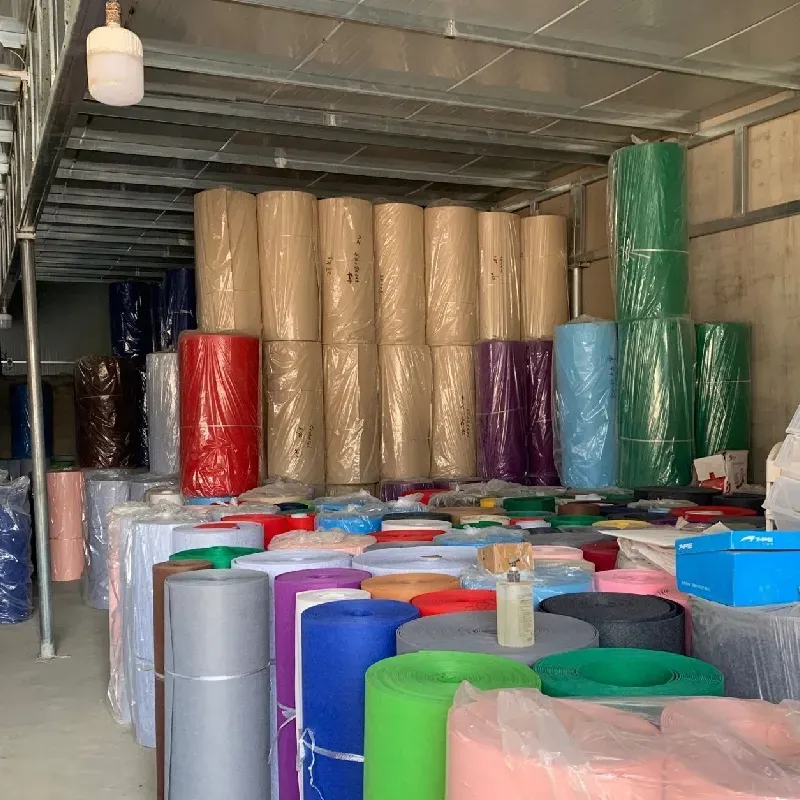
Felt paper red, commonly utilized as a cushioning material, filtration medium, and sound dampener, represents a non-woven fabric constructed from cellulose fibers, typically wood pulp. Within the industrial supply chain, it functions as a critical component in numerous applications, including roofing underlayment, automotive insulation, and various industrial padding roles. Its primary performance characteristics – density, thickness, and permeability – dictate its efficacy in these applications. The red coloration typically signifies the inclusion of specific dyes for identification or UV resistance, though this is not a standardized requirement. A significant industry pain point lies in ensuring consistent material properties to guarantee reliable performance across diverse and demanding environments, particularly with regards to water resistance and dimensional stability.
Material Science & Manufacturing
The core material of felt paper red is cellulose fiber, derived predominantly from wood pulp but increasingly from recycled paper sources. These fibers possess inherent physical properties including tensile strength (ranging from 50-150 MPa, dependent on fiber type and processing) and elasticity. Manufacturing begins with the pulping process, breaking down the wood or recycled material into individual fibers. These fibers are then dispersed in water, forming a slurry. The formation of the felt paper occurs through a wet-laid process, where the fiber slurry is deposited onto a moving wire mesh. Water drainage through the mesh leaves a mat of interwoven fibers. Critical parameters in this stage include slurry concentration (typically 0.5-2% by weight), wire speed (impacts fiber alignment and density – 10-50 m/min), and vacuum pressure applied for water removal. Following wet-forming, the mat undergoes compression through rollers to enhance density and structural integrity. Red dye is usually introduced during the pulping stage to ensure uniform coloration throughout the material. Chemical compatibility is also crucial; the dyes used must not interfere with the cellulose’s structural integrity or leach out under exposure to common environmental factors. Binders, like latex or starch, are often added to improve the paper's strength and water resistance. The binder content and application method significantly impact the final product characteristics.
Performance & Engineering
The performance of felt paper red is deeply linked to its structural integrity and resistance to environmental factors. Force analysis reveals that its load-bearing capacity is dependent on its density and fiber orientation. Higher density materials exhibit greater compressive strength but reduced permeability. Environmental resistance, specifically to moisture, is a primary concern. Water absorption can lead to dimensional instability, loss of structural integrity, and potential mold growth. Therefore, treatments with water-repellent chemicals (such as paraffin wax or silicone-based coatings) are often employed. The effectiveness of these treatments is quantified by the water absorption rate (typically <20% after 24 hours immersion) and water vapor transmission rate (WVTR) – lower WVTR indicates better moisture barrier properties. Roofing underlayment applications demand compliance with ASTM D226 and ASTM D1973, which specify requirements for tensile strength, tear resistance, and water resistance. In automotive applications, flammability is a critical performance factor, necessitating adherence to FMVSS 302 standards (Federal Motor Vehicle Safety Standards). Furthermore, the material’s resistance to UV degradation, assessed through accelerated weathering tests (ASTM G154), directly impacts its long-term durability in outdoor applications. Fiber alignment during the manufacturing process impacts the tensile strength in specific directions, requiring engineers to consider this anisotropy during product design.
Technical Specifications
| Parameter | Unit | Typical Value (Grade A) | Typical Value (Grade B) |
|---|---|---|---|
| Basis Weight | g/m² | 300 | 500 |
| Thickness | mm | 1.5 | 2.5 |
| Density | kg/m³ | 200 | 200 |
| Tensile Strength (MD) | N/50mm | 15 | 25 |
| Tensile Strength (CD) | N/50mm | 8 | 12 |
| Water Absorption (24hr) | % | 15 | 10 |
Failure Mode & Maintenance
Felt paper red is susceptible to several failure modes. Delamination, or separation of layers, occurs due to insufficient bonding between fibers or binder failure, often exacerbated by moisture exposure and temperature fluctuations. Fatigue cracking arises from repeated stress, particularly in applications involving constant vibration (e.g., automotive insulation). Degradation of the cellulose fibers themselves can occur due to prolonged exposure to UV radiation and oxidative environments, leading to embrittlement and loss of strength. Mold and mildew growth represents another significant failure mode, particularly in damp environments. Oxidation can also lead to discoloration and a reduction in the material’s functional properties. Maintenance primarily involves preventative measures. Proper storage in a dry, well-ventilated environment is crucial to minimize moisture absorption and mold growth. Regular inspection for signs of delamination or cracking is recommended. For applications requiring prolonged outdoor exposure, periodic re-application of water-repellent coatings can extend the material’s lifespan. If delamination is detected, localized repair using appropriate adhesives can provide temporary mitigation, but complete replacement is often the most reliable long-term solution.
Industry FAQ
Q: What is the impact of fiber source (wood pulp vs. recycled paper) on the long-term performance of felt paper red?
A: Recycled paper fibers generally have lower tensile strength and are more prone to degradation compared to virgin wood pulp fibers. This translates to a shorter lifespan and reduced load-bearing capacity, particularly in demanding applications. However, advancements in recycling technologies are continually improving the quality of recycled fibers, narrowing the performance gap. The choice depends on cost considerations and the specific performance requirements of the application.
Q: How do different binder types affect the water resistance and flexibility of the felt paper?
A: Latex binders typically provide superior water resistance compared to starch-based binders. However, latex binders can reduce the flexibility of the material, making it more prone to cracking under bending stress. Starch binders offer greater flexibility but limited water resistance, necessitating the use of additional water-repellent treatments.
Q: What testing methods are used to verify the consistency of dye concentration in red felt paper?
A: Spectrophotometry is the standard method for quantifying dye concentration. A spectrophotometer measures the absorbance and transmittance of light through the material, allowing for precise determination of the dye content. Visual inspection, using standardized color charts, provides a quick but less accurate assessment.
Q: Can felt paper red be effectively used in high-temperature applications, and if so, what limitations apply?
A: Felt paper red has a limited thermal stability. Prolonged exposure to temperatures above 80°C (176°F) can lead to cellulose degradation, resulting in embrittlement and loss of structural integrity. While specific additives can marginally improve thermal resistance, it is generally not suitable for sustained high-temperature environments.
Q: What considerations should be made when selecting felt paper red for use in contact with potentially corrosive chemicals?
A: Cellulose is susceptible to degradation by strong acids and bases. Therefore, it’s vital to assess the chemical compatibility of the felt paper with the specific chemicals it will encounter. If exposure to corrosive substances is anticipated, specialized chemically resistant coatings or alternative materials should be considered. Testing under simulated exposure conditions is highly recommended.
Conclusion
Felt paper red represents a versatile material offering cost-effective solutions in numerous industrial applications. Its performance, however, is intrinsically linked to its manufacturing process, material composition, and susceptibility to environmental factors. Maintaining consistent fiber quality, optimizing binder application, and implementing appropriate water-repellent treatments are critical to ensuring reliable long-term performance.
Future advancements in cellulose fiber modification and the development of bio-based binders promise to enhance the durability, sustainability, and overall performance of felt paper red. Continued research into novel coating technologies will also play a crucial role in expanding its application range to more demanding environments and addressing evolving industry needs.


 English
  Afrikaans
  Albanian
  Amharic
  Arabic
  Armenian
  Azerbaijani
  Basque
  Belarusian
  Bengali
  Bosnian
  Bulgarian
  Catalan
  Cebuano
  Corsican
  Croatian
  Czech
Czech  Danish
  Dutch
Dutch  Esperanto
  Estonian
  Finnish
  French
  Frisian
  Galician
  Georgian
  German
  Greek
Greek  Gujarati
  Haitian Creole
  Hausa
Hausa  Hebrew
  Hindi
Hindi  Miao
Miao  Hungarian
  Icelandic
  Igbo
Igbo  Indonesian
  Irish
Irish  Italian
  Japanese
  Javanese
  Kazakh
  Khmer
Khmer  Rwandese
  Korean
  Kurdish
  Kyrgyz
  Lao
Lao  Latin
Latin  Latvian
  Lithuanian
  Luxembourgish
  Macedonian
  Malgashi
  Malay
Malay  Malayalam
  Maltese
  Maori
Maori  Marathi
  Mongolian
  Myanmar
  Nepali
  Norwegian
  Norwegian
  Occitan
  Pashto
  Persian
  Polish
  Portuguese
  Romanian
  Russian
  Samoan
  Scottish Gaelic
  Serbian
  Sesotho
  Shona
Shona  Sindhi
  Sinhala
  Slovak
  Slovenian
  Somali
  Spanish
  Sundanese
  Swahili
  Swedish
  Tajik
Tajik  Tamil
Tamil  Tatar
Tatar  Telugu
  Thai
Thai  Turkish
  Turkmen
  Ukrainian
  Urdu
Urdu  Uighur
  Uzbek
Uzbek  Vietnamese
  Welsh
Welsh  Bantu
Bantu  Yiddish
  Yoruba
  Zulu
Zulu