
Apr . 01, 2024 17:55 Back to list
Felt Pastel Colors Performance Analysis
Introduction
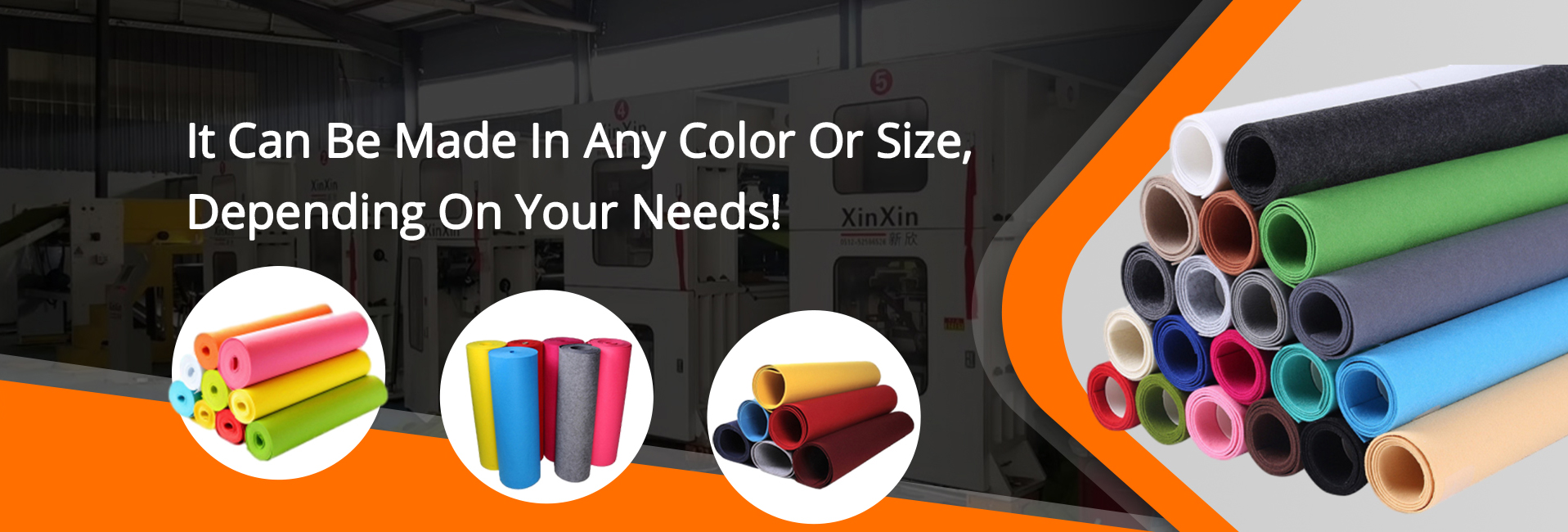
Felt pastel colors represent a significant segment within the broader nonwoven textile industry, serving diverse applications ranging from craft and educational materials to industrial sound dampening and filtration. Technically, felt is a textile material produced by matting, condensing and pressing fibers together. Pastel coloration is achieved through dyeing processes utilizing specific pigment chemistries to yield soft, muted hues. This guide details the material science, manufacturing processes, performance characteristics, potential failure modes, and relevant standards associated with felt in pastel colorations, focusing on a B2B perspective for industrial applications. A core industry pain point is maintaining color consistency and durability across large production runs while adhering to increasingly stringent environmental regulations concerning dye effluent and material composition. Understanding these factors is crucial for procurement managers, engineers, and quality control personnel.
Material Science & Manufacturing
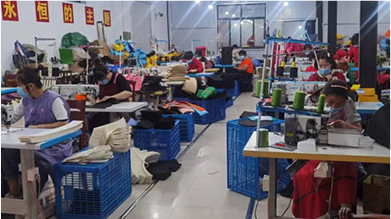
The primary raw material for most pastel-colored felts is typically wool, acrylic, polyester, or rayon, or blends thereof. Wool felts offer natural crimp and loft, leading to superior insulation and absorbency, however they are susceptible to biological degradation and require treatment for flame retardancy. Acrylic felts provide good colorfastness and are more cost-effective, though they possess lower heat resistance. Polyester felts exhibit excellent durability and resistance to chemicals and abrasion, but can be more difficult to dye consistently. Rayon offers a soft hand and drapes well but lacks the dimensional stability of synthetics. Dye selection is critical for pastel shades; reactive dyes are common for cellulosic fibers (rayon), while disperse dyes are used for polyester. Acrylics take basic dyes well. Manufacturing processes begin with fiber preparation, followed by carding to align the fibers, then needling, or wet felting. Needling involves mechanically interlocking the fibers using barbed needles. Wet felting utilizes heat, moisture, and agitation to create a dense, matted structure. Parameter control is paramount: needle density and stroke length influence felt density and texture; temperature, pH, and dye concentration dictate color development and penetration. Post-processing may include calendaring to refine surface smoothness and antimicrobial treatment to prevent mold growth. The choice of fiber and manufacturing technique significantly impacts the final properties and performance of the pastel-colored felt.
Performance & Engineering
The performance of felt pastel colors is dictated by several key engineering properties. Tensile strength, measured in pounds per square inch (PSI) or Newtons (N), determines resistance to tearing and deformation under load. Elongation at break indicates the material's ability to stretch before failure. Dimensional stability, assessed by changes in length and width after exposure to heat and humidity, is crucial for applications requiring precise fit. Air permeability, measured in cubic feet per minute (CFM), dictates suitability for filtration or insulation. Sound absorption coefficient, ranging from 0 to 1, reflects the material's ability to reduce noise transmission. Colorfastness to light and washing is essential for maintaining aesthetic appeal. These properties are influenced by fiber type, felt density, and manufacturing process. For example, denser felts generally exhibit higher tensile strength and lower air permeability. Force analysis in structural applications requires consideration of compressive stress and shear forces. Environmental resistance, particularly UV degradation and moisture absorption, must be evaluated for outdoor applications. Compliance requirements vary by industry; for example, automotive applications demand adherence to flammability standards (FMVSS 302) and material emission limits (VDA 270), while medical applications require biocompatibility testing (ISO 10993).
Technical Specifications
| Property | Wool Felt (Pastel) | Acrylic Felt (Pastel) | Polyester Felt (Pastel) | Rayon Felt (Pastel) |
|---|---|---|---|---|
| Tensile Strength (PSI) | 150-250 | 100-180 | 200-300 | 80-150 |
| Elongation at Break (%) | 30-50 | 40-60 | 15-30 | 25-45 |
| Density (g/cm³) | 0.2-0.4 | 0.15-0.3 | 0.1-0.25 | 0.1-0.2 |
| Air Permeability (CFM) | 5-20 | 10-30 | 1-10 | 15-25 |
| Colorfastness to Light (Rating 1-5) | 3-4 | 4-5 | 3-4 | 2-3 |
| Moisture Absorption (%) | 30-40 | 2-5 | 0.5-2 | 50-60 |
Failure Mode & Maintenance
Felt pastel colors are susceptible to several failure modes. Fatigue cracking can occur under repeated stress, particularly in applications involving cyclical loading. Delamination, or separation of layers, can arise from inadequate fiber interlocking or exposure to solvents. Degradation of dyes, leading to fading or discoloration, is common due to UV exposure or washing. Oxidation of fibers, particularly wool, can result in embrittlement and loss of strength. Biological attack, such as mold or mildew growth, is a concern in humid environments. Abrasion can cause wear and tear, reducing thickness and performance. Maintenance strategies include regular cleaning with mild detergents, avoiding harsh chemicals or solvents, protecting from prolonged UV exposure, and storing in a dry, well-ventilated area. For wool felts, mothproofing treatment is recommended. Regular inspection for signs of damage, such as cracks, tears, or discoloration, is crucial for preventing catastrophic failure. Preventive measures, such as applying a protective coating, can enhance durability and extend service life. In case of minor damage, patching or repair with compatible materials may be feasible.
Industry FAQ
Q: What is the impact of different dye types on the long-term colorfastness of pastel-colored felts?
A: The dye type significantly influences colorfastness. Reactive dyes generally offer excellent wash fastness, but can be susceptible to fading upon prolonged UV exposure. Disperse dyes, commonly used for polyester, exhibit good lightfastness but may bleed during washing if not properly fixed. Basic dyes, used for acrylics, have moderate colorfastness to both light and washing. The choice of dye should align with the intended application and anticipated environmental conditions. Pre-treatment of the felt to enhance dye uptake and post-treatment to improve dye fixation are also critical.
Q: How does the fiber blend (e.g., wool/acrylic) affect the flammability of felt pastel colors?
A: Wool is naturally flame retardant due to its high nitrogen and moisture content. Acrylic, however, is highly flammable. Blending wool with acrylic reduces the overall flammability, but the proportion of acrylic dictates the degree of protection. Polyester also contributes to flammability. For applications requiring stringent fire safety standards, flame retardant treatments are necessary, regardless of the fiber blend. These treatments typically involve applying chemical coatings that inhibit combustion.
Q: What are the considerations for using felt pastel colors in outdoor applications, specifically regarding UV degradation?
A: UV degradation is a significant concern for outdoor applications. Prolonged exposure to UV radiation can cause fading, embrittlement, and loss of strength in most felt materials. Polyester felts generally offer better UV resistance than wool or rayon, but are still susceptible to degradation. Using UV stabilizers in the dye formulation and applying a UV-protective coating can significantly extend the service life of the felt. The color itself also plays a role; darker shades tend to absorb more UV radiation and degrade faster.
Q: How does the manufacturing process (needled vs. wet felted) influence the mechanical properties and performance characteristics?
A: Needled felts typically exhibit higher tensile strength and dimensional stability compared to wet-felted felts. This is because the mechanical interlocking of fibers in needling creates a stronger, more cohesive structure. Wet felting results in a softer, more pliable material with lower strength and greater susceptibility to deformation. Wet-felted felts, however, often have a more uniform density and better drape. The choice of process depends on the specific application requirements.
Q: What environmental regulations should be considered when sourcing or using pastel-colored felts, particularly regarding dye effluent?
A: Several environmental regulations are relevant. REACH (Registration, Evaluation, Authorisation and Restriction of Chemicals) in Europe restricts the use of certain hazardous chemicals in textile production. OEKO-TEX Standard 100 certifies that textiles are free from harmful substances. Regulations concerning dye effluent, such as those enforced by the EPA in the United States and similar agencies globally, limit the discharge of heavy metals and other pollutants. Choosing suppliers that adhere to these regulations and utilize eco-friendly dyes is crucial for sustainable sourcing.
Conclusion
Felt pastel colors represent a versatile material with a wide range of industrial applications, however, optimal performance relies on a deep understanding of material science, manufacturing nuances, and potential failure mechanisms. The selection of appropriate fiber types, dye chemistries, and production processes is critical for achieving desired properties such as tensile strength, colorfastness, and environmental resistance. A proactive approach to maintenance and a commitment to regulatory compliance are essential for ensuring long-term durability and sustainability.
Future development in this field will likely focus on bio-based and recycled fiber alternatives to reduce environmental impact, innovative dye technologies to enhance colorfastness and reduce effluent, and advanced finishing treatments to improve performance characteristics. Ongoing research into the fundamental properties of felt and the interactions between fibers, dyes, and environmental factors will continue to drive innovation and optimize the application of felt pastel colors across diverse industries.


 English
  Afrikaans
  Albanian
  Amharic
  Arabic
  Armenian
  Azerbaijani
  Basque
  Belarusian
  Bengali
  Bosnian
  Bulgarian
  Catalan
  Cebuano
  Corsican
  Croatian
  Czech
Czech  Danish
  Dutch
Dutch  Esperanto
  Estonian
  Finnish
  French
  Frisian
  Galician
  Georgian
  German
  Greek
Greek  Gujarati
  Haitian Creole
  Hausa
Hausa  Hebrew
  Hindi
Hindi  Miao
Miao  Hungarian
  Icelandic
  Igbo
Igbo  Indonesian
  Irish
Irish  Italian
  Japanese
  Javanese
  Kazakh
  Khmer
Khmer  Rwandese
  Korean
  Kurdish
  Kyrgyz
  Lao
Lao  Latin
Latin  Latvian
  Lithuanian
  Luxembourgish
  Macedonian
  Malgashi
  Malay
Malay  Malayalam
  Maltese
  Maori
Maori  Marathi
  Mongolian
  Myanmar
  Nepali
  Norwegian
  Norwegian
  Occitan
  Pashto
  Persian
  Polish
  Portuguese
  Romanian
  Russian
  Samoan
  Scottish Gaelic
  Serbian
  Sesotho
  Shona
Shona  Sindhi
  Sinhala
  Slovak
  Slovenian
  Somali
  Spanish
  Sundanese
  Swahili
  Swedish
  Tajik
Tajik  Tamil
Tamil  Tatar
Tatar  Telugu
  Thai
Thai  Turkish
  Turkmen
  Ukrainian
  Urdu
Urdu  Uighur
  Uzbek
Uzbek  Vietnamese
  Welsh
Welsh  Bantu
Bantu  Yiddish
  Yoruba
  Zulu
Zulu