
Apr . 01, 2024 17:55 Back to list
felt purple Performance Analysis
Introduction
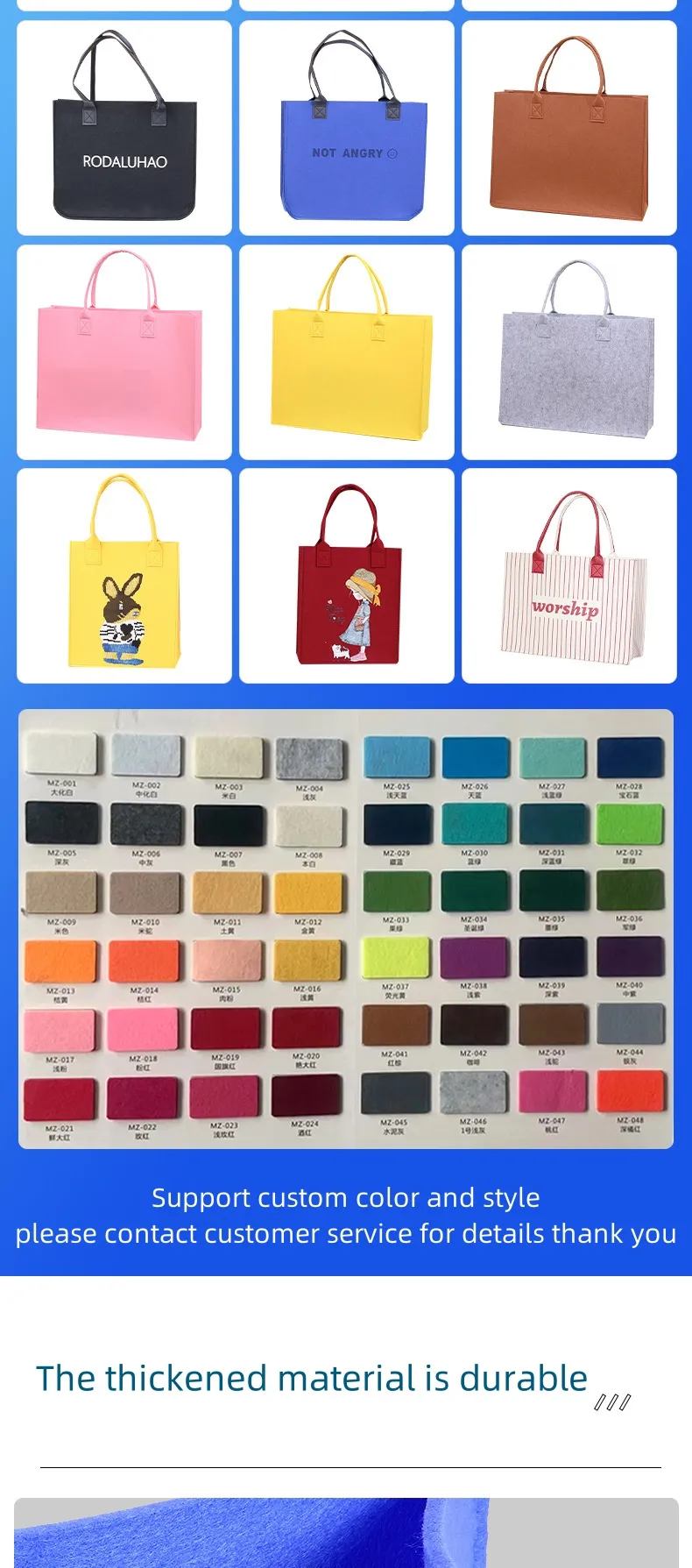
Felt purple is a non-woven textile material produced by matting, condensing and pressing natural or synthetic fibers. Within the broader textile industry, felt occupies a unique position as a material fabricated without weaving or knitting, relying instead on the interlocking of fibers achieved through mechanical, chemical, or thermal processes. Its specific properties—density, thickness, colorfastness, and resilience—are critically dependent on the fiber composition, manufacturing process, and post-processing treatments. The utility of felt purple spans diverse applications, including industrial filtration, acoustic dampening, cushioning, craft materials, and increasingly, specialized technical applications demanding precise performance characteristics. Core performance indicators include dimensional stability under load, resistance to chemical degradation, and ability to maintain form and function over a defined service life. A significant industry pain point lies in inconsistent quality control across suppliers, leading to variability in material properties and potential failures in critical applications. This guide details the material science, manufacturing techniques, performance characteristics, failure modes, and relevant standards governing felt purple.
Material Science & Manufacturing
Felt purple is most commonly manufactured from wool, acrylic, polyester, or blends thereof. Wool felts, historically dominant, benefit from the natural crimp of wool fibers, facilitating interlocking. Acrylic and polyester offer cost advantages, improved resistance to abrasion, and tailored color options. Fiber diameter is a crucial parameter; finer fibers (e.g., less than 20 microns for wool) create a denser, smoother felt with superior interlocking. Manufacturing processes fall into several categories: wet felting, needle felting, and thermal bonding. Wet felting involves applying moisture, heat, and mechanical agitation to interlock fibers. Needle felting utilizes barbed needles to mechanically entangle fibers, offering precise control over density and pattern. Thermal bonding employs heat to melt thermoplastic fibers, creating a cohesive structure. Parameter control is paramount. For wet felting, temperature (typically 80-95°C), agitation intensity, and pH level must be tightly regulated. In needle felting, needle density, penetration depth, and feed rate impact product quality. Thermal bonding requires precise control of temperature, pressure, and dwell time to avoid fiber degradation. Chemical compatibility is also critical; certain chemical treatments (e.g., for water repellency) must be compatible with the chosen fiber composition to avoid compromising material integrity. The addition of dyes and pigments during fiber production or post-fabrication affects colorfastness and UV resistance.
Performance & Engineering
The performance of felt purple is dictated by its physical and mechanical properties. Compressive strength, a key parameter, determines its ability to withstand loads without permanent deformation. Density, typically ranging from 0.1 to 0.8 g/cm³, influences both strength and insulation properties. Tensile strength, though relatively low compared to woven fabrics, is important for applications involving stretching or pulling forces. Friction coefficients are relevant for applications requiring controlled sliding or gripping. Environmental resistance is a significant consideration. Exposure to UV radiation can cause fiber degradation, leading to discoloration and reduced strength. Moisture absorption impacts dimensional stability and can promote microbial growth. Chemical resistance varies depending on the fiber composition; wool is susceptible to attack by moths and certain chemicals, while synthetic fibers generally exhibit better resistance. Compliance requirements often dictate performance specifications. For example, in filtration applications, felt must meet specific pore size and flow rate requirements. In acoustic applications, sound absorption coefficients must meet defined standards. Force analysis in applications like cushioning requires understanding the material’s compression-force deflection curve. Failure analyses often pinpoint weaknesses in the fiber structure or bonding process, leading to delamination or cracking.
Technical Specifications
| Parameter | Wool Felt (Typical) | Acrylic Felt (Typical) | Polyester Felt (Typical) | Units |
|---|---|---|---|---|
| Density | 0.4 - 0.6 | 0.2 - 0.4 | 0.3 - 0.5 | g/cm³ |
| Thickness | 1 - 10 | 0.5 - 5 | 1 - 8 | mm |
| Tensile Strength | 50 - 150 | 70 - 200 | 80 - 250 | N/m |
| Compressive Strength | 100 - 300 | 50 - 150 | 75 - 200 | kPa |
| Water Absorption | 30 - 40 | 1 - 5 | 0.5 - 3 | % |
| Colorfastness to Light | 3 - 5 | 5 - 7 | 6 - 8 | (1-8 scale, 8=Excellent) |
Failure Mode & Maintenance
Felt purple is susceptible to several failure modes. Fatigue cracking, particularly under cyclic loading, can occur due to repeated stress on the fiber structure. Delamination, the separation of layers, can result from inadequate fiber bonding or exposure to solvents. Degradation, caused by UV radiation, moisture, or chemical attack, leads to reduced strength and discoloration. Oxidation, especially in wool felts, can weaken fibers and create a brittle texture. Abrasion, resulting from surface wear, reduces thickness and compromises performance. Microbial growth, particularly in wool felts exposed to moisture, can cause degradation and odor. Maintenance strategies depend on the application. Regular cleaning, using mild detergents and avoiding harsh chemicals, helps remove contaminants and prevent degradation. UV protectants can be applied to mitigate the effects of sunlight. For heavily soiled felts, professional cleaning may be required. Proper storage, away from direct sunlight and moisture, extends the service life. In filtration applications, regular replacement of filters is crucial to maintain performance. Inspection for signs of wear, cracking, or delamination should be conducted periodically to identify potential failures.
Industry FAQ
Q: What is the impact of fiber blend composition on the long-term performance of felt purple in a high-humidity environment?
A: Fiber blend composition significantly influences performance in high humidity. While wool offers excellent absorbency, prolonged exposure can promote microbial growth and dimensional instability. Acrylic and polyester blends exhibit superior resistance to moisture absorption and microbial attack. However, polyester may experience some hydrolysis over extended periods, leading to reduced strength. A blend incorporating a small percentage of a hydrophobic fiber (e.g., polypropylene) can improve overall resistance to moisture-induced degradation. The ideal composition will depend on the specific application and expected service life.
Q: How does the needle density during needle felting affect the filtration efficiency of felt purple used in air filtration systems?
A: Higher needle density generally leads to increased filtration efficiency. More frequent needle punctures create a tighter fiber network with smaller pore sizes, effectively trapping smaller particles. However, excessively high needle density can also reduce airflow and potentially damage fibers, diminishing overall performance. Optimal needle density is a balance between filtration efficiency and airflow resistance, requiring careful optimization based on the target particle size and desired airflow rate.
Q: What specific chemical compatibility testing is recommended before using felt purple in contact with aggressive solvents?
A: Chemical compatibility testing should include immersion testing, where samples are fully submerged in the solvent for a defined period (e.g., 24, 72, and 168 hours) at a specific temperature. Post-exposure analysis should assess changes in weight, tensile strength, elongation at break, and appearance. Additionally, Fourier-transform infrared spectroscopy (FTIR) can identify any chemical alterations in the fiber structure. A control sample, exposed to air only, should be included for comparison. Detailed solvent resistance charts for the specific fiber composition should be consulted.
Q: Can felt purple be effectively treated to achieve antistatic properties, and what methods are preferred?
A: Yes, felt purple can be effectively treated to achieve antistatic properties. Methods include applying topical antistatic agents (e.g., ethoxylated amines, quaternary ammonium compounds), incorporating conductive fibers into the felt structure, or using plasma treatment to modify the surface. Topical agents offer a cost-effective solution but may require re-application over time. Conductive fibers provide a permanent solution but increase material cost. Plasma treatment creates a durable, hydrophilic surface that dissipates static charge but may require specialized equipment. The preferred method depends on the application and desired durability of the antistatic effect.
Q: What are the typical failure mechanisms observed in thermally bonded polyester felt used in automotive interior applications, and how can they be mitigated?
A: Common failure mechanisms in thermally bonded polyester felt for automotive interiors include thermal shrinkage, creep under sustained pressure, and UV-induced degradation. Thermal shrinkage can occur due to residual stresses from the bonding process or exposure to high temperatures within the vehicle. Creep leads to permanent deformation under pressure from seat occupants. UV degradation causes discoloration and reduced strength. Mitigation strategies include optimizing the thermal bonding parameters to minimize residual stresses, using UV stabilizers in the polyester formulation, and selecting a polyester resin with high creep resistance. Careful design of the felt component, incorporating reinforcement structures where necessary, can also improve long-term durability.
Conclusion
Felt purple represents a versatile material platform with diverse applications, underpinned by a complex interplay of material science, manufacturing processes, and performance characteristics. Understanding the specific fiber composition, manufacturing technique, and environmental conditions is critical to optimizing performance and predicting service life. The industry faces ongoing challenges related to quality control consistency, chemical compatibility, and long-term durability, particularly in demanding applications. Rigorous testing, informed material selection, and careful attention to processing parameters are essential to mitigate potential failure modes.
Future advancements in felt technology will likely focus on developing sustainable fiber sources, enhancing chemical resistance through novel surface treatments, and integrating smart functionalities (e.g., sensors) into felt structures. Further research into the effects of various environmental stressors on felt properties will be crucial for improving material performance and extending service life in increasingly challenging applications. Continued adherence to international standards and a commitment to quality control will remain paramount for ensuring the reliability and safety of felt purple products.


 English
  Afrikaans
  Albanian
  Amharic
  Arabic
  Armenian
  Azerbaijani
  Basque
  Belarusian
  Bengali
  Bosnian
  Bulgarian
  Catalan
  Cebuano
  Corsican
  Croatian
  Czech
Czech  Danish
  Dutch
Dutch  Esperanto
  Estonian
  Finnish
  French
  Frisian
  Galician
  Georgian
  German
  Greek
Greek  Gujarati
  Haitian Creole
  Hausa
Hausa  Hebrew
  Hindi
Hindi  Miao
Miao  Hungarian
  Icelandic
  Igbo
Igbo  Indonesian
  Irish
Irish  Italian
  Japanese
  Javanese
  Kazakh
  Khmer
Khmer  Rwandese
  Korean
  Kurdish
  Kyrgyz
  Lao
Lao  Latin
Latin  Latvian
  Lithuanian
  Luxembourgish
  Macedonian
  Malgashi
  Malay
Malay  Malayalam
  Maltese
  Maori
Maori  Marathi
  Mongolian
  Myanmar
  Nepali
  Norwegian
  Norwegian
  Occitan
  Pashto
  Persian
  Polish
  Portuguese
  Romanian
  Russian
  Samoan
  Scottish Gaelic
  Serbian
  Sesotho
  Shona
Shona  Sindhi
  Sinhala
  Slovak
  Slovenian
  Somali
  Spanish
  Sundanese
  Swahili
  Swedish
  Tajik
Tajik  Tamil
Tamil  Tatar
Tatar  Telugu
  Thai
Thai  Turkish
  Turkmen
  Ukrainian
  Urdu
Urdu  Uighur
  Uzbek
Uzbek  Vietnamese
  Welsh
Welsh  Bantu
Bantu  Yiddish
  Yoruba
  Zulu
Zulu