
Apr . 01, 2024 17:55 Back to list
Felt Types Performance Analysis
Introduction
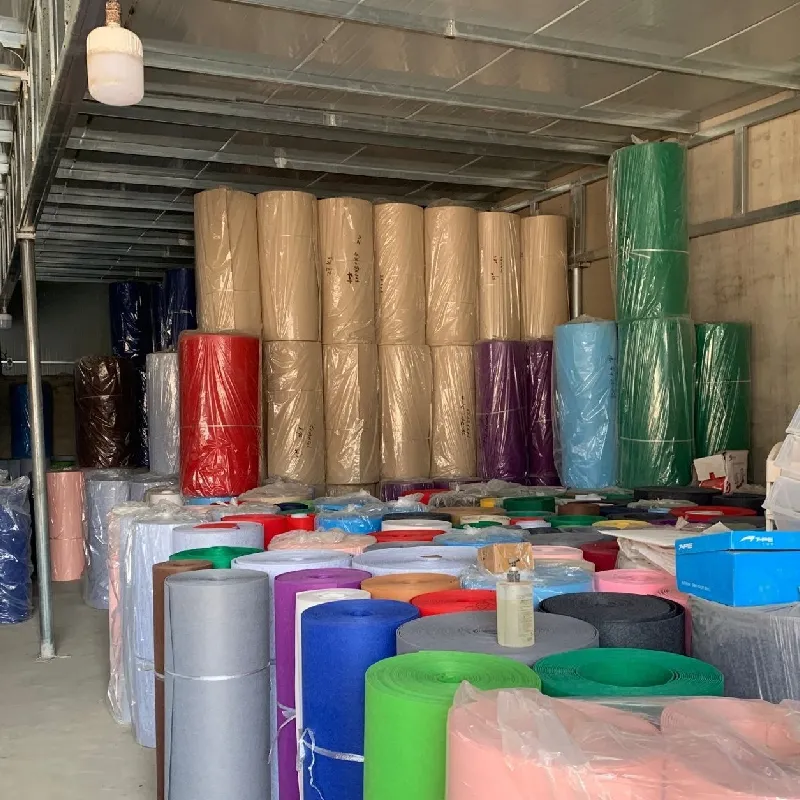
Felt is a non-woven textile produced by matting, condensing and pressing fibers together. Its position within the broader textile industry is unique; unlike woven or knitted fabrics, it requires no yarn or knitting process. Felt’s industrial significance spans numerous sectors including automotive, filtration, insulation, and padding. Core performance characteristics are defined by density, fiber composition, thickness, and the method of production. These parameters dictate properties like sound absorption, thermal insulation, cushioning, and liquid retention. A critical pain point in industrial applications is consistency of material properties, particularly batch-to-batch variations impacting performance in automated processes. Another challenge lies in achieving desired performance characteristics while maintaining cost-effectiveness, driving demand for optimized fiber blends and manufacturing processes. The selection of appropriate felt type is paramount to ensuring operational efficiency and product longevity.
Material Science & Manufacturing
The primary raw materials for felt production are wool, synthetic fibers (acrylic, polyester, polypropylene), and rayon. Wool felts derive their properties from the scaly surface of wool fibers, allowing them to interlock and mat under heat, moisture, and pressure. Synthetic felt production typically relies on chemical or mechanical bonding of fibers. Acrylic fibers offer wool-like characteristics at a lower cost, while polyester and polypropylene provide enhanced durability and resistance to abrasion. Rayon provides a cost-effective alternative with good absorbency.
Manufacturing processes vary depending on the desired felt type. Wool felt production involves carding, where fibers are aligned, followed by felting – a process combining heat, moisture, and mechanical action (fulling). Needle felting, common for synthetic felts, uses barbed needles to interlock fibers. Wet felting utilizes water and agitation to promote fiber entanglement. Thermally bonded felts utilize heat to melt and fuse fibers. Key parameter control includes fiber length (influencing strength and smoothness), fiber diameter (affecting density and filtration efficiency), and bonding density (determining overall structural integrity). Controlling these parameters is crucial for consistent material properties and repeatable performance. Fiber blending is a common practice, tailored to achieve specific combinations of cost, durability, and performance. The presence of impurities in the raw materials impacts the performance of the felt; consistent quality control is essential.
Performance & Engineering
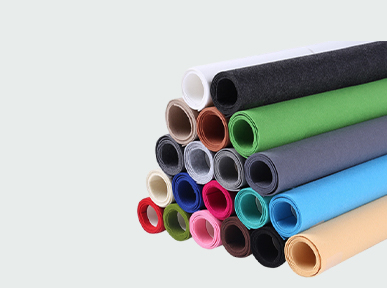
Felt’s performance is critically dependent on its application. In automotive interiors, felt serves as a damping material, reducing noise, vibration, and harshness (NVH). Engineering considerations include the felt's ability to withstand temperature fluctuations, UV exposure, and abrasion. Force analysis focuses on compression set – the permanent deformation under sustained load. For filtration applications, pore size distribution and filtration efficiency are paramount. These are directly related to fiber diameter and density. Environmental resistance is also key; exposure to oils, solvents, and chemicals can degrade the felt’s structural integrity. Compliance requirements vary by industry. Automotive felts must meet flammability standards (e.g., FMVSS 302 in the US). Filtration felts must comply with relevant standards for air or liquid purification. The coefficient of friction is crucial in applications involving sliding contact. Thermal conductivity impacts its use as an insulator. Proper selection involves rigorous testing and consideration of the operating environment.
Technical Specifications
| Felt Type | Material Composition | Density (g/cm³) | Thickness (mm) |
|---|---|---|---|
| Wool Felt | 100% Wool | 0.2 - 0.5 | 1 - 10 |
| Acrylic Felt | 100% Acrylic | 0.15 - 0.35 | 1 - 6 |
| Polyester Felt | 100% Polyester | 0.3 - 0.8 | 1 - 12 |
| Polypropylene Felt | 100% Polypropylene | 0.25 - 0.6 | 1 - 8 |
| Wool/Acrylic Blend | Wool/Acrylic (50/50) | 0.2 - 0.4 | 2 - 8 |
| Needle Punched Polyester | 100% Polyester | 0.5 - 1.2 | 3 - 25 |
Failure Mode & Maintenance
Common failure modes in felt include degradation due to UV exposure (leading to fiber embrittlement), compression set (loss of cushioning ability), delamination (separation of layers in laminated felts), and chemical attack (resulting in fiber dissolution or swelling). Fatigue cracking can occur in applications involving repeated compression. Abrasion causes fiber wear and thinning, reducing performance. Oxidation of synthetic fibers can lead to property changes over time. For wool felts, moth damage is a potential concern requiring preventative treatment. Maintenance typically involves periodic inspection for wear and tear. Cleaning methods depend on the felt type and contamination. Vacuuming is suitable for loose debris. Gentle washing with mild detergent may be appropriate for some types. Avoid harsh chemicals and excessive heat. For filtration felts, regular replacement is necessary to maintain filtration efficiency. Preventative measures include storing felt in a cool, dry, and dark environment to minimize degradation. Implementing a scheduled inspection program can allow for the timely identification and replacement of failing components.
Industry FAQ
Q: What are the primary differences between wool felt and synthetic felt in terms of durability?
A: Wool felt generally exhibits higher resilience and resistance to compression set compared to most synthetic felts. However, synthetic felts, particularly those made from polypropylene or polyester, demonstrate superior resistance to abrasion, chemicals, and moisture. Wool is also susceptible to moth damage, requiring preventative treatments. The choice depends on the specific application and its environmental stressors.
Q: How does the density of felt affect its performance as a sound dampener?
A: Higher density felts generally provide better sound absorption due to their increased mass and ability to dissipate sound energy. The increased density reduces the transmission of sound waves through the material. However, very high density can also lead to increased weight and cost.
Q: What is the impact of fiber diameter on the filtration efficiency of a felt filter?
A: Smaller fiber diameters result in smaller pore sizes within the felt structure, leading to higher filtration efficiency for particulate matter. However, extremely small pore sizes can increase pressure drop and reduce flow rate. Optimizing fiber diameter involves balancing filtration efficiency with flow characteristics.
Q: What are the flammability requirements for felt used in automotive applications?
A: Automotive felts typically must meet FMVSS 302, which specifies requirements for flammability resistance. This often necessitates the use of flame retardant treatments or inherently flame-resistant fiber materials. Testing and certification are critical to ensure compliance.
Q: How does thermal bonding differ from needle felting, and what are the advantages of each process?
A: Thermal bonding utilizes heat to fuse fibers together, creating a more uniform and dense structure. Needle felting uses barbed needles to mechanically interlock fibers. Thermal bonding generally results in higher strength and dimensional stability, but can be more energy intensive. Needle felting is a more versatile process, suitable for a wider range of fiber types and thicknesses, and offers lower production costs.
Conclusion
Felt remains a versatile and essential material across numerous industries, offering a unique combination of properties unattainable with conventional woven textiles. The critical factors in felt selection and application hinge on understanding the interplay between fiber composition, manufacturing process, and intended performance characteristics. Addressing the inherent challenges of batch-to-batch consistency and environmental degradation through rigorous quality control and material selection is paramount for achieving optimal and reliable performance.
Future developments in felt technology will likely focus on sustainable materials, advanced bonding techniques, and the integration of smart functionalities. The utilization of recycled fibers, bio-based polymers, and novel needle punching methods promises to reduce environmental impact and enhance performance capabilities. Furthermore, the exploration of conductive fibers and embedded sensors opens possibilities for integrating felt into intelligent systems and monitoring applications, expanding its utility beyond traditional roles.


 English
  Afrikaans
  Albanian
  Amharic
  Arabic
  Armenian
  Azerbaijani
  Basque
  Belarusian
  Bengali
  Bosnian
  Bulgarian
  Catalan
  Cebuano
  Corsican
  Croatian
  Czech
Czech  Danish
  Dutch
Dutch  Esperanto
  Estonian
  Finnish
  French
  Frisian
  Galician
  Georgian
  German
  Greek
Greek  Gujarati
  Haitian Creole
  Hausa
Hausa  Hebrew
  Hindi
Hindi  Miao
Miao  Hungarian
  Icelandic
  Igbo
Igbo  Indonesian
  Irish
Irish  Italian
  Japanese
  Javanese
  Kazakh
  Khmer
Khmer  Rwandese
  Korean
  Kurdish
  Kyrgyz
  Lao
Lao  Latin
Latin  Latvian
  Lithuanian
  Luxembourgish
  Macedonian
  Malgashi
  Malay
Malay  Malayalam
  Maltese
  Maori
Maori  Marathi
  Mongolian
  Myanmar
  Nepali
  Norwegian
  Norwegian
  Occitan
  Pashto
  Persian
  Polish
  Portuguese
  Romanian
  Russian
  Samoan
  Scottish Gaelic
  Serbian
  Sesotho
  Shona
Shona  Sindhi
  Sinhala
  Slovak
  Slovenian
  Somali
  Spanish
  Sundanese
  Swahili
  Swedish
  Tajik
Tajik  Tamil
Tamil  Tatar
Tatar  Telugu
  Thai
Thai  Turkish
  Turkmen
  Ukrainian
  Urdu
Urdu  Uighur
  Uzbek
Uzbek  Vietnamese
  Welsh
Welsh  Bantu
Bantu  Yiddish
  Yoruba
  Zulu
Zulu