Apr . 01, 2024 17:55 Back to list
Felt use Performance Analysis

Introduction
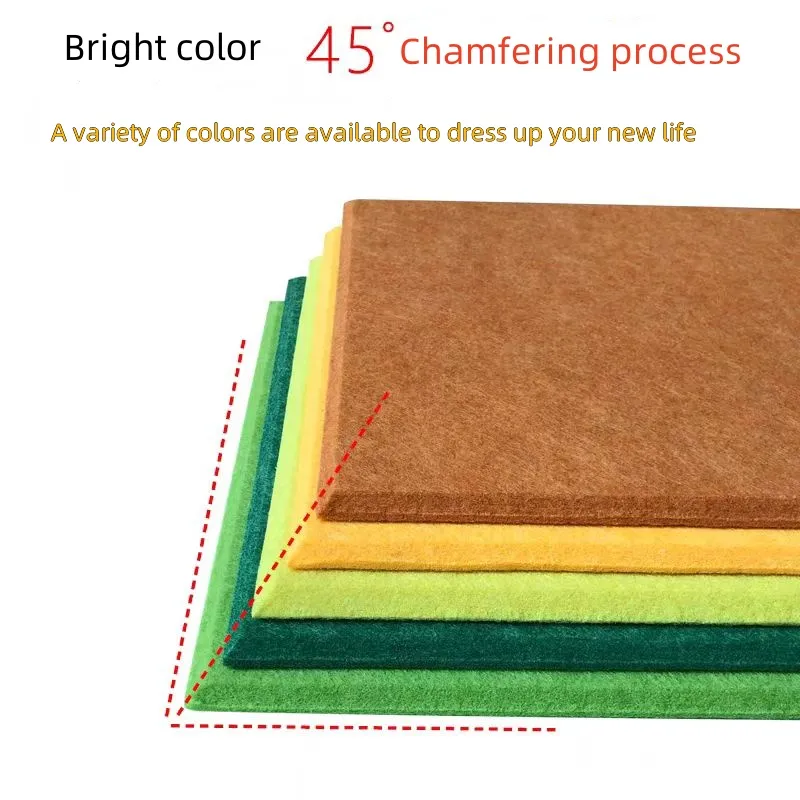
Felt is a non-woven textile produced by matting, condensing and pressing fibers together. Unlike woven or knitted fabrics, felt does not require yarns; instead, it relies on interlocking fibers through mechanical, chemical, or thermal processes. Historically produced from animal fibers like wool and hair, modern felt manufacturing encompasses synthetic fibers like acrylic, rayon, and polypropylene. Its position within the industrial chain extends across numerous sectors, serving as a crucial component in filtration, insulation, cushioning, sealing, and polishing applications. Core performance characteristics include its ability to conform to irregular shapes, dampen vibration, absorb sound, and provide thermal and acoustic insulation. The industry faces persistent challenges related to maintaining consistent fiber density, controlling shrinkage, and ensuring dimensional stability under varying environmental conditions. Furthermore, the increasing demand for sustainable materials drives research into bio-based felt alternatives and optimized recycling processes.
Material Science & Manufacturing
The raw materials for felt dictate its final properties. Wool, the traditional material, comprises keratin fibers with a complex structure granting elasticity and crimp. Acrylic fibers offer superior resistance to sunlight and chemicals, but lower moisture absorption. Polypropylene provides excellent chemical resistance and is lightweight, often used in industrial applications. Rayon offers a silk-like luster and is often blended to improve absorbency. The manufacturing process typically involves carding, where fibers are aligned into a web; then, densification through needling, chemical bonding, or thermal bonding. Needle punching uses barbed needles to mechanically interlock the fibers. Wet felting employs hot water, soap, and agitation to induce fiber entanglement. Thermal bonding utilizes heat to fuse thermoplastic fibers. Critical parameters during production include fiber length, fineness, density, and the applied pressure/temperature. Fiber length influences the felt’s strength and durability; finer fibers increase density and smoothness. Control of moisture content during wet felting is crucial to prevent uneven shrinkage and ensure uniform fiber distribution. Resin application for chemical bonding requires precise control of resin concentration and curing temperature to achieve optimal adhesion without compromising flexibility. Consistency in these parameters directly impacts the final product’s mechanical properties and functional performance.
Performance & Engineering
The performance of felt is intrinsically linked to its structural properties. Stress-strain analysis reveals its anisotropic behavior, with strength varying significantly depending on the direction of force application relative to the fiber orientation. Load-bearing capacity is directly proportional to fiber density and interlocking strength. Environmental resistance is a key engineering consideration. Prolonged exposure to UV radiation can degrade acrylic and polypropylene felts, reducing their tensile strength and causing discoloration. Moisture absorption affects dimensional stability; wool felts exhibit significant shrinkage when wetted, while synthetic felts demonstrate better retention of shape. Chemical resistance varies widely: wool is susceptible to acid attack, while polypropylene is resistant to most chemicals. Compliance requirements often dictate the need for flame retardancy, achieved through chemical treatments or the incorporation of inherently flame-resistant fibers. For filtration applications, pore size and permeability are critical parameters, engineered by controlling fiber density and bonding strength. In sealing applications, compression set – the permanent deformation under sustained pressure – is a key performance indicator. The design of felt components requires careful consideration of these factors to ensure reliable performance in the intended operating environment. Furthermore, felt’s damping characteristics are utilized in vibration isolation applications, where its ability to dissipate energy reduces noise and protects sensitive equipment.
Technical Specifications
| Parameter | Wool Felt | Acrylic Felt | Polypropylene Felt | Rayon Felt |
|---|---|---|---|---|
| Density (g/cm³) | 0.2 – 0.6 | 0.3 – 0.7 | 0.15 – 0.4 | 0.4 – 0.8 |
| Tensile Strength (MPa) | 1 – 5 | 2 – 8 | 1.5 – 6 | 2.5 - 9 |
| Elongation at Break (%) | 20 – 60 | 30 – 80 | 50 – 120 | 40 – 70 |
| Moisture Absorption (%) | 30 – 40 | 2 – 5 | <1 | 50-60 |
| Shrinkage (%) | 10 – 20 | 1 – 3 | <1 | 15-25 |
| Operating Temperature (°C) | -20 – 100 | -40 – 80 | -20 – 110 | -10-60 |
Failure Mode & Maintenance
Felt failure modes are diverse, dependent on material composition and application. Fatigue cracking can occur under cyclic loading, initiated by microscopic defects or fiber slippage. Delamination, the separation of felt layers, is common in bonded felts due to insufficient adhesive strength or environmental degradation of the bonding agent. Oxidation, especially in wool felt, leads to fiber embrittlement and loss of strength, accelerated by heat and light exposure. Chemical attack can dissolve or degrade fibers, compromising structural integrity. Abrasion, prevalent in polishing applications, causes fiber loss and surface roughening. Microbial growth, particularly in wool felt exposed to moisture, can lead to fiber decomposition and odor formation. Preventative maintenance includes regular cleaning to remove contaminants, avoiding prolonged exposure to harsh chemicals or UV radiation, and controlling humidity levels. For damaged felt, patching with compatible material or complete replacement are typical solutions. Regular inspection for signs of wear, cracking, or delamination is crucial to prevent catastrophic failure. Proper storage in a dry, well-ventilated environment can significantly extend the service life of felt components. Furthermore, utilizing protective coatings can enhance resistance to abrasion, chemicals, and UV degradation.
Industry FAQ
Q: What is the impact of needle density on the performance of needle-punched felt?
A: Higher needle density generally leads to greater fiber interlocking and increased felt density, resulting in improved tensile strength, reduced porosity, and enhanced dimensional stability. However, excessively high needle density can also cause fiber breakage and damage, potentially reducing overall performance. Optimization of needle density is crucial, balancing strength gains with fiber integrity.
Q: How does the choice of bonding agent affect the long-term durability of chemically bonded felt?
A: The bonding agent’s chemical compatibility with the fibers, its resistance to environmental degradation (UV, moisture, temperature), and its flexibility are all critical. Incompatible agents can lead to bond failure and delamination. Brittle agents are prone to cracking under stress. Selecting a durable, flexible, and compatible agent is essential for long-term performance.
Q: What are the considerations for selecting felt for high-temperature applications?
A: Material selection is paramount. Acrylic and polypropylene felts generally have lower temperature limits than wool or specialized synthetic felts. Consider the operating temperature range and choose a material with a sufficient thermal stability and oxidation resistance. Adding heat-resistant additives or coatings may also be necessary.
Q: How does the fiber composition influence the sound absorption coefficient of felt?
A: Fiber density, porosity, and fiber diameter all contribute to sound absorption. Generally, denser felts with a more open pore structure exhibit better sound absorption. Wool felts tend to have a higher sound absorption coefficient than synthetic felts due to their natural crimp and fiber structure, which create more air pockets.
Q: What testing methods are used to verify the chemical resistance of felt?
A: Immersion testing, where felt samples are exposed to specific chemicals for a defined period, is common. Changes in weight, tensile strength, and appearance are monitored. Spot testing assesses localized chemical effects. The specific testing protocol depends on the intended application and the chemicals the felt will encounter.
Conclusion
Felt, as a versatile non-woven material, offers a compelling combination of properties that make it essential across diverse industrial applications. Its manufacturing process, rooted in the intricate manipulation of fibers, allows for tailoring of performance characteristics to specific needs. Understanding the underlying material science – the nuances of wool, acrylic, polypropylene, and rayon – is paramount to successful application design. Addressing the inherent challenges of dimensional stability, environmental resistance, and potential failure modes through careful material selection, controlled manufacturing, and proactive maintenance ensures the longevity and reliability of felt components.
Future advancements in felt technology are likely to focus on sustainable materials, biodegradable alternatives, and enhanced performance characteristics. Research into bio-based fiber sources and innovative bonding techniques holds the key to reducing environmental impact. Furthermore, advancements in nanotechnology and surface treatments promise to unlock new functionalities, such as self-cleaning properties or enhanced chemical resistance. Continued collaboration between material scientists, engineers, and industry stakeholders will drive innovation and expand the applications of felt in an increasingly demanding technological landscape.


 English
  Afrikaans
  Albanian
  Amharic
  Arabic
  Armenian
  Azerbaijani
  Basque
  Belarusian
  Bengali
  Bosnian
  Bulgarian
  Catalan
  Cebuano
  Corsican
  Croatian
  Czech
Czech  Danish
  Dutch
Dutch  Esperanto
  Estonian
  Finnish
  French
  Frisian
  Galician
  Georgian
  German
  Greek
Greek  Gujarati
  Haitian Creole
  Hausa
Hausa  Hebrew
  Hindi
Hindi  Miao
Miao  Hungarian
  Icelandic
  Igbo
Igbo  Indonesian
  Irish
Irish  Italian
  Japanese
  Javanese
  Kazakh
  Khmer
Khmer  Rwandese
  Korean
  Kurdish
  Kyrgyz
  Lao
Lao  Latin
Latin  Latvian
  Lithuanian
  Luxembourgish
  Macedonian
  Malgashi
  Malay
Malay  Malayalam
  Maltese
  Maori
Maori  Marathi
  Mongolian
  Myanmar
  Nepali
  Norwegian
  Norwegian
  Occitan
  Pashto
  Persian
  Polish
  Portuguese
  Romanian
  Russian
  Samoan
  Scottish Gaelic
  Serbian
  Sesotho
  Shona
Shona  Sindhi
  Sinhala
  Slovak
  Slovenian
  Somali
  Spanish
  Sundanese
  Swahili
  Swedish
  Tajik
Tajik  Tamil
Tamil  Tatar
Tatar  Telugu
  Thai
Thai  Turkish
  Turkmen
  Ukrainian
  Urdu
Urdu  Uighur
  Uzbek
Uzbek  Vietnamese
  Welsh
Welsh  Bantu
Bantu  Yiddish
  Yoruba
  Zulu
Zulu