
Apr . 01, 2024 17:55 Back to list
Flesh colored felt Performance Analysis
Introduction
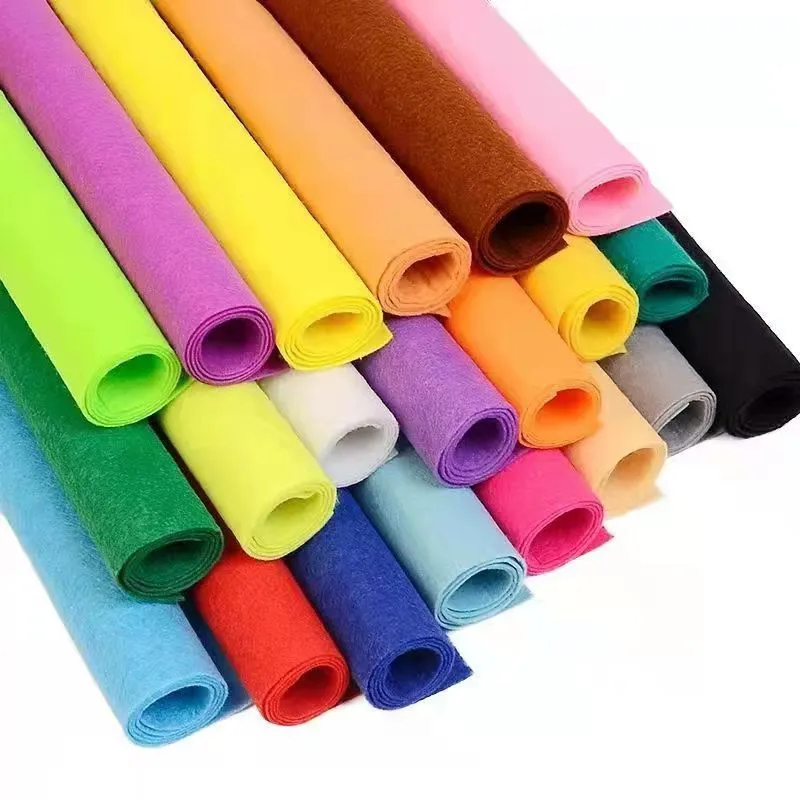
Flesh-colored felt is a non-woven textile material constructed from compressed natural or synthetic fibers, specifically dyed to approximate human skin tones. Its primary composition varies, commonly utilizing wool, acrylic, polyester, or rayon, or blends thereof. Within the broader felt industry, flesh-colored felt occupies a niche segment, serving specialized applications requiring visual concealment, realism in crafting, or hypoallergenic properties. This guide will detail the material science, manufacturing processes, performance characteristics, potential failure modes, and relevant industry standards concerning flesh-colored felt. The core performance characteristics revolve around its ability to mimic skin tone, its tactile properties (softness, compressibility), its absorbency, and its dimensional stability. A key industry pain point stems from achieving consistent color matching across batches, ensuring durability against abrasion, and maintaining hypoallergenic performance for medical and cosmetic applications.
Material Science & Manufacturing
The foundational material science of flesh-colored felt centers on the polymer chemistry of its constituent fibers. Wool felts derive their properties from the natural crimp and scale structure of wool fibers, enabling mechanical interlocking during the felting process. Acrylic and polyester felts rely on thermoplasticity; heat and pressure fuse the fibers together. Rayon, a regenerated cellulose fiber, contributes softness and absorbency. The 'flesh tone' color is achieved through precise dye formulation. Common dyes include acid dyes (for wool and nylon), disperse dyes (for polyester), and reactive dyes (for rayon). The manufacturing process typically involves carding – disentangling the fibers – followed by layering and compaction. Wet felting uses moisture, heat, and agitation to interlock fibers. Dry felting employs needles with barbs to mechanically tangle fibers. Needle punching is common for synthetic felts, and thermoforming is used to bond thermoplastic fibers. Key parameter control includes fiber fineness (denier), fiber length, density of the felt (weight per unit area, expressed as gsm – grams per square meter), dye concentration, and compaction force. Fiber blending significantly influences the final product characteristics. For instance, a wool/polyester blend offers a balance of softness, durability, and cost-effectiveness. The dye bath temperature, pH, and duration must be rigorously controlled to ensure uniform color penetration and prevent dye migration or fading. A critical issue is minimizing variations in fiber distribution during carding to prevent inconsistencies in felt thickness and density. The presence of impurities in the raw fibers can negatively impact dye uptake and felt formation.
Performance & Engineering
The performance of flesh-colored felt is governed by its physical and mechanical properties. Tensile strength, elongation at break, and tear strength are critical for applications involving stress or strain. The compressive strength and resilience are crucial for cushioning or prosthetic applications. The thermal conductivity of the felt impacts its suitability for temperature-sensitive applications. Environmental resistance is also a key consideration. UV exposure can lead to color fading and fiber degradation, particularly in acrylic and polyester felts. Moisture absorption affects dimensional stability and can promote microbial growth. For medical applications, biocompatibility and hypoallergenic properties are paramount, necessitating rigorous testing for cytotoxicity and sensitization. Engineering considerations involve optimizing the felt's density and thickness for specific load-bearing or cushioning requirements. Finite element analysis (FEA) can be used to model the stress distribution within the felt under various loading conditions. The porosity of the felt influences its breathability and fluid handling capabilities. Compliance requirements vary depending on the intended application. Medical-grade felt must meet stringent standards for biocompatibility and sterilization. Cosmetic applications require adherence to regulations regarding dye content and skin irritation potential. Specific attention is given to the fiber orientation; achieving a consistent orientation maximizes tensile strength in a specific direction.
Technical Specifications
| Parameter | Wool Felt | Acrylic Felt | Polyester Felt | Rayon Felt |
|---|---|---|---|---|
| Density (gsm) | 100-600 | 150-400 | 200-800 | 120-300 |
| Thickness (mm) | 1-10 | 0.5-5 | 1-12 | 0.8-4 |
| Tensile Strength (N/cm) | 5-20 | 8-25 | 15-40 | 3-10 |
| Elongation at Break (%) | 20-50 | 30-60 | 50-100 | 15-30 |
| Moisture Absorption (%) | 30-40 | 1-3 | 0.5-2 | 70-80 |
| Color Fastness (Grey Scale) | 4-5 | 3-4 | 3-5 | 2-3 |
Failure Mode & Maintenance
Flesh-colored felt, like all textiles, is susceptible to several failure modes. Abrasion leads to fiber loss and thinning, particularly in high-wear areas. UV degradation causes color fading and reduced tensile strength. Hydrolytic degradation (especially in polyester) occurs with prolonged exposure to moisture, causing fiber embrittlement. Microbial growth, fueled by moisture and organic residues, can lead to staining, odor, and material breakdown. Compression set – permanent deformation under sustained load – is a concern for cushioning applications. Delamination, or separation of the felt layers, can occur if the fibers are not adequately interlocked. Failure analysis often reveals that a combination of factors contributes to product failure. Maintenance involves gentle cleaning with mild detergent and cool water. Avoid harsh chemicals, bleach, and excessive heat. Vacuuming can remove loose debris. Spot cleaning is recommended for localized stains. Prolonged immersion in water should be avoided to prevent dimensional instability. Storage in a cool, dry, and dark environment minimizes UV degradation and microbial growth. For medical applications, sterilization protocols must be followed according to the manufacturer’s instructions; autoclaving may damage certain synthetic felts. Regular inspection for signs of wear, damage, or contamination is crucial for preventing catastrophic failure.
Industry FAQ
Q: What is the primary difference between wool felt and synthetic felt in terms of biocompatibility?
A: Wool felt, while naturally occurring, can contain lanolin, a wax that may cause allergic reactions in sensitive individuals. Synthetic felts, such as polyester and polypropylene, are generally considered more hypoallergenic and offer greater control over purity and consistency. However, ensuring the synthetic fibers themselves are biocompatible and free from harmful additives is crucial.
Q: How does dye lot variation impact the use of flesh-colored felt in prosthetic applications?
A: Dye lot variation can create noticeable color discrepancies between different batches of felt, which is unacceptable in prosthetic applications where a realistic skin tone match is critical. Suppliers should provide consistent dye lot certification and offer color matching services to ensure seamless integration of materials.
Q: What testing protocols are used to assess the UV resistance of flesh-colored felt?
A: Accelerated weathering tests, such as those specified in ASTM G154, are used to simulate prolonged UV exposure. These tests measure color change, tensile strength reduction, and other performance parameters after a defined period of exposure. The results are compared to control samples to determine the felt’s UV resistance.
Q: What is the impact of felt density on its suitability for sound dampening applications?
A: Higher density felts generally exhibit superior sound absorption characteristics due to their increased mass and reduced porosity. However, excessively high density can make the felt stiff and less effective at dampening high-frequency sounds. The optimal density depends on the specific frequency range and sound attenuation requirements.
Q: How can the dimensional stability of flesh-colored felt be improved when exposed to high humidity?
A: Using synthetic fibers, such as polyester, which have lower moisture absorption than natural fibers like wool or rayon, significantly improves dimensional stability. Applying a water-repellent finish can also help to minimize moisture uptake and prevent swelling or shrinkage. Proper drying and storage conditions are also essential.
Conclusion
Flesh-colored felt presents a unique combination of aesthetic and functional properties, making it valuable in a diverse array of applications, from medical prosthetics to artistic crafts. The material’s performance is inherently linked to the properties of its constituent fibers, the precision of the manufacturing process, and the implementation of rigorous quality control measures. Achieving consistent color matching, ensuring biocompatibility, and maximizing durability against environmental factors remain key challenges for the industry.
Future developments may focus on incorporating advanced fiber technologies, such as antimicrobial treatments and UV stabilizers, to enhance the performance and longevity of flesh-colored felt. The development of more sustainable manufacturing processes, utilizing recycled or bio-based fibers, is also a growing trend. Continued research into fiber blending and surface modification techniques will further expand the application possibilities of this versatile material.


 English
  Afrikaans
  Albanian
  Amharic
  Arabic
  Armenian
  Azerbaijani
  Basque
  Belarusian
  Bengali
  Bosnian
  Bulgarian
  Catalan
  Cebuano
  Corsican
  Croatian
  Czech
Czech  Danish
  Dutch
Dutch  Esperanto
  Estonian
  Finnish
  French
  Frisian
  Galician
  Georgian
  German
  Greek
Greek  Gujarati
  Haitian Creole
  Hausa
Hausa  Hebrew
  Hindi
Hindi  Miao
Miao  Hungarian
  Icelandic
  Igbo
Igbo  Indonesian
  Irish
Irish  Italian
  Japanese
  Javanese
  Kazakh
  Khmer
Khmer  Rwandese
  Korean
  Kurdish
  Kyrgyz
  Lao
Lao  Latin
Latin  Latvian
  Lithuanian
  Luxembourgish
  Macedonian
  Malgashi
  Malay
Malay  Malayalam
  Maltese
  Maori
Maori  Marathi
  Mongolian
  Myanmar
  Nepali
  Norwegian
  Norwegian
  Occitan
  Pashto
  Persian
  Polish
  Portuguese
  Romanian
  Russian
  Samoan
  Scottish Gaelic
  Serbian
  Sesotho
  Shona
Shona  Sindhi
  Sinhala
  Slovak
  Slovenian
  Somali
  Spanish
  Sundanese
  Swahili
  Swedish
  Tajik
Tajik  Tamil
Tamil  Tatar
Tatar  Telugu
  Thai
Thai  Turkish
  Turkmen
  Ukrainian
  Urdu
Urdu  Uighur
  Uzbek
Uzbek  Vietnamese
  Welsh
Welsh  Bantu
Bantu  Yiddish
  Yoruba
  Zulu
Zulu