
Apr . 01, 2024 17:55 Back to list
Gold glitter felt Performance Analysis
Introduction
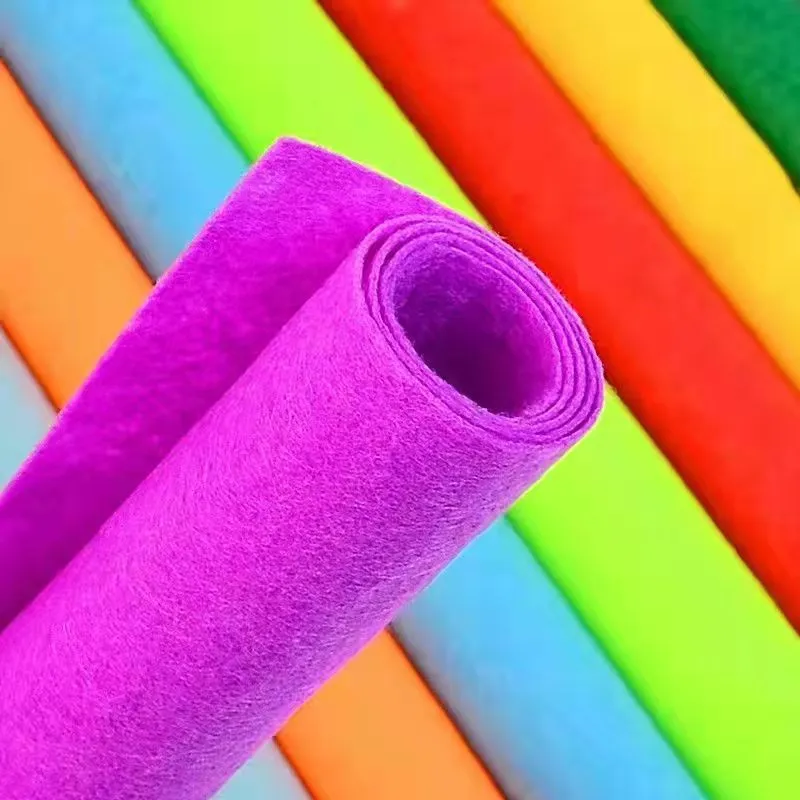
Gold glitter felt is a composite material consisting of a textile felt base, typically composed of polyester, rayon, or wool, laminated with a layer of polymeric film containing dispersed gold-colored glitter particles. It occupies a niche position within the broader decorative textiles market, bridging applications between craft materials, event decoration, and limited industrial uses. Core performance characteristics center around visual appeal – reflectivity and aesthetic presentation – alongside basic physical properties relevant to its application, such as flexibility, tear resistance, and dimensional stability. While not engineered for high-performance mechanical or chemical resistance, understanding its inherent limitations and appropriate applications is critical for successful implementation. The primary industry pain point revolves around glitter shedding and environmental concerns associated with microplastic release, alongside the relatively low durability compared to standard felt materials.
Material Science & Manufacturing
The foundation of gold glitter felt lies in the selection of both the felt base and the glitter coating. Felt bases commonly employ 100% polyester due to its cost-effectiveness and inherent resistance to shrinking and stretching. Rayon is employed for applications requiring a softer hand feel and greater dye uptake, though it exhibits lower wet strength. Wool felt, while offering superior natural properties, is less common due to its higher cost. The glitter component typically consists of PET (polyethylene terephthalate) or PVC (polyvinyl chloride) micro-particles coated with a metallic finish, often achieved through vacuum metallization or pigment dispersion. Manufacturing involves several stages. First, the chosen felt base is produced through needle punching, thermal bonding, or wet felting processes. The glitter coating is then applied via one of three primary methods: adhesive lamination, electrostatic flocking, or glitter embedding. Adhesive lamination uses a pressure-sensitive adhesive to bind the glitter to the felt, offering good initial adhesion but potentially leading to shedding. Electrostatic flocking employs an electrostatic charge to attract the glitter particles to the felt, resulting in a more even distribution but requiring careful control of humidity and charge. Glitter embedding involves incorporating the glitter directly into a liquid polymer resin which is then applied to the felt and cured, yielding the most durable bond, though also potentially impacting the felt's flexibility. Critical parameters during manufacturing include adhesive viscosity (for lamination), electrostatic charge potential (for flocking), resin curing temperature and time (for embedding), and glitter particle size and concentration. Particle size directly impacts reflectivity and shedding; smaller particles exhibit greater shimmer but are more prone to detachment. Uniform glitter distribution is essential for consistent aesthetic quality.
Performance & Engineering
The engineering performance of gold glitter felt is dictated largely by the properties of its constituent materials. Force analysis reveals relatively low tensile strength (typically between 5-15 N/cm² depending on base felt and coating type) and elongation at break (10-30%). The glitter coating introduces stress concentrations, lowering the overall material strength compared to uncoated felt. Environmental resistance is limited. Exposure to UV radiation causes both the felt base and the glitter coating to degrade, leading to color fading and embrittlement. The polymeric glitter is susceptible to plasticizer migration at elevated temperatures, resulting in tackiness and potential adhesion failure. Hydrolytic stability is moderate; prolonged exposure to moisture can cause delamination of the glitter layer, particularly in laminated constructions. Compliance requirements vary based on intended application. For children's products, adherence to EN 71-3 (migration of certain elements) and ASTM F963 (toy safety) is crucial. For event decorations, fire retardancy standards such as NFPA 701 are often mandated. The core functional implementation relies on its aesthetic qualities; however, understanding the load-bearing capacity (or lack thereof) is vital. It is not suitable for structural applications or applications involving significant mechanical stress. The adhesive bond between the glitter and felt represents a critical failure point. Improved adhesion methods and encapsulation strategies are key areas for performance enhancement.
Technical Specifications
| Parameter | Unit | Polyester Base, Adhesive Lamination | Rayon Base, Electrostatic Flock |
|---|---|---|---|
| Thickness | mm | 1.5 - 2.0 | 1.0 - 1.5 |
| Basis Weight | g/m² | 200 - 300 | 180 - 250 |
| Tensile Strength (Longitudinal) | N/cm² | 8 - 12 | 5 - 10 |
| Elongation at Break (Longitudinal) | % | 15 - 25 | 20 - 30 |
| Glitter Density | g/m² | 50 - 100 | 60 - 120 |
| Colorfastness to Light (Gray Scale) | Rating (1-5) | 3 - 4 | 2 - 3 |
Failure Mode & Maintenance
Gold glitter felt is susceptible to several failure modes. The most common is glitter shedding, driven by weak adhesive bonds, abrasion, and mechanical stress. This leads to a diminished aesthetic appearance and contributes to microplastic pollution. Delamination of the glitter coating, particularly in laminated structures, occurs due to moisture ingress and temperature fluctuations. UV degradation causes embrittlement and color fading of both the felt base and glitter, reducing its lifespan. Fatigue cracking can occur with repeated bending or flexing, especially if the glitter layer introduces stress concentrations. Oxidation of the metallic glitter coating can diminish reflectivity and alter the color. Maintenance is primarily limited to gentle cleaning. Vacuuming with a soft brush attachment can remove loose glitter particles. Wet cleaning is generally discouraged as it can exacerbate delamination. Avoid exposure to direct sunlight and extreme temperatures. For prolonged storage, rolling the material rather than folding it can minimize creasing and potential glitter detachment. Repairing significant damage is generally not feasible; replacement is typically the most cost-effective solution. Preventative measures, such as selecting a higher-quality adhesive or embedding technique during manufacture, are critical for mitigating these failure modes.
Industry FAQ
Q: What is the primary concern regarding the environmental impact of gold glitter felt?
A: The primary concern is the shedding of glitter particles, which are typically composed of microplastics (PET or PVC). These microplastics can enter waterways and contribute to plastic pollution, impacting aquatic ecosystems and potentially entering the food chain.
Q: How does the choice of felt base material impact the overall performance of the product?
A: Polyester provides the best durability and resistance to shrinking/stretching, making it suitable for applications requiring repeated use. Rayon offers a softer feel but sacrifices wet strength. Wool, while offering superior natural properties, is significantly more expensive.
Q: What adhesive methods offer the most durable glitter retention?
A: Glitter embedding, where the glitter is incorporated into a resin and then applied to the felt, provides the most robust bond and minimizes shedding. Electrostatic flocking offers good distribution but may not be as durable as embedding.
Q: What are the key compliance requirements for gold glitter felt used in children's products?
A: Compliance with EN 71-3 (migration of certain elements) and ASTM F963 (toy safety) is essential. These standards limit the levels of potentially harmful substances that can migrate from the material.
Q: How can I minimize glitter shedding during use and handling?
A: Avoid aggressive handling or rubbing. Gentle vacuuming with a soft brush attachment can remove loose particles. Proper storage – rolling instead of folding – can also reduce shedding. Selecting a product manufactured with a durable glitter embedding technique is the most effective preventative measure.
Conclusion
Gold glitter felt represents a visually appealing, albeit limited-performance, material suited primarily for decorative applications. Its inherent weaknesses – low tensile strength, susceptibility to UV degradation, and potential for glitter shedding – necessitate careful consideration of the intended use and environmental impact. The manufacturing process significantly influences product quality, with glitter embedding offering superior durability compared to adhesive lamination or electrostatic flocking.
Future development should focus on biodegradable glitter alternatives and improved adhesive technologies to mitigate environmental concerns and enhance long-term performance. Further research into encapsulating the glitter particles within a durable, flexible polymer matrix could also yield a more robust and sustainable product. Understanding the material's limitations and adhering to relevant compliance standards are crucial for ensuring safe and effective application.


 English
  Afrikaans
  Albanian
  Amharic
  Arabic
  Armenian
  Azerbaijani
  Basque
  Belarusian
  Bengali
  Bosnian
  Bulgarian
  Catalan
  Cebuano
  Corsican
  Croatian
  Czech
Czech  Danish
  Dutch
Dutch  Esperanto
  Estonian
  Finnish
  French
  Frisian
  Galician
  Georgian
  German
  Greek
Greek  Gujarati
  Haitian Creole
  Hausa
Hausa  Hebrew
  Hindi
Hindi  Miao
Miao  Hungarian
  Icelandic
  Igbo
Igbo  Indonesian
  Irish
Irish  Italian
  Japanese
  Javanese
  Kazakh
  Khmer
Khmer  Rwandese
  Korean
  Kurdish
  Kyrgyz
  Lao
Lao  Latin
Latin  Latvian
  Lithuanian
  Luxembourgish
  Macedonian
  Malgashi
  Malay
Malay  Malayalam
  Maltese
  Maori
Maori  Marathi
  Mongolian
  Myanmar
  Nepali
  Norwegian
  Norwegian
  Occitan
  Pashto
  Persian
  Polish
  Portuguese
  Romanian
  Russian
  Samoan
  Scottish Gaelic
  Serbian
  Sesotho
  Shona
Shona  Sindhi
  Sinhala
  Slovak
  Slovenian
  Somali
  Spanish
  Sundanese
  Swahili
  Swedish
  Tajik
Tajik  Tamil
Tamil  Tatar
Tatar  Telugu
  Thai
Thai  Turkish
  Turkmen
  Ukrainian
  Urdu
Urdu  Uighur
  Uzbek
Uzbek  Vietnamese
  Welsh
Welsh  Bantu
Bantu  Yiddish
  Yoruba
  Zulu
Zulu