Apr . 01, 2024 17:55 Back to list
Grass green felt Performance Analysis
Introduction
Grass green felt is a non-woven textile material constructed from compressed natural or synthetic fibers, typically wool, acrylic, or a blend thereof, and dyed a shade of green resembling natural grass. Within the broader textile industry, felt occupies a niche position characterized by its unique manufacturing process – a non-weaving technique relying on matting, interlocking, and compressing fibers – distinguishing it from woven or knitted fabrics. This results in a material possessing isotropic properties, meaning consistent characteristics in all directions. Its primary function extends across diverse applications including cushioning, filtration, insulation, craftwork, and industrial soundproofing. Core performance characteristics center around its density, thickness, and the type of fiber employed, influencing its compression set, thermal insulation value, and resistance to abrasion. The increasing demand for sustainable materials presents both challenges and opportunities for felt manufacturers, necessitating exploration of eco-friendly fiber sources and manufacturing processes.
Material Science & Manufacturing
The foundational material for grass green felt dictates its inherent properties. Wool felt, historically dominant, leverages the natural crimp in wool fibers, allowing for mechanical interlocking during compression. This creates a robust, resilient material. Synthetic alternatives, like acrylic or polypropylene, are often selected for cost-effectiveness and resistance to moisture. The dyeing process employs reactive dyes to achieve the grass green hue, requiring careful control of pH, temperature, and dye concentration to ensure colorfastness and prevent fiber damage.
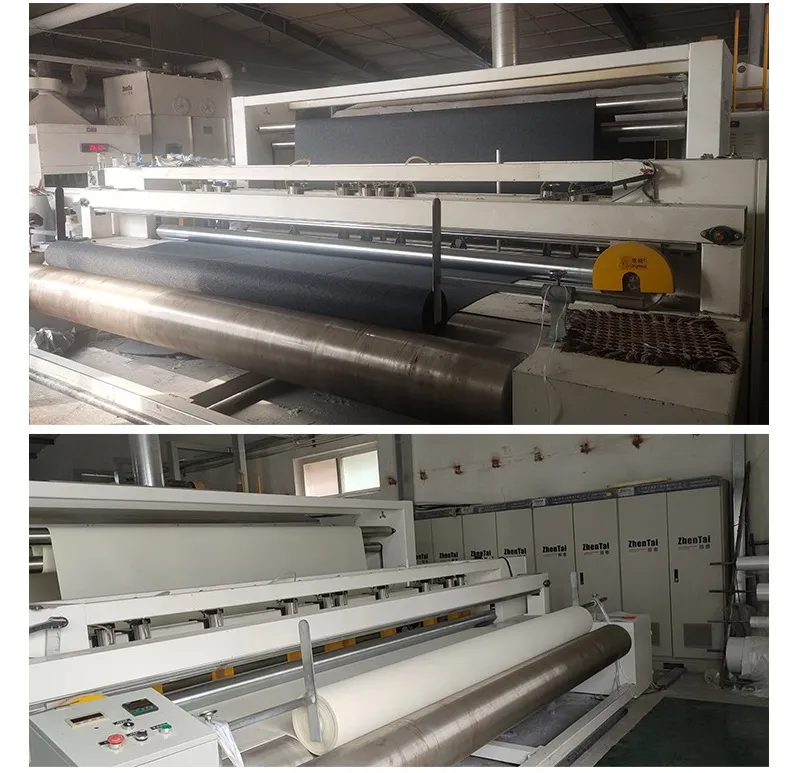
Manufacturing typically begins with fiber preparation – cleaning, carding, and potentially blending different fiber types. Carding aligns the fibers in a generally parallel direction, enhancing the subsequent matting process. The core manufacturing method is needle punching, where barbed needles repeatedly penetrate the fiber web, mechanically interlocking the fibers. The density of the felt is controlled by the number of needle punches and the applied pressure. Wet felting, utilizing hot water, soap, and mechanical agitation, is another method, particularly suited for finer wool felts. Key process parameters include fiber fineness (measured in microns), web weight (grams per square meter), and needle density (needles per square inch). Precise control of these parameters is crucial for achieving consistent material properties and minimizing defects like uneven density or fiber breakage. Post-processing often involves calendaring – passing the felt through rollers – to achieve desired thickness and surface finish.
Performance & Engineering
The performance of grass green felt is intimately tied to its structural integrity and material composition. Force analysis reveals that felt exhibits a non-linear stress-strain relationship. Initial compression results in relatively low stress, followed by a rapid increase as the fibers begin to buckle and compress. Its compressive strength is dependent on density and fiber type. Environmental resistance is a critical consideration. Wool felt exhibits natural resistance to static electricity and moderate moisture absorption. However, prolonged exposure to UV radiation can lead to fiber degradation, causing discoloration and reduced tensile strength. Synthetic felts generally offer better UV resistance but can be susceptible to degradation from certain chemicals.
For applications requiring dimensional stability, such as gaskets or sealing materials, the creep and relaxation behavior of the felt must be characterized. Compliance requirements vary significantly depending on the intended application. For example, felt used in automotive interiors must meet flammability standards (FMVSS 302) and volatile organic compound (VOC) emission limits. Filtration applications require adherence to specific pore size and filtration efficiency standards (ISO 16887). In soundproofing applications, the sound absorption coefficient (measured in NRC – Noise Reduction Coefficient) is a key performance indicator, dependent on the felt's thickness and density. The choice of fiber and manufacturing process must be aligned with these performance and regulatory demands.
Technical Specifications
| Property | Wool Felt (Grass Green) | Acrylic Felt (Grass Green) | Polypropylene Felt (Grass Green) | Units |
|---|---|---|---|---|
| Density | 0.6 – 0.8 | 0.5 – 0.7 | 0.4 – 0.6 | g/cm³ |
| Thickness | 1 – 5 | 1 – 5 | 1 – 5 | mm |
| Tensile Strength | 20 – 40 | 15 – 30 | 10 – 25 | N/cm |
| Elongation at Break | 30 – 60 | 40 – 80 | 50 – 100 | % |
| Water Absorption | 20 – 30 | 1 – 5 | <1 | % |
| Flammability (Oxygen Index) | 20 – 25 | 25 – 30 | 30 – 35 | % |
Failure Mode & Maintenance
Grass green felt, while durable, is susceptible to several failure modes. Fatigue cracking can occur under repeated compression or flexing, particularly in wool felt due to the gradual weakening of fibers. Delamination, the separation of layers, is common in thinner felts subjected to shear stresses. Degradation from UV exposure leads to fiber embrittlement and discoloration, reducing tensile strength and overall performance. Oxidation, particularly in wool, can occur over time, causing fiber breakdown and odor development. Biological attack, such as mold or mildew growth, can occur in damp environments, compromising the integrity of the felt. Chemical degradation arises from exposure to harsh solvents or acids.
Preventative maintenance involves minimizing exposure to harsh environmental conditions. Regular cleaning with mild detergents can remove dirt and debris. For wool felt, periodic brushing can help maintain fiber alignment. Storage in a cool, dry, and dark environment is crucial to prevent degradation. If chemical exposure is unavoidable, selecting a chemically resistant felt material (e.g., polypropylene) is essential. In cases of minor delamination, adhesive bonding can provide a temporary repair. For severe damage, replacement is typically the most cost-effective solution. Proper handling and storage are paramount to extending the service life of grass green felt components.
Industry FAQ
Q: What is the impact of fiber blend composition on the long-term durability of grass green felt?
A: Fiber blend composition significantly influences durability. While 100% wool felt offers excellent resilience and compression recovery, it's susceptible to biodegradation and UV damage. Incorporating synthetic fibers like acrylic or polypropylene enhances resistance to these factors but may reduce breathability and natural elasticity. A balanced blend is often optimal, leveraging the strengths of each fiber type. The percentage of each fiber must be carefully considered based on the intended application and expected service life.
Q: How does the needle punching density affect the filtration efficiency of felt used in air filtration systems?
A: Higher needle punching density generally leads to a more compact felt structure with smaller pore sizes. This translates to improved filtration efficiency for particulate matter. However, excessively high density can increase airflow resistance, reducing the overall system performance. An optimal needle punching density strikes a balance between filtration efficiency and airflow permeability, typically determined through experimental testing based on the target particle size distribution.
Q: What are the key considerations when selecting grass green felt for automotive interior applications?
A: Automotive applications demand stringent performance criteria. Key considerations include flammability resistance (meeting FMVSS 302 standards), VOC emissions (minimizing off-gassing), colorfastness (preventing dye transfer), and UV stability (preventing fading and embrittlement). The felt must also exhibit good dimensional stability and resistance to abrasion. Selecting a synthetic felt (e.g., polypropylene) is often preferred due to its superior chemical and UV resistance.
Q: Can grass green felt be recycled, and what are the associated challenges?
A: Recycling felt is challenging due to the mixed fiber composition common in many products. While 100% wool felt can be recycled through traditional textile recycling processes, blended felts require more complex separation techniques. Mechanical recycling, involving shredding and re-matting, is possible but often results in a lower-quality material. Chemical recycling, breaking down the fibers into their constituent monomers, is a promising but currently expensive option. The presence of dyes and finishes also complicates the recycling process.
Q: What testing methods are used to assess the compression set of grass green felt used in sealing applications?
A: Compression set is typically assessed using standardized tests like ASTM D395, which involves subjecting a sample to a specified compressive load for a defined period at a specific temperature. The resulting permanent deformation, expressed as a percentage of the original thickness, is measured to determine the compression set. Lower compression set values indicate better recovery and sealing performance. The test parameters (load, time, temperature) should be representative of the actual service conditions.
Conclusion
Grass green felt, a versatile non-woven textile, possesses a unique combination of properties stemming from its manufacturing process and fiber composition. Understanding the interplay between material science, engineering principles, and industry-specific requirements is crucial for selecting the appropriate felt grade for a given application. The technical specifications, potential failure modes, and preventative maintenance strategies outlined in this guide provide a foundation for informed decision-making.
Future developments in felt technology are likely to focus on sustainable materials, advanced manufacturing techniques, and improved performance characteristics. Exploring bio-based fibers, optimizing needle punching parameters, and developing novel surface treatments will further expand the applicability of grass green felt across diverse industries. The continued demand for lightweight, cost-effective, and environmentally friendly materials will drive innovation in this established textile sector.


 English
  Afrikaans
  Albanian
  Amharic
  Arabic
  Armenian
  Azerbaijani
  Basque
  Belarusian
  Bengali
  Bosnian
  Bulgarian
  Catalan
  Cebuano
  Corsican
  Croatian
  Czech
Czech  Danish
  Dutch
Dutch  Esperanto
  Estonian
  Finnish
  French
  Frisian
  Galician
  Georgian
  German
  Greek
Greek  Gujarati
  Haitian Creole
  Hausa
Hausa  Hebrew
  Hindi
Hindi  Miao
Miao  Hungarian
  Icelandic
  Igbo
Igbo  Indonesian
  Irish
Irish  Italian
  Japanese
  Javanese
  Kazakh
  Khmer
Khmer  Rwandese
  Korean
  Kurdish
  Kyrgyz
  Lao
Lao  Latin
Latin  Latvian
  Lithuanian
  Luxembourgish
  Macedonian
  Malgashi
  Malay
Malay  Malayalam
  Maltese
  Maori
Maori  Marathi
  Mongolian
  Myanmar
  Nepali
  Norwegian
  Norwegian
  Occitan
  Pashto
  Persian
  Polish
  Portuguese
  Romanian
  Russian
  Samoan
  Scottish Gaelic
  Serbian
  Sesotho
  Shona
Shona  Sindhi
  Sinhala
  Slovak
  Slovenian
  Somali
  Spanish
  Sundanese
  Swahili
  Swedish
  Tajik
Tajik  Tamil
Tamil  Tatar
Tatar  Telugu
  Thai
Thai  Turkish
  Turkmen
  Ukrainian
  Urdu
Urdu  Uighur
  Uzbek
Uzbek  Vietnamese
  Welsh
Welsh  Bantu
Bantu  Yiddish
  Yoruba
  Zulu
Zulu