Apr . 01, 2024 17:55 Back to list
gray wool felt Performance Analysis
Introduction
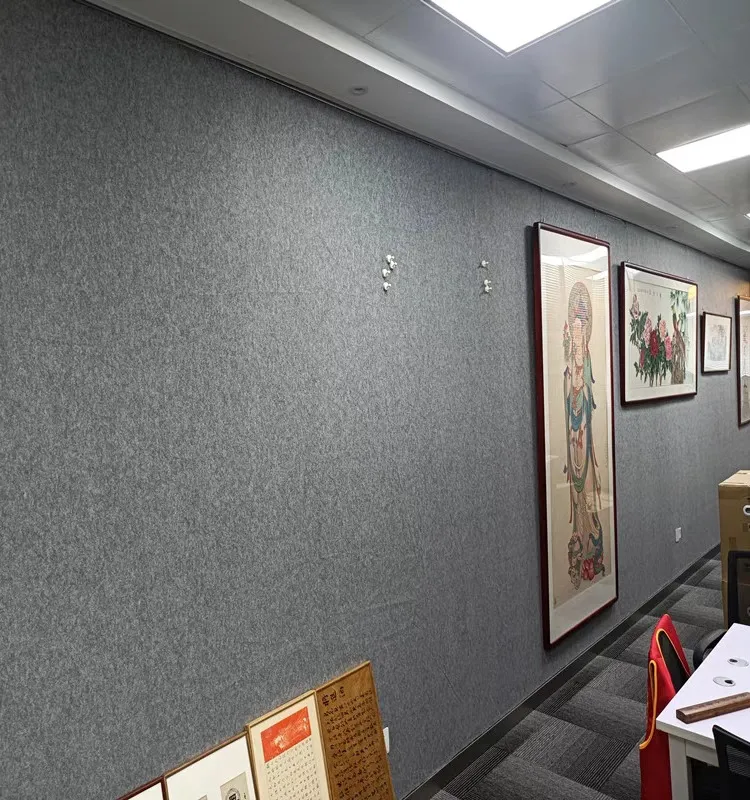
Gray wool felt is a non-woven textile produced by matting, condensing, and pressing natural wool fibers. Its industrial significance stems from its versatility, providing cushioning, insulation, filtration, and sound absorption in diverse applications. Unlike woven fabrics, felt lacks a distinct grain, offering isotropic properties beneficial in many engineering contexts. The "gray" designation typically refers to the natural color of the wool prior to significant dyeing, though variations exist due to differing breeds and processing techniques. Its position within the textile chain is as a semi-finished material, requiring further processing – cutting, molding, bonding – to create final products. Core performance characteristics include density, thickness, compression set, tensile strength, and thermal/acoustic insulation capabilities. A key challenge in the industry is achieving consistent quality and performance across batches, driven by variations in raw wool and manufacturing parameters.
Material Science & Manufacturing
The primary raw material is wool fiber, composed largely of keratin, a complex protein structure. Wool fiber properties, including fineness (measured in microns), length, crimp, and strength, significantly impact the final felt characteristics. Fiber diameter dictates softness and fineness of the felt; longer fibers generally improve tensile strength. Manufacturing begins with wool scouring to remove lanolin, dirt, and other impurities. Following scouring, the wool is carded – a process that disentangles and aligns the fibers into a web. Carding can be performed using roller carding or air-laid processes. The carded web is then subjected to needling, where barbed needles interlock the fibers. Needling density and needle type influence the felt’s density and strength. Wet felting, involving moisture, heat, and mechanical action, is an alternative or supplementary process. Parameter control is critical. Temperature and pressure during wet felting directly affect fiber shrinkage and interlocking. Needle penetration depth and angle during needling impact fiber entanglement. Chemical treatments, such as anti-moth agents or flame retardants, are often applied post-manufacturing. Fiber orientation within the felt is largely random, though controlled carding can introduce some directional bias. The presence of vegetable matter in the wool can impact dye uptake and potentially weaken the felt over time.
Performance & Engineering
Gray wool felt’s performance is dictated by its physical properties and its response to external factors. Force analysis reveals its ability to distribute load effectively, making it suitable for cushioning applications. Compressive strength and compression set are crucial parameters, particularly in sealing and gasketing applications. Environmental resistance is paramount; wool is susceptible to degradation from prolonged UV exposure, leading to fiber embrittlement and discoloration. Moisture absorption is significant; wool can absorb up to 30% of its weight in water, affecting dimensional stability and potentially promoting mildew growth if not adequately dried. Flame resistance is inherent due to the protein structure of wool, offering a degree of self-extinguishing capability, though treatments can enhance this property. Compliance requirements vary by industry. In automotive applications, felt used in interior components must meet flammability standards (e.g., FMVSS 302). For filtration applications, dimensional stability under varying temperatures and humidity is critical. In industrial soundproofing, noise reduction coefficient (NRC) ratings are essential for evaluating acoustic performance. Felt’s performance is also influenced by its density; higher density generally equates to better insulation and sound absorption, but also increased weight and cost.
Technical Specifications
| Parameter | Units | Typical Value (Range) | Testing Method |
|---|---|---|---|
| Density | g/cm³ | 0.15 – 0.6 (depending on compression) | ASTM D3801 |
| Thickness | mm | 1 – 10 | ASTM D1777 |
| Tensile Strength | N/cm | 5 – 30 (machine direction/cross direction) | ASTM D751 |
| Elongation at Break | % | 20 – 60 | ASTM D751 |
| Compression Set | % | 5 – 20 (after 24 hours at specified load) | ASTM D395 |
| Water Absorption | % | Up to 30 | ASTM D248 |
Failure Mode & Maintenance
Gray wool felt is susceptible to several failure modes. Mechanical degradation includes tearing, abrasion, and compression set. Tearing occurs under tensile stress exceeding the material’s strength. Abrasion results from surface wear, especially in applications involving friction. Compression set, the permanent deformation after sustained load, reduces cushioning effectiveness. Chemical degradation stems from exposure to acids, alkalis, and oxidizing agents, weakening the keratin structure. UV degradation causes fiber embrittlement and discoloration. Biological degradation, primarily from moths, can cause significant damage if untreated. Maintenance involves regular inspection for wear and tear. Vacuuming removes loose debris. Spot cleaning with mild detergent and water addresses localized stains. For heavily soiled felt, professional cleaning is recommended. Periodic application of mothproofing treatments is essential, particularly for storage. To mitigate failure, proper selection of felt density and thickness for the intended application is crucial. Protecting the felt from prolonged UV exposure and harsh chemicals extends its service life. Avoid excessive mechanical stress and ensure adequate ventilation to prevent moisture buildup and mildew growth.
Industry FAQ
Q: What is the impact of wool fiber origin (e.g., Merino vs. coarser breeds) on the properties of the felt?
A: Wool fiber origin significantly impacts felt properties. Merino wool, with its finer diameter and higher crimp, yields softer, more resilient felt with superior drapability. Coarser breeds produce felt with greater stiffness and abrasion resistance, suitable for applications requiring durability. Fiber length also plays a role; longer fibers enhance tensile strength, regardless of breed.
Q: How does the needle density during manufacturing affect the felt’s performance characteristics?
A: Higher needle density leads to greater fiber entanglement, resulting in increased density, tensile strength, and abrasion resistance. However, excessive needling can damage fibers and reduce the felt's loft and flexibility. Optimizing needle density is crucial to balance these competing factors.
Q: Can gray wool felt be effectively used in humid environments, and what precautions should be taken?
A: Wool’s natural absorbency means it can function in humid environments, but precautions are needed. Prolonged exposure to moisture can lead to dimensional instability, mildew growth, and reduced insulation effectiveness. Adequate ventilation and periodic drying are essential. Consider applying a water-repellent treatment for applications requiring high moisture resistance.
Q: What are the limitations of using gray wool felt in applications requiring high temperature resistance?
A: Wool’s protein structure begins to degrade at temperatures exceeding 100°C (212°F). Prolonged exposure to higher temperatures causes fiber embrittlement and loss of strength. For high-temperature applications, alternative materials or flame-retardant treatments are necessary.
Q: Is gray wool felt environmentally friendly, and are there any sustainability considerations?
A: Wool is a renewable and biodegradable resource, making gray wool felt a relatively environmentally friendly material. However, scouring and dyeing processes can consume significant water and energy. Sourcing wool from sustainably managed farms and utilizing eco-friendly dyeing techniques minimizes the environmental impact.
Conclusion
Gray wool felt remains a valuable material in a diverse range of industrial applications, owing to its unique combination of properties – cushioning, insulation, absorption, and inherent flame resistance. Its performance is intimately tied to the raw material’s characteristics and the intricacies of the manufacturing process, demanding meticulous control of parameters like fiber selection, carding, and needling density. Understanding the potential failure modes, particularly degradation from UV exposure, chemicals, and biological agents, is crucial for ensuring longevity and reliability.
Future developments may focus on enhancing felt’s performance through novel fiber treatments, such as bio-based coatings for improved water repellency and UV protection. Furthermore, advances in non-woven manufacturing technologies could enable the creation of felt structures with tailored properties for specific applications. Continued emphasis on sustainable sourcing and environmentally responsible production practices will be paramount in maintaining the long-term viability of gray wool felt as a preferred industrial material.


 English
  Afrikaans
  Albanian
  Amharic
  Arabic
  Armenian
  Azerbaijani
  Basque
  Belarusian
  Bengali
  Bosnian
  Bulgarian
  Catalan
  Cebuano
  Corsican
  Croatian
  Czech
Czech  Danish
  Dutch
Dutch  Esperanto
  Estonian
  Finnish
  French
  Frisian
  Galician
  Georgian
  German
  Greek
Greek  Gujarati
  Haitian Creole
  Hausa
Hausa  Hebrew
  Hindi
Hindi  Miao
Miao  Hungarian
  Icelandic
  Igbo
Igbo  Indonesian
  Irish
Irish  Italian
  Japanese
  Javanese
  Kazakh
  Khmer
Khmer  Rwandese
  Korean
  Kurdish
  Kyrgyz
  Lao
Lao  Latin
Latin  Latvian
  Lithuanian
  Luxembourgish
  Macedonian
  Malgashi
  Malay
Malay  Malayalam
  Maltese
  Maori
Maori  Marathi
  Mongolian
  Myanmar
  Nepali
  Norwegian
  Norwegian
  Occitan
  Pashto
  Persian
  Polish
  Portuguese
  Romanian
  Russian
  Samoan
  Scottish Gaelic
  Serbian
  Sesotho
  Shona
Shona  Sindhi
  Sinhala
  Slovak
  Slovenian
  Somali
  Spanish
  Sundanese
  Swahili
  Swedish
  Tajik
Tajik  Tamil
Tamil  Tatar
Tatar  Telugu
  Thai
Thai  Turkish
  Turkmen
  Ukrainian
  Urdu
Urdu  Uighur
  Uzbek
Uzbek  Vietnamese
  Welsh
Welsh  Bantu
Bantu  Yiddish
  Yoruba
  Zulu
Zulu