Apr . 01, 2024 17:55 Back to list
green craft felt Performance Analysis
Introduction
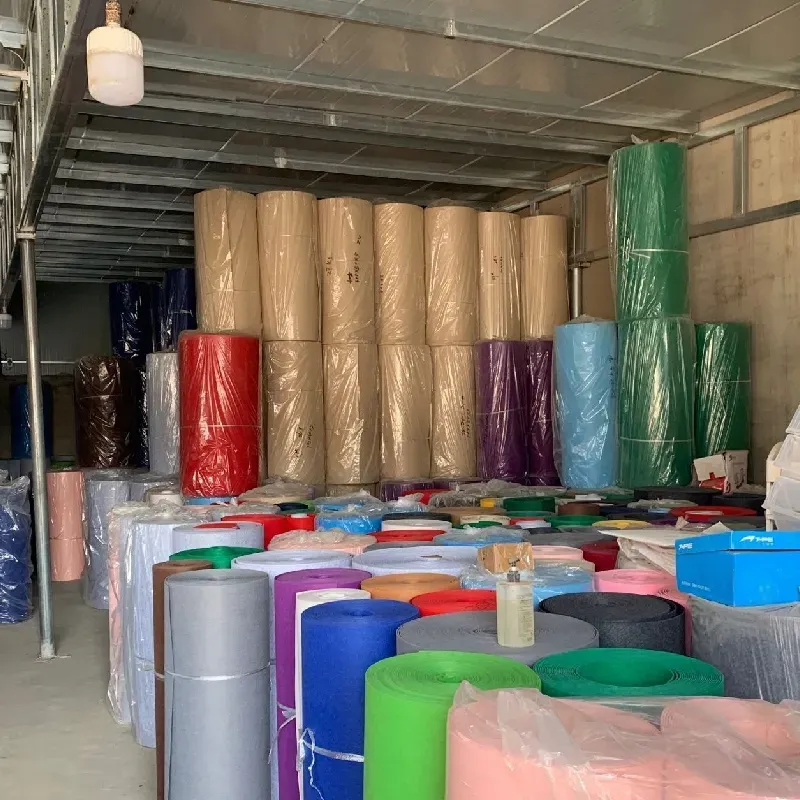
Green craft felt is a non-woven textile material primarily composed of recycled polyester fibers, offering a sustainable alternative to traditional wool felt. Positioned within the broader textile industry, specifically the crafting and industrial materials segment, it functions as a versatile medium for various applications including decorative crafts, insulation, filtration, and protective padding. Its core performance characteristics revolve around its lightweight nature, ease of cutting and shaping, relative affordability, and improved environmental profile due to its recycled content. However, understanding its limitations concerning durability, thermal stability, and chemical resistance is crucial for appropriate application selection. This guide will provide a detailed technical overview of green craft felt, covering material science, manufacturing processes, performance parameters, failure modes, and relevant industry standards.
Material Science & Manufacturing
The primary raw material for green craft felt is typically post-consumer polyethylene terephthalate (PET) plastic, sourced from recycled water bottles and other PET packaging. The process begins with the collection, sorting, and cleaning of these PET materials. They are then mechanically shredded into flakes, which are subsequently processed through melt filtration to remove contaminants. These cleaned flakes are then melted and extruded into continuous filaments. The diameter and length of these filaments significantly influence the final felt's properties – finer filaments contribute to a smoother surface and better drape, while longer filaments enhance tensile strength. The felt itself is created through a needling process. This involves repeatedly passing barbed needles through the loose web of PET filaments, interlocking them to create a cohesive fabric structure. Needle density (needles per square inch) and needle gauge (needle diameter) are critical process parameters. Higher needle density increases fabric density and strength, but can also reduce flexibility. Color is typically added during the filament extrusion stage, using environmentally friendly dyes. The bonding strength between fibers is determined by the entanglement induced by needling, and occasionally, a minimal amount of thermally activated binder may be applied to improve cohesion. Quality control focuses on fiber composition verification via infrared spectroscopy, filament denier measurement, and assessment of felt density and thickness using digital calipers.
Performance & Engineering
The performance of green craft felt is dictated by its physical and mechanical properties. Tensile strength, measured according to ASTM D882, typically ranges from 5-15 psi depending on fiber density and needling intensity. Elongation at break, also per ASTM D882, is generally between 20-50%. Dimensional stability is a key concern, especially in humid environments. The material exhibits a degree of moisture absorption (approximately 0.5-1.5% by weight), leading to potential shrinkage or distortion. Thermal insulation properties, while not comparable to high-performance insulators, are sufficient for basic cushioning and protective applications, with a thermal conductivity of approximately 0.035 W/mK. Fire resistance is moderate; green craft felt will melt and shrink under high heat, but does not typically support combustion. From an engineering perspective, the relatively low compressive strength (typically 1-5 psi) limits its use in load-bearing applications. Force analysis reveals that the felt’s resistance to tearing is anisotropic, meaning it varies depending on the direction of the tear relative to the fiber orientation. Environmental resistance is also a factor. Prolonged exposure to UV radiation can cause fiber degradation and color fading. Furthermore, the material is susceptible to attack by certain organic solvents and strong acids.
Technical Specifications
| Property | Unit | Typical Value | Test Method |
|---|---|---|---|
| Density | g/m² | 150-600 | ASTM D774 |
| Thickness | mm | 1-5 | ASTM D1777 |
| Tensile Strength (MD) | psi | 8-12 | ASTM D882 |
| Tensile Strength (CD) | psi | 5-10 | ASTM D882 |
| Elongation at Break (MD) | % | 30-45 | ASTM D882 |
| Elongation at Break (CD) | % | 20-35 | ASTM D882 |
Failure Mode & Maintenance
Green craft felt is susceptible to several failure modes. Delamination, or separation of the felt layers, occurs due to insufficient fiber interlocking during the needling process or repeated stress. Fatigue cracking, although less common, can develop under cyclic loading, particularly in areas subjected to bending or flexing. Oxidation and UV degradation lead to fiber embrittlement, reduced tensile strength, and color fading, especially in outdoor applications. Chemical attack by strong solvents or acids can dissolve or weaken the PET fibers. A common failure mode in humid environments is dimensional instability – shrinkage or warping due to moisture absorption. Maintenance is relatively simple. Regular vacuuming or gentle brushing can remove dust and debris. Avoid prolonged exposure to direct sunlight and extreme temperatures. Spot cleaning with mild soap and water is recommended for localized stains. Strong solvents should be avoided. If the felt becomes excessively soiled, hand washing in cool water with a mild detergent may be possible, but care should be taken to avoid excessive agitation, which could damage the fiber structure. Proper storage in a cool, dry, and dark environment will maximize the material’s lifespan. Preventive measures such as applying a UV protective coating can mitigate degradation in outdoor applications.
Industry FAQ
Q: What is the typical service temperature range for green craft felt, and how does temperature affect its mechanical properties?
A: The typical service temperature range is -20°C to 80°C. Below -20°C, the felt becomes brittle and prone to cracking. Above 80°C, the PET fibers begin to soften and lose their dimensional stability, resulting in a significant reduction in tensile strength and modulus. Prolonged exposure to high temperatures can also accelerate oxidation and degradation.
Q: How does the recycled content impact the performance compared to virgin PET felt?
A: The recycled content can slightly reduce tensile strength and elongation at break compared to virgin PET felt, typically by 5-10%, due to potential chain scission during the recycling process. However, modern recycling techniques minimize this impact, and the performance difference is often negligible for many applications. The environmental benefits of using recycled materials usually outweigh this minor performance trade-off.
Q: What is the flammability rating of green craft felt, and are there any fire retardant treatments available?
A: Green craft felt is typically classified as a Class 1 flammable material. It will melt and shrink upon exposure to flame, but does not readily ignite. Fire retardant treatments are available, typically involving the application of phosphate-based compounds. These treatments can improve the flammability rating, but may also affect the felt’s softness and color.
Q: What is the recommended storage method to prevent degradation and maintain the felt’s properties over time?
A: Store the felt in a cool, dry, and dark environment, away from direct sunlight and sources of heat. It is recommended to store it in a breathable container or on a pallet to allow for air circulation. Avoid compressing the felt for extended periods, as this can cause permanent deformation. Optimal storage temperature is between 15°C and 25°C, with relative humidity below 60%.
Q: What testing standards are relevant to assessing the chemical resistance of green craft felt?
A: ASTM D3574 is relevant for assessing resistance to water, acids, and bases. ASTM D682 evaluates resistance to solvents. Specific testing should be conducted with the chemicals the felt is expected to encounter in its application to determine compatibility. Consider testing for colorfastness (ISO 105) as well, as some chemicals can cause dye bleeding or fading.
Conclusion
Green craft felt presents a compelling balance of sustainability, versatility, and affordability. Its manufacturing process, centered on recycled PET, minimizes environmental impact while delivering a material suitable for a broad range of crafting, insulation, and industrial applications. Understanding its core performance characteristics – tensile strength, dimensional stability, and environmental resistance – alongside potential failure modes, is critical for appropriate material selection and application design.
Future developments in green craft felt technology will likely focus on enhancing its mechanical properties through optimized fiber processing and binder technologies. Further research into bio-based binders and alternative recycled fiber sources will further improve its environmental profile. Continued standardization of testing methods and performance specifications will also be essential for ensuring consistent quality and reliability across the industry.


 English
  Afrikaans
  Albanian
  Amharic
  Arabic
  Armenian
  Azerbaijani
  Basque
  Belarusian
  Bengali
  Bosnian
  Bulgarian
  Catalan
  Cebuano
  Corsican
  Croatian
  Czech
Czech  Danish
  Dutch
Dutch  Esperanto
  Estonian
  Finnish
  French
  Frisian
  Galician
  Georgian
  German
  Greek
Greek  Gujarati
  Haitian Creole
  Hausa
Hausa  Hebrew
  Hindi
Hindi  Miao
Miao  Hungarian
  Icelandic
  Igbo
Igbo  Indonesian
  Irish
Irish  Italian
  Japanese
  Javanese
  Kazakh
  Khmer
Khmer  Rwandese
  Korean
  Kurdish
  Kyrgyz
  Lao
Lao  Latin
Latin  Latvian
  Lithuanian
  Luxembourgish
  Macedonian
  Malgashi
  Malay
Malay  Malayalam
  Maltese
  Maori
Maori  Marathi
  Mongolian
  Myanmar
  Nepali
  Norwegian
  Norwegian
  Occitan
  Pashto
  Persian
  Polish
  Portuguese
  Romanian
  Russian
  Samoan
  Scottish Gaelic
  Serbian
  Sesotho
  Shona
Shona  Sindhi
  Sinhala
  Slovak
  Slovenian
  Somali
  Spanish
  Sundanese
  Swahili
  Swedish
  Tajik
Tajik  Tamil
Tamil  Tatar
Tatar  Telugu
  Thai
Thai  Turkish
  Turkmen
  Ukrainian
  Urdu
Urdu  Uighur
  Uzbek
Uzbek  Vietnamese
  Welsh
Welsh  Bantu
Bantu  Yiddish
  Yoruba
  Zulu
Zulu