
Apr . 01, 2024 17:55 Back to list
industrial felt for sale Performance Analysis
Introduction
Industrial felt, a non-woven textile fabricated from compressed and matted fibers, serves as a crucial component in a diverse array of industrial applications. Unlike woven fabrics, felt lacks a distinct weave, granting it unique properties such as isotropic behavior and high conformability. Composed primarily of wool, synthetic fibers (polypropylene, polyester, acrylic), or blends thereof, industrial felt occupies a critical position in sectors including automotive, filtration, insulation, and manufacturing. Its performance characteristics – including density, thickness, porosity, and compressive strength – are precisely engineered to meet the stringent demands of these industries. A key industrial pain point centers around consistent performance under harsh conditions, including elevated temperatures, chemical exposure, and continuous mechanical stress. Maintaining dimensional stability and resisting degradation are paramount concerns. This guide provides a comprehensive technical overview of industrial felt, encompassing material science, manufacturing processes, performance parameters, failure modes, and relevant industry standards.
Material Science & Manufacturing
The foundational material for industrial felt significantly impacts its properties. Wool felts, historically dominant, offer excellent natural resilience, absorbency, and thermal insulation. However, wool’s susceptibility to biodegradation and cost limitations drive the increasing adoption of synthetic alternatives. Polypropylene (PP) felts exhibit high chemical resistance and low cost, making them suitable for filtration and protective padding. Polyester felts provide superior tensile strength and temperature resistance compared to PP. Acrylic felts offer good dyeability and UV resistance. Fiber diameter, length, and crimp influence the felt's structure and performance.
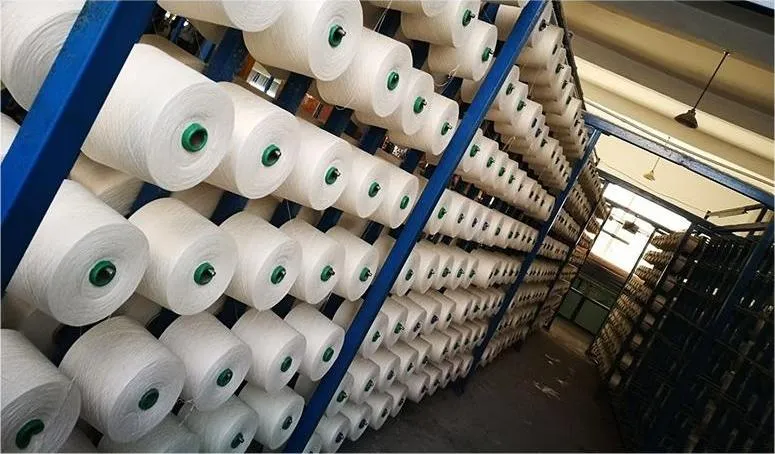
Manufacturing typically involves carding, needling, and calendering. Carding aligns the fibers into a web. Needling mechanically interlocks the fibers using barbed needles, creating the felt’s structure. Needle density and penetration depth are critical parameters. Higher needle density generally results in increased density and strength, but can also reduce porosity. Calendering, a process involving passing the felt through heated rollers, compresses the fibers, increasing density, reducing thickness, and improving surface finish. Controlling roller temperature, pressure, and speed is essential to achieve desired properties without damaging the fibers. Chemical bonding, using resins, can further enhance structural integrity, but must be carefully selected to ensure compatibility with the intended application environment. The presence of impurities in the raw fibers, or inconsistent process control during needling and calendering, can lead to weak spots and premature failure.
Performance & Engineering
The performance of industrial felt is dictated by its ability to withstand mechanical, thermal, and chemical stressors. Tensile strength, determined through standardized testing (ASTM D751), measures the force required to break the felt. Elongation at break indicates its flexibility. Compressive strength (ASTM D575) and compressive recovery (ASTM D575) are critical for applications involving static or dynamic loads, such as seals and gaskets.
Thermal properties are equally important. Thermal conductivity (ASTM C518) dictates its effectiveness as an insulator. Dimensional stability at elevated temperatures is a key concern; excessive shrinkage or deformation can compromise functionality. Chemical resistance is assessed by exposing the felt to various solvents, acids, and bases and monitoring for degradation (ASTM D543). Felt’s porosity and permeability govern its performance in filtration applications. The pore size distribution determines the efficiency of particle capture. For applications involving fluid flow, the pressure drop across the felt is a critical parameter. Engineering design must account for these properties, utilizing appropriate safety factors to ensure reliable performance over the intended lifespan. Finite element analysis (FEA) can be employed to simulate stress distributions and optimize felt geometry for specific load conditions.
Technical Specifications
| Property | Typical Value (Wool Felt) | Typical Value (PP Felt) | Typical Value (Polyester Felt) | Test Method |
|---|---|---|---|---|
| Density (g/cm³) | 0.2 – 0.5 | 0.1 – 0.3 | 0.3 – 0.6 | ASTM D792 |
| Tensile Strength (MPa) | 1.0 – 3.0 | 0.5 – 1.5 | 2.0 – 4.0 | ASTM D751 |
| Elongation at Break (%) | 30 – 60 | 50 – 100 | 20 – 40 | ASTM D751 |
| Compressive Strength (kPa) | 50 – 150 | 20 – 80 | 80 – 200 | ASTM D575 |
| Thermal Conductivity (W/m·K) | 0.03 – 0.05 | 0.03 – 0.04 | 0.035 – 0.05 | ASTM C518 |
| Water Absorption (%) | 20 – 30 | <5 | 5 – 10 | ASTM D570 |
Failure Mode & Maintenance
Industrial felt is susceptible to several failure modes depending on the operating environment and application. Fatigue cracking can occur under cyclical loading, particularly in areas of high stress concentration. Delamination, the separation of felt layers, is often caused by insufficient bonding or exposure to harsh chemicals. Degradation, resulting from UV exposure, oxidation, or chemical attack, leads to loss of mechanical properties and embrittlement. Abrasion, caused by frictional forces, can wear away the felt's surface, reducing its thickness and effectiveness. Biological attack, specifically mold and mildew growth in wool felts, can compromise structural integrity.
Preventative maintenance includes regular inspection for signs of wear, damage, or contamination. Cleaning with appropriate solvents (compatible with the felt material) removes debris and prevents clogging. Avoid prolonged exposure to harsh chemicals or UV radiation. Store felt in a cool, dry environment to prevent degradation. For critical applications, consider applying a protective coating to enhance chemical resistance or UV protection. Repairing minor damage, such as small tears, may extend the felt's service life. However, significant degradation or delamination necessitates replacement. Regular monitoring of performance parameters, such as pressure drop in filtration systems, can provide early warning of impending failure.
Industry FAQ
Q: What are the key differences between wool felt and synthetic felt in terms of long-term durability in a humid environment?
A: Wool felt, while initially possessing good moisture absorption, is vulnerable to biodegradation in consistently humid environments, leading to weakening of the fibers. Synthetic felts, particularly polypropylene and polyester, exhibit significantly better resistance to microbial growth and hydrolysis, resulting in superior long-term durability in humid conditions. However, wool felts generally maintain better dimensional stability when saturated.
Q: How does the needle density during manufacturing affect the filtration efficiency of polypropylene felt?
A: Increasing needle density typically reduces the average pore size in polypropylene felt, leading to higher filtration efficiency for smaller particles. However, excessively high needle density can also increase the pressure drop across the felt, potentially reducing flow rate. There's an optimal balance that depends on the specific application requirements.
Q: What is the impact of calendering temperature on the compressive set of polyester felt used in sealing applications?
A: Higher calendering temperatures generally increase the density and smoothness of polyester felt, initially improving its ability to conform to sealing surfaces. However, excessively high temperatures can cause excessive fiber compaction, reducing its resilience and increasing its compressive set (permanent deformation under load), ultimately compromising the seal’s effectiveness.
Q: Can industrial felt be used in applications involving exposure to concentrated sulfuric acid? If so, which material is best suited?
A: Exposure to concentrated sulfuric acid is highly corrosive. While no felt material is completely immune, PTFE-coated polyester felt offers the best resistance. The PTFE coating provides a barrier against acid penetration, protecting the underlying polyester fibers. However, even with PTFE coating, prolonged exposure will eventually lead to degradation. Regular inspection and replacement are crucial.
Q: What methods are available to assess the remaining useful life of industrial felt used in a hydraulic filtration system?
A: Monitoring the pressure differential across the felt is a primary indicator of clogging and reduced filtration capacity. Regular particle counts in the hydraulic fluid can also reveal increased contaminant levels, signifying filter breakthrough. Visual inspection for signs of wear, delamination, or degradation provides additional insights. Differential Pressure testing, comparing the pressure drop at known flow rates, can quantify the filter’s performance decline.
Conclusion
Industrial felt, despite its seemingly simple construction, is a sophisticated material engineered to meet diverse and demanding industrial requirements. The selection of appropriate fiber type – wool, polypropylene, polyester, or acrylic – and precise control over manufacturing parameters (carding, needling, calendering) are crucial to achieving desired performance characteristics. Understanding the potential failure modes – fatigue, delamination, degradation, abrasion, and biological attack – and implementing preventative maintenance strategies are essential for maximizing service life and ensuring reliable operation.
Looking ahead, advancements in material science and manufacturing techniques will likely lead to the development of even more specialized industrial felts with enhanced properties, such as improved chemical resistance, thermal stability, and filtration efficiency. Continued research into sustainable materials and manufacturing processes will also be a key focus, addressing growing environmental concerns. Careful consideration of these technical factors will ensure informed decision-making and optimal utilization of industrial felt in a broad spectrum of applications.


 English
  Afrikaans
  Albanian
  Amharic
  Arabic
  Armenian
  Azerbaijani
  Basque
  Belarusian
  Bengali
  Bosnian
  Bulgarian
  Catalan
  Cebuano
  Corsican
  Croatian
  Czech
Czech  Danish
  Dutch
Dutch  Esperanto
  Estonian
  Finnish
  French
  Frisian
  Galician
  Georgian
  German
  Greek
Greek  Gujarati
  Haitian Creole
  Hausa
Hausa  Hebrew
  Hindi
Hindi  Miao
Miao  Hungarian
  Icelandic
  Igbo
Igbo  Indonesian
  Irish
Irish  Italian
  Japanese
  Javanese
  Kazakh
  Khmer
Khmer  Rwandese
  Korean
  Kurdish
  Kyrgyz
  Lao
Lao  Latin
Latin  Latvian
  Lithuanian
  Luxembourgish
  Macedonian
  Malgashi
  Malay
Malay  Malayalam
  Maltese
  Maori
Maori  Marathi
  Mongolian
  Myanmar
  Nepali
  Norwegian
  Norwegian
  Occitan
  Pashto
  Persian
  Polish
  Portuguese
  Romanian
  Russian
  Samoan
  Scottish Gaelic
  Serbian
  Sesotho
  Shona
Shona  Sindhi
  Sinhala
  Slovak
  Slovenian
  Somali
  Spanish
  Sundanese
  Swahili
  Swedish
  Tajik
Tajik  Tamil
Tamil  Tatar
Tatar  Telugu
  Thai
Thai  Turkish
  Turkmen
  Ukrainian
  Urdu
Urdu  Uighur
  Uzbek
Uzbek  Vietnamese
  Welsh
Welsh  Bantu
Bantu  Yiddish
  Yoruba
  Zulu
Zulu