
Apr . 01, 2024 17:55 Back to list
Industrial Felt Material Performance Analysis

Introduction
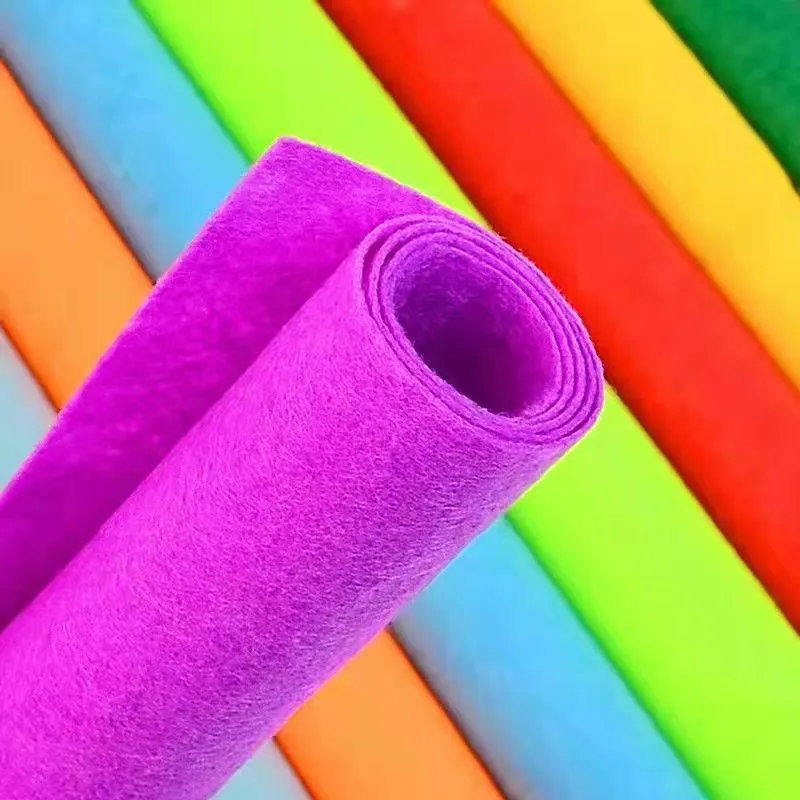
Industrial felt is a non-woven textile fabricated by matting, condensing, and pressing fibers together. Distinct from woven cloth, felt is created through mechanical entanglement, chemical adhesion, or a combination of both. Within the industrial sector, it functions not as a traditional textile, but as a critical component in diverse applications including sealing, filtration, cushioning, and sound dampening. The material’s performance is heavily dependent on the fiber composition—ranging from wool and synthetic polymers like acrylic, polyester, and polypropylene—and the manufacturing process employed. This guide provides a comprehensive technical overview of industrial felt, covering its material science, manufacturing processes, performance characteristics, failure modes, and relevant industry standards. A key pain point for procurement engineers is consistently achieving the necessary performance specifications, given the broad range of available felt types and the impact of subtle variations in manufacturing parameters. Understanding these nuances is crucial for optimizing operational efficiency and minimizing downtime across multiple industrial sectors.
Material Science & Manufacturing
The foundation of industrial felt lies in its constituent fibers. Wool felts, historically dominant, offer excellent resilience, natural crimp (facilitating entanglement), and inherent flame retardancy. However, they are susceptible to biodegradation and dimensional instability when exposed to moisture. Synthetic felts, primarily utilizing polyester, polypropylene, acrylic, and rayon, address these shortcomings, providing enhanced resistance to chemicals, abrasion, and UV degradation. Polyester felts exhibit good thermal stability and strength, while polypropylene offers superior resistance to acids and alkalis, making it ideal for filtration applications. Acrylic felts are known for their softness and dyeability.
Manufacturing processes are equally critical. Needle felting is a prevalent technique, employing barbed needles to mechanically interlock fibers, creating a dense and robust material. The needle density, punching frequency, and depth of penetration directly influence the felt's density, tensile strength, and surface finish. Wet felting involves applying moisture, heat, and agitation to induce fiber entanglement. This process generally yields a softer, more pliable felt, but typically with lower tensile strength than needle-felted varieties. Thermal bonding utilizes heat and pressure to melt thermoplastic fibers, fusing them together. This method is suitable for producing lightweight, uniform felts, but can be limited by the melting point of the chosen polymer. Chemical bonding employs adhesives to bind fibers, offering flexibility in material combinations but potentially introducing long-term stability concerns related to adhesive degradation. Critical parameters during manufacturing include fiber orientation control, precise temperature regulation (especially in thermal bonding), and consistent moisture content (in wet felting) to ensure repeatable performance characteristics. Fiber fineness (denier), length, and crimp also significantly influence the final product’s properties.
Performance & Engineering
The performance of industrial felt is dictated by its intended application. In sealing applications – particularly within rotating machinery such as pumps and mixers – the compressive strength, creep resistance, and rebound characteristics are paramount. These properties determine the felt's ability to maintain a consistent seal under load and temperature variations. Filtration applications demand high porosity, controlled pore size distribution, and chemical resistance. The felt’s permeability, measured in Darcy units, dictates the flow rate of the filtered medium. For cushioning and vibration dampening, the felt’s energy absorption capacity and resilience are critical. These properties are assessed through impact testing and dynamic mechanical analysis (DMA).
Environmental resistance is also a key consideration. Exposure to UV radiation can cause polymer degradation, leading to embrittlement and loss of strength. Chemical exposure, particularly from solvents and corrosive fluids, can lead to swelling, dissolution, or dimensional changes. Temperature fluctuations induce thermal expansion and contraction, which can stress the material and lead to cracking. Engineers must therefore carefully select fiber compositions and manufacturing processes to ensure compatibility with the operating environment. Finite Element Analysis (FEA) is frequently employed to model the stress distribution within felt components, optimizing their geometry and material selection for specific load conditions. Compliance requirements, such as RoHS and REACH, further restrict the use of certain materials and necessitate rigorous testing to ensure adherence to environmental regulations.
Technical Specifications
| Property | Wool Felt | Polyester Felt | Polypropylene Felt | Acrylic Felt |
|---|---|---|---|---|
| Tensile Strength (MPa) | 5-15 | 10-25 | 8-18 | 6-12 |
| Density (g/cm³) | 0.2 - 0.6 | 0.4 - 0.8 | 0.3 - 0.7 | 0.3 - 0.6 |
| Elongation at Break (%) | 10-30 | 20-50 | 30-60 | 15-35 |
| Compressive Strength (kPa) | 50-200 | 100-300 | 80-250 | 60-180 |
| Water Absorption (%) | 30-40 | 1-3 | <1 | 5-10 |
| Operating Temperature (°C) | -20 to 100 | -40 to 150 | -30 to 120 | -20 to 80 |
Failure Mode & Maintenance
Industrial felt is susceptible to several failure modes. Fatigue cracking can occur in applications involving repeated compression or vibration, particularly in sealing applications. This is exacerbated by poor material uniformity or the presence of defects. Delamination, the separation of felt layers, is often caused by inadequate fiber interlocking or adhesive failure (in chemically bonded felts). Degradation due to UV exposure leads to embrittlement and loss of strength, manifesting as surface cracking and reduced performance. Oxidation, particularly in wool felts, can lead to discoloration, loss of elasticity, and eventual disintegration. Chemical attack from solvents, acids, or alkalis can cause swelling, dissolution, or weakening of the material.
Preventive maintenance is crucial for extending the service life of industrial felt components. Regular visual inspections can identify early signs of degradation, such as surface cracking, discoloration, or delamination. Periodic cleaning to remove contaminants can prevent chemical attack and maintain porosity in filtration applications. Lubrication, where appropriate, can reduce friction and wear in sealing applications. In cases of significant degradation, replacement is often the most cost-effective solution. When selecting replacement felt, carefully consider the operating environment and choose a material with appropriate chemical and temperature resistance. Proper storage of unused felt is also important; it should be kept in a cool, dry, and dark environment to minimize degradation.
Industry FAQ
Q: What are the key differences between needle-felted and wet-felted industrial felt in terms of mechanical properties?
A: Needle-felted felt generally exhibits higher tensile strength, tear resistance, and dimensional stability compared to wet-felted felt. This is due to the mechanical interlocking of fibers achieved through the needling process. Wet-felted felt, while softer and more pliable, relies on fiber entanglement through compression and agitation, resulting in a less robust structure. The choice depends on the application; needle-felted is preferred for demanding mechanical applications, while wet-felted is suitable for cushioning and non-structural uses.
Q: How does the choice of polymer affect the chemical resistance of synthetic industrial felt?
A: Polyester felts offer good resistance to many common chemicals, but are susceptible to degradation by strong alkalis. Polypropylene felts excel in resistance to acids, alkalis, and organic solvents. Acrylic felts have limited chemical resistance and are generally not recommended for harsh chemical environments. Understanding the specific chemicals the felt will encounter is crucial for selecting the appropriate polymer.
Q: What is the significance of felt density in filtration applications?
A: Felt density directly impacts the filtration efficiency and flow rate. Higher density felts generally offer finer pore sizes and greater particle capture efficiency, but also exhibit lower permeability and reduced flow rate. The optimal density is determined by the particle size distribution of the contaminants being removed and the desired flow rate.
Q: What measures can be taken to mitigate the effects of UV degradation on industrial felt?
A: UV stabilizers can be incorporated into the polymer matrix during manufacturing to enhance UV resistance. Alternatively, coatings can be applied to the felt surface to block UV radiation. Shielding the felt from direct sunlight whenever possible is also an effective preventative measure. Selecting polymers with inherently high UV resistance, such as certain grades of polypropylene, is another proactive strategy.
Q: How does creep affect the long-term performance of felt seals in rotating equipment?
A: Creep, the tendency of a material to deform permanently under sustained stress, is a significant concern in felt seals. Over time, creep can reduce the compressive force of the seal, leading to leakage. Selecting felts with high creep resistance, optimizing the seal geometry, and controlling the operating temperature can mitigate this issue.
Conclusion
Industrial felt is a versatile material offering a unique combination of properties suited to a wide array of demanding applications. Its performance is intrinsically linked to the selection of appropriate fiber compositions, precise control of manufacturing processes, and a thorough understanding of potential failure modes. Choosing the correct felt type requires a careful consideration of the operating environment, load conditions, and desired performance characteristics.
Looking ahead, advancements in fiber technology and manufacturing techniques promise to further enhance the performance and durability of industrial felt. The development of novel polymers with improved chemical and thermal resistance, as well as the implementation of advanced bonding techniques, will expand the range of applications for this valuable material. A continued focus on understanding the long-term effects of environmental factors and optimizing preventative maintenance strategies will be crucial for maximizing the service life and minimizing the total cost of ownership of industrial felt components.


 English
  Afrikaans
  Albanian
  Amharic
  Arabic
  Armenian
  Azerbaijani
  Basque
  Belarusian
  Bengali
  Bosnian
  Bulgarian
  Catalan
  Cebuano
  Corsican
  Croatian
  Czech
Czech  Danish
  Dutch
Dutch  Esperanto
  Estonian
  Finnish
  French
  Frisian
  Galician
  Georgian
  German
  Greek
Greek  Gujarati
  Haitian Creole
  Hausa
Hausa  Hebrew
  Hindi
Hindi  Miao
Miao  Hungarian
  Icelandic
  Igbo
Igbo  Indonesian
  Irish
Irish  Italian
  Japanese
  Javanese
  Kazakh
  Khmer
Khmer  Rwandese
  Korean
  Kurdish
  Kyrgyz
  Lao
Lao  Latin
Latin  Latvian
  Lithuanian
  Luxembourgish
  Macedonian
  Malgashi
  Malay
Malay  Malayalam
  Maltese
  Maori
Maori  Marathi
  Mongolian
  Myanmar
  Nepali
  Norwegian
  Norwegian
  Occitan
  Pashto
  Persian
  Polish
  Portuguese
  Romanian
  Russian
  Samoan
  Scottish Gaelic
  Serbian
  Sesotho
  Shona
Shona  Sindhi
  Sinhala
  Slovak
  Slovenian
  Somali
  Spanish
  Sundanese
  Swahili
  Swedish
  Tajik
Tajik  Tamil
Tamil  Tatar
Tatar  Telugu
  Thai
Thai  Turkish
  Turkmen
  Ukrainian
  Urdu
Urdu  Uighur
  Uzbek
Uzbek  Vietnamese
  Welsh
Welsh  Bantu
Bantu  Yiddish
  Yoruba
  Zulu
Zulu