
Apr . 01, 2024 17:55 Back to list
Industrial Felt Suppliers Performance Analysis
Introduction
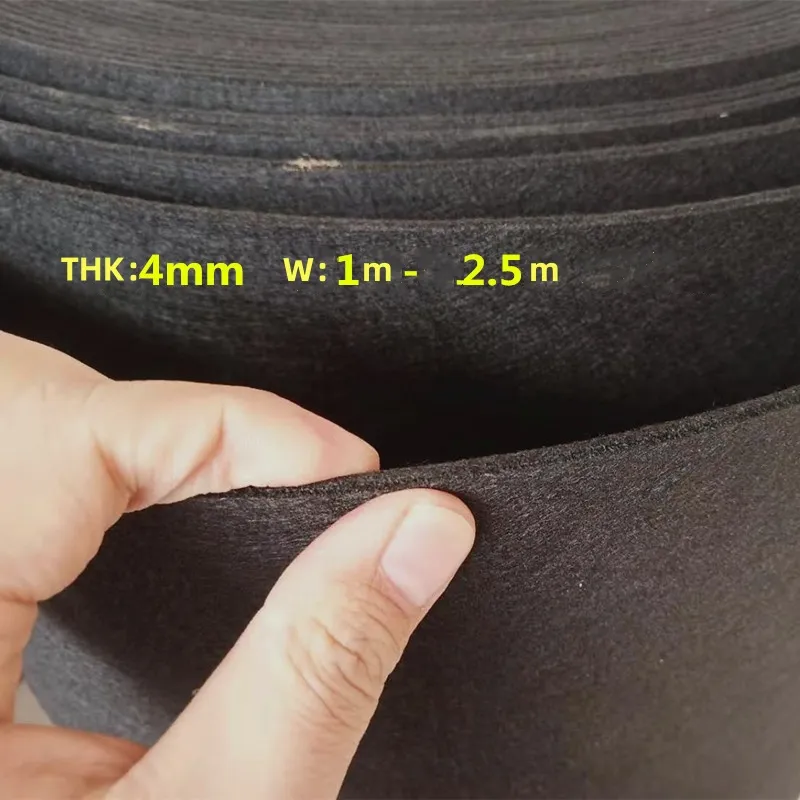
Industrial felt, a non-woven textile fabricated from compressed fibers, occupies a critical position across diverse B2B sectors including manufacturing, automotive, filtration, and packaging. Unlike woven textiles, felt achieves cohesion through mechanical interlocking of fibers, often aided by heat, moisture, and chemical adhesion. This process yields a material with isotropic properties – consistent performance regardless of direction – a key differentiator driving its adoption in applications demanding uniformity. The industry chain begins with raw material sourcing (typically wool, synthetic fibers like polyester and acrylic, or blends), progresses through carding, needling, calendering, and finishing processes, culminating in tailored felt solutions. Core performance characteristics include cushioning, sealing, insulation, filtration efficiency, and sound dampening. Current industry challenges center on sourcing sustainable materials, reducing production costs, and developing high-performance felts capable of withstanding increasingly demanding operational environments, such as elevated temperatures and aggressive chemical exposure. Industrial felt suppliers are increasingly focused on providing customized solutions based on specific application requirements, moving beyond commodity offerings.
Material Science & Manufacturing
The foundation of industrial felt lies in the properties of its constituent fibers. Wool, a natural protein fiber, offers inherent crimp, resilience, and flame retardancy, making it suitable for applications requiring thermal and acoustic insulation. Synthetic fibers, such as polyester (PET) and polypropylene (PP), provide enhanced durability, chemical resistance, and lower cost. Acrylic fibers contribute softness and bulk. Blends are common, leveraging the synergistic benefits of different materials. The manufacturing process begins with carding, where fibers are aligned in a parallel configuration. Needling, a critical step, uses barbed needles to mechanically interlock the fibers, creating a dense, cohesive web. Needle density and penetration depth are key parameters influencing felt density and strength. Calendering, involving passing the felt through heated rollers, further consolidates the structure, controlling thickness and surface finish. Finishing treatments, such as dyeing, coating (with acrylic or PTFE for water repellency), or chemical bonding, enhance specific performance attributes. Parameter control during carding (fiber feed rate, doffer speed) directly impacts fiber orientation and web uniformity. Maintaining consistent needle penetration depth and preventing needle breakage are crucial during needling. Temperature and pressure during calendering must be precisely regulated to avoid fiber melting or damage. Chemical compatibility of coating materials with the base felt is paramount to prevent delamination or degradation.
Performance & Engineering
The engineering performance of industrial felt is dictated by its physical properties and operational environment. Compressive strength and resilience are critical in cushioning and sealing applications, determining the felt’s ability to withstand load and recover its shape. Tensile strength, measured according to ASTM D751, indicates resistance to tearing. Dimensional stability, particularly at elevated temperatures, is vital in applications involving thermal insulation or gasket materials. Filtration efficiency, a key performance metric in filtration applications, depends on fiber diameter, pore size distribution, and felt thickness. Air permeability, assessed using ASTM D737, influences filtration rates and pressure drop. Chemical resistance must be evaluated based on the specific exposure conditions – concentration, temperature, and duration. Failure analysis often reveals degradation due to chemical attack, thermal oxidation, or mechanical fatigue. In applications involving dynamic loads, fatigue life is a crucial consideration. Force analysis and finite element modeling (FEM) are employed to optimize felt geometry and material selection for specific load-bearing requirements. Compliance standards, such as UL 94 for flammability testing and REACH/RoHS for restricted substances, must be adhered to depending on the end-use application.
Technical Specifications
| Property | Wool Felt | Polyester Felt | Acrylic Felt | Polypropylene Felt |
|---|---|---|---|---|
| Density (g/m²) | 300-800 | 500-1500 | 200-600 | 150-400 |
| Tensile Strength (N/5cm) | 20-50 | 80-150 | 30-70 | 40-80 |
| Elongation at Break (%) | 50-100 | 100-200 | 80-150 | 150-300 |
| Thickness (mm) | 1-10 | 1-25 | 1-8 | 1-5 |
| Water Absorption (%) | 30-50 | 1-3 | 5-10 | 0.5-2 |
| Operating Temperature (°C) | -20 to 120 | -40 to 150 | -30 to 100 | -10 to 80 |
Failure Mode & Maintenance
Industrial felt is susceptible to several failure modes. Mechanical fatigue, resulting from repeated stress cycles, leads to fiber breakage and eventual delamination. Thermal degradation occurs at elevated temperatures, causing oxidation and embrittlement, particularly in wool and acrylic felts. Chemical attack, from acids, alkalis, or solvents, weakens the fiber structure and reduces strength. Compaction, due to prolonged compression, reduces porosity and alters performance characteristics. Biological degradation, from mold or mildew, can occur in humid environments. Abrasion, especially in applications involving sliding contact, causes fiber wear and surface damage. Maintenance strategies include regular inspection for signs of wear, cleaning to remove contaminants, and replacement when performance degrades below acceptable levels. Preventative measures include selecting appropriate felt materials for the operating environment, minimizing exposure to harsh chemicals, and implementing load distribution strategies to reduce stress concentration. In cases of minor damage, patching or localized repair may be feasible, but complete replacement is often the most reliable solution for critical applications. Proper storage, away from moisture and direct sunlight, is essential to extend the service life of industrial felt.
Industry FAQ
Q: What are the key differences between wool felt and polyester felt in terms of filtration efficiency?
A: Wool felt generally exhibits higher initial filtration efficiency due to its natural fiber irregularities and finer fiber diameter, creating a more tortuous path for particles. However, polyester felt maintains its filtration efficiency better over time as it's less prone to fiber shedding and deformation under stress. The choice depends on the specific contaminant, flow rate, and desired filter lifespan.
Q: How does temperature affect the performance of acrylic felt in sealing applications?
A: Acrylic felt exhibits a relatively low glass transition temperature. Exposure to temperatures exceeding 80°C can cause it to soften and lose its sealing properties. Prolonged exposure to elevated temperatures can also lead to thermal degradation and embrittlement, compromising long-term performance.
Q: What chemical resistance properties should I consider when selecting felt for a chemically corrosive environment?
A: Polypropylene felt generally offers the best chemical resistance, particularly to acids and alkalis. Polyester felt provides good resistance to many solvents and oils. Wool felt is vulnerable to degradation by strong acids and alkalis. It’s crucial to consult a chemical resistance chart and test the felt in the specific chemical environment before deployment.
Q: What is the impact of needle density on the properties of needle-felted industrial felt?
A: Higher needle density generally results in a denser, more compact felt with increased tensile strength and reduced porosity. However, excessive needling can damage the fibers and reduce resilience. Optimizing needle density is crucial to achieve the desired balance of properties for the intended application.
Q: What standards are relevant for assessing the flammability of industrial felt?
A: UL 94 is a widely recognized standard for assessing the flammability of plastic materials, including polyester and polypropylene felts. ASTM D6413 is another relevant standard for determining the flammability characteristics of textile materials. Compliance with these standards is often required for safety-critical applications.
Conclusion
Industrial felt, characterized by its diverse material compositions and manufacturing processes, provides tailored solutions for a broad spectrum of industrial applications. Performance is inextricably linked to material selection, fiber properties, and precise control of manufacturing parameters. Understanding the potential failure modes and implementing appropriate maintenance strategies are critical for maximizing service life and ensuring reliable operation.
The future of industrial felt lies in the development of sustainable materials, advanced manufacturing techniques, and customized solutions tailored to increasingly demanding application requirements. Continued research into fiber blends, coating technologies, and non-woven processing methods will drive innovation and expand the applicability of this versatile material. A holistic approach, encompassing material science, engineering design, and quality control, is essential for optimizing the performance and longevity of industrial felt in diverse industrial settings.


 English
  Afrikaans
  Albanian
  Amharic
  Arabic
  Armenian
  Azerbaijani
  Basque
  Belarusian
  Bengali
  Bosnian
  Bulgarian
  Catalan
  Cebuano
  Corsican
  Croatian
  Czech
Czech  Danish
  Dutch
Dutch  Esperanto
  Estonian
  Finnish
  French
  Frisian
  Galician
  Georgian
  German
  Greek
Greek  Gujarati
  Haitian Creole
  Hausa
Hausa  Hebrew
  Hindi
Hindi  Miao
Miao  Hungarian
  Icelandic
  Igbo
Igbo  Indonesian
  Irish
Irish  Italian
  Japanese
  Javanese
  Kazakh
  Khmer
Khmer  Rwandese
  Korean
  Kurdish
  Kyrgyz
  Lao
Lao  Latin
Latin  Latvian
  Lithuanian
  Luxembourgish
  Macedonian
  Malgashi
  Malay
Malay  Malayalam
  Maltese
  Maori
Maori  Marathi
  Mongolian
  Myanmar
  Nepali
  Norwegian
  Norwegian
  Occitan
  Pashto
  Persian
  Polish
  Portuguese
  Romanian
  Russian
  Samoan
  Scottish Gaelic
  Serbian
  Sesotho
  Shona
Shona  Sindhi
  Sinhala
  Slovak
  Slovenian
  Somali
  Spanish
  Sundanese
  Swahili
  Swedish
  Tajik
Tajik  Tamil
Tamil  Tatar
Tatar  Telugu
  Thai
Thai  Turkish
  Turkmen
  Ukrainian
  Urdu
Urdu  Uighur
  Uzbek
Uzbek  Vietnamese
  Welsh
Welsh  Bantu
Bantu  Yiddish
  Yoruba
  Zulu
Zulu