Apr . 01, 2024 17:55 Back to list
ivory felt Performance Analysis

Introduction
Ivory felt is a non-woven textile material produced by matting, condensing and pressing wool fibers. Distinguished by its dense structure, smooth surface, and characteristic off-white coloration mimicking natural ivory, it occupies a niche position within the broader felt industry. Unlike traditional wool felts which prioritize robustness and warmth, ivory felt is valued for its aesthetic qualities and dimensional stability, making it a critical component in applications demanding precision and refined appearance. Its production chain sits between raw wool sourcing and finished product manufacturing – hats, linings, decorative elements, and specialized industrial components. Core performance characteristics include consistent thickness, low fiber shedding, and the ability to accept dyes and adhesives with minimal distortion. This guide provides an in-depth technical exploration of ivory felt, covering its material science, manufacturing processes, performance parameters, failure modes, and relevant industry standards.
Material Science & Manufacturing
Ivory felt is primarily composed of fine wool fibers, typically merino or similar breeds chosen for their fineness and crimp. The raw wool possesses a physical structure characterized by overlapping scales, contributing to its felting ability. Chemical composition comprises approximately 65-75% protein (keratin), 18-35% moisture, 2-5% lipids, and trace minerals. The fiber diameter typically ranges from 17-25 microns, influencing the felt’s softness and drape. Manufacturing begins with wool scouring to remove lanolin, dirt, and other impurities. Following scouring, the wool undergoes carding, a process that disentangles and aligns the fibers into a continuous web. This web is then subjected to a needling process, utilizing barbed needles to mechanically interlock the fibers. Critical parameters include needle density (needles per square centimeter), needle penetration depth, and punching speed. Higher needle density increases felt density but can also cause fiber breakage. Post-needling, the felt is often subjected to fulling, a wet-felting process involving controlled agitation, temperature, and chemical additives (alkalis or detergents). Fulling causes further fiber interlocking and shrinkage, resulting in a denser, more compact felt. Dyeing and finishing treatments are then applied to achieve desired color and surface properties. Quality control involves rigorous testing of fiber composition, felt density, thickness variation, and dimensional stability.
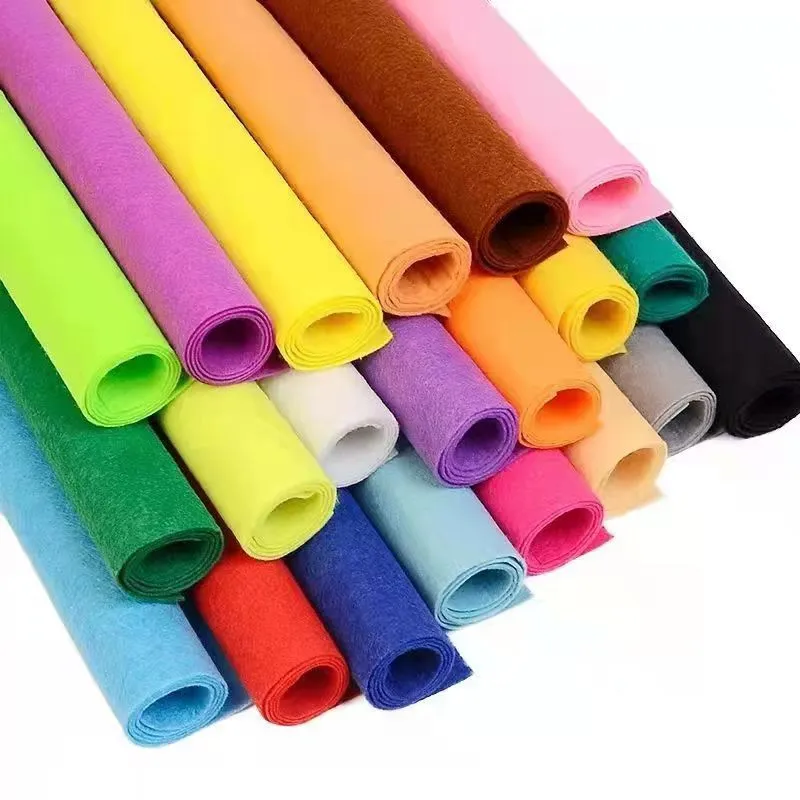
Performance & Engineering
The performance of ivory felt is heavily reliant on its inherent structural properties and the manufacturing parameters employed. Key engineering considerations center around dimensional stability under varying humidity and temperature conditions. Wool’s hygroscopic nature results in moisture absorption, leading to potential shrinkage or expansion. Control of fulling parameters and application of stabilizing finishes are crucial. Tensile strength, typically measured using ASTM D751, is an important indicator of the felt’s resistance to tearing and deformation. A typical range for ivory felt is 20-40 N/cm width. Compressive strength, relevant for applications involving cushioning or sealing, is assessed using ASTM D575. Resistance to abrasion is vital, particularly in applications involving friction or wear. This is typically quantified using the Martindale abrasion test (ISO 12947-2), with performance varying based on fiber type and felt density. Environmental resistance – specifically resistance to UV degradation and mold growth – requires careful consideration. Wool is susceptible to UV damage, causing yellowing and strength loss. Application of UV absorbers and antimicrobial treatments can mitigate these effects. Furthermore, assessment of flammability is critical. Ivory felt, like other wool textiles, is inherently flame-resistant due to its high nitrogen and moisture content, but may require flame-retardant treatments to meet specific safety standards (e.g., NFPA 701).
Technical Specifications
| Parameter | Unit | Typical Value | Test Method |
|---|---|---|---|
| Fiber Composition | % Wool | 100 | Microscopy & Chemical Analysis |
| Felt Density | g/m² | 300-600 | ASTM D776 |
| Thickness | mm | 1-5 | ASTM D1777 |
| Tensile Strength | N/cm | 25-45 | ASTM D751 |
| Elongation at Break | % | 40-70 | ASTM D751 |
| Moisture Regain | % | 14-18 | ASTM D2495 |
Failure Mode & Maintenance
Ivory felt, despite its inherent robustness, is susceptible to several failure modes. A common issue is fiber shedding, particularly during initial use or after repeated abrasion. This is exacerbated by low felt density and inadequate needling. Another frequent failure is dimensional instability, manifesting as shrinkage or distortion due to moisture absorption or improper fulling. Delamination, the separation of felt layers, can occur under high compressive stress or repeated flexing, especially if the needling process was insufficient. Oxidation of the wool fibers leads to yellowing and embrittlement, accelerated by exposure to UV radiation and atmospheric pollutants. Biological degradation, caused by mold or mildew growth, can occur in humid environments. Maintenance strategies involve regular vacuuming to remove dust and debris. Spot cleaning with mild detergent and water is recommended for stain removal, avoiding harsh chemicals. Storage in a cool, dry, and well-ventilated environment is critical to prevent mold growth and oxidation. For high-stress applications, periodic inspection for delamination and fiber shedding is advised. Preventative measures include application of UV protective coatings and antimicrobial treatments, and ensuring proper ventilation to control humidity levels.
Industry FAQ
Q: What is the impact of varying wool fiber fineness on the overall performance of ivory felt?
A: Finer wool fibers (lower micron count) result in a softer, more pliable felt with improved drape and a smoother surface finish. However, finer fibers generally exhibit lower tensile strength and abrasion resistance compared to coarser fibers. Therefore, the optimal fiber fineness depends on the intended application; applications requiring durability prioritize coarser fibers, while those prioritizing aesthetic qualities favor finer fibers.
Q: How does the needling process influence the long-term structural integrity of ivory felt?
A: The needling process is paramount to the felt’s structural integrity. Insufficient needling leads to poor fiber interlocking and a tendency for delamination. Excessive needling, conversely, can cause fiber breakage and a reduction in tensile strength. Optimizing needle density, penetration depth, and punching speed is crucial to achieve a balance between fiber interlocking and fiber integrity.
Q: What are the key considerations when selecting a fulling agent for ivory felt?
A: The choice of fulling agent impacts felt density, shrinkage, and surface finish. Alkaline detergents promote fiber interlocking but can also damage wool fibers if used in excessive concentrations. Neutral detergents offer gentler fulling but may result in lower density. The pH and temperature of the fulling bath must be carefully controlled to prevent fiber degradation. Furthermore, the fulling agent should be readily rinsable to avoid residue buildup.
Q: What methods can be employed to enhance the UV resistance of ivory felt?
A: UV resistance can be improved through several methods. Applying UV absorbers during the finishing process is a common approach, forming a protective layer that absorbs harmful UV radiation. Blending UV-resistant synthetic fibers with the wool can also provide enhanced protection. Furthermore, dyeing the felt with pigments that offer UV protection can contribute to improved durability. Regular application of UV protective sprays can provide temporary but effective protection.
Q: What is the expected lifespan of ivory felt in a typical indoor application with moderate humidity?
A: In a typical indoor application with moderate humidity (40-60%), ivory felt can have a lifespan of 5-10 years, provided it is properly maintained. However, exposure to direct sunlight, high humidity, or frequent abrasion can significantly shorten its lifespan. Regular vacuuming and spot cleaning, along with proper storage conditions, are essential to maximize longevity.
Conclusion
Ivory felt, characterized by its unique combination of aesthetic appeal and functional properties, remains a valuable material across diverse industries. Its performance is intrinsically linked to the careful control of raw material selection – specifically the quality and fineness of the wool – and precise optimization of the manufacturing process, including carding, needling, and fulling. Understanding the potential failure modes, such as fiber shedding, dimensional instability, and oxidation, is critical for implementing effective maintenance strategies and ensuring long-term durability.
Future advancements in ivory felt technology will likely focus on enhancing its environmental resistance through the development of bio-based UV absorbers and antimicrobial treatments. Exploring novel fiber blending techniques, incorporating sustainable and recycled materials, will also contribute to reducing its environmental footprint. Continued research into optimizing the needling process, utilizing advanced needle designs and control systems, will improve the felt’s structural integrity and dimensional stability, solidifying its position as a premium textile material.


 English
  Afrikaans
  Albanian
  Amharic
  Arabic
  Armenian
  Azerbaijani
  Basque
  Belarusian
  Bengali
  Bosnian
  Bulgarian
  Catalan
  Cebuano
  Corsican
  Croatian
  Czech
Czech  Danish
  Dutch
Dutch  Esperanto
  Estonian
  Finnish
  French
  Frisian
  Galician
  Georgian
  German
  Greek
Greek  Gujarati
  Haitian Creole
  Hausa
Hausa  Hebrew
  Hindi
Hindi  Miao
Miao  Hungarian
  Icelandic
  Igbo
Igbo  Indonesian
  Irish
Irish  Italian
  Japanese
  Javanese
  Kazakh
  Khmer
Khmer  Rwandese
  Korean
  Kurdish
  Kyrgyz
  Lao
Lao  Latin
Latin  Latvian
  Lithuanian
  Luxembourgish
  Macedonian
  Malgashi
  Malay
Malay  Malayalam
  Maltese
  Maori
Maori  Marathi
  Mongolian
  Myanmar
  Nepali
  Norwegian
  Norwegian
  Occitan
  Pashto
  Persian
  Polish
  Portuguese
  Romanian
  Russian
  Samoan
  Scottish Gaelic
  Serbian
  Sesotho
  Shona
Shona  Sindhi
  Sinhala
  Slovak
  Slovenian
  Somali
  Spanish
  Sundanese
  Swahili
  Swedish
  Tajik
Tajik  Tamil
Tamil  Tatar
Tatar  Telugu
  Thai
Thai  Turkish
  Turkmen
  Ukrainian
  Urdu
Urdu  Uighur
  Uzbek
Uzbek  Vietnamese
  Welsh
Welsh  Bantu
Bantu  Yiddish
  Yoruba
  Zulu
Zulu