Apr . 01, 2024 17:55 Back to list
kelly green felt Performance Analysis
Introduction
Kelly green felt is a non-woven textile material typically composed of compressed cellulose fibers, dyed a specific shade of green known as Kelly green. Its technical position within the broader textile industry is as a versatile intermediary material; it does not typically function as a final consumer product but rather as a component in craft applications, industrial padding, filtration systems, and protective linings. Core performance characteristics revolve around its compressibility, thermal insulation properties, ease of cutting and shaping, and cost-effectiveness. Unlike woven fabrics, felt lacks a grain, lending itself to isotropic performance. This guide provides an in-depth examination of kelly green felt, covering material science, manufacturing processes, performance parameters, failure modes, and relevant industry standards, addressing common pain points related to consistency, durability, and application-specific performance.
Material Science & Manufacturing
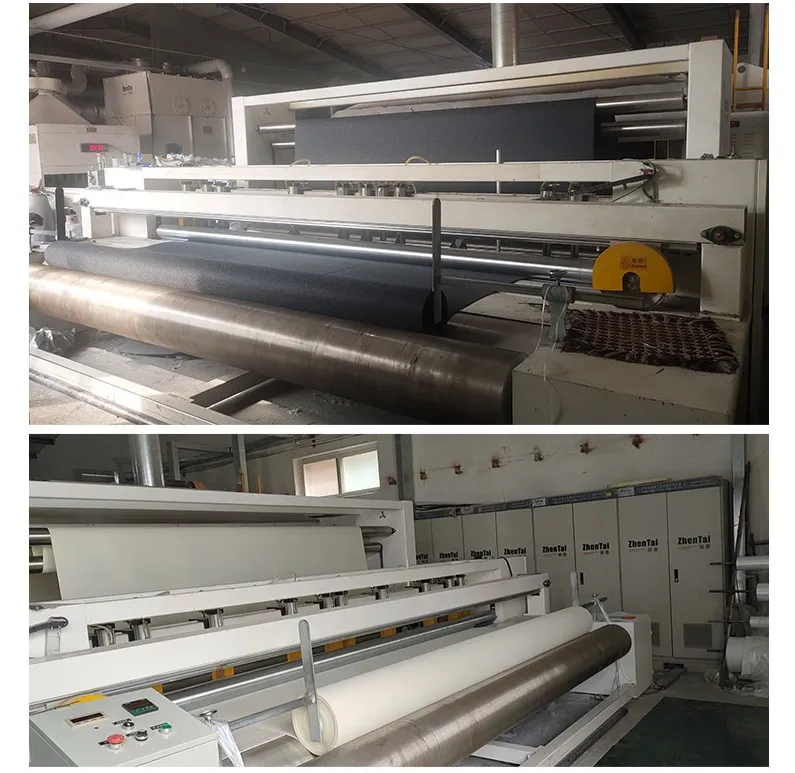
The primary raw material for kelly green felt is cellulose fiber, typically derived from wood pulp or recycled textile waste. The quality and source of the cellulose significantly influence the final product's properties. Fiber length, fineness, and lignin content are critical parameters. Manufacturing begins with pulping, where wood or recycled materials are broken down into individual cellulose fibers. These fibers are then dispersed in water, forming a slurry. Kelly green dye, typically an acid dye chosen for its vibrancy and affinity for cellulose, is added during this stage, ensuring uniform coloration. The dyed slurry is then subjected to a wet-felting process. This involves laying the fibers onto a moving screen and applying mechanical action—typically needling or hydroentanglement—to interlock the fibers. Needling uses barbed needles to mechanically entangle the fibers, while hydroentanglement uses high-pressure water jets. The resulting web is then dried and compressed, further enhancing the interlocking and densifying the material. Critical parameters during manufacturing include fiber density (g/m²), sheet thickness (mm), moisture content (%), dye concentration, and needle density (needles/cm²). Variations in these parameters directly impact the felt’s strength, texture, and color consistency. Post-processing may include calendaring to smooth the surface or applying surface treatments to enhance water repellency or flame retardancy.
Performance & Engineering
The performance of kelly green felt is dictated by its physical and mechanical properties. Tensile strength, measured in Newtons per meter (N/m), determines its resistance to tearing. Elongation at break (%) indicates its flexibility and ability to deform without fracturing. Compressive strength (kPa) is crucial for applications requiring load-bearing capacity, such as padding. Thermal insulation, quantified by thermal conductivity (W/m·K), is vital in applications like garment linings. Important considerations include moisture absorption capacity (%), which influences its suitability for humid environments, and its dimensional stability under varying temperatures. Environmental resistance is also a critical factor. Prolonged exposure to UV radiation can lead to color fading and fiber degradation. The felt’s resistance to chemical attack varies depending on the dye used and the nature of the chemicals. Engineering analyses frequently involve stress-strain relationships to predict deformation under load. For filtration applications, pore size distribution and filtration efficiency are key parameters, assessed using standardized test methods. Compliance requirements depend on the intended application; for example, children’s toys must meet flammability standards (e.g., ASTM F963), while medical applications require biocompatibility testing (e.g., ISO 10993).
Technical Specifications
| Property | Unit | Typical Value (Range) | Test Method |
|---|---|---|---|
| Density | g/m² | 200-800 | ASTM D776 |
| Thickness | mm | 1-5 | ASTM D1777 |
| Tensile Strength | N/m | 50-300 | ASTM D638 |
| Elongation at Break | % | 10-50 | ASTM D638 |
| Compressive Strength | kPa | 20-150 | ASTM D575 |
| Moisture Absorption | % | 20-40 | ASTM D2583 |
Failure Mode & Maintenance
Kelly green felt is susceptible to several failure modes. Delamination, or separation of the felt layers, can occur due to insufficient fiber interlocking during manufacturing or repeated stress. Fiber fatigue, resulting from cyclical loading, leads to a gradual loss of strength and eventual tearing. Oxidation and UV degradation cause color fading and embrittlement, particularly in outdoor applications. Chemical degradation can occur if exposed to aggressive solvents or acids, leading to fiber dissolution or discoloration. Abrasion wear is a concern in applications involving friction. Biological degradation, through mold or mildew growth, can occur in humid environments, compromising the felt's structural integrity. Maintenance primarily involves preventative measures. Storage in a dry, well-ventilated area minimizes biological growth. Avoiding prolonged exposure to direct sunlight reduces UV degradation. Gentle cleaning with mild detergents can remove surface contaminants. For damaged felt, patching with compatible felt material using adhesive is a viable repair option. However, for significant damage or structural compromise, replacement is typically recommended. Regular inspection for signs of wear, delamination, or discoloration can enable proactive maintenance and extend the felt's service life.
Industry FAQ
Q: What is the typical lifespan of kelly green felt in a craft application, like for costume making?
A: The lifespan heavily depends on the frequency of use and the handling of the material. With moderate use and careful storage, a costume made from kelly green felt can last for several seasons. However, repeated washing (even hand washing) and exposure to abrasion during wear will accelerate degradation. Expect a lifespan of 1-3 years for frequently used costumes.
Q: How does the dye affect the felt’s resistance to chlorine bleach?
A: Acid dyes, commonly used for kelly green felt, generally have poor resistance to chlorine bleach. Exposure to even diluted bleach solutions will cause significant color fading and potentially fiber damage. It’s crucial to avoid using bleach-containing detergents when cleaning or laundering felt items.
Q: What is the difference between needle-felted and hydroentangled kelly green felt in terms of durability?
A: Needle-felted felt generally exhibits higher tensile strength and tear resistance due to the mechanical interlocking of fibers. Hydroentangled felt is often softer and more flexible, but can be more prone to delamination under stress. For applications demanding high durability, needle-felted is preferred. Hydroentangled felt is better suited for applications where softness and drape are prioritized.
Q: Can kelly green felt be used as a soundproofing material? If so, what thickness is recommended?
A: Kelly green felt does offer some sound absorption properties, particularly at higher frequencies. However, its effectiveness as a soundproofing material is limited. For optimal sound absorption, a thickness of at least 6-10mm is recommended. Combining the felt with other soundproofing materials can significantly enhance performance.
Q: What should be considered when specifying kelly green felt for a filtration application?
A: For filtration, consider the particle size you need to filter. The felt's pore size distribution must be appropriate for capturing the target particles. Also, assess the chemical compatibility of the felt with the fluid being filtered, ensuring no degradation or leaching occurs. Finally, the felt’s flow rate and pressure drop should be considered to optimize filtration efficiency without compromising system performance.
Conclusion
Kelly green felt represents a versatile and cost-effective material solution across a diverse range of industries. Its manufacturing process, centered on cellulose fiber manipulation and dye application, directly influences its performance characteristics, including tensile strength, thermal insulation, and moisture absorption. Understanding these properties, along with potential failure modes like delamination and UV degradation, is critical for informed material selection and long-term application success.
Future advancements in felt technology will likely focus on incorporating sustainable and bio-based materials, enhancing durability through novel fiber treatments, and tailoring properties for increasingly specialized applications. The continued development of standardized testing methods and performance metrics will also be essential for ensuring consistent quality and reliability within the industry. Ultimately, a comprehensive understanding of the material science and engineering principles governing kelly green felt will empower engineers and designers to optimize its utilization and maximize its performance potential.


 English
  Afrikaans
  Albanian
  Amharic
  Arabic
  Armenian
  Azerbaijani
  Basque
  Belarusian
  Bengali
  Bosnian
  Bulgarian
  Catalan
  Cebuano
  Corsican
  Croatian
  Czech
Czech  Danish
  Dutch
Dutch  Esperanto
  Estonian
  Finnish
  French
  Frisian
  Galician
  Georgian
  German
  Greek
Greek  Gujarati
  Haitian Creole
  Hausa
Hausa  Hebrew
  Hindi
Hindi  Miao
Miao  Hungarian
  Icelandic
  Igbo
Igbo  Indonesian
  Irish
Irish  Italian
  Japanese
  Javanese
  Kazakh
  Khmer
Khmer  Rwandese
  Korean
  Kurdish
  Kyrgyz
  Lao
Lao  Latin
Latin  Latvian
  Lithuanian
  Luxembourgish
  Macedonian
  Malgashi
  Malay
Malay  Malayalam
  Maltese
  Maori
Maori  Marathi
  Mongolian
  Myanmar
  Nepali
  Norwegian
  Norwegian
  Occitan
  Pashto
  Persian
  Polish
  Portuguese
  Romanian
  Russian
  Samoan
  Scottish Gaelic
  Serbian
  Sesotho
  Shona
Shona  Sindhi
  Sinhala
  Slovak
  Slovenian
  Somali
  Spanish
  Sundanese
  Swahili
  Swedish
  Tajik
Tajik  Tamil
Tamil  Tatar
Tatar  Telugu
  Thai
Thai  Turkish
  Turkmen
  Ukrainian
  Urdu
Urdu  Uighur
  Uzbek
Uzbek  Vietnamese
  Welsh
Welsh  Bantu
Bantu  Yiddish
  Yoruba
  Zulu
Zulu