Apr . 01, 2024 17:55 Back to list
Mustard Yellow Felt Performance Analysis
Introduction
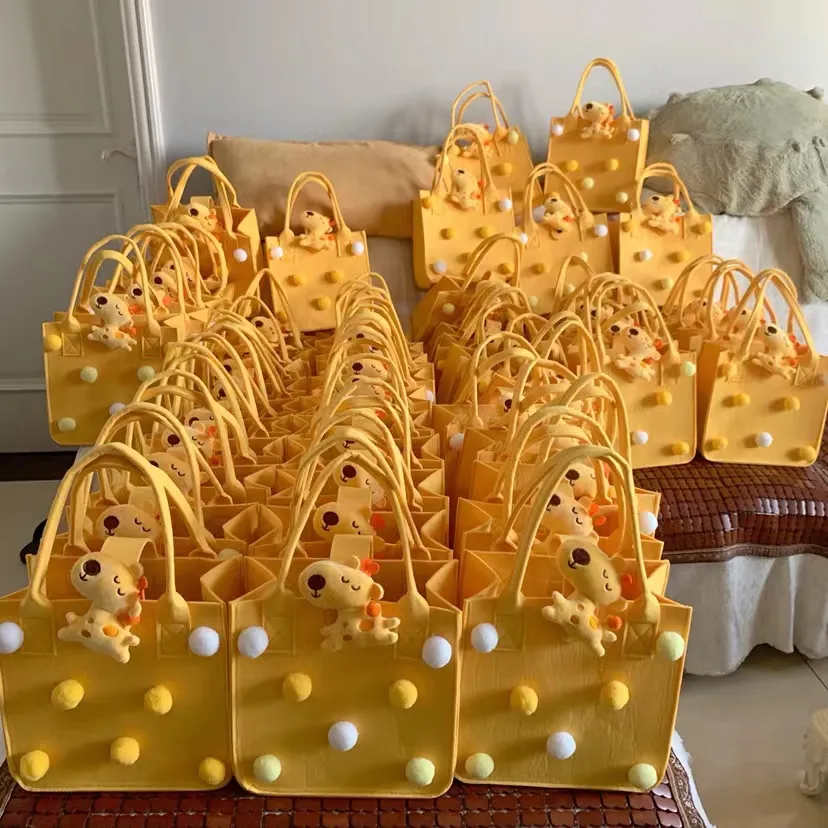
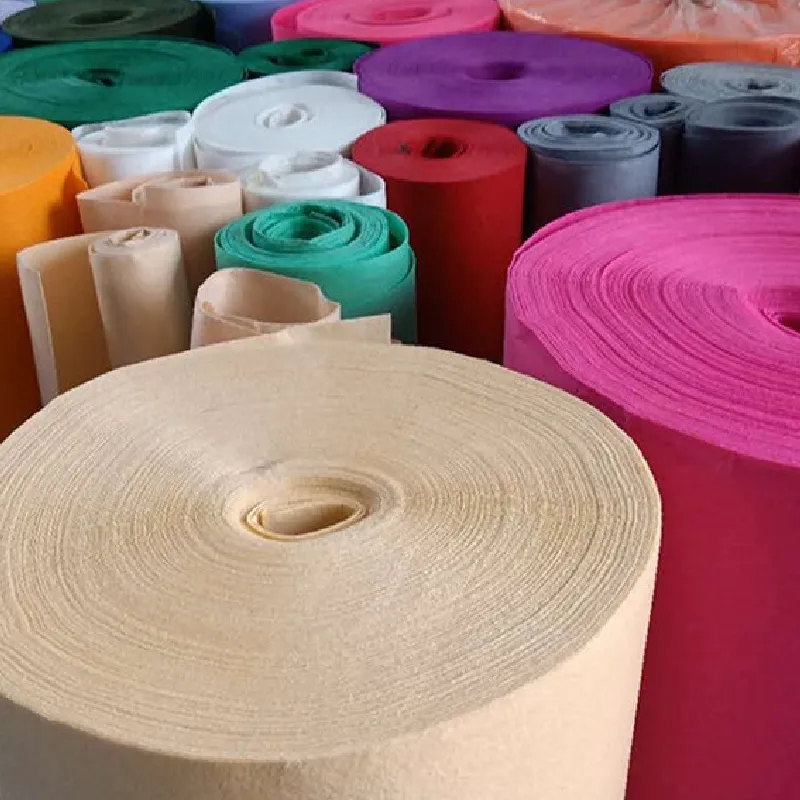
Mustard yellow felt is a non-woven textile material produced by matting, condensing and bonding fibers through mechanical, thermal, or chemical means. Characterized by its distinct mustard yellow coloration, it is primarily composed of either natural fibers (wool, cellulose) or synthetic fibers (acrylic, polyester, polypropylene), or a blend thereof. Within the broader felt industry – a market exceeding $45 billion globally – mustard yellow felt occupies a niche application segment due to its aesthetic properties and performance characteristics. Its technical positioning lies between conventional industrial felts used for filtration and cushioning, and specialized decorative felts focused purely on visual appeal. Core performance aspects include thermal insulation, sound absorption, cushioning, and ease of cutting and shaping, making it suitable for diverse applications ranging from craft projects and insulation linings to acoustic paneling and protective coverings. A critical pain point within the felt industry is achieving consistent color matching across batches, particularly with custom shades like mustard yellow. Another key concern is the variability in fiber composition impacting dimensional stability and resistance to degradation.
Material Science & Manufacturing
The raw materials driving mustard yellow felt production dictate its final properties. Wool felts utilize the natural crimp and interlocking scales of wool fibers to achieve bonding through mechanical agitation, moisture, and heat. This results in a material with excellent thermal insulation and moisture wicking. Acrylic felts offer superior colorfastness and resistance to weathering, but generally exhibit lower thermal performance. Polyester and polypropylene felts provide excellent durability, chemical resistance, and cost-effectiveness. The color ‘mustard yellow’ is achieved through dye incorporation during fiber production or post-felt formation. The manufacturing process commonly involves carding – disentangling and aligning the fibers – followed by needling, where barbed needles interlock the fibers. Thermal bonding, utilizing heated rollers, or chemical bonding, employing adhesives, provides further consolidation. Key parameters controlled during manufacturing include fiber density (grams per square meter – GSM), fiber length, needle density (needles per inch), and bonding temperature/adhesive concentration. Achieving consistent mustard yellow coloration requires precise dye bath control, monitoring colorimeters, and maintaining consistent fiber sourcing. Failure to do so leads to batch-to-batch variations impacting product acceptability. The degree of fiber entanglement directly impacts tensile strength and tear resistance, measured using ASTM D751 and ASTM D2261 respectively.
Performance & Engineering
The performance of mustard yellow felt is significantly influenced by its fiber composition and density. Force analysis reveals that felt’s compressive strength is crucial in cushioning applications, while its tensile strength dictates its ability to withstand pulling forces. Environmental resistance is a critical consideration. Exposure to ultraviolet (UV) radiation degrades synthetic fibers, leading to discoloration and embrittlement – evaluated via ASTM G154. Moisture absorption impacts dimensional stability and can promote mildew growth, necessitating anti-microbial treatments. The fire retardancy of the felt is governed by standards like EN 13501-1 (Europe) and UL 94 (North America), particularly important in interior design applications. Engineering considerations include determining appropriate felt thickness based on the desired level of insulation or cushioning. For acoustic applications, the Sound Transmission Class (STC) rating is a key metric, optimized by manipulating felt density and layering configurations. Furthermore, understanding the creep behavior of felt – its tendency to deform under sustained load – is crucial for applications requiring long-term dimensional stability. Chemical resistance data, typically assessed against common cleaning agents and industrial solvents, is critical for specifying appropriate felt grades in various operating environments.
Technical Specifications
| Parameter | Wool Felt (Mustard Yellow) | Acrylic Felt (Mustard Yellow) | Polyester Felt (Mustard Yellow) | Polypropylene Felt (Mustard Yellow) |
|---|---|---|---|---|
| Density (GSM) | 200-500 | 150-300 | 100-250 | 80-180 |
| Thickness (mm) | 1-5 | 0.5-3 | 0.5-2 | 0.3-1.5 |
| Tensile Strength (N/5cm) | 80-150 | 60-120 | 40-80 | 30-60 |
| Elongation at Break (%) | 30-50 | 20-40 | 15-30 | 10-25 |
| Water Absorption (%) | 25-35 | 5-10 | 2-5 | 1-3 |
| Dimensional Stability (After 24hr @ 20°C, 65% RH) (%) | ±2 | ±1 | ±0.5 | ±0.3 |
Failure Mode & Maintenance
Mustard yellow felt is susceptible to several failure modes. Fatigue cracking occurs under repeated stress, especially in applications involving dynamic loads. Delamination – the separation of felt layers – arises from inadequate fiber bonding or exposure to solvents. Degradation, particularly in natural fiber felts, is driven by moisture, mold, and insect infestation. Oxidation affects synthetic fibers over extended periods, resulting in discoloration and loss of mechanical properties. Specific to the mustard yellow coloration, fading can occur due to UV exposure or repeated washing with harsh detergents. Maintenance involves regular vacuuming to remove dust and debris. Spot cleaning with mild soap and water is recommended for localized stains. Avoid aggressive solvents or abrasive cleaners, which can damage the fibers. For wool felts, professional dry cleaning is advisable. To mitigate delamination, ensure adequate adhesive coverage (in chemically bonded felts) or consistent needling depth (in needled felts). Preventative measures against UV degradation include applying UV protective coatings or selecting UV-resistant fiber types. Regular inspection for signs of wear and tear allows for timely replacement, preventing catastrophic failures and ensuring continued performance.
Industry FAQ
Q: What is the impact of fiber type on the longevity of mustard yellow felt exposed to direct sunlight?
A: Acrylic and polypropylene felts exhibit significantly better UV resistance than wool or viscose-based felts. Prolonged exposure to direct sunlight will cause wool and viscose to fade and become brittle over time. Acrylic offers moderate resistance, while polypropylene provides the highest level of UV stability, minimizing color fading and maintaining structural integrity for extended periods.
Q: Can mustard yellow felt be effectively used as a sound dampening material in automotive interiors?
A: Yes, mustard yellow felt can provide moderate sound dampening in automotive interiors, particularly when laminated onto other substrates like foam or plastic. Polyester felt, due to its density and sound absorption coefficient, is generally preferred for this application. However, its performance is limited compared to specialized automotive acoustic materials.
Q: What are the key considerations when specifying mustard yellow felt for use in crafting applications involving cutting and shaping?
A: For crafting, acrylic or polyester felt are preferable due to their clean-cut edges and resistance to fraying. Wool felt, while offering a more luxurious texture, can be more challenging to cut cleanly and may require edge finishing. Felt density also impacts ease of cutting – lower density felts are easier to manipulate.
Q: What is the typical lead time and minimum order quantity for custom-dyed mustard yellow felt?
A: Lead times for custom-dyed felt can vary from 2-6 weeks, depending on the fiber type, quantity, and dye availability. Minimum order quantities generally range from 100-500 meters, although smaller quantities may be available at a premium. Color matching accuracy is a critical factor impacting lead time.
Q: How does the manufacturing process affect the potential for off-gassing of volatile organic compounds (VOCs) from mustard yellow felt?
A: Chemically bonded felts, utilizing adhesives, have the highest potential for VOC off-gassing. Needled and thermally bonded felts generally exhibit lower VOC emissions. The specific type of adhesive used and the extent of curing play a significant role. Testing to standards like OEKO-TEX Standard 100 can verify low VOC content.
Conclusion
Mustard yellow felt, a versatile non-woven material, offers a compelling combination of aesthetic appeal and functional properties. Its selection necessitates careful consideration of fiber composition, manufacturing processes, and intended application. Understanding the interplay between material science principles – including fiber density, tensile strength, and environmental resistance – and performance characteristics is paramount for ensuring optimal performance and longevity.
The industry's ongoing challenges regarding color consistency, dimensional stability, and sustainable manufacturing practices will continue to drive innovation in felt production. Future advancements may focus on bio-based fiber alternatives, enhanced dye technologies, and optimized bonding techniques to further improve the performance and environmental profile of mustard yellow felt and its broader category.


 English
  Afrikaans
  Albanian
  Amharic
  Arabic
  Armenian
  Azerbaijani
  Basque
  Belarusian
  Bengali
  Bosnian
  Bulgarian
  Catalan
  Cebuano
  Corsican
  Croatian
  Czech
Czech  Danish
  Dutch
Dutch  Esperanto
  Estonian
  Finnish
  French
  Frisian
  Galician
  Georgian
  German
  Greek
Greek  Gujarati
  Haitian Creole
  Hausa
Hausa  Hebrew
  Hindi
Hindi  Miao
Miao  Hungarian
  Icelandic
  Igbo
Igbo  Indonesian
  Irish
Irish  Italian
  Japanese
  Javanese
  Kazakh
  Khmer
Khmer  Rwandese
  Korean
  Kurdish
  Kyrgyz
  Lao
Lao  Latin
Latin  Latvian
  Lithuanian
  Luxembourgish
  Macedonian
  Malgashi
  Malay
Malay  Malayalam
  Maltese
  Maori
Maori  Marathi
  Mongolian
  Myanmar
  Nepali
  Norwegian
  Norwegian
  Occitan
  Pashto
  Persian
  Polish
  Portuguese
  Romanian
  Russian
  Samoan
  Scottish Gaelic
  Serbian
  Sesotho
  Shona
Shona  Sindhi
  Sinhala
  Slovak
  Slovenian
  Somali
  Spanish
  Sundanese
  Swahili
  Swedish
  Tajik
Tajik  Tamil
Tamil  Tatar
Tatar  Telugu
  Thai
Thai  Turkish
  Turkmen
  Ukrainian
  Urdu
Urdu  Uighur
  Uzbek
Uzbek  Vietnamese
  Welsh
Welsh  Bantu
Bantu  Yiddish
  Yoruba
  Zulu
Zulu