
Apr . 01, 2024 17:55 Back to list
olive green felt Performance Analysis
Introduction
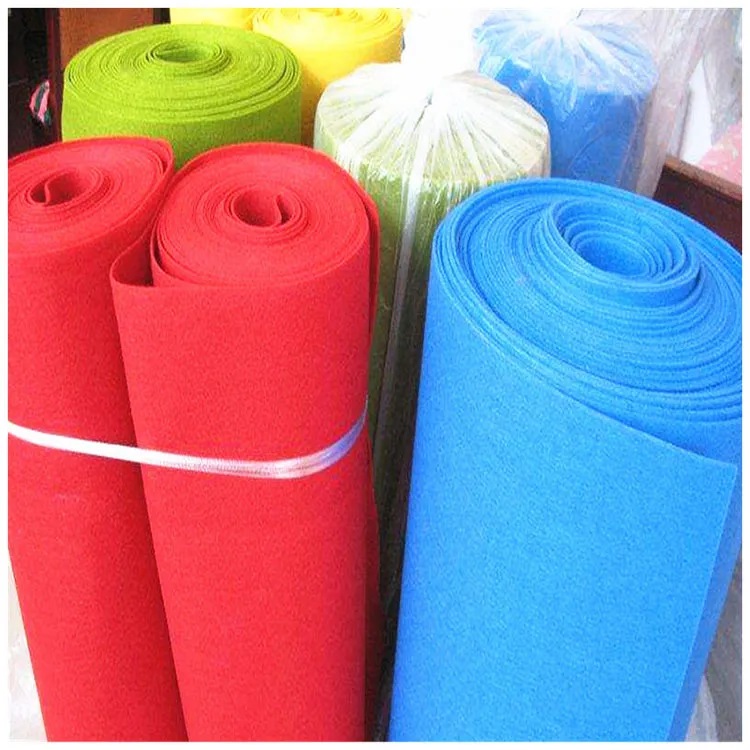
Olive green felt is a non-woven textile material constructed by matting, condensing and pressing fibers together. Predominantly composed of either wool, rayon, acrylic, or a blend thereof, the specific composition dictates its performance characteristics. In the industrial B2B context, olive green felt serves as a crucial component across diverse sectors including filtration, sound dampening, cushioning, and protective lining. The color itself, while aesthetic, often signifies specific application requirements relating to camouflage, environmental blending, or regulatory adherence in certain military or industrial settings. Its technical position lies in providing a cost-effective, customizable material solution where woven fabrics are unsuitable due to permeability needs, conformability requirements, or cost constraints. Core performance metrics center around density, thickness, tensile strength, compression set, and fluid permeability, defining its suitability for targeted applications. A primary industry pain point revolves around consistent material quality and batch-to-batch variation in fiber content and manufacturing processes, leading to unpredictable performance in critical applications.
Material Science & Manufacturing
The core raw material for olive green felt is typically wool, rayon (viscose), polypropylene, polyester, or acrylic fibers. Wool fibers, characterized by their crimped structure and scales, provide excellent insulation and moisture absorption. Rayon offers a silk-like texture and good dye uptake, but possesses lower wet strength. Polypropylene and polyester offer robust chemical resistance and durability, while acrylic fibers provide wool-like characteristics at a lower cost. The olive green coloration is achieved through dye application, typically utilizing acid dyes for wool and rayon, and disperse dyes for synthetic fibers. Colorfastness is a critical attribute, assessed via standards like ISO 105-B02. Manufacturing involves several stages: fiber preparation (carding or combing), web formation (laying fibers in a sheet), bonding (needle punching, wet felting, or chemical bonding), and finishing (cutting, calendering, or coating). Needle punching is the most common method, utilizing barbed needles to interlock fibers. Wet felting involves applying heat, moisture, and agitation to interlock fibers. Chemical bonding employs binders like acrylic emulsions. Key parameter control includes fiber fineness, web weight, needle density, and bonding temperature. Variations in these parameters significantly impact the felt’s density, porosity, and mechanical properties. The consistency of dye penetration and distribution during the dyeing process is also paramount, impacting color uniformity and fastness.

Performance & Engineering
The performance of olive green felt is heavily influenced by its intended application. In filtration, permeability and fiber size distribution are critical; a finer fiber and controlled porosity yield higher filtration efficiency. For sound dampening, the felt’s density and thickness dictate sound absorption coefficients. Higher density and thickness generally correlate with greater sound attenuation. In cushioning applications, compression set and resilience are key metrics, impacting long-term performance. Force analysis reveals that the felt’s resistance to deformation is governed by the fiber’s tensile strength and the density of the fiber network. Environmental resistance is crucial; prolonged exposure to UV radiation, moisture, and temperature fluctuations can degrade the fibers, reducing the felt’s mechanical properties. Compliance requirements vary depending on the end-use application. For example, automotive applications necessitate compliance with flammability standards (FMVSS 302) and odor emission regulations. Military applications may require specific camouflage standards and chemical resistance to withstand harsh environments. The use of appropriate fiber blends and post-treatment coatings can enhance performance characteristics, such as water repellency or flame retardancy. A comprehensive understanding of the applied loads, environmental conditions, and relevant regulations is crucial for successful engineering design.
Technical Specifications
| Property | Unit | Typical Value (Wool Blend) | Typical Value (Synthetic Blend) |
|---|---|---|---|
| Density | g/m² | 500-1200 | 200-800 |
| Thickness | mm | 1-5 | 0.5-3 |
| Tensile Strength (MD) | N/50mm | 5-20 | 8-30 |
| Tensile Strength (CD) | N/50mm | 3-10 | 6-20 |
| Elongation (MD) | % | 10-30 | 15-40 |
| Elongation (CD) | % | 8-25 | 12-35 |
Failure Mode & Maintenance
Olive green felt is susceptible to several failure modes. Fatigue cracking can occur under cyclic loading, especially in applications involving repeated compression or tension. Delamination, or separation of layers, can arise from inadequate bonding during manufacturing or exposure to aggressive solvents. Degradation, particularly in wool-based felts, can be caused by UV exposure, leading to fiber embrittlement and reduced tensile strength. Oxidation, especially in synthetic fibers, can result in discoloration and loss of flexibility. Microbial growth is also a concern, especially in humid environments, leading to odor and material decomposition. Maintenance primarily focuses on preventative measures. Regular cleaning with mild detergents can remove contaminants and prevent microbial growth. Avoid prolonged exposure to direct sunlight and harsh chemicals. For critical applications, periodic inspection for signs of degradation or damage is recommended. Damaged felt should be replaced rather than repaired, as repairs often compromise the overall structural integrity. Storage should be in a cool, dry, and well-ventilated area to minimize degradation. Applying a protective coating (e.g., a UV inhibitor or water repellent) can extend the service life of the felt.
Industry FAQ
Q: What is the impact of fiber type on the felt's resistance to chemical exposure?
A: The fiber type significantly impacts chemical resistance. Wool-based felts are susceptible to damage from strong acids and alkalis. Synthetic fibers like polypropylene and polyester offer superior resistance to most chemicals, including acids, alkalis, and solvents. Acrylic fibers exhibit moderate resistance. It’s crucial to consult a chemical compatibility chart before exposing the felt to any specific substance.
Q: How does the manufacturing process (needle punching vs. wet felting) affect the felt's performance?
A: Needle punching creates a more mechanically interlocked structure, resulting in higher tensile strength and abrasion resistance. However, it can leave small holes, reducing filtration efficiency. Wet felting produces a denser, more uniform structure with better filtration capabilities but lower tensile strength. The choice depends on the application's priorities.
Q: What are the key considerations for selecting a felt for high-temperature applications?
A: For high-temperature applications, synthetic fibers like polyester and acrylic are generally preferred due to their higher melting points compared to wool or rayon. The felt’s thermal stability and resistance to oxidation must be considered. Fiber blends can be used to optimize performance, but thermal degradation needs to be carefully evaluated.
Q: What is the typical service life of olive green felt in an industrial filtration application?
A: The service life varies depending on the contaminant load, operating temperature, and fiber type. Generally, synthetic blends offer longer service life in harsh filtration environments compared to wool-based felts. Regular monitoring of pressure drop and visual inspection for clogging or degradation are essential for determining replacement intervals. Expect a service life ranging from 6 months to 2 years in typical applications.
Q: Are there any eco-friendly alternatives to traditional felt manufacturing processes?
A: Yes, several eco-friendly alternatives are emerging. Utilizing recycled fibers (e.g., recycled polyester or wool) reduces landfill waste and lowers the environmental impact. Waterless felting technologies, such as thermal bonding, minimize water consumption and wastewater discharge. Employing natural dyes and biodegradable binders also contribute to sustainability.
Conclusion
Olive green felt represents a versatile material solution across a broad spectrum of industrial applications, offering a cost-effective alternative to woven fabrics where specific performance characteristics are paramount. Its performance, however, is intrinsically linked to the selection of appropriate fiber types, manufacturing processes, and post-treatment finishes. Understanding the fundamental material science principles and potential failure modes is critical for ensuring long-term reliability and optimal performance in demanding environments.
Future advancements in felt technology are likely to focus on the development of sustainable materials and manufacturing processes, as well as the integration of smart functionalities such as self-cleaning or antimicrobial properties. Addressing the industry’s pain points related to batch-to-batch consistency and enhancing the durability of the material through innovative fiber blends and coatings will be crucial for expanding its application range. Continued research and development in this field promise to unlock even greater potential for this ubiquitous yet often-overlooked textile material.


 English
  Afrikaans
  Albanian
  Amharic
  Arabic
  Armenian
  Azerbaijani
  Basque
  Belarusian
  Bengali
  Bosnian
  Bulgarian
  Catalan
  Cebuano
  Corsican
  Croatian
  Czech
Czech  Danish
  Dutch
Dutch  Esperanto
  Estonian
  Finnish
  French
  Frisian
  Galician
  Georgian
  German
  Greek
Greek  Gujarati
  Haitian Creole
  Hausa
Hausa  Hebrew
  Hindi
Hindi  Miao
Miao  Hungarian
  Icelandic
  Igbo
Igbo  Indonesian
  Irish
Irish  Italian
  Japanese
  Javanese
  Kazakh
  Khmer
Khmer  Rwandese
  Korean
  Kurdish
  Kyrgyz
  Lao
Lao  Latin
Latin  Latvian
  Lithuanian
  Luxembourgish
  Macedonian
  Malgashi
  Malay
Malay  Malayalam
  Maltese
  Maori
Maori  Marathi
  Mongolian
  Myanmar
  Nepali
  Norwegian
  Norwegian
  Occitan
  Pashto
  Persian
  Polish
  Portuguese
  Romanian
  Russian
  Samoan
  Scottish Gaelic
  Serbian
  Sesotho
  Shona
Shona  Sindhi
  Sinhala
  Slovak
  Slovenian
  Somali
  Spanish
  Sundanese
  Swahili
  Swedish
  Tajik
Tajik  Tamil
Tamil  Tatar
Tatar  Telugu
  Thai
Thai  Turkish
  Turkmen
  Ukrainian
  Urdu
Urdu  Uighur
  Uzbek
Uzbek  Vietnamese
  Welsh
Welsh  Bantu
Bantu  Yiddish
  Yoruba
  Zulu
Zulu