Apr . 01, 2024 17:55 Back to list
sky blue felt Technical Analysis
Introduction
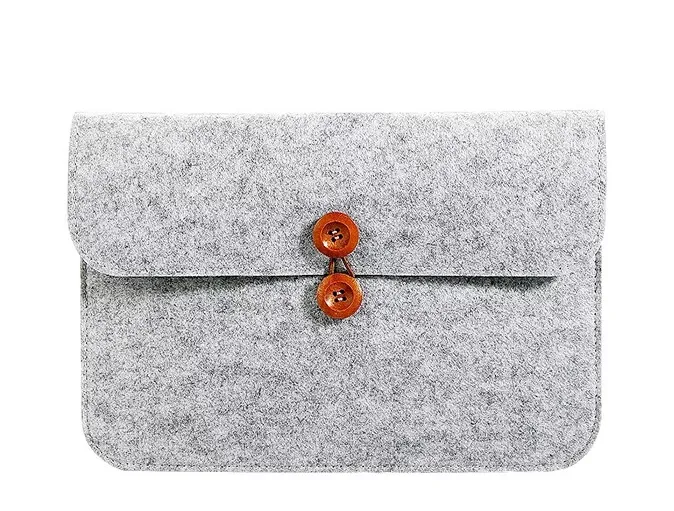
Sky blue felt is a non-woven textile material constructed by interlocking fibers through mechanical, chemical, thermal, or solvent means. Within the broader felt industry, it occupies a specialized niche due to its aesthetic qualities and performance characteristics, finding application across diverse sectors including filtration, insulation, cushioning, craft materials, and increasingly, in technical textile applications. Unlike woven or knitted fabrics, felt lacks a defined grain, offering isotropic properties beneficial in many applications. Its primary composition is typically synthetic fibers – polypropylene, polyester, or acrylic – although wool and rayon blends are also prevalent, affecting performance attributes such as melting point, tensile strength, and chemical resistance. This guide provides a comprehensive technical analysis of sky blue felt, detailing its material science, manufacturing processes, performance criteria, failure modes, and relevant industry standards, targeting procurement managers, engineers, and quality control personnel involved in selecting and implementing felt-based solutions.
Material Science & Manufacturing
The fundamental material science of sky blue felt centers around the polymeric composition of its constituent fibers. Polypropylene (PP) felt is common due to its low cost and good chemical resistance, exhibiting a melting point around 160-170°C and a density of 0.9 g/cm³. Polyester (PET) felt offers higher tensile strength and temperature resistance (melting point ~250-260°C, density 1.38 g/cm³). Acrylic felt, while softer, provides poorer heat resistance. Fiber denier, typically ranging from 1.5 to 6 denier, dictates fiber fineness and influences felt texture and porosity. The manufacturing process begins with fiber production, typically through melt spinning or solution spinning. The core manufacturing method for sky blue felt is needle punching. In this process, a web of fibers is repeatedly pierced by barbed needles, entangling the fibers to create a cohesive structure. Needle density (needles per inch) and punching speed are critical parameters; higher density generally yields greater strength but reduced thickness. Other manufacturing methods include thermal bonding (using heat to fuse fibers), chemical bonding (using binders), and hydroentanglement (using high-pressure water jets). Coloration is achieved either through fiber dyeing prior to web formation or post-production dyeing, with careful consideration given to dye compatibility with the fiber polymer to prevent degradation or discoloration. Critical process controls involve maintaining consistent fiber weight per unit area (basis weight), ensuring uniform fiber distribution, and controlling the moisture content during processing to optimize entanglement efficiency.
Performance & Engineering
The performance of sky blue felt is dictated by several key engineering parameters. Tensile strength, measured according to ASTM D751, is a crucial indicator of its load-bearing capacity, typically ranging from 5-30 N/cm depending on fiber type and density. Elongation at break, also determined via ASTM D751, indicates its flexibility and resistance to deformation. Air permeability, measured using ASTM D737, is vital for filtration and insulation applications; values generally range from 10 to 100 CFM (cubic feet per minute). Water absorption, assessed by ASTM D570, is relevant for applications where moisture resistance is critical. Dimensional stability, influenced by temperature and humidity, must be considered, particularly in industrial applications. For applications involving fluid contact, chemical resistance is paramount. PP and PET felts exhibit good resistance to many acids and bases, but susceptibility to organic solvents varies significantly. When employed as a cushioning material, compression set – the permanent deformation after sustained compression – is a key metric. In acoustic insulation, the Noise Reduction Coefficient (NRC), measuring sound absorption, is critical. Finite Element Analysis (FEA) can be used to model the stress distribution within the felt structure under load, optimizing material thickness and density for specific applications. Furthermore, adherence to flammability standards (e.g., UL 94) is essential for safety-critical applications.
Technical Specifications
| Parameter | Polypropylene (PP) Felt | Polyester (PET) Felt | Acrylic Felt | Units |
|---|---|---|---|---|
| Tensile Strength | 5-15 | 10-30 | 3-8 | N/cm |
| Elongation at Break | 150-300 | 50-150 | 200-400 | % |
| Air Permeability | 30-80 | 10-50 | 20-60 | CFM |
| Water Absorption | 0.1-0.3 | 0.5-1.0 | 1.0-2.0 | % (24hr) |
| Density | 0.5-0.9 | 0.8-1.2 | 0.6-1.0 | g/cm³ |
| Operating Temperature | -20 to +80 | -40 to +150 | -10 to +60 | °C |
Failure Mode & Maintenance
Sky blue felt, like all materials, is susceptible to various failure modes. Fatigue cracking can occur under cyclic loading, particularly in applications involving repeated stress. This is exacerbated by the presence of defects or stress concentrators. Oxidative degradation is a significant concern, especially for PP felt exposed to UV radiation and elevated temperatures. This results in embrittlement and loss of strength. Hydrolytic degradation can occur in PET felt exposed to prolonged moisture, leading to chain scission and reduced mechanical properties. Delamination – the separation of fiber layers – can occur due to inadequate fiber entanglement or exposure to aggressive solvents. Abrasion, common in filtration and wiping applications, results in fiber loss and reduced thickness. Contamination by particulates can clog the felt structure, reducing its permeability and performance. Maintenance primarily involves regular cleaning to remove contaminants. Vacuuming is suitable for loose debris, while gentle washing with mild detergents can remove embedded contaminants. Avoid harsh chemicals and high temperatures, which can damage the fibers. For applications with significant wear, periodic replacement of the felt is necessary to maintain optimal performance. Preventative measures include selecting appropriate fiber types for the specific application environment, implementing UV stabilizers for outdoor applications, and using protective coatings to enhance chemical resistance.
Industry FAQ
Q: What is the impact of fiber denier on the overall performance of sky blue felt for filtration applications?
A: Lower fiber denier generally results in a finer pore structure, enhancing filtration efficiency for smaller particles. However, lower denier fibers may have reduced tensile strength, requiring a higher basis weight to maintain structural integrity. Therefore, an optimal balance between denier and basis weight must be achieved based on the specific filtration requirements.
Q: How does thermal bonding affect the long-term durability of polyester felt compared to needle punching?
A: Thermal bonding can create a more uniform and stable structure initially, reducing the risk of delamination. However, prolonged exposure to high temperatures or UV radiation can weaken the thermal bonds, leading to premature failure. Needle punching, while potentially less uniform initially, generally exhibits better long-term durability in harsh environments, as the mechanical interlocking of fibers is less susceptible to thermal degradation.
Q: What chemical compatibility testing is recommended before using sky blue felt in contact with specific solvents?
A: Immersion testing is crucial. Submerge samples of the felt in the solvent for a defined period (e.g., 24, 72, 168 hours) at a specified temperature. Assess changes in weight, tensile strength, elongation, and appearance. Gas chromatography-mass spectrometry (GC-MS) can identify any leachables from the felt into the solvent, indicating potential compatibility issues.
Q: How does basis weight impact the Noise Reduction Coefficient (NRC) of sky blue felt used for acoustic insulation?
A: Generally, increasing the basis weight increases the density of the felt, leading to higher NRC values. A greater density provides more mass to absorb sound energy. However, beyond a certain point, the increase in NRC becomes marginal, and the added weight may not be cost-effective. Optimal basis weight depends on the target NRC value and frequency range.
Q: What are the primary considerations when selecting sky blue felt for outdoor applications exposed to UV radiation?
A: For outdoor applications, select PP or PET felt with incorporated UV stabilizers. Darker colors generally exhibit better UV resistance than lighter colors. Regular inspection for signs of degradation (embrittlement, discoloration) is essential. Consider applying a UV-resistant coating to further enhance protection. The anticipated lifespan and exposure levels should drive the choice of materials and maintenance protocols.
Conclusion
Sky blue felt, a versatile non-woven material, offers a compelling combination of performance characteristics and cost-effectiveness. Its selection and implementation require a thorough understanding of its material science, manufacturing processes, and potential failure modes. Optimizing performance relies on careful consideration of fiber type, basis weight, manufacturing method, and environmental conditions.
Future development in sky blue felt technology will likely focus on enhancing its sustainability through the use of recycled fibers and biodegradable polymers, improving its resistance to degradation through advanced additive technologies, and expanding its application scope through the development of specialized coatings and surface treatments. A continued emphasis on rigorous testing and adherence to industry standards will be crucial for ensuring the long-term reliability and performance of sky blue felt-based solutions.


 English
  Afrikaans
  Albanian
  Amharic
  Arabic
  Armenian
  Azerbaijani
  Basque
  Belarusian
  Bengali
  Bosnian
  Bulgarian
  Catalan
  Cebuano
  Corsican
  Croatian
  Czech
Czech  Danish
  Dutch
Dutch  Esperanto
  Estonian
  Finnish
  French
  Frisian
  Galician
  Georgian
  German
  Greek
Greek  Gujarati
  Haitian Creole
  Hausa
Hausa  Hebrew
  Hindi
Hindi  Miao
Miao  Hungarian
  Icelandic
  Igbo
Igbo  Indonesian
  Irish
Irish  Italian
  Japanese
  Javanese
  Kazakh
  Khmer
Khmer  Rwandese
  Korean
  Kurdish
  Kyrgyz
  Lao
Lao  Latin
Latin  Latvian
  Lithuanian
  Luxembourgish
  Macedonian
  Malgashi
  Malay
Malay  Malayalam
  Maltese
  Maori
Maori  Marathi
  Mongolian
  Myanmar
  Nepali
  Norwegian
  Norwegian
  Occitan
  Pashto
  Persian
  Polish
  Portuguese
  Romanian
  Russian
  Samoan
  Scottish Gaelic
  Serbian
  Sesotho
  Shona
Shona  Sindhi
  Sinhala
  Slovak
  Slovenian
  Somali
  Spanish
  Sundanese
  Swahili
  Swedish
  Tajik
Tajik  Tamil
Tamil  Tatar
Tatar  Telugu
  Thai
Thai  Turkish
  Turkmen
  Ukrainian
  Urdu
Urdu  Uighur
  Uzbek
Uzbek  Vietnamese
  Welsh
Welsh  Bantu
Bantu  Yiddish
  Yoruba
  Zulu
Zulu