
Apr . 01, 2024 17:55 Back to list
thick industrial felt Performance Analysis
Introduction
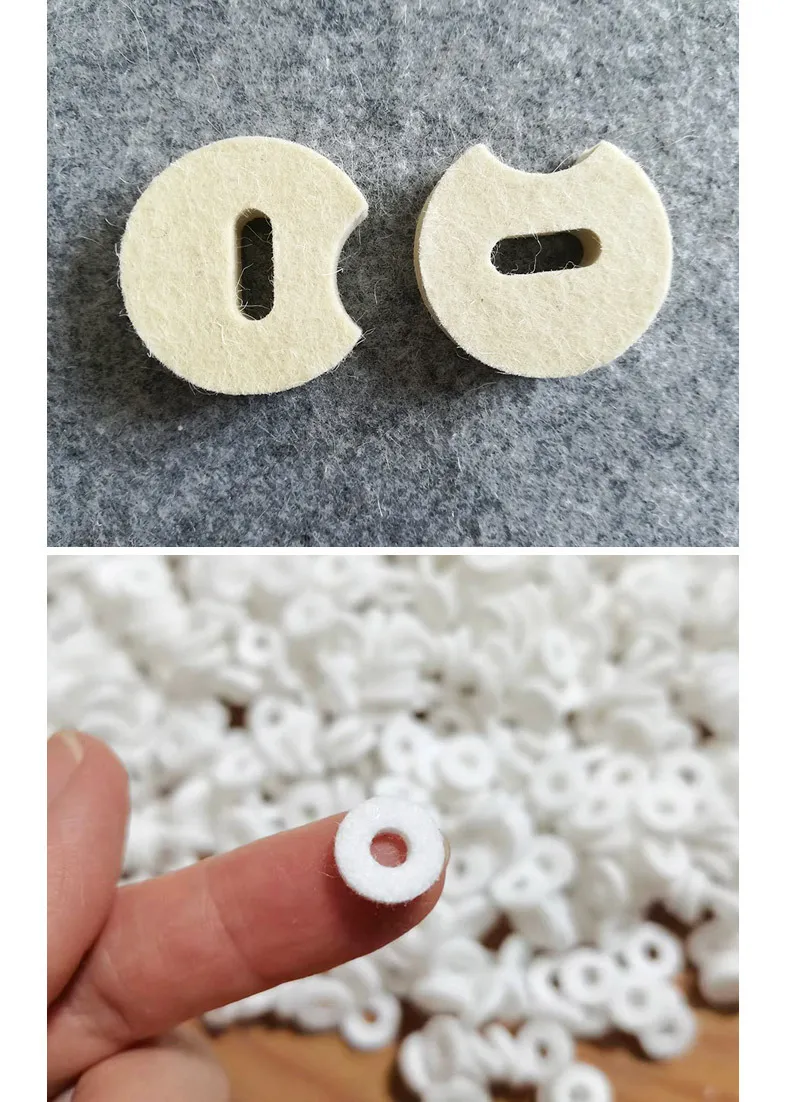
Thick industrial felt is a non-woven fabric manufactured by matting, condensing and pressing fibers together. Primarily composed of wool, synthetic fibers like polyester, polypropylene, or acrylic, and sometimes blends, it distinguishes itself from standard felt through its increased density and thickness, typically ranging from 6mm to 25mm or greater. This material finds extensive application across diverse industries – automotive, manufacturing, filtration, and construction – serving as cushioning, insulation, sealing, and polishing agents. Its position in the supply chain is fundamental as a component material, rarely a finished consumer product itself. Core performance characteristics include high compressibility, excellent vibration damping, thermal and acoustic insulation properties, and resistance to abrasion, making it critical for applications demanding robust protection and operational efficiency. A key industry pain point revolves around achieving consistent density and thickness across large production runs, alongside maintaining dimensional stability under varying temperature and humidity conditions.
Material Science & Manufacturing
The raw materials defining industrial felt dictate its ultimate properties. Wool, traditionally dominant, offers natural crimp for fiber interlocking, inherent resilience, and effective moisture absorption. However, its cost and susceptibility to mildew limit some applications. Polyester fibers provide high tensile strength, UV resistance, and dimensional stability but lack the natural resilience of wool. Polypropylene is a cost-effective alternative offering good chemical resistance, while acrylic provides wool-like hand and improved mothproofing. Manufacturing begins with fiber preparation: cleaning, carding, and potentially dyeing. Carding aligns fibers in a parallel orientation, crucial for strength. The matting process utilizes mechanical action, electrostatic charges, or wet-laying techniques to interlock fibers. Wet-laying involves suspending fibers in water and forming a sheet, followed by consolidation through draining and pressing. Needle punching, a common method, uses barbed needles to mechanically interlock fibers, creating a dense, robust structure. Thermoforming, utilizing heat and pressure, fuses fibers together. Critical parameter control during manufacturing includes fiber blend ratio, carding speed and pressure, needle density and depth (for needle-punched felt), pressing temperature and duration, and moisture content. Maintaining consistent fiber distribution ensures uniform density, while controlling pressing parameters governs thickness and compaction. Chemical compatibility between fibers and any binders used is paramount to prevent degradation and maintain structural integrity.
Performance & Engineering
The performance of thick industrial felt is heavily reliant on its physical structure and material composition. Force analysis reveals its ability to distribute loads evenly, making it ideal for cushioning and shock absorption. The compressive strength, measured in kPa or PSI, determines its ability to withstand sustained pressure without deformation. Its resilience, or springback, is crucial for applications requiring repeated compression cycles. Environmental resistance is a key concern; prolonged exposure to UV radiation can degrade synthetic fibers, reducing tensile strength and causing discoloration. Moisture absorption, while beneficial in some applications, can lead to dimensional instability and promote microbial growth in wool-based felts. Compliance requirements vary by industry. Automotive applications demand adherence to FMVSS 302 (flammability standards), while filtration systems must meet ISO 16889 (MPPS efficiency testing). The thermal insulation performance is governed by its thermal conductivity, a measure of its resistance to heat flow, and is dependent on fiber density and composition. Acoustic performance stems from the felt's porous structure, which absorbs sound energy, reducing noise transmission. For sealing applications, the material’s compression set – the amount of permanent deformation after compression – is a critical parameter, influencing the longevity and effectiveness of the seal. Finite Element Analysis (FEA) is frequently employed to optimize felt thickness and density for specific load-bearing and vibration damping scenarios.
Technical Specifications
| Parameter | Typical Value (Wool Felt) | Typical Value (Polyester Felt) | Testing Standard |
|---|---|---|---|
| Density (g/cm³) | 0.25 – 0.50 | 0.15 – 0.35 | ISO 845 |
| Thickness (mm) | 6 – 25+ | 6 – 25+ | ASTM D1777 |
| Tensile Strength (N/cm) | 5 – 15 | 10 – 25 | ISO 527-5 |
| Compression Set (%) (after 24 hrs @ 50% compression) | 5 – 10 | 3 – 8 | ASTM D395 |
| Water Absorption (%) (24 hr immersion) | 30 – 50 | < 1 | ISO 658 |
| Thermal Conductivity (W/m·K) | 0.035 – 0.045 | 0.030 – 0.040 | ASTM C518 |
Failure Mode & Maintenance
Thick industrial felt is susceptible to several failure modes. Fatigue cracking can occur under repeated compression cycles, particularly in wool-based felts where fiber breakage initiates cracks. Delamination, the separation of layers within the felt, results from inadequate fiber interlocking or exposure to solvents. Degradation from UV exposure leads to embrittlement and loss of tensile strength, predominantly affecting synthetic fibers. Oxidation, especially in wool, causes fiber weakening and discoloration. Microbial growth, fostered by moisture retention, degrades the felt and releases unpleasant odors. Chemical attack from acids, alkalis, or organic solvents can dissolve or swell fibers, compromising structural integrity. Maintenance strategies focus on preventative measures. Regular inspection for signs of wear, cracking, or delamination is crucial. Protective coatings can mitigate UV damage and chemical exposure. Cleaning should be performed with mild detergents and avoided harsh chemicals or abrasive cleaners. Proper storage in a dry, well-ventilated environment minimizes moisture absorption and microbial growth. For critical applications, periodic testing of key parameters – thickness, density, and tensile strength – ensures continued performance and identifies potential issues before failure occurs. In cases of minor damage, localized repair using adhesives compatible with the felt material can extend its service life.
Industry FAQ
Q: What is the impact of fiber blend composition on the long-term durability of industrial felt used in automotive gasketing?
A: Fiber blend composition significantly impacts durability. While wool provides excellent compression set recovery, its susceptibility to oil and temperature extremes necessitates blending with synthetic fibers. Polyester enhances tensile strength and dimensional stability, resisting deformation under load. However, a higher percentage of polyester can reduce the felt’s ability to conform to irregular surfaces. Adding polypropylene improves chemical resistance, protecting against fuel and oil degradation. A typical robust blend for automotive gasketing would incorporate 30-50% wool, 30-40% polyester, and 10-20% polypropylene, optimized for the specific application's chemical and thermal environment.
Q: How does the needle-punching density affect the filtration efficiency of felt filters?
A: Needle-punching density directly correlates with filtration efficiency. A higher needle density creates a tighter, more convoluted fiber structure, reducing pore size and increasing the surface area available for particle capture. However, excessively high density can reduce permeability, increasing pressure drop and potentially compromising flow rate. Optimal needle density is determined by the target particle size and required flow characteristics. For capturing fine particles (sub-micron range), a higher density is necessary, while coarser filtration applications can utilize lower densities.
Q: What methods can be employed to assess the dimensional stability of industrial felt exposed to high humidity environments?
A: Assessing dimensional stability requires controlled humidity exposure and precise measurement. A common method involves exposing felt samples to a controlled humidity chamber (e.g., 95% RH at 40°C) for a specified duration (e.g., 24-72 hours). Before and after exposure, thickness and width are measured using a digital caliper or optical comparator. The percentage change in dimensions is then calculated. ASTM D737 and ISO 62 provide standardized procedures for determining dimensional changes under varying environmental conditions.
Q: What are the primary considerations when selecting industrial felt for vibration damping in heavy machinery?
A: Key considerations include density, thickness, and resilience. Higher density felts generally provide better vibration damping due to increased mass and energy absorption. Greater thickness further enhances damping capacity. However, resilience is equally important; the felt must be able to recover its shape after repeated compression cycles. The optimal felt properties are determined by the frequency and amplitude of the vibrations, as well as the weight and stiffness of the machinery. FEA modeling can predict performance and optimize felt selection.
Q: How do different binder types influence the thermal stability and outgassing characteristics of industrial felt used in aerospace applications?
A: Binder type is critical in aerospace applications where thermal stability and low outgassing are paramount. Acrylic binders generally offer good adhesion but exhibit lower thermal stability and can release volatile organic compounds (VOCs) at elevated temperatures. Epoxy binders provide superior thermal resistance and lower outgassing but can be more brittle. Silicone binders offer excellent thermal stability and flexibility but may have lower adhesive strength. Outgassing is assessed using ASTM E595, which measures the total mass loss (TML) and collected volatile condensable materials (CVCM). The choice of binder must comply with stringent aerospace standards for VOC emissions and material flammability.
Conclusion
Thick industrial felt, while seemingly simple, is a complex material whose performance is deeply interwoven with its constituent fibers, manufacturing processes, and intended application. Achieving optimal performance necessitates a thorough understanding of material properties, including density, tensile strength, compression set, and environmental resistance. The selection process must consider the specific demands of the operating environment – temperature, humidity, chemical exposure, and mechanical stress – to ensure long-term reliability and functionality. Addressing the industry pain points of consistent production and dimensional stability requires meticulous process control and robust quality assurance protocols.
Looking forward, advancements in fiber technology, such as the development of bio-based and recycled fiber options, are poised to enhance the sustainability of industrial felt. Furthermore, incorporating nanotechnology to modify fiber surfaces and enhance properties like hydrophobicity and abrasion resistance will unlock new application possibilities. Continued research into novel manufacturing techniques, like 3D felt forming, could allow for customized shapes and optimized performance for highly specialized applications, solidifying thick industrial felt’s role as a versatile and indispensable material across numerous industries.


 English
  Afrikaans
  Albanian
  Amharic
  Arabic
  Armenian
  Azerbaijani
  Basque
  Belarusian
  Bengali
  Bosnian
  Bulgarian
  Catalan
  Cebuano
  Corsican
  Croatian
  Czech
Czech  Danish
  Dutch
Dutch  Esperanto
  Estonian
  Finnish
  French
  Frisian
  Galician
  Georgian
  German
  Greek
Greek  Gujarati
  Haitian Creole
  Hausa
Hausa  Hebrew
  Hindi
Hindi  Miao
Miao  Hungarian
  Icelandic
  Igbo
Igbo  Indonesian
  Irish
Irish  Italian
  Japanese
  Javanese
  Kazakh
  Khmer
Khmer  Rwandese
  Korean
  Kurdish
  Kyrgyz
  Lao
Lao  Latin
Latin  Latvian
  Lithuanian
  Luxembourgish
  Macedonian
  Malgashi
  Malay
Malay  Malayalam
  Maltese
  Maori
Maori  Marathi
  Mongolian
  Myanmar
  Nepali
  Norwegian
  Norwegian
  Occitan
  Pashto
  Persian
  Polish
  Portuguese
  Romanian
  Russian
  Samoan
  Scottish Gaelic
  Serbian
  Sesotho
  Shona
Shona  Sindhi
  Sinhala
  Slovak
  Slovenian
  Somali
  Spanish
  Sundanese
  Swahili
  Swedish
  Tajik
Tajik  Tamil
Tamil  Tatar
Tatar  Telugu
  Thai
Thai  Turkish
  Turkmen
  Ukrainian
  Urdu
Urdu  Uighur
  Uzbek
Uzbek  Vietnamese
  Welsh
Welsh  Bantu
Bantu  Yiddish
  Yoruba
  Zulu
Zulu